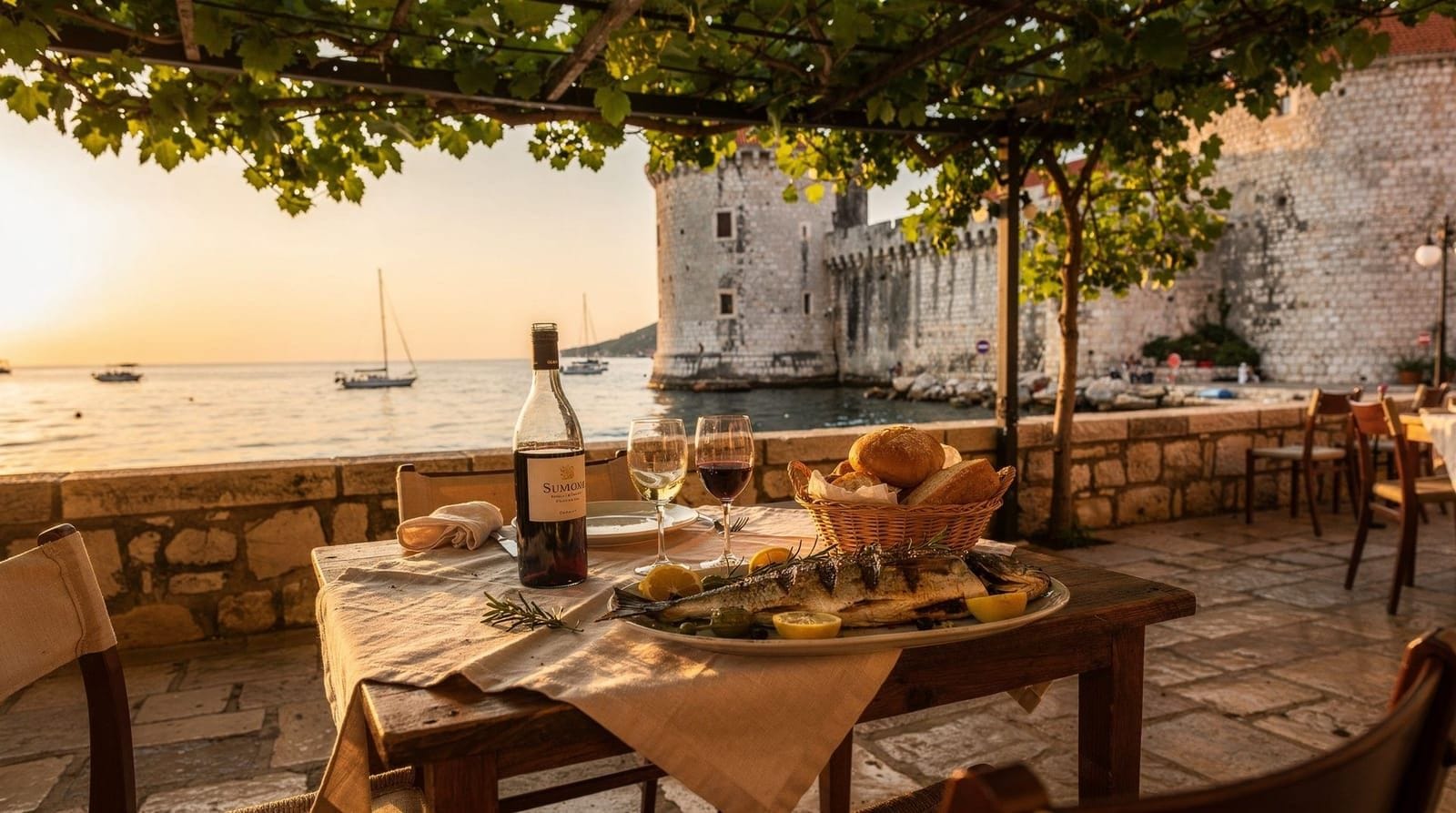
Wine tasting in Croatia: where to go, how to do it, and what to expect
Dubrovnik: Full-day Peljesac wine tour
Is wine tasting in Croatia easy to organise as a tourist?
Organised tours from Dubrovnik, Split, and Hvar are the easiest entry point — the best wineries on Pelješac rarely have walk-in tasting rooms, and English-speaking guides make a real difference. Self-drive is possible on Pelješac with advance booking directly at estates. Istrian agritourism is more visitor-friendly. Budget €15–30 per person for a quality tasting; full-day tours with transport run €70–120.
In brief: Croatia is an underrated wine destination — not because the wines are mediocre, but because the infrastructure for visitors is still catching up. Most producers are small family operations with no tasting room, no website, and sometimes no English. Knowing how to navigate that gap is what separates a frustrating afternoon of locked cellar doors from one of the best food-and-wine experiences in the Mediterranean.
| Best region for reds | Pelješac peninsula (Dingač, Postup, Plavac Mali) |
| Best region for whites | Istria (Malvazija) and Korčula (Pošip, Grk) |
| Typical tasting cost | €10–20/person at a small estate, incl. food |
| Full-day organised tour | €70–120/person from Dubrovnik or Split |
| Booking | Advance, by phone — most estates have no walk-in tasting room |
What wine tasting in Croatia actually looks like
Wine tourism in Italy or France means signposted routes, standardised tasting rooms, and winery restaurants booked weeks in advance. Croatia is not there yet — and that is partly what makes it interesting. On Pelješac, Croatia’s most prestigious wine peninsula, you might taste Dingač at a producer whose label is a hand-printed sticker and whose cellar is underneath their house. The wine in the glass is world-class. The staging is nonexistent. Whether that feels authentic or inconvenient depends on your expectations.
The practical reality: most serious wineries require advance booking, often by phone, often in Croatian. Very few have the kind of open-door tasting rooms you would find in Tuscany. Organised tours solve this entirely — they have relationships with specific estates, handle language barriers, and include transport on roads that are genuinely challenging to navigate by rental car in summer. But self-drive is absolutely possible with a bit of planning, especially on Pelješac and in Istria.
This guide covers both approaches, plus the city wine bar scene for days when you want quality Croatian wine without leaving the old town.
Pelješac from Dubrovnik: the most rewarding day trip for wine lovers
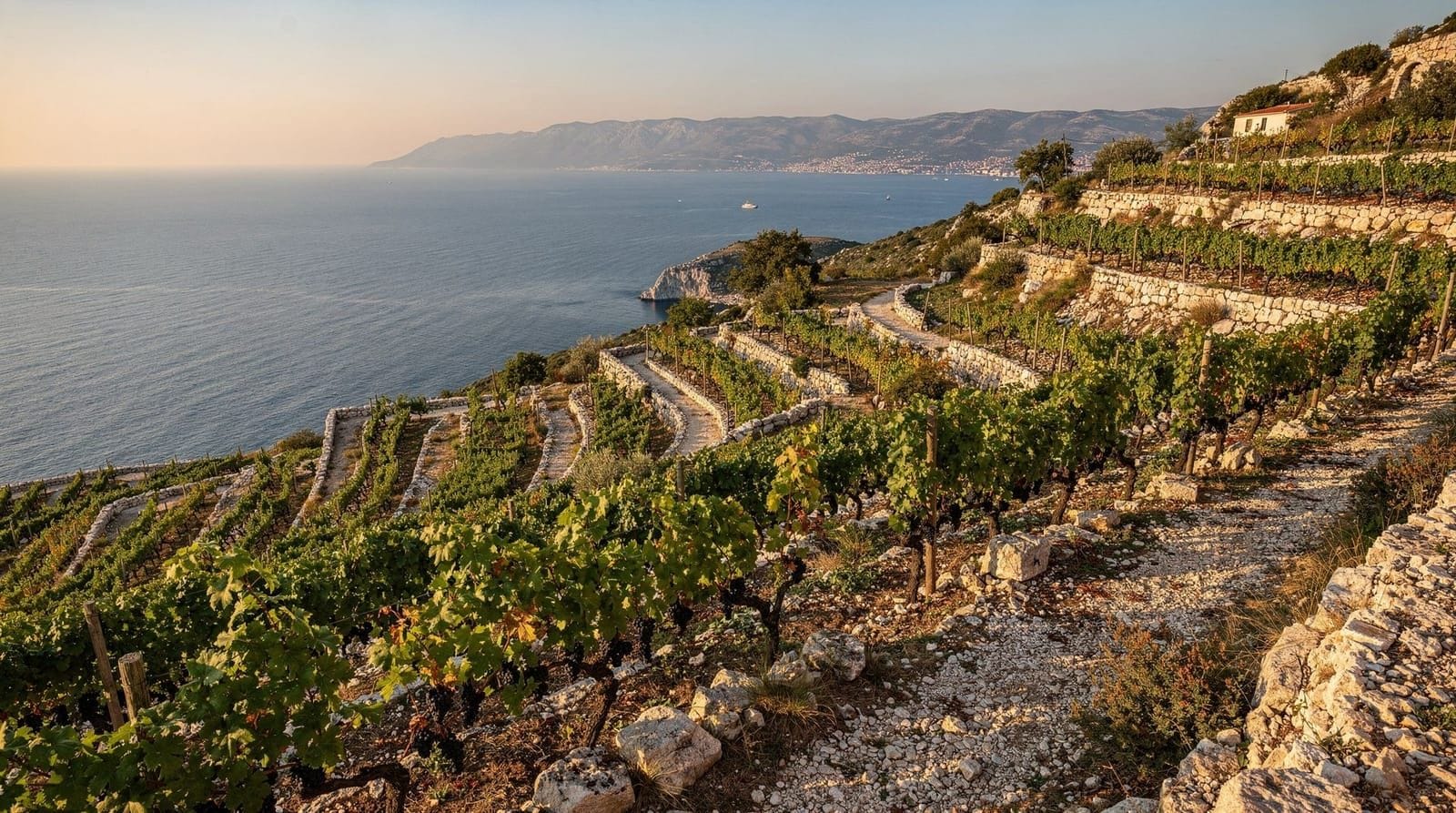
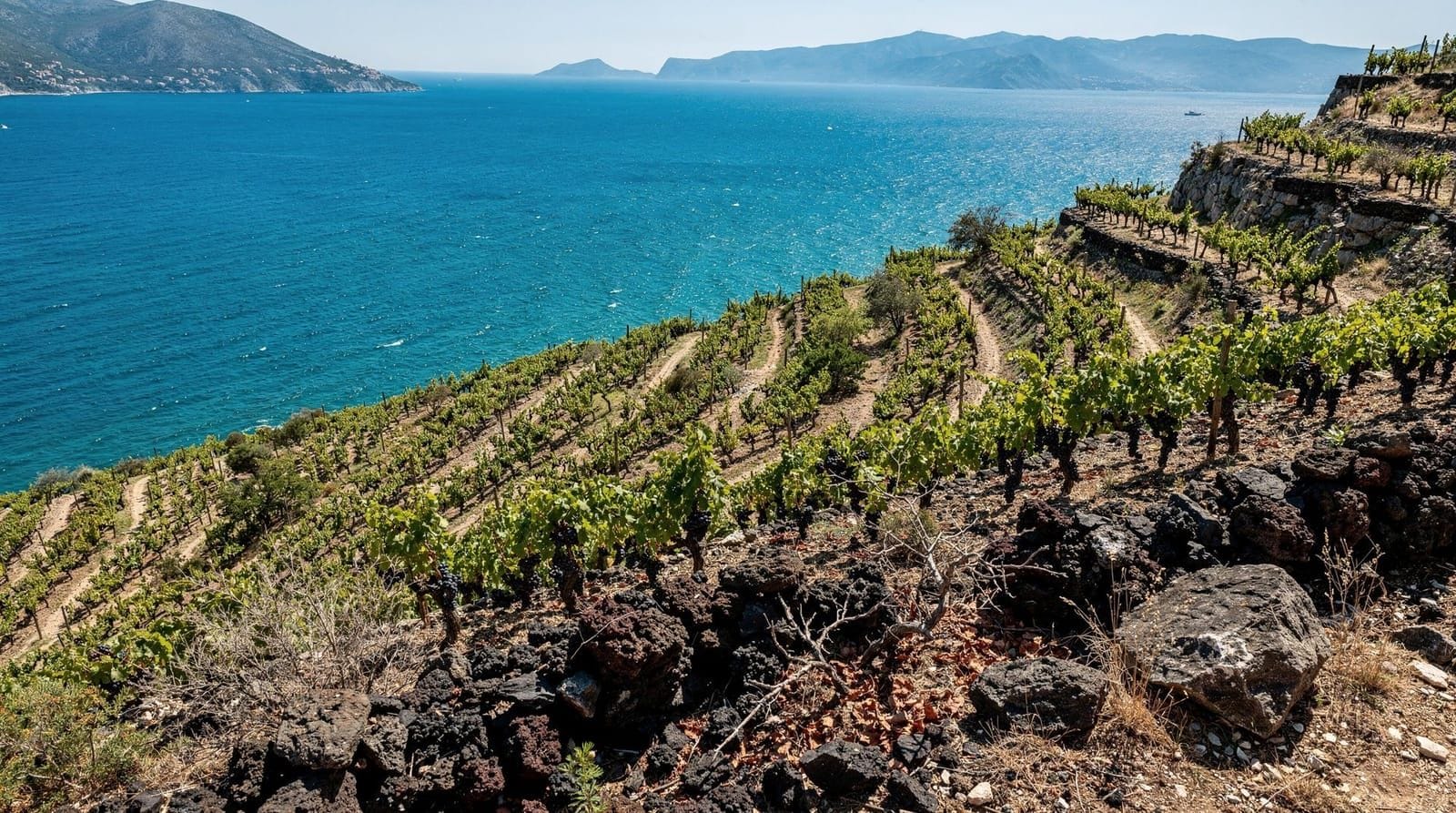
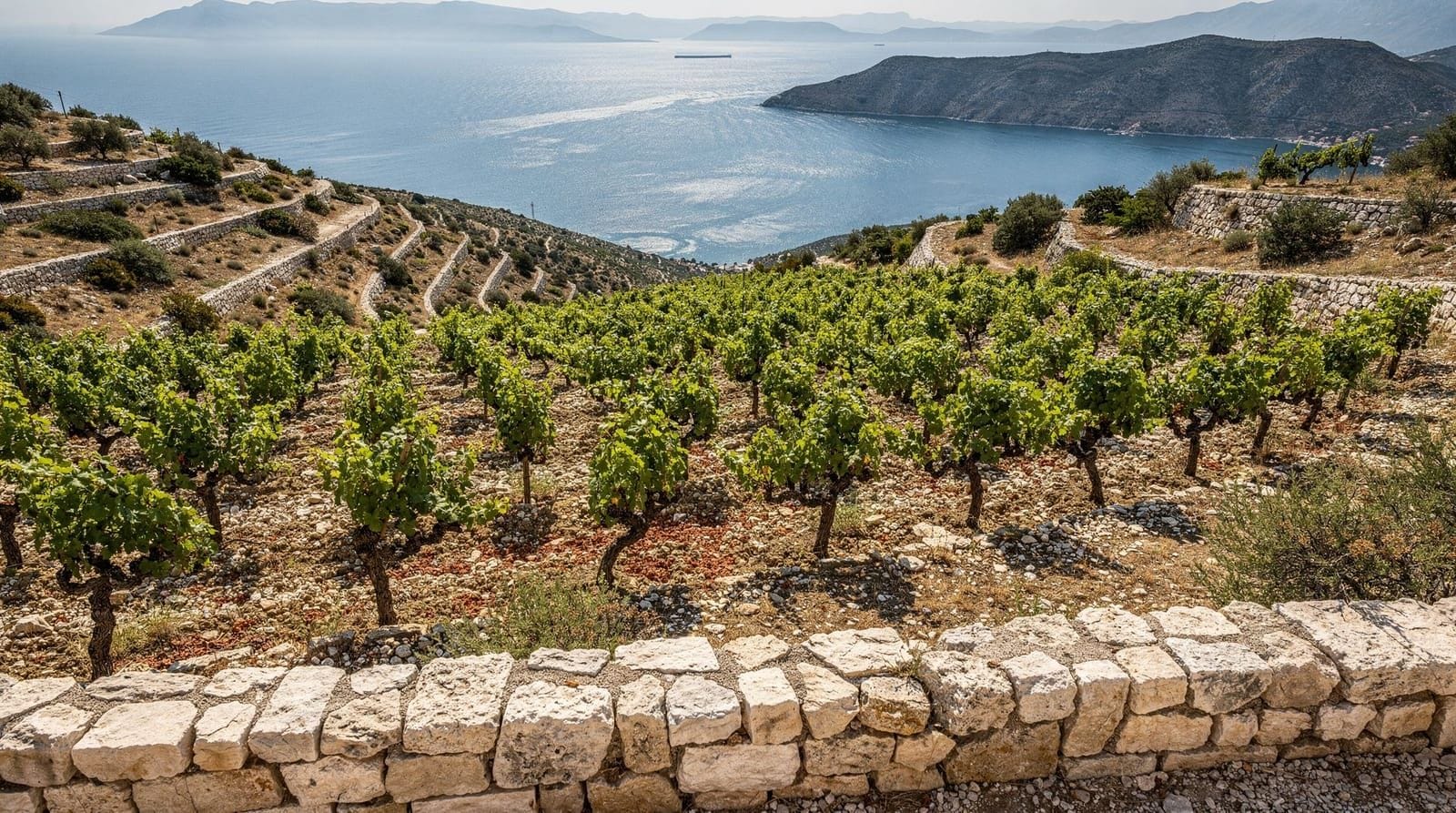
Pelješac is a narrow, 65 km peninsula jutting northwest from the mainland near Dubrovnik, separated from Korčula island by a thin channel. Its southern-facing karst slopes above the Adriatic are where Dingač and Postup — Croatia’s only two protected controlled appellations — are produced, along with a wide range of other Plavac Mali expressions that don’t carry the appellation name but can be equally impressive.
The drive from Dubrovnik takes about 90 minutes to Ston at the base of the peninsula, and another 30–45 minutes north to Potomje, the village at the heart of the Dingač zone. The road winds along cliff edges above the sea. It is beautiful, moderately stressful, and definitely not the place to be checking a wine list.
Organised tours from Dubrovnik handle all of this: transport in a comfortable minivan, stops at two or three estates, guided tasting of five to eight wines per stop, food provided, and a guide who can contextualise the differences between a Dingač and a Postup, or explain why one producer ages in barriques while another uses Slavonian oak. A full day runs €75–110 per person and is genuinely good value given what is included.
For day trips from Dubrovnik, Pelješac wine tours are consistently rated among the best value excursions available — more distinctive than a generic boat tour, and the wine you bring home is lighter to carry than souvenirs.
Self-drive wine route on Pelješac: logistics and stops
If you prefer independence and have already booked ahead by phone or email, the self-drive route is straightforward.
The route: Start in Ston — taste the local oysters and mussels before you drink anything, then drive north along the D414 toward Potomje. The main wine zone runs between Potomje (the Dingač tunnel village) and Orebić at the western tip.
Key stops to pre-book:
- Matuško Winery (Potomje) — one of the most visitor-oriented estates on the peninsula, with a proper tasting room and an impressive range from entry-level Plavac Mali to aged Dingač
- Miloš Winery (Potomje) — benchmark producer for the appellation; the Barrique and aged expressions are exceptional
- Saints Hills (near Dingač) — the most design-forward estate on Pelješac, owned by a Croatian entrepreneur; Nevina (white blend) and Dingač are the highlights
- Crvik Vina — smaller, more family-run feel, excellent Postup
Logistics: Most estates are open May–October, 9 am–5 pm with advance notice. Bring cash — many do not have card machines for small purchases. Bottles run €8–18 for regular Plavac Mali, €20–45 for premium Dingač. Wine can be packed in your check-in luggage (standard wine shipping from Croatia is expensive and slow).
Where to eat on Pelješac: Konoba Bakus in Potomje, Konoba Kapetanova Kuca in Mali Ston (the best place for oysters before the wine route begins), and the terrace restaurants in Orebić overlooking Korčula channel.
Hvar: wine tasting with a speedboat and a view
Hvar island is not Croatia’s most serious wine destination — that title belongs to Pelješac and Korčula — but it has something neither of those offers: world-class scenery, easy access from Split, and a growing number of small producers making interesting wines from Plavac Mali and a local white called Bogdanuša.
The wine experiences on Hvar tend to be combined with island sightseeing: a speedboat circuit that takes you to a winery on the south coast, with a short tasting on a terrace above the sea, then back to Hvar town or Split by early evening. It is more of an experience than a deep dive into wine, but the setting — vineyards dropping to the Adriatic at the foot of the Biokovo massif — is genuinely spectacular.
Winery visits on Hvar pair well with the island’s food culture: olive oil from Blato na Cetini, lavender honey, and the distinctive local fish and lamb. For context on what you are drinking alongside, Dalmatian cuisine is worth reading before you go.
Korčula: Pošip and Grk, Croatia’s finest whites
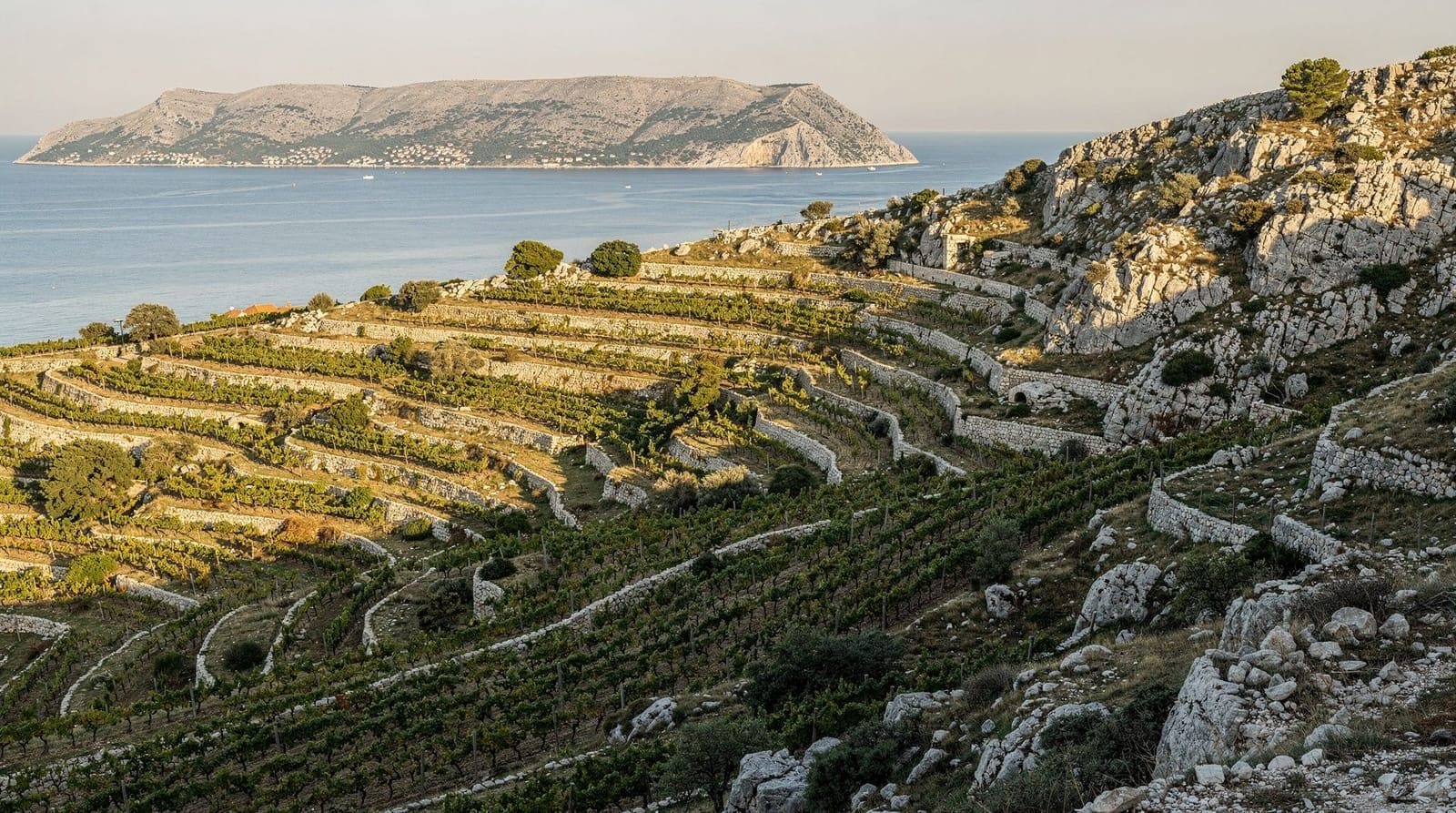
While Pelješac dominates the red wine conversation, Korčula island is the place to understand Croatian white wine. Two grapes are native to the island: Pošip (Croatia’s most planted quality white — floral, textured, with notes of peach and almond) and Grk (rarer, grown only around the village of Lumbarda, deeply mineral with almost no free sulfur, oddly compelling). Both are difficult to find outside Croatia, which makes tasting them here feel like a discovery.
The main producers to look for: Toreta (the standard-bearer for Pošip), Bire (excellent Grk from Lumbarda), and Zure (small but precise). Most welcome visits with advance notice.
The island tour format — which combines the medieval town of Korčula, the Marco Polo connection, and two or three winery stops — is the most common way to experience this, either as a day trip from Dubrovnik or independently if you are based on the island.
For a 7-day Croatia itinerary, allocating one day on Korčula (either based there or as a day trip from Dubrovnik) gives you both the wine and a genuinely lovely Adriatic town.
Wine tasting from Split: vineyards with a sea view
Split is increasingly a serious wine tourism hub — close enough to Pelješac for a long day trip, and with its own cluster of coastal vineyards on the Dalmatian hinterland. The drive north from Split toward the Kastela wineries and south toward Omiš and the Cetina valley reveals a more accessible side of Croatian wine: less prestigious than Pelješac, more spontaneous to visit.
From Split, the most popular organised wine experience combines a visit to a working vineyard with a sea-view terrace tasting — typically three to five Dalmatian wines (Plavac Mali, Crljenak Kaštelanski — the genetic parent of California’s Zinfandel — and local whites) with food pairings.
In the city itself, wine bars have improved significantly. Paradox Wine Bar (near the Diocletian’s Palace north gate) is the best introduction to Croatian wine from across all regions — a long list, honest pour prices (€4–8 per glass), and staff who can guide you through the differences between a Plavac Mali from Pelješac and one from the Dalmatian zagora. Zinfandel’s at Hotel Park is more formal but serves one of the best cellar selections in the city.
Istrian wine routes: white wine, truffles, and agritourism
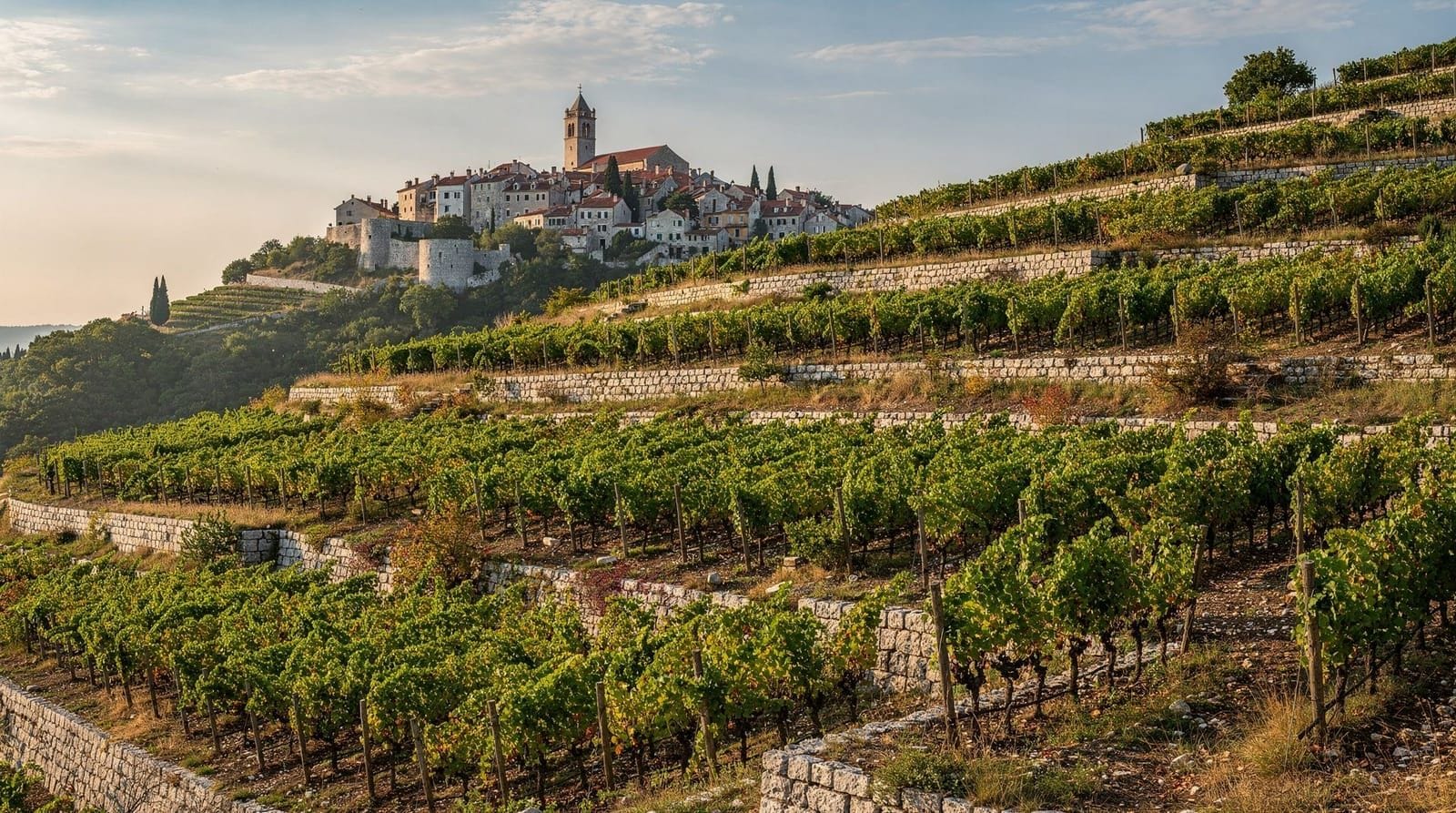
Istria’s wine tourism infrastructure is the most developed in Croatia — closer to the Slovenian or Italian model, with proper signposted routes, agritourism estates (agroturizmi) that combine accommodation, food, and tasting, and a regional marketing effort behind the whole experience.
The dominant grape is Malvazija Istarska — a white with remarkable versatility, ranging from light and floral (in the unoaked version drunk young) to rich and oxidative (skin-contact versions aged in amphorae or old barrels). It pairs extraordinarily well with Istrian food: fuzi pasta with truffles, grilled asparagus in season, sheep’s cheese with honey.
The main routes:
Poreč–Buzet–Motovun loop: Start in Poreč on the coast, drive inland through Višnjan (home to some of the most innovative Istrian producers — Kozlović, Clai, Roxanich) toward Motovun on its hilltop, then north to the truffle town of Buzet. This is a half-day circuit by car with one or two winery stops, easily combined with lunch in Motovun.
Key Istrian producers: Kozlović (Malvazija and international varieties, Istria’s most decorated estate), Clai (biodynamic, orange wines, genuinely distinctive), Roxanich (big structured whites and reds, amphora aging), Benvenuti (reliably excellent across the range), Kabola (malvazija specialist, atmospheric winery north of Poreč).
Agritourism estates: These are the hidden gem of Istrian wine tourism — family farms that grow their own vines, cure their own prosciutto, make their own olive oil, and cook lunch. You eat and drink at a long wooden table in someone’s farmyard. Book at least a week ahead; some are fully booked months in advance in summer. Prices run €25–40 per person for a full lunch with wine. The Grgeta family near Momjan and Agriturismo Pintur near Motovun are starting points.
The main Istrian wine festival is Vinska Berba Portun in Poreč each September — a two-day event with 60+ producers, serious seminars, and tastings that stay open until midnight.
Croatian wine festivals worth timing your trip around
Wine tourism in Croatia has a calendar worth checking before you book:
- Dubrovnik Wine Festival (May, Old Town): a four-day event spread across the Stradun and Rector’s Palace courtyard, with producers from all Croatian regions. Tickets run €25–40 for day sessions. The setting alone is worth it.
- Wine & Food Festival Split (May): a more casual affair in Strossmayer Park, good for trying lesser-known Dalmatian producers
- Vinska Berba Portun, Poreč (September): Istria’s main harvest festival — serious and well-organised, with a focus on small family producers
- Korčula Wine Festival (July): island winery open days, combined with the island’s summer cultural program
Wine bars in Croatia’s main cities
If you are based in a city and want to explore Croatian wine without a day trip, the wine bar scene has developed significantly in the last five years.
Dubrovnik: D’Vino Wine Bar in the Old Town (Palmotićeva Street) is the reference — over 60 Croatian wines by the glass, regular flights, a knowledgeable team. It gets crowded by 9 pm in summer; arrive at opening. The selection of aged Dingač and Postup is the best in the city.
Split: Paradox Wine Bar (near the north palace gate) and Zinfandel’s at Hotel Park both offer serious Croatian wine lists. For something more informal, the wine shop-bar on Marmontova offers a self-pour selection.
Zagreb: Bornstein (Kaptol) is Croatia’s most celebrated wine shop and bar — run by the same family for 30 years, with a cellar of aged Croatian vintages that is genuinely exceptional. Amadeus Wine Bar near the cathedral runs monthly vertical tastings that are open to the public. Both are essential if you spend a day in Zagreb.
Practical tips for wine tasting in Croatia
Call ahead, always. Even producers listed on tourist websites may be closed for harvest, private events, or simply because the family is in the vineyard. A phone call (or WhatsApp message in English) the day before almost always works.
Bring cash to wineries. Small family producers rarely have reliable card machines. €50–100 in cash covers most tasting fees and a couple of bottles.
Tastings typically cost €10–20 per person and include food — cheese, prosciutto, olives, bread. It is rarely a full meal but almost always more than token nibbles. Factor this into your day’s eating.
Bottles to take home: Standard Croatian wine pricing at cellar door runs €8–14 for entry-level Plavac Mali or Malvazija, €18–30 for premium single-vineyard wines, and €35–55 for aged Dingač from top estates. Buy here — these wines are almost impossible to find in Western European retail, and the cellar-door prices are the best you will encounter.
Driving after tasting: Croatia has a strict drink-driving limit (0.5 mg/L blood alcohol). Many wine tour operators are clear about this: they are the ones driving. If you self-drive, designate before you leave, or take a taxi back from Ston to Dubrovnik (roughly €40–50 shared).
What to expect food-wise at tastings: The standard pairing spread is sheep’s cheese (ovčji sir), cured ham, olives, capers, and bread. In Istria, add seasonal vegetables and sometimes truffle products. At more developed estates — Saints Hills on Pelješac, Kozlović in Istria — the food is more sophisticated, closer to a light lunch.
Language: English is widely spoken by anyone who runs wine tours or a formal tasting room. Smaller family producers may have limited English; a few words in Croatian (hvala = thank you, vino = wine, koliko košta = how much does it cost) are appreciated and occasionally essential.
What to expect at your first Croatian wine tasting
Because so few estates run a polished tasting-room operation, first-time visitors sometimes arrive with the wrong expectations, set by wine tourism elsewhere. There’s no chilled tasting bar with spittoons and a printed menu at most Pelješac or Korčula producers. Instead: you’ll likely be received in a garden, a converted cellar, or the family’s own dining room. The winemaker or a family member pours, talks you through each wine in whatever English they have (often more than they let on), and the food arrives without being asked for.
Tastings are rarely rushed. A booked slot of “one hour” routinely runs ninety minutes once the conversation gets going, especially if you show genuine interest in how the wine is made. Don’t schedule back-to-back estate visits with tight timing — build in slack, particularly for the second or third stop of a self-drive day.
Spitting is far less common than in Bordeaux or Napa tasting culture. Most Croatian producers pour generous glasses and expect you to drink, not taste-and-discard — one more reason a driver who isn’t drinking, or an organised tour, makes the day work better.
Wine and food pairings worth knowing
Understanding what traditionally accompanies each style makes ordering at a konoba or choosing a bottle far easier:
Dingač and Postup (Pelješac reds): Grilled lamb, aged cheese, and peka-cooked meat. These are big, high-alcohol, tannic wines built for rich, fatty food — a light salad will be overwhelmed.
Plavac Mali (everyday red): More versatile — works with grilled fish as well as meat, particularly younger, less oaked examples. The default red at most Dalmatian konobas for good reason.
Malvazija Istarska (Istrian white): Pairs naturally with Istrian fuži pasta, truffle dishes, and fresh shellfish. The unoaked style suits lighter seafood; skin-contact (“orange wine”) versions can stand up to richer dishes.
Pošip and Grk (Korčula whites): Excellent with the island’s own seafood — grilled fish, octopus salad — and mineral enough to cut through olive oil-heavy Dalmatian cooking.
Bogdanuša (Hvar white): A lighter, more delicate pairing partner — good with simply prepared white fish and shellfish rather than anything heavily sauced.
If food and wine pairing is a specific interest, Dalmatian cuisine and the Croatian food guide both cover the dishes these wines are built to accompany in more depth.
Pelješac vs Istria vs Korčula: which region fits your trip
| Pelješac | Istria | Korčula | |
|---|---|---|---|
| Best for | Serious red wine, Dubrovnik day trip | White wine + agritourism, self-drive comfort | Rare native whites, island scenery |
| Access | 90 min from Dubrovnik | Fly into Pula or drive from Zagreb/Rijeka | Ferry from Split or Dubrovnik day trip |
| Booking difficulty | High — call ahead, little English at small estates | Lower — signposted routes, agritourism-friendly | Moderate — small producers, advance notice helps |
| Standout grape | Plavac Mali / Dingač | Malvazija Istarska | Pošip and Grk |
| Good for a first-timer? | Yes, via organised tour | Yes, self-drive is easy | Yes, if combining with island sightseeing |
If your trip only allows one wine region, base the choice on what else is on your itinerary: Pelješac if you’re anchored in Dubrovnik, Istria if you’re doing a northern Croatia or Slovenia loop, Korčula if island-hopping from Split or Dubrovnik is already part of the plan.
Combining wine with the rest of a Croatia trip
Wine tasting rarely justifies a dedicated multi-day trip on its own — it works best woven into a broader itinerary. A Pelješac wine day pairs naturally with Ston’s oysters at the start of the route. A Korčula wine day doubles as an island day trip with Marco Polo history and beach time. In Istria, a wine route combines easily with truffle hunting and a night in Motovun or Rovinj.
For itinerary planning specifically built around food and wine, see the Croatia 7-day itinerary, which allocates a full day to Pelješac from a Dubrovnik base, and the Istria–Zagreb–Slovenia circuit if wine tourism is a bigger priority for your trip than beach time.
Frequently asked questions about Wine tasting in Croatia
Which Croatian wine region is best for tasting tours?
Pelješac peninsula is the premier destination — this is where Croatia's most powerful reds (Dingač, Postup, Plavac Mali) are made by family estates that increasingly welcome visitors. Istria is better for white wine and agritourism experiences (malvazija, Istrian teran, truffle pairings). Korčula is excellent for the rare whites Pošip and Grk in a beautiful island setting.Do Croatian wineries require advance booking?
Most small family producers on Pelješac — Miloš, Matuško, Crvik — require advance booking for tastings. Many don't have formal tasting rooms; you are often received in the family cellar or garden. The only exceptions are the larger commercial operations. Istrian agritourism estates are slightly more flexible but still benefit from a call ahead. Organised tours handle all logistics.How much does wine tasting cost in Croatia?
A tasting of 4–6 wines at a small Pelješac estate runs €10–20 per person, usually with bread, cheese, and olives included. Bottles to take home cost €8–18 for entry-level Plavac Mali and €20–45 for aged Dingač from top producers. Organised full-day tours from Dubrovnik or Split with transport and multiple stops run €70–120 per person.What food is typically served at Croatian wine tastings?
Most family estates serve a simple spread alongside their wines: local sheep's or goat's cheese (sir), homemade prsut (dry-cured ham), Dalmatian olives, pickled vegetables, and bread. At Istrian agritourism estates the spread is usually more elaborate — prosciutto, cheese, seasonal vegetables, and sometimes truffle products. It is rarely a full meal but almost always more than token nibbles.Can I do wine tasting in Croatia without a car?
Yes, through organised tours — most depart from Dubrovnik, Split, Hvar, or Korčula and include transport. Without a car on Pelješac you are essentially dependent on tours or taxis from Ston or Orebić. In Istria, renting a car or bicycle makes sense as estates are spread across inland hill towns. In cities (Split, Dubrovnik, Zagreb), wine bars offer excellent tastings without any transport needed.When is the best time to visit Croatian wineries?
September–October is harvest season and the most atmospheric time to visit — many estates are in full production and the vineyards are heavy with grapes. May–June and September–October avoid summer crowds. Avoid August on Pelješac if you dislike heat and traffic: the peninsula road is busy and temperatures hit 38°C. Winter (December–March) most estates are closed or by strict appointment only.What are the main Croatian wine festivals?
Vinska Berba Portun in Poreč (September, Istria's main harvest festival), the Dubrovnik Wine Festival (May, Old Town venues), and the Wine & Food Festival in Split (May) are the main events. The Korčula Wine Festival in July combines island sightseeing with winery open days. Zagreb's Amadeus Wine Bar and Bornstein run regular vertical tastings year-round.
Top experiences
Bookable activities with verified prices and instant confirmation on GetYourGuide.
Top experiences
Best-rated activities across GetYourGuide and Viator.

Krka National Park Tour with tour Guide & Wine tasting from Split & Trogir
- Viator

Dolphin Watching & Sunset Boat Tour With Drinks & optional Dinner
- Viator

Fantastic DOLPHIN & SUNSET TOUR with dinner ( Pula-NP BRIJUNI )
- Viator

Dubrovnik Guided Group Tour with Ston Oyster tasting from Split & Trogir
- Viator

Zadar Highlights: Old Town, Sea Organ & Local Tastings
- Viator

Zadar: Luxury Island Boat Tour, Snorkeling & Unlimited Wine
- Viator