Sailing in Croatia: practical tips for planning a sailing trip
| Main base | Split (also Dubrovnik, Zadar, Šibenik) |
| Bareboat week (mid-range monohull) | around 1,800–3,500 EUR, July |
| Licence needed | RYA Day Skipper or equivalent (bareboat) |
| Best months | June and September for wind + fewer crowds |
| Booking | ACI marinas 3–4 months ahead for July–August |
Croatia is one of the best sailing destinations in the Mediterranean, which is both a strength and a complication. The strength: an extraordinary coastline of 1,800 kilometres, more than a thousand islands, reliable seasonal winds, clear water, well-developed marina infrastructure and a functioning ACI marina network (Adriatic Croatia International Club) that covers the main routes. The complication: the same qualities attract a very large volume of sailing traffic in July and August, which means popular anchorages can feel like parking lots and ACI marina berths book up months in advance.
This guide covers the practical questions — wind, routes, charter logistics, costs, regulations — that determine whether a Croatian sailing trip works well or not.
Wind patterns: the two systems you need to understand
Croatian sailing is defined by two wind systems:
The Maestral: a thermal sea breeze that develops most afternoons from May through September along the Dalmatian coast. It blows from the northwest, typically reaching Force 3-4 (12-18 knots) by early afternoon and dying in the evening. The maestral is the sailing wind of choice: reliable, warm, predictable. Planning day legs to depart in the morning and arrive before or as the maestral builds works well; sailing downwind (southeast) in the afternoon is efficient and comfortable.
The Bura (Bora): a cold katabatic wind from the northeast that descends from the Dinaric Alps and can reach Force 7-9 in its strongest manifestations, particularly in winter and spring. The bura is characterised by rapid onset and can be dangerous in exposed channels. In summer, the bura is less frequent but still occurs: watch forecasts, stay in harbour when bura warnings are issued, and do not anchor in exposed positions on northeast-facing shores when bura is possible.
The Jugo (Scirocco): a southeasterly warm, humid wind that can bring 48 to 72 hours of rough conditions, particularly in autumn. Uncomfortable to sail in and brings swell into normally sheltered bays.
A reliable Croatian sailing application or a subscription to Meteo Adriatico provides the regional forecasting detail required for passage planning.
Charter routes from Split: the standard and why it works
Split is the primary charter base in Dalmatia. The concentration of charter companies — dozens of operators with fleets ranging from basic bareboat monohulls to luxury catamarans — around the ACI marina and Marina Kastela creates genuine competition and good availability across budget levels.
The standard week-long route from Split covers:
Split (depart marina, anchor in Šolta or sail overnight) Šolta (small island, quiet anchorages, local wine) Hvar (overnight in ACI or in the Pakleni islands anchorage) Vis / Komiža (overnight or day stop at Stiniva) Korčula (overnight in Korčula town or Lumbarda) Mljet (national park, Polače lagoon) Return via Lastovo (the most remote main island) or direct to Split via Hvar
This route covers the best of central Dalmatia in seven nights without requiring excessive motoring distances. Daily legs range from 15 to 45 nautical miles depending on the stops chosen.
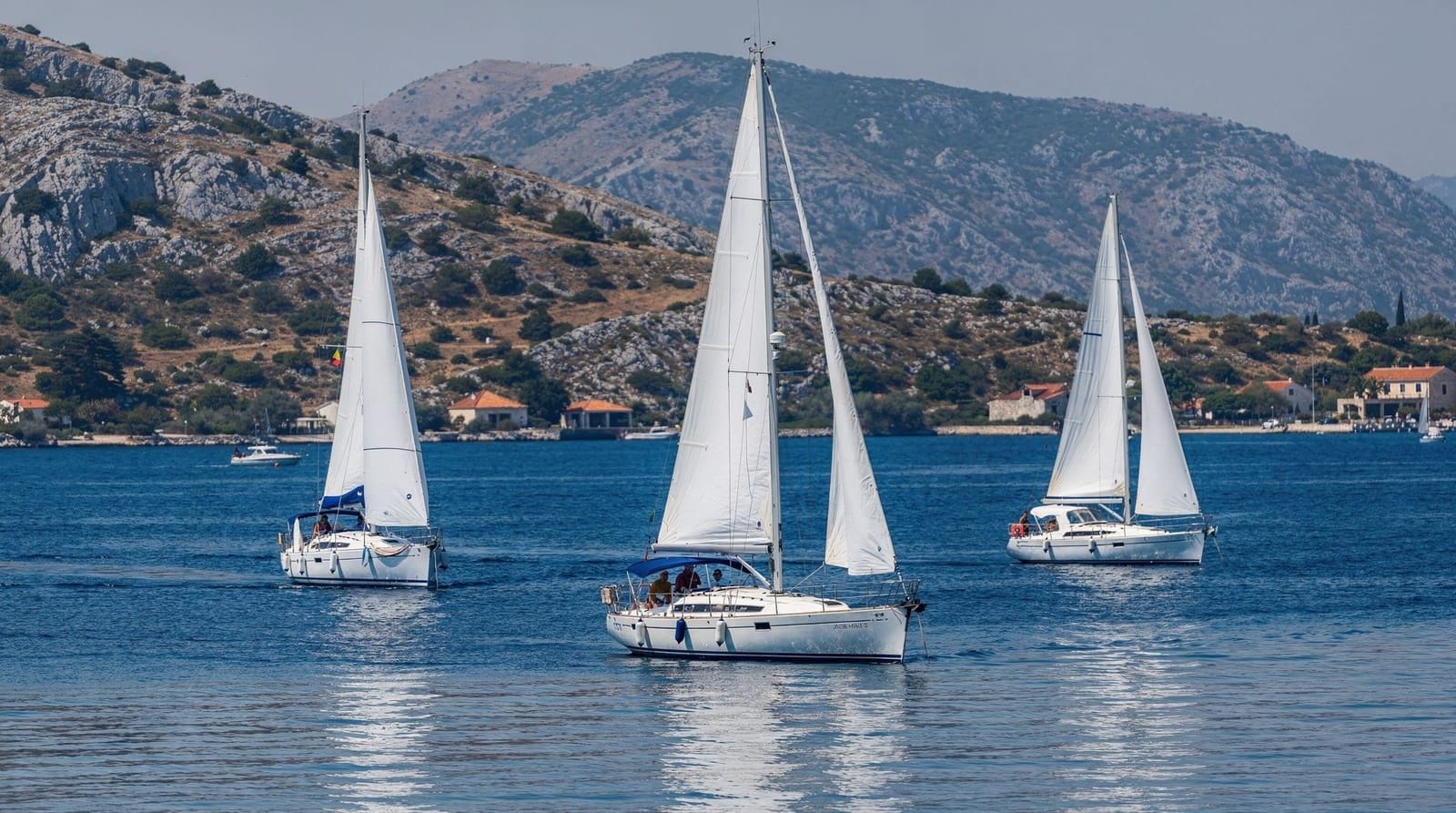
Half-day sailing from Split — a good way to test conditions before charteringCharter options and costs
Bareboat: you handle the boat yourself with a recognised skipper’s licence (RYA Day Skipper or equivalent is the minimum most charter companies accept; Coastal Skipper or equivalent is strongly recommended for the full week route above). A bareboat week for a mid-range monohull (10-12 metres) in July runs approximately 1,800 to 3,500 EUR depending on the vessel age and condition.
Skippered charter: a professional skipper is included, which adds approximately 150 to 200 EUR per day. Worth it if you are an experienced sailor but want local knowledge, or if anyone in your group is not an experienced crew. Croatian skippers typically know every anchorage on the route and can navigate the marina booking system.
Flotilla: sailing in a group with a lead boat that provides briefings and assistance. Good for less experienced sailors who want the sailing experience without full independent responsibility. Several flotilla operators run routes out of Split and Zadar.
Crewed charter: full crew included, catamaran or larger monohull, meals provided. The premium end of the market — prices start around 8,000 EUR per week for a basic setup.
Fuel costs approximately 1.2 to 1.5 EUR per litre. Marina berthing fees range from 30 EUR per night at smaller facilities to 150 EUR and above at peak marinas in Hvar town or Dubrovnik. Anchoring is free but regulations apply.
Anchoring regulations in Croatia
Croatia introduced compulsory anchoring registration in 2022. Vessels anchoring in Croatian waters must register their position online within two hours of dropping anchor (using the eCrew or e-Nautica system). Failure to register is subject to a fine. The regulation applies to all vessels including foreign-flagged yachts.
Anchoring is prohibited in some designated protected areas, including within the Kornati National Park without purchasing a park entry permit (which allows anchoring in designated spots within the park). The Kornati boat tour from Zadar for non-sailors gives access to the park without navigational complexity.
Protected meadows of Posidonia oceanica seagrass are legally protected throughout Croatia; anchoring in seagrass is prohibited. Most Croatian cruising guides mark seagrass areas on the charts.
Marina booking: the ACI network
The ACI (Adriatic Croatia International Club) operates 22 marinas along the Croatian coast from Umag in Istria to Dubrovnik. ACI marina booking can be done online and is strongly recommended for July and August at popular stops — Hvar, Korčula, Dubrovnik (if you sail that far). The Dalmatian Pilots Association Croatian cruising guide lists all ACI facilities.
Many sailors prefer to anchor in bay rather than taking a marina berth — it is free, often more scenic, and allows more flexibility. The Croatian coast has abundant suitable anchorages. AC power and water are only available in marinas, which matters for catamarans with electric systems or for vessels without a watermaker.
Provisioning and eating
The major Dalmatian ports — Split, Hvar, Korčula, Šibenik — have supermarkets accessible from the marina or town quay. More remote stops (Vis, Lastovo, Mljet) have smaller shops with limited stock; provision in Split or Hvar for island segments. Fresh fish can be bought directly from fishing boats in most anchorages early in the morning — negotiating directly in Croatian (the phrase “riba?” works fine) usually produces a better price than the marina.
Konobas — traditional Croatian restaurants — are present in almost every harbour, and eating ashore in the evening at a table on a waterfront terrace is one of the pleasures that distinguishes a Croatian sailing holiday from a bluewater passage. The Croatian food guide covers peka (slow-cooked meat and vegetables under an iron dome), grilled fish and the Dalmatian wine pairings.
Safety, Communication and What Charter Companies Actually Check
Every reputable Croatian charter company runs a check-in briefing before handing over the boat — engine checks, safety equipment location, VHF procedure, and the boat’s specific quirks. Take it seriously even on a repeat charter with a familiar boat model; individual vessels vary in maintenance history and the briefing is also the moment to flag anything that looks off before you’re liable for it at handover.
VHF radio: Channel 16 is the international distress and calling channel, monitored by the Croatian coastguard (Obalna straža). Channel 10 is commonly used for Croatian coastal traffic information. A working VHF, not just a mobile phone, is required safety equipment — mobile coverage drops out around some of the more remote anchorages (parts of Kornati, the channel between Vis and Biševo) exactly when you might need it most.
Life jackets and safety kit: Croatian maritime law requires life jackets for all crew aboard, flares, a first aid kit, and a functioning bilge pump as standard charter equipment. Charter companies supply these; check the expiry dates on flares during handover, as this is occasionally overlooked.
Weather routing: the two apps most sailors in Croatia rely on are Windy and PredictWind, cross-referenced with the Croatian meteorological service (DHMZ) forecast for bura and jugo warnings. A bura warning is not something to sail through experimentally — even experienced charter skippers reroute or stay in harbour.
First-Time Charterers: What the Brochure Doesn’t Mention
The gap between the marketing photos and the first afternoon at the helm is real, and worth naming honestly. Mediterranean mooring — reversing into a tight marina berth stern-to, with lines to shore and an anchor forward — is a specific skill that intimidates most first-time charterers, including those with a valid Coastal Skipper qualification earned on different waters. Practice it early in the week, in a quiet marina, rather than for the first time under pressure in a crowded Hvar harbour on a Friday evening in August.
The other adjustment is pace. Sailing itineraries built for a week routinely underestimate how long provisioning, fuel stops, and simply getting everyone aboard and organised in the morning actually take. A “quick 20-mile hop” that looks like two hours on the chart often becomes a half-day once departure delays, a swim stop and the approach into an unfamiliar anchorage are factored in. Build slack into the plan rather than a tight schedule — the sailing week from Split itinerary already accounts for this, which is worth following rather than compressing further.
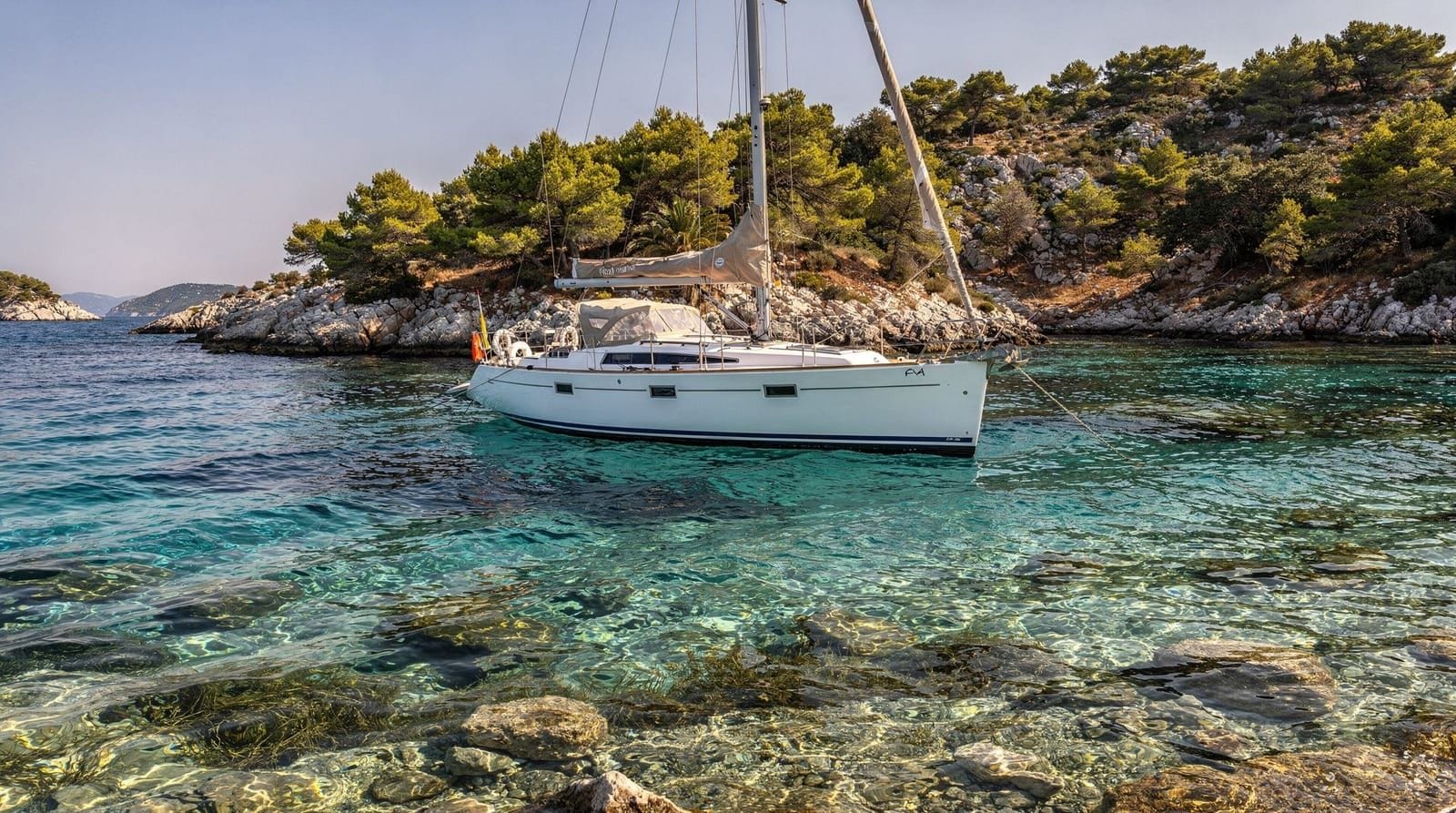
A full-day sailing trip from Split to Šolta and Brač — a good low-commitment way to test whether a full charter week is for youSailing season timing
May-June: ideal. The sea is building to swimming temperature, the maestral is reliable, marinas are not full, and prices are lower than peak. Booking flexibility is much better.
July-August: peak. Everything is available, fully operational and more expensive. Marina booking is essential 3-4 months ahead for the best stops. Hvar anchorages in the Pakleni islands can be crowded in August. The sailing is still good.
September-October: excellent. The sea is at maximum temperature, the bura is still rare, the maestral continues, and the crowds drop sharply after the first week of September. Some smaller restaurants and facilities close after mid-October.
The sailing week from Split itinerary covers a specific route and day-by-day plan for a standard charter week.
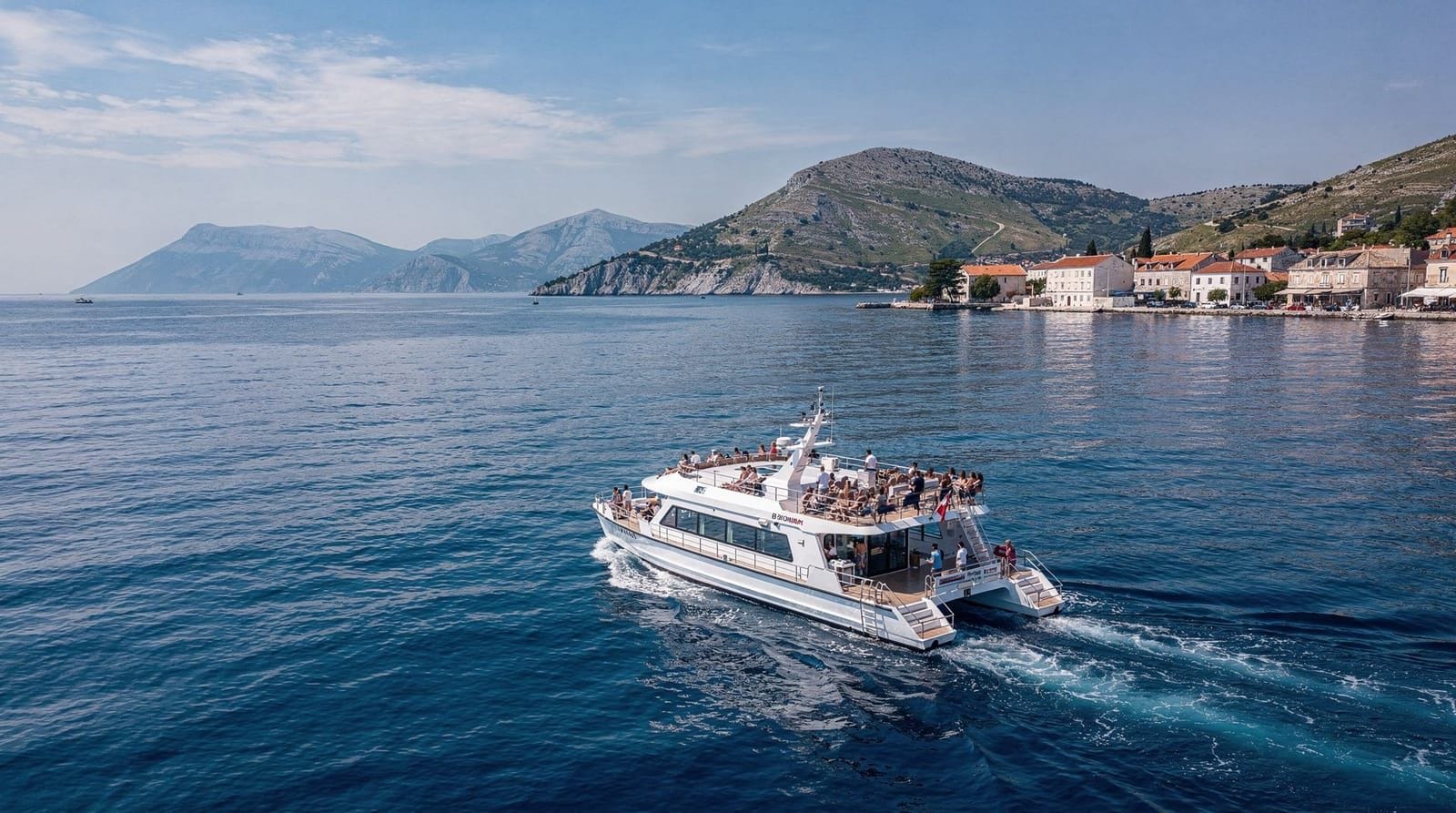
Private charter from Split: Hvar, five islands and the Blue CaveThe bottom line on sailing in Croatia
Croatia is one of the most developed sailing destinations in Europe, which means the infrastructure is excellent and the complications are manageable with advance planning. The anchorages that used to be empty in August are no longer empty; the ACI marinas that used to be first-come-first-served now require booking. These are the adjustments of popularity, not fundamental problems with the sailing environment.
The water remains clear, the wind remains reliable, and the sequence of islands from Šolta to Lastovo continues to offer the combination of accessible ports and genuine remoteness that makes Croatian sailing genuinely special.
Charter type comparison
| Option | Best for | Approx. cost/week | Experience needed |
|---|---|---|---|
| Bareboat | Independent, experienced sailors | 1,800–3,500 EUR | Day Skipper minimum |
| Skippered | Experienced but want local knowledge | Bareboat + 150–200 EUR/day | None, skipper handles it |
| Flotilla | Less experienced, want structure | Similar to skippered | Basic sailing helpful |
| Crewed | Comfort-first, no sailing involvement | From ~8,000 EUR | None |