Best Croatian Islands to Visit: an honest guide for every type of traveller
Croatia has more than a thousand islands and islets, of which around fifty are permanently inhabited. Most visitors end up on three or four of the same ones: Hvar, Brač, Korčula, perhaps Vis. This is not necessarily wrong — they are popular for real reasons — but the range of experiences across the archipelago is far broader than most itineraries reflect.
This guide covers the islands that are actually worth prioritising, sorted by character rather than alphabetically, with honest notes on what each one does and does not offer.
| Best overall | Hvar (polished) or Vis (local, less crowded) |
| Best value | Brač or Korčula |
| Best for peace | Mljet or Lošinj/Cres |
| Getting there | Ferry/catamaran from Split, Dubrovnik, Zadar or Rijeka |
| Ideal pace | 2 nights minimum per island, not a day trip |
Hvar — the social anchor of the Dalmatian archipelago
Hvar is Croatia’s most visited island and has a clear identity: a sophisticated, expensive, good-looking place that takes itself seriously. Hvar town has the largest Renaissance-era main square in Dalmatia, a 16th-century arsenal, a hilltop Venetian fortress and a harbour that makes its ambitions visible from the water.
The nightlife reputation that defined Hvar in the 2010s has settled into something more balanced — the island now attracts a broader mix of visitors, including serious food and wine tourists, sailors and honeymooners alongside the festival crowd. The Pakleni islands just offshore provide excellent swimming and day-sailing options. Lavender fields in the interior bloom in June.
The main limitation is cost: Hvar town is among the most expensive places to eat and sleep in Croatia. If budget matters, base yourself in Stari Grad on the north side of the island and take the bus in. The comparison with Brač and Korčula is useful if you are deciding between the three.
Brač — Zlatni Rat and the island workhorse
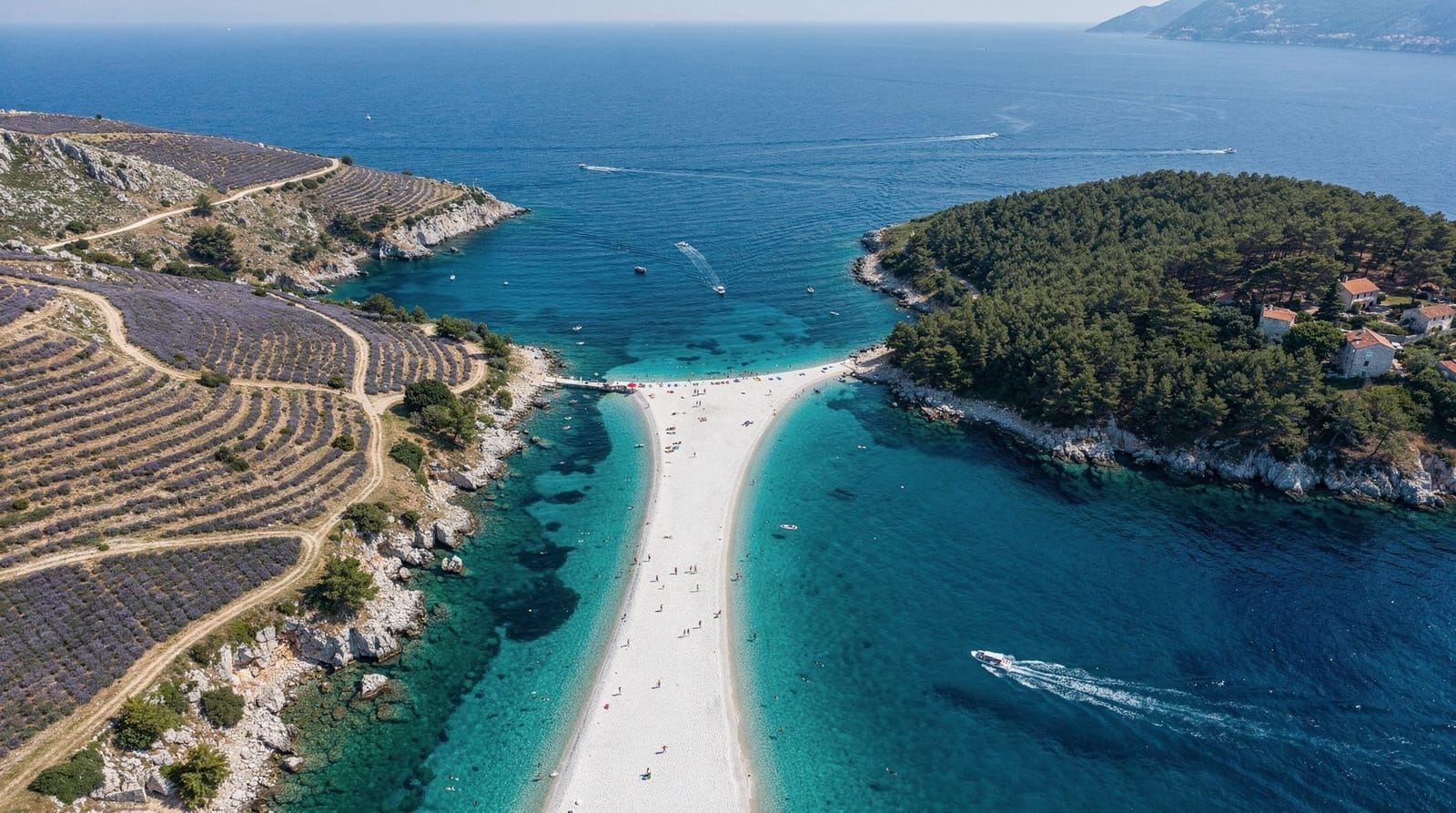
Brač is the largest island in the central Dalmatian chain and offers the most varied geography: Zlatni Rat beach near Bol on the south coast (see the beaches guide), the hilltop village of Škrip with its Roman-era museum, olive groves, quarries of the white limestone that built Diocletian’s Palace and the White House, and a functional island interior that is not particularly touristic.
Bol is a pleasant town with good windsurfing conditions — the maestral afternoon wind is consistent — and the ferry connection from Split to Supetar (45 minutes) makes Brač an easy day trip or short overnight. It lacks Hvar’s glamour but also lacks Hvar’s prices. For beach-first travellers, Brač is often the better value choice.
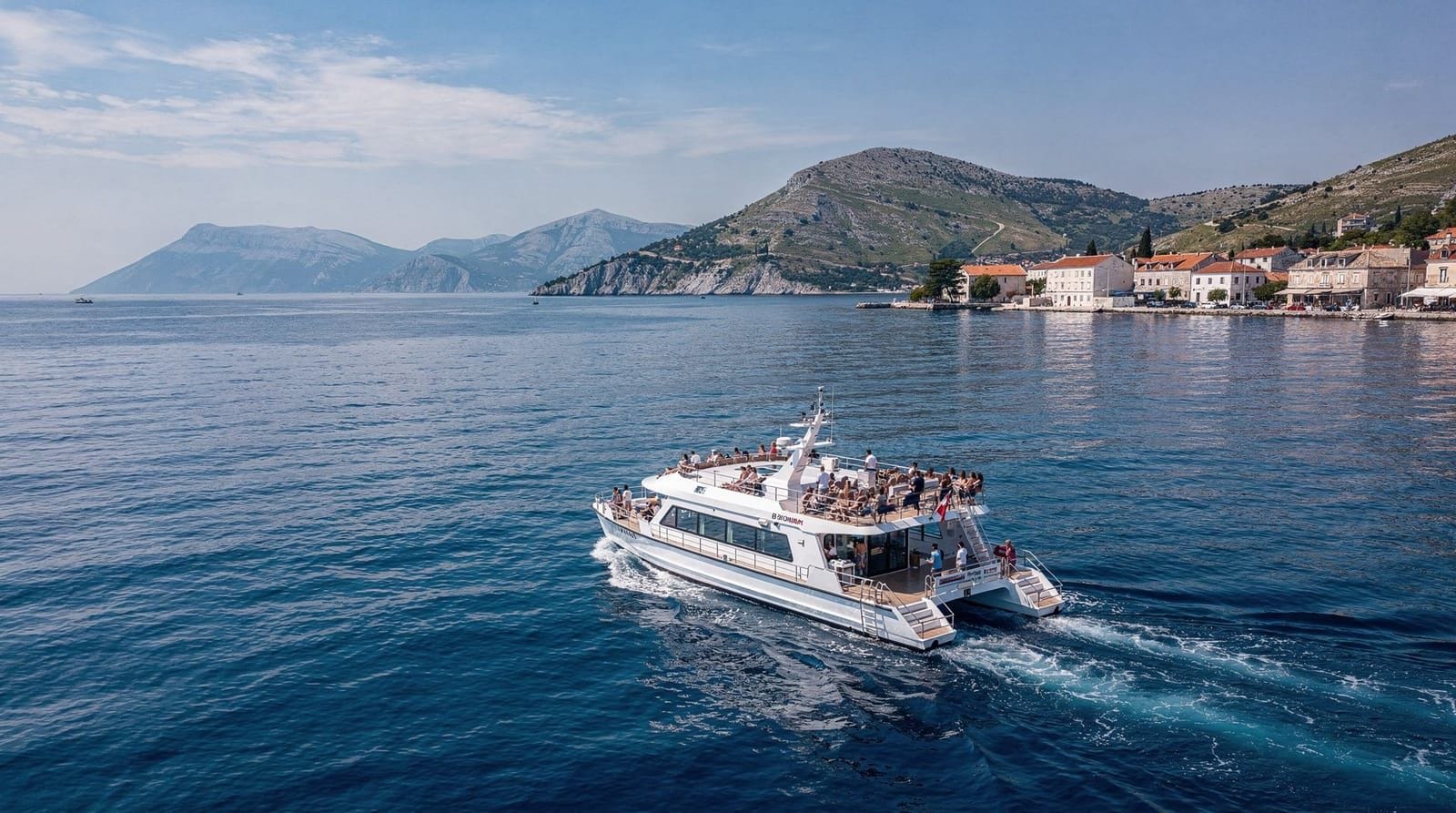
Five-islands day tour from Split including Brač and VisVis — the remote one that rewards effort
Vis was a Yugoslav military island closed to foreigners until 1989, which means it developed with significantly less tourist infrastructure than its neighbours — and retains a character that is more genuinely Croatian and less resort-polished. The two main towns, Vis and Komiža, are quieter and more local-feeling than Hvar or Bol. The restaurants are better than the island’s profile would suggest.
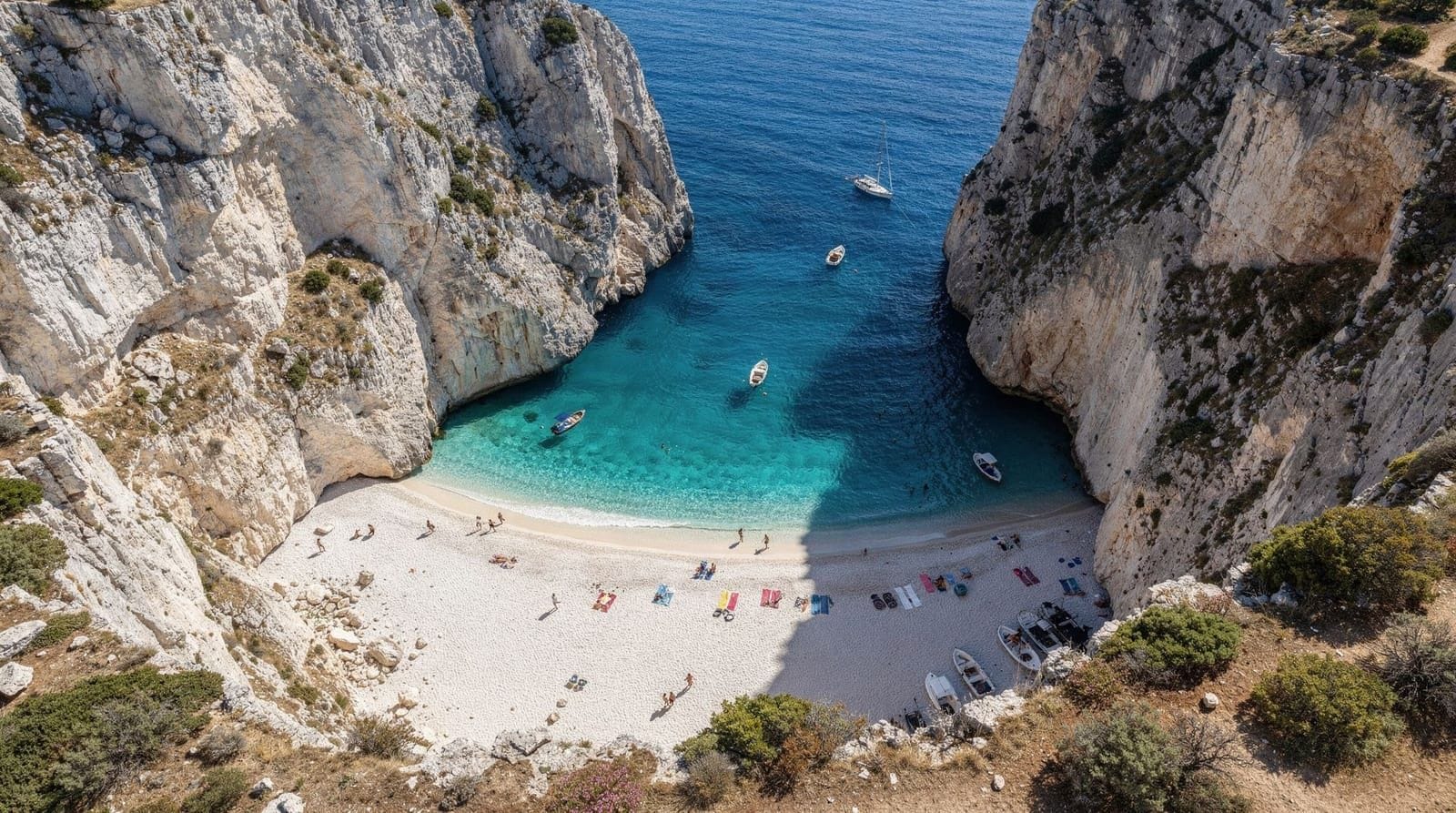
The main draw beyond the character is Stiniva cove — arguably the best single beach in Croatia — and the Blue Cave on nearby Biševo, a sea cave lit by refracted light that turns the interior an extraordinary blue for a few hours each morning. Organised tours from Split and Hvar visit both in the same day.
Vis is best reached by overnight ferry from Split (2.5 hours) or the Krilo fast catamaran (about 2.5 hours). It is worth at least two nights.
Korčula — wine, Marco Polo and Venetian walls
Korčula old town sits on a small peninsula and is genuinely striking from the sea: the same silhouette as Dubrovnik in miniature, with intact medieval walls, a cathedral and a street grid arranged in a herringbone pattern to deflect the wind. The Marco Polo birthplace claim is contested by historians but enthusiastically maintained; the historical accuracy matters less than the town’s actual quality, which is considerable.
The surrounding island produces one of Croatia’s best-known red wines — Plavac Mali from the Pelješac vineyards is visible across the water — and the Dalmatian wines Korčula tour combining both shores is a worthwhile full day.
Korčula is accessible from Split by fast catamaran (about 3 hours) or from Dubrovnik by a shorter ferry hop across the Pelješac channel. It is noticeably less crowded than Hvar and significantly less expensive.
Mljet — the green island
Mljet is the most forested island in the Adriatic — about two-thirds of the island is covered in Aleppo and Halep pines — and the western third is a national park containing two saltwater lakes connected to the sea. A Benedictine monastery on a small island in the larger lake is the photographic icon, reachable by small boat.
Mljet is quiet. The national park draws visitors, but the island never feels busy in the way that Hvar or Brač can. The swimming in the lakes is warm and sheltered; the cycling and hiking trails around the park are genuinely good. It is best accessed from Dubrovnik by the fast Krilo catamaran or by ferry from the Pelješac peninsula.
If your priority is natural beauty and peace over beaches and restaurants, Mljet is underrated.
Pag — salt, cheese and an unlikely party scene
Pag is a remarkable landscape: a barren, windswept island of white karst limestone with almost no vegetation, separated from the mainland coast by a narrow channel. It looks like a lunar surface. The local products — Paški sir (hard sheep’s milk cheese aged in olive oil and sea herbs) and sea salt from the Pag saltpans — are among Croatia’s finest food exports.
Pag also hosts Zrće beach near Novalja, which is the main Croatian venue for large-scale electronic music events through July and August. The combination of lunar landscape, artisan food production and rave beach is unusual but all genuinely present. Outside festival season, Novalja is a family beach town and Pag town itself is a pleasant small settlement with a 15th-century church.
Pag is connected to the mainland north of Zadar by a bridge, making it accessible by car without a ferry, which affects the visitor profile significantly.
Krk — the connected island
Krk is connected to the mainland by a bridge near Rijeka, which makes it the most accessible island in Croatia but also, in parts, the least island-feeling. The main town of Krk has a functional old town; Baška on the south coast has the island’s best beach. The wider island is heavily developed in places and offers a resort holiday infrastructure that is reliable rather than distinctive.
Krk works well as an entry point to the Kvarner Gulf region, which is less visited than Dalmatia and has good beaches, islands and the towns of Opatija and Rijeka within easy reach.
Lošinj and Cres — the northern nature pair
Lošinj and Cres form a long chain in the northern Kvarner Gulf. Lošinj’s main town, Mali Lošinj, is a historic port with a pleasant waterfront and a well-established wellness and sailing tradition. The island has a dolphin conservation project — the waters between Lošinj and Cres host a small resident common dolphin population. Cres is wilder, with griffon vulture colonies near Beli and a salt lake at Vrana.
Both islands are less visited than the Dalmatian chain and offer a different, quieter character. They are accessible by ferry from Zadar and Rijeka.
Rab — a strong all-rounder
Rab has one of the best-preserved medieval old towns in the Kvarner Gulf (four bell towers visible from the sea make identification easy) and one of Croatia’s best sandy beaches, Rajska Plaža. The island is green compared to the arid Dalmatian norm, the food is good, and the atmosphere is noticeably quieter than the Dalmatian equivalents.
Rab is accessible by ferry from the mainland near Senj and from Lošinj, making it easily combined with a Kvarner circuit.
Šolta and Vis-adjacent alternatives for less crowded days
If Hvar and Brač feel too busy but you still want to island-hop from Split, Šolta is the overlooked answer: 45 minutes by ferry, olive groves and small coves, almost no organised tourism infrastructure, and a genuinely relaxed pace. It works best as a day trip or one-night stay rather than a base for a full holiday, since restaurant and accommodation options are limited. Combined with a Vis day-tour itinerary, it makes a good lower-key alternative to the Hvar-Brač corridor most first-time visitors default to.
Comparing the islands at a glance
| Island | Character | Best for | From Split |
|---|---|---|---|
| Hvar | Polished, social, expensive | Nightlife, food, day-sailing | ~1 hr catamaran |
| Brač | Varied, functional, good value | Beaches (Zlatni Rat), windsurfing | ~45 min catamaran |
| Vis | Remote, local, less developed | Stiniva beach, the Blue Cave | ~2.5 hrs catamaran |
| Korčula | Historic, Venetian-walled | Old town, wine | ~3 hrs catamaran |
| Mljet | Forested, national park | Peace, hiking, saltwater lakes | Via Dubrovnik |
| Pag | Barren, lunar landscape | Cheese, salt, Zrće beach parties | Via Zadar |
| Krk | Bridge-connected, developed | Easy access, Kvarner base | Via Rijeka |
| Rab | Green, medieval old town | Sandy beaches, quiet pace | Via Senj/Lošinj |
| Šolta | Quiet, undeveloped | Low-key day trip from Split | ~45 min ferry |
For the classic three-way comparison in more depth, Hvar vs Brač vs Korčula breaks down cost, crowds and character further, and the narrower Hvar vs Brač guide is useful if you have already ruled out Korčula. If Vis and Mljet are your finalists instead, the best islands near Split guide and family-friendly islands guide both cover that trade-off from different angles.
Planning island combinations
The Dalmatian island hopping guide covers practical logistics for combining several islands across a week. The key variables are how much of your time you want to spend on ferries versus staying in one place, and whether you are travelling in peak season when catamaran booking in advance is essential.
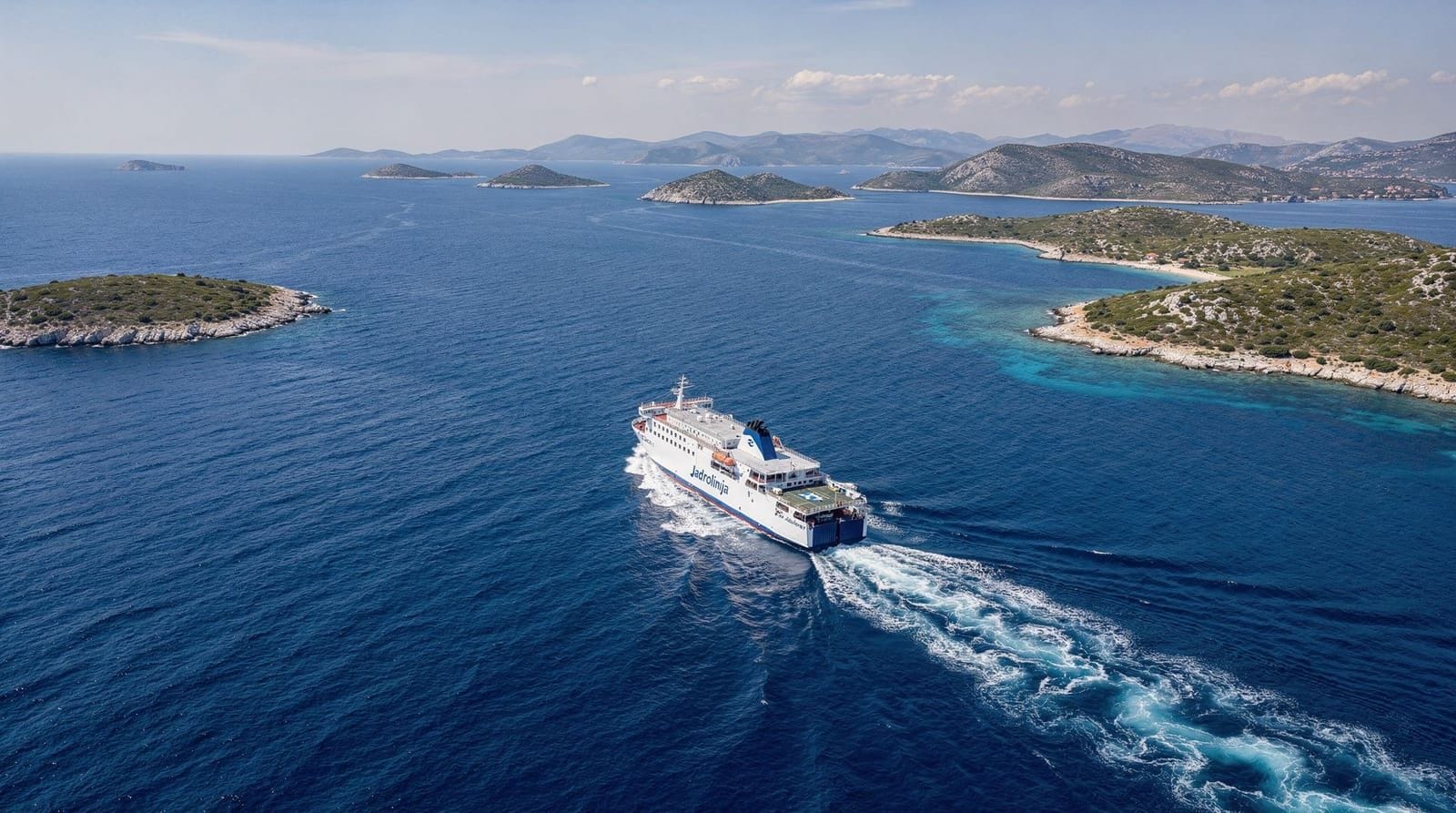
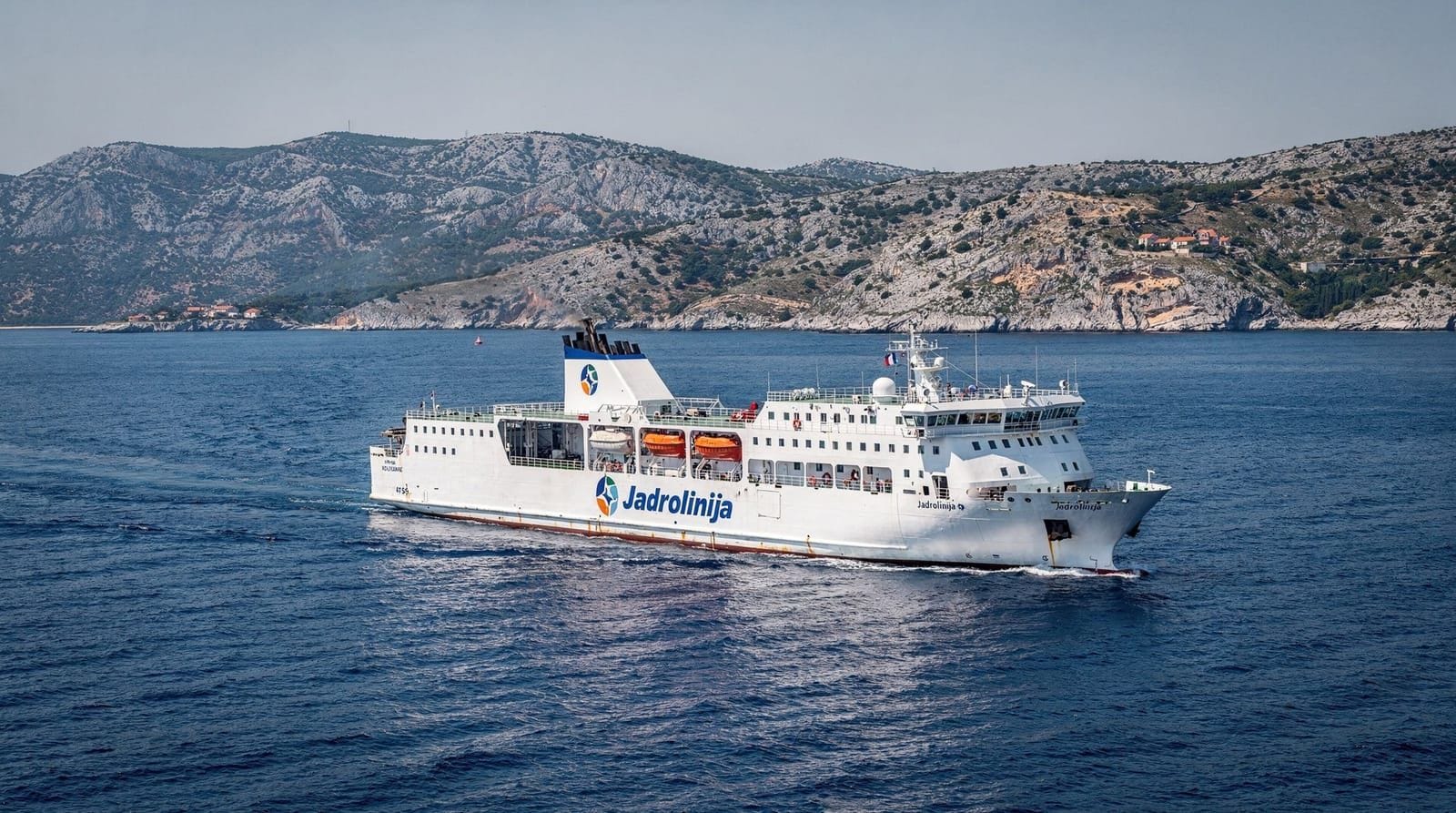
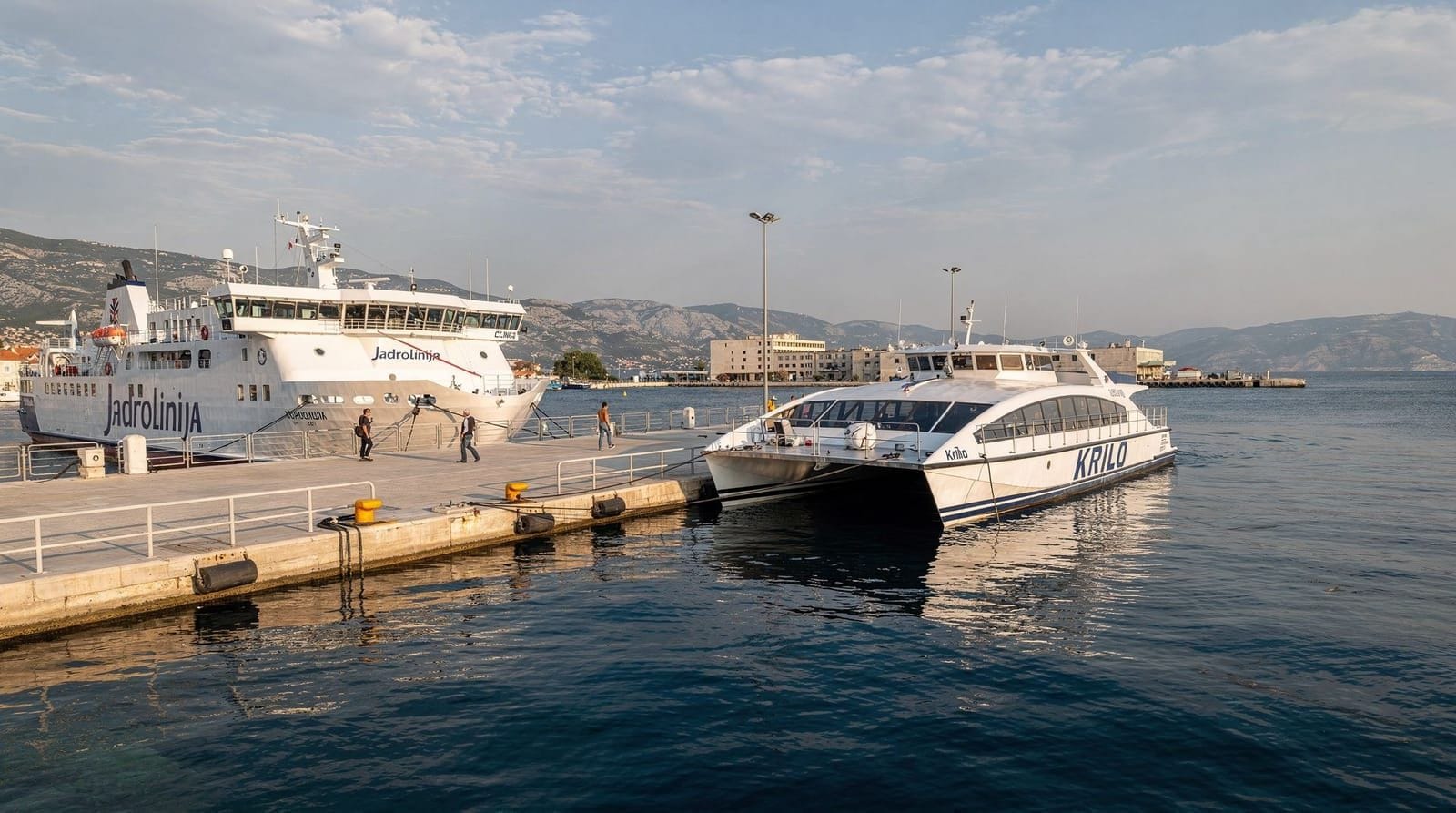
For a week centred on the central Dalmatian islands, a logical sequence is Split — Brač — Hvar — Vis — Korčula — back to Split or continue to Dubrovnik. The Croatia ferries guide covers the Jadrolinija and Krilo catamaran networks in detail.
Half-day sailing from Split — a good introduction to the island watersThe islands are best experienced slowly. The temptation to cover five islands in four days is understandable but produces a version of Croatia that is mostly ferry terminals and packed bags. Two nights on two or three islands is more satisfying than one night on five. If you want the logistics fully handled instead, comparing bareboat vs skippered charter options is worth doing before you commit to a self-planned route, and a dedicated sailing week from Split itinerary lays out a proven week-long sequence.