Croatia in 10 Days: Dubrovnik, Split and the Islands
Split: Hvar, five islands and blue cave private tour
Ten days in Dalmatia: the right amount of time
Ten days is the sweet spot for the Croatian coast. It gives you time to slow down in Dubrovnik, properly explore a couple of islands, and arrive in Split without a schedule hangover. The route below runs south to north — fly into Dubrovnik, fly out of Split — which is logistically cleaner than the reverse and lets the journey feel progressive.
The Dalmatian coast is deceptively long. The road from Dubrovnik to Split is 230 km but takes 3.5–4 hours by car (longer in summer) and 3.5–5 hours by catamaran or ferry depending on the route. Budget accordingly.
Budget reality check: At mid-range, expect €100–160 per person per day in peak season (accommodation, meals, island ferries, the odd paid tour). Dubrovnik runs 30–40% more expensive than the coast further north. Hvar Town also commands premium prices in July–August. Korčula and Brač are noticeably more affordable. See our Croatia trip cost guide for a fuller breakdown.
| Route | Dubrovnik → Korčula → Hvar → Brač → Split, one-way |
| Bases | Dubrovnik (3 nights), Korčula (1), Hvar (2), Split (2) |
| Cost | around €1,000–1,600 per person, flights extra |
| Getting around | ferries and catamarans, no car needed |
| Best time | late May, June or September |
If ten days feels ambitious, the 7-day itinerary uses the same south-to-north logic with fewer stops. Travellers with two full weeks should look at the 14-day route, which adds Istria, Plitvice and Zadar to the north of this loop.
Day 1: Arrive Dubrovnik — first impressions
Fly into Dubrovnik Airport (DBV), 20 km south of the city. The airport bus (Atlas shuttle) runs to the Pile Gate and costs around €8; a taxi is €30–40. Book your airport transfer ahead in summer peak.
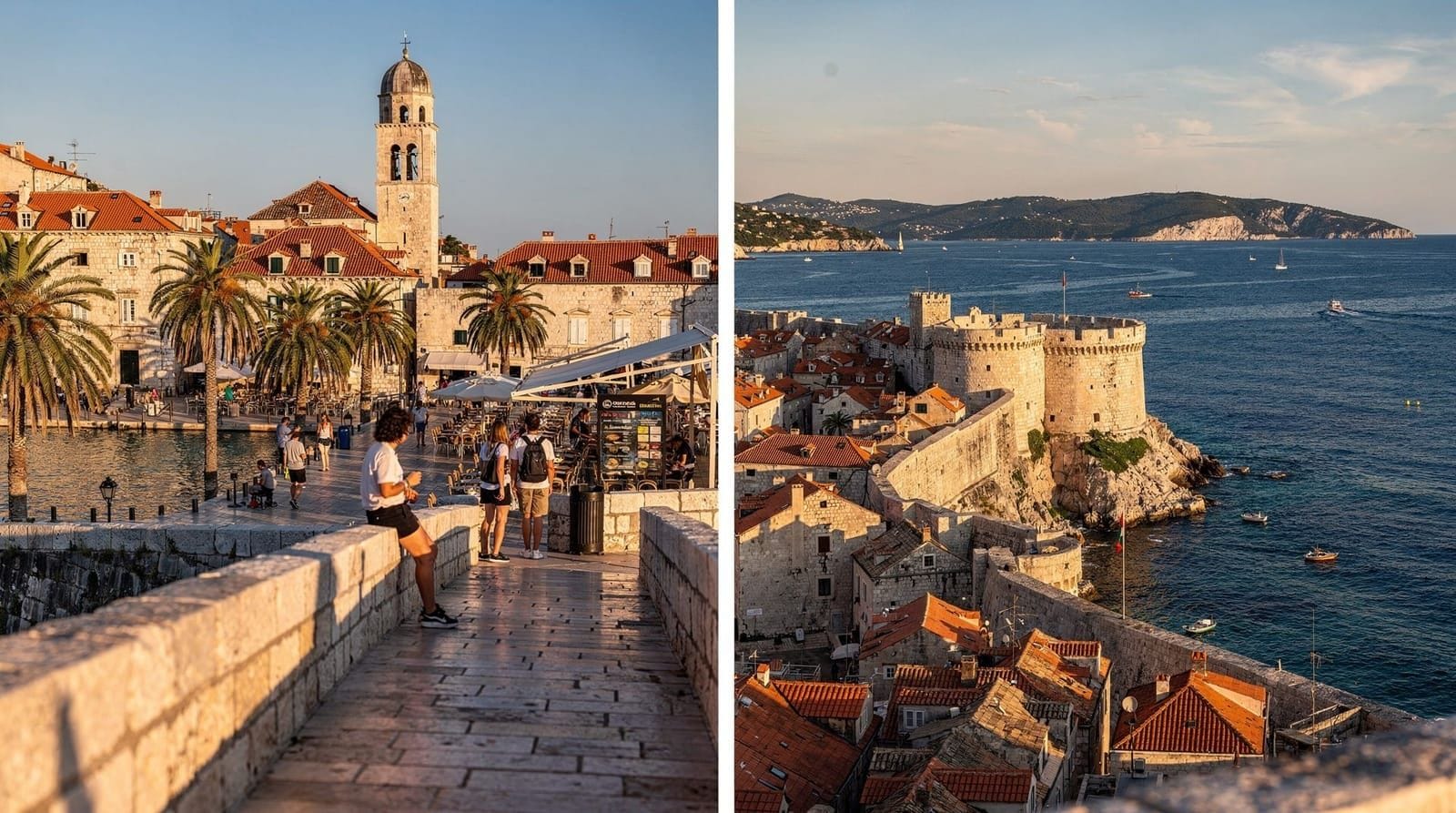
Check in and resist the temptation to see everything immediately. This first evening is for a slow walk along the Stradun, a drink on one of the terraces above the city walls, and dinner somewhere not on the main tourist drag — try Nishta (excellent vegetarian), Shizuku (creative Croatian-Japanese fusion) or a straightforward konoba in the streets behind the Dominican Monastery.
Where to sleep (Dubrovnik, 3 nights): Lapad peninsula is the best value-for-money area — 20 minutes by bus, with local restaurants and a real neighbourhood feel. Old Town accommodations are pricier but remarkable. Avoid anything in Gruž (the cruise port area) unless you get a genuinely good deal.
Day 2: Dubrovnik — city walls and old town in depth
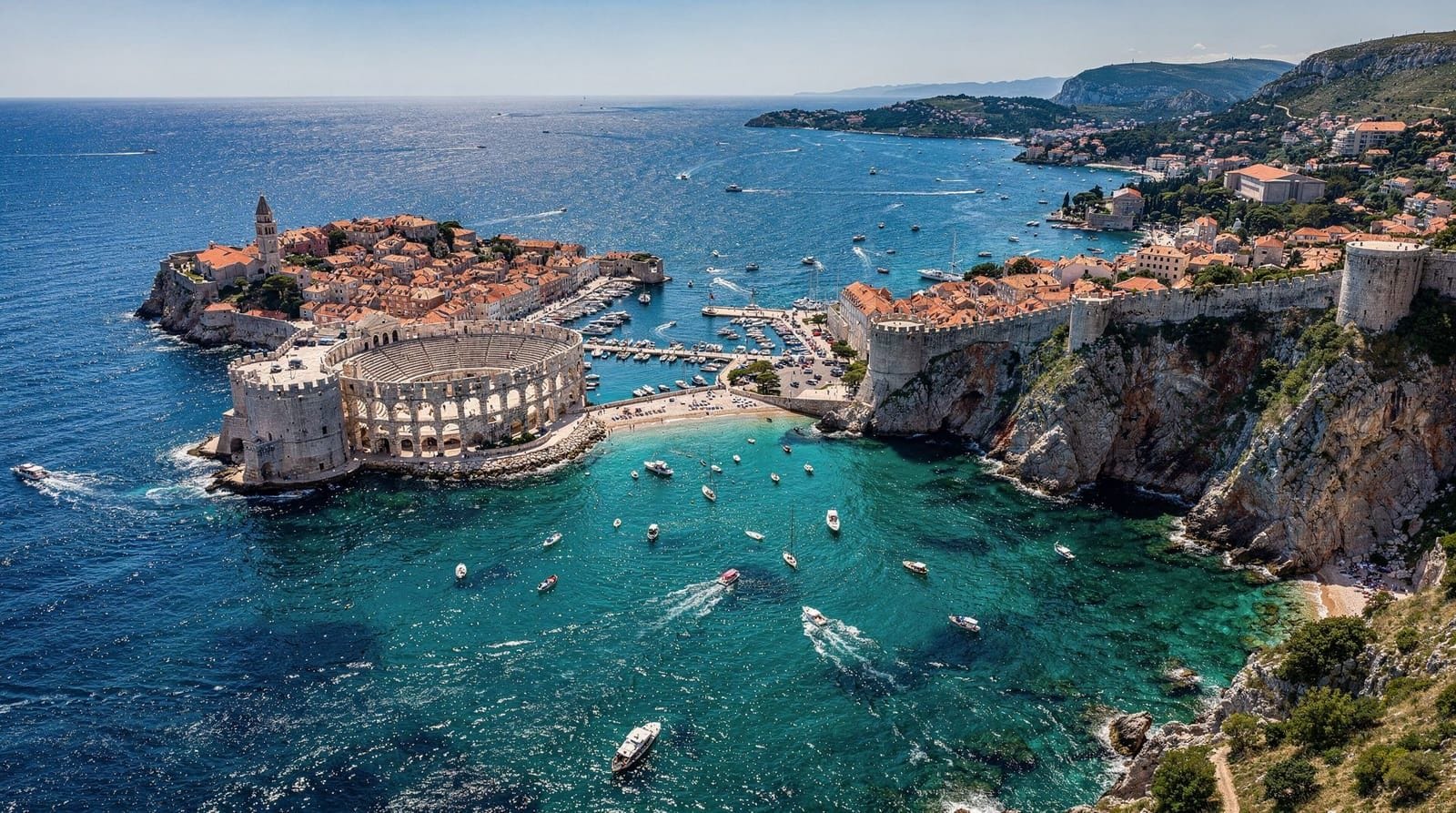
Full day in Dubrovnik. The City Walls are the starting point for any proper visit — the 2 km circuit takes 1.5 hours and delivers views that justify every photo ever taken of this city. Go at opening (08:00) or late afternoon; midday in summer is brutal.
After the walls, explore the Old Town without a fixed agenda. The Dominican Monastery’s cloister is one of the finest in the Adriatic. Rector’s Palace has good exhibits on Ragusan history. Fort Lovrijenac — the isolated fortress just west of the walls — costs a few euros separate entry but earns its price. The cable car up to Mount Srđ (Žičara) is worth the €25 return ticket at sunset.
Evening boat: consider a sunset cruise from the Old Harbour.
Day 3: Day trip to Pelješac peninsula and Ston
The Pelješac peninsula juts north from the mainland and contains some of Croatia’s finest wine-growing land. This day trip from Dubrovnik (45 minutes by car or organised tour) combines three things: the medieval walls of Ston — the longest defensive walls in Europe after the Great Wall of China — locally farmed oysters, and Plavac Mali wine tasting in the vineyards of Dingač and Postup.
Ston oysters are among the best in Europe. They come directly from the Mali Ston bay; a dozen costs €12–18 at the waterfront restaurants. The Pelješac wine tour is one of the most pleasurable day trips from Dubrovnik and completely different in character from any island excursion.
Return to Dubrovnik by late afternoon.
Day 4: Dubrovnik to Korčula — catamaran south to north begins
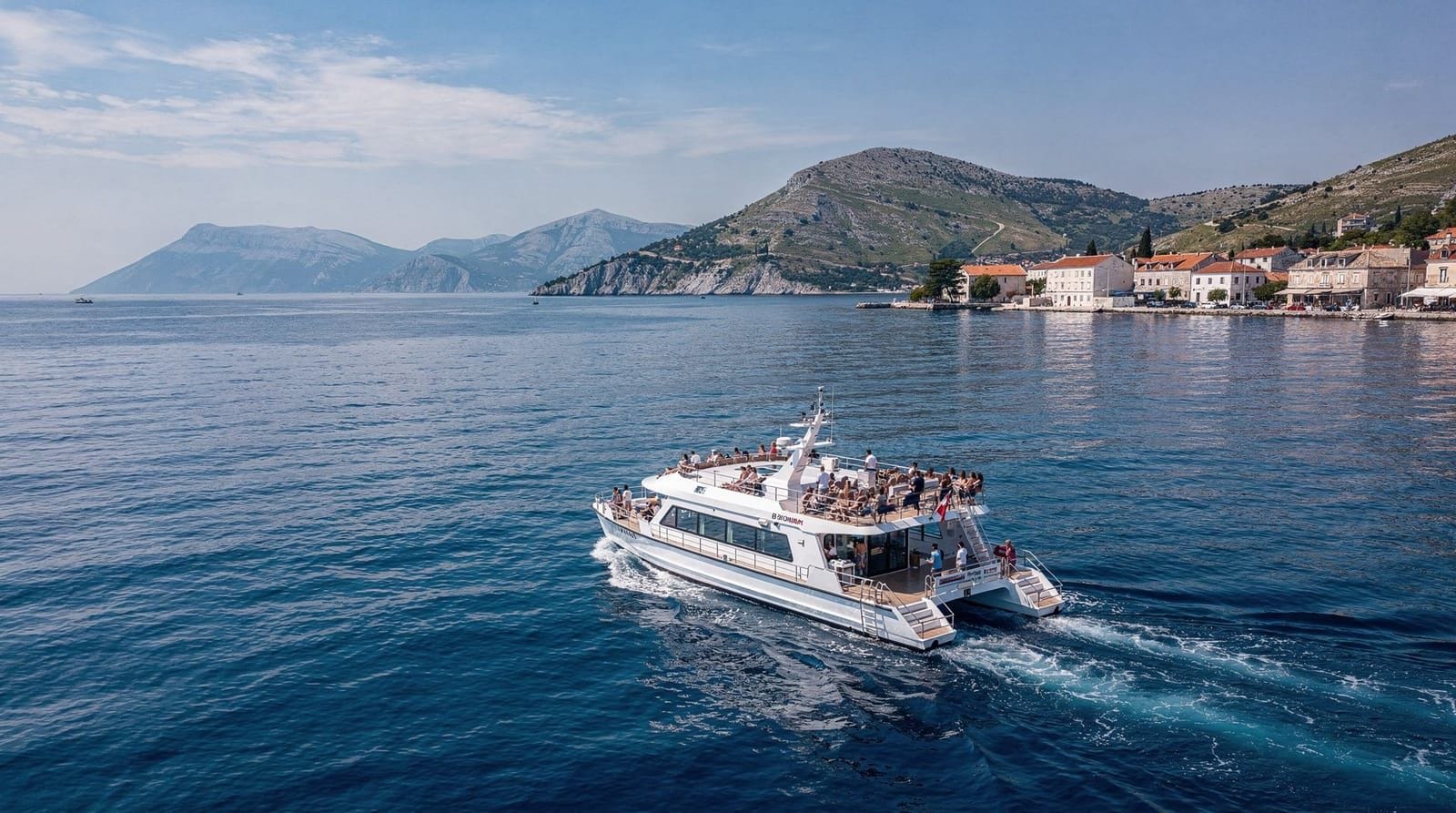
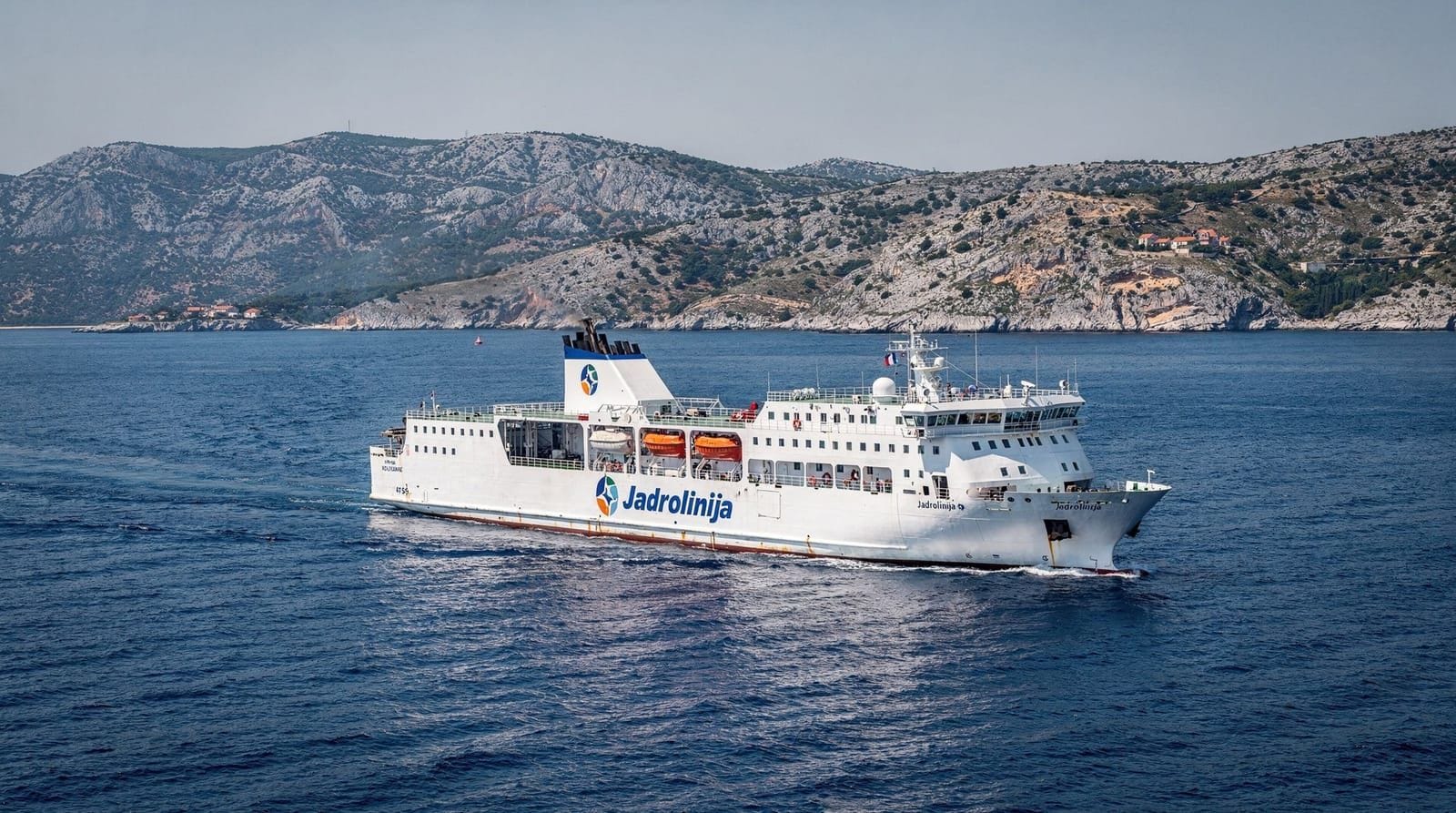
This is the day the journey starts moving. The Jadrolinija or Krilo catamaran from Dubrovnik to Korčula takes around 2 hours and runs along the coast and between islands. Morning departure; arrive Korčula Town by midday.
Check in to your Korčula accommodation (one night) and spend the afternoon in the old town. Korčula’s UNESCO-protected medieval centre is a fishbone grid of lanes, the Cathedral of St. Mark, and what is claimed to be Marco Polo’s birthplace house (the interior is modest but the tower climb is fun). The atmosphere is dramatically quieter and more authentic than Dubrovnik or Hvar. Excellent Pošip white wine is produced here; try it at any waterfront bar.
Ferry logistics: Jadrolinija and Krilo both serve Korčula from Dubrovnik. Check current timetables — summer schedules add sailings; shoulder season reduces them. Book ahead in July–August.
Day 5: Korčula to Hvar — island hopping northward
Morning: a short walk in Korčula Town, then the catamaran north to Hvar. Korčula to Hvar Town takes 1.5–2 hours depending on the route and operator. There is no single scheduled year-round connection on all days, so check Jadrolinija and Krilo’s current timetable carefully. Alternatively, you can go via Split and back-track, but a direct catamaran is far preferable when available.
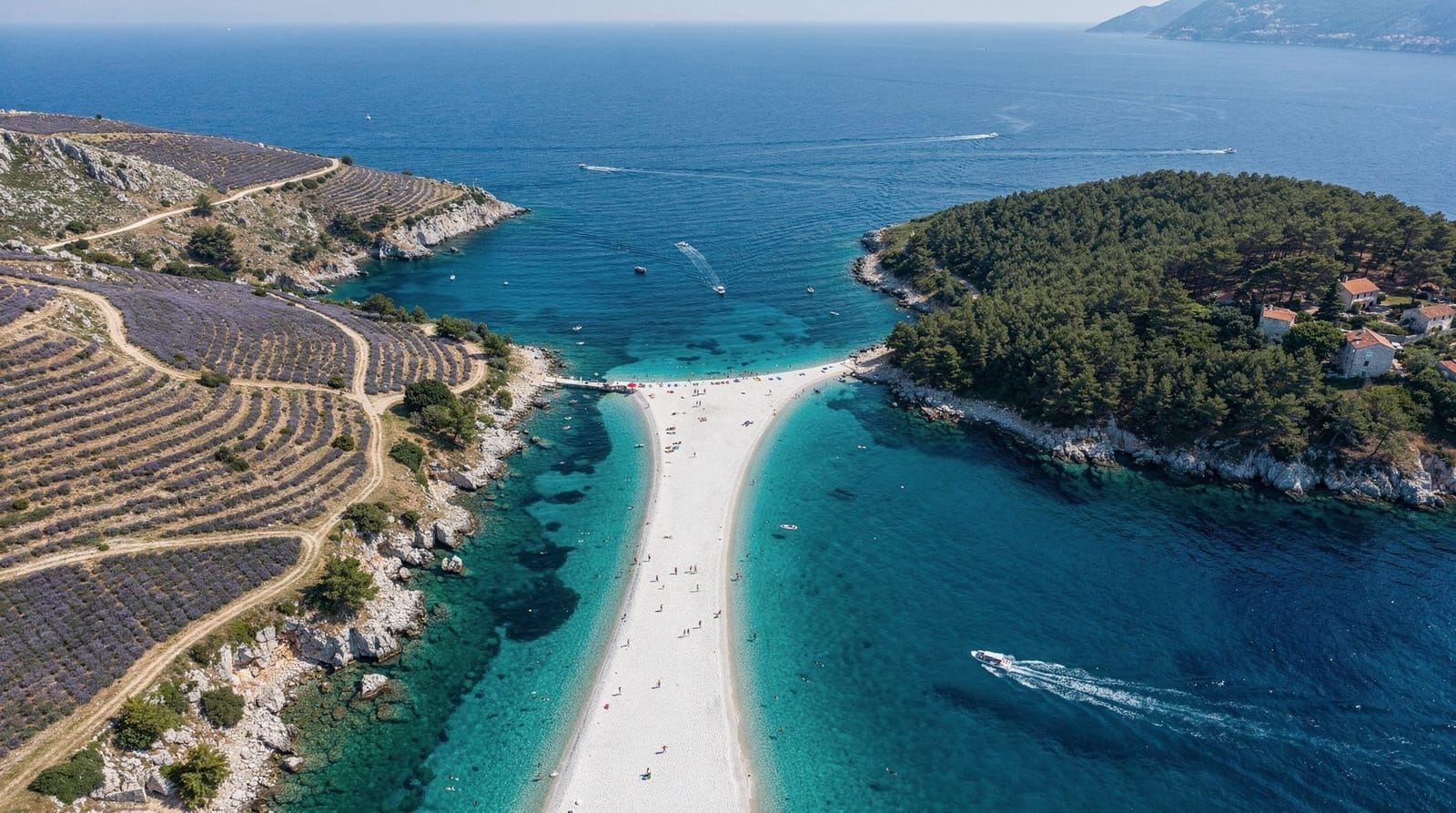
Arriving in Hvar Town by midday, check in (2 nights) and explore. The Španijola Fortress above the town is the primary viewpoint. The cathedral is lovely. But honestly, Hvar Town’s charm is simply sitting at a café by the waterfront watching the Adriatic shimmer. The lavender fields and interior vineyards reward a rented scooter or bus ride into the island’s hinterland.
Where to sleep (Hvar, 2 nights): Hotel Riva for a splurge; Pharos Hvar or smaller guesthouses for mid-range. Book months ahead for July–August. Hvar is genuinely expensive — budget travellers may prefer to day-trip from Split instead.
Day 6: Hvar — Pakleni Islands and Blue Cave
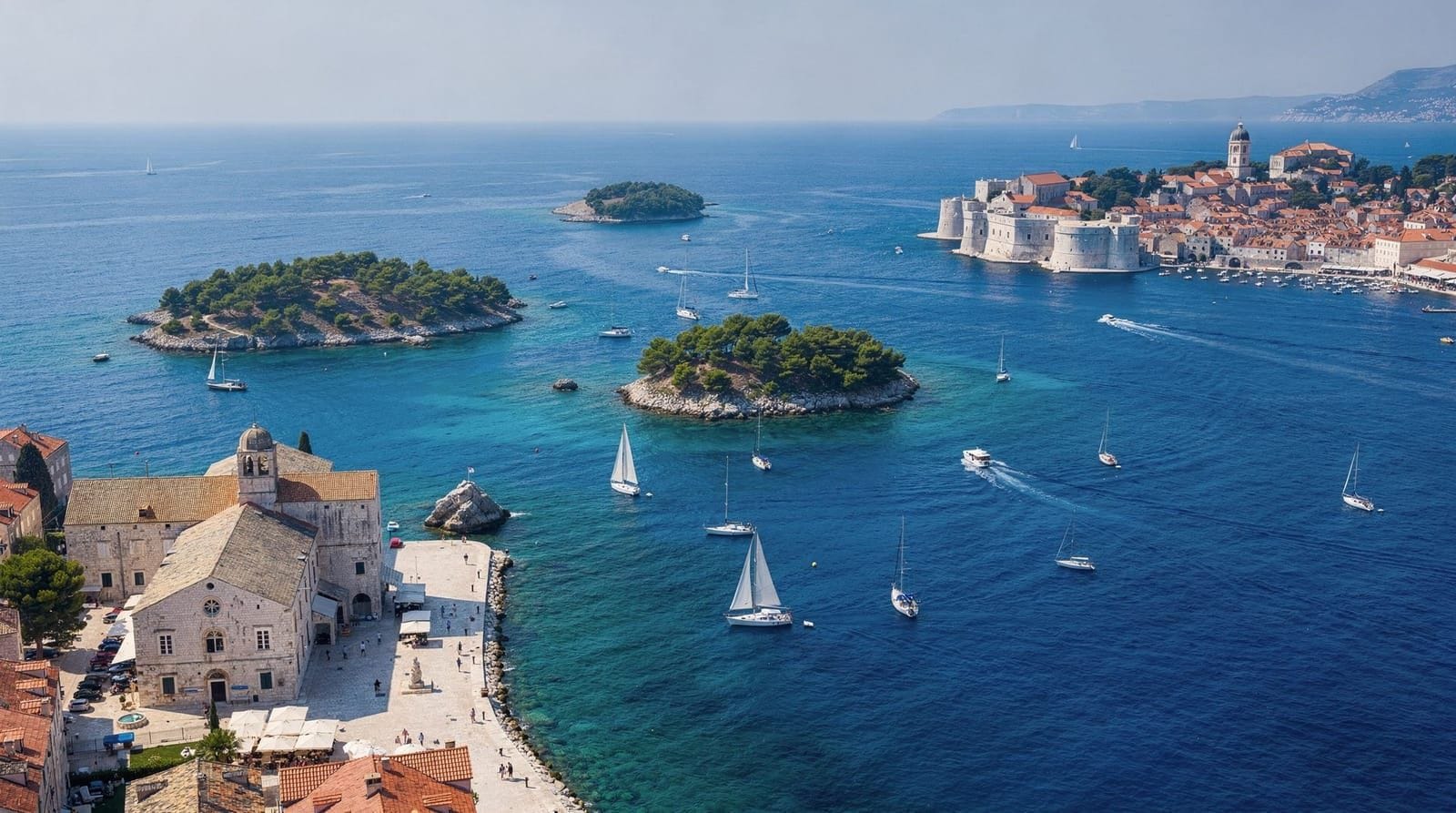
The Pakleni Islands are a scattering of pine-covered islets accessible by water taxi from Hvar Town harbour (5–15 minutes, €5–10 return). The main stops are Palmižana, Sveti Klement and Marinkovac — all excellent for swimming and lunch at waterside restaurants with their feet almost in the sea.
Many visitors also combine this day with a Blue Cave trip from Hvar — though the cave is actually on the island of Biševo, 2 hours from Hvar by speedboat and quite expensive (€60–100 for a group tour). Book any Blue Cave excursion directly from Hvar Town harbour.
Evening back in Hvar Town. For dinner, avoid the most touristy spots on the main square and head up to Konoba Menego or into Stari Grad (the older settlement 20 minutes east by bus) for a more genuine meal.
Day 7: Hvar to Brač — Zlatni Rat beach
From Hvar Town, a short catamaran or ferry hop (under 1 hour) brings you to Brač and the beach of Zlatni Rat at Bol — arguably the most famous beach in Croatia. This distinctive shingle spit changes shape with the currents and is beautiful even if very busy in summer.
Spend the day at Bol. Beyond Zlatni Rat, the beach at Potočine and the swimming rocks further east are quieter. The windsurfing at Bol is excellent — consistent maestral (afternoon northwest) wind makes it one of Europe’s top spots.
Late afternoon, catch the Jadrolinija catamaran from Bol to Split (around 1 hour). Arrive in Split, check in for your final 2 nights.
Day 8: Split — Diocletian’s Palace and old town
Split is built around the 4th-century palace of the Roman Emperor Diocletian — a living neighbourhood where 3,000 people inhabit ancient Roman structures. Read our Diocletian’s Palace guide before you go.
Morning: the palace cellars (Podrumi), the Cathedral of St. Domnius built inside Diocletian’s mausoleum, the Peristyle courtyard. The Bronze Gate from the waterfront Riva leads directly into the cellars and is the most dramatic entrance.
Afternoon: Marjan Hill park, the Meštrović Gallery (Croatia’s greatest 20th-century sculptor) and a swim from Bačvice beach — the sandy beach just east of the old town, famous for picigin, a unique Croatian ball game played in shallow water.
Evening: explore the restaurants and bars inside the palace. Konoba Matoni, Bokeria Kitchen and Wine Bar, and the peka speciality at Konoba Fetivi are all genuinely good.
Day 9: Day trip to Krka National Park
Krka National Park is 75 km north of Split and one of the most accessible natural spectacles in Croatia — a sequence of travertine waterfalls on the Krka River, the most famous being Skradinski Buk. Day trips from Split run daily; the drive takes 1.5 hours.
Note: swimming directly in the waterfalls was restricted from 2021; check current rules before going. The boardwalks through the park and the boat ride to the island monastery of Visovac are the main draws.
From Split, numerous tour operators and bus services serve Krka daily.
Day 10: Trogir and Split departure
Your last morning: Trogir is a 30-minute bus ride from Split bus station, or reachable by half-day boat tour. This small UNESCO-protected town on an island connected to the mainland by a bridge is arguably the best-preserved Venetian and Romanesque old town in Croatia. The Cathedral of St. Lawrence’s carved Romanesque portal is the finest in the country.
Spend the morning in Trogir, return to Split by early afternoon, collect bags, and head to the airport. Split Airport (SPU) is 25 km west; the bus takes 30–40 minutes.
Day-by-day summary
| Day | Base | Highlight |
|---|---|---|
| 1 | Dubrovnik | Arrival, Stradun evening walk |
| 2 | Dubrovnik | City Walls and Old Town in depth |
| 3 | Dubrovnik | Pelješac peninsula and Ston oysters |
| 4 | Korčula | Catamaran north, old town and wine |
| 5 | Hvar | Catamaran onward, Španjola Fortress |
| 6 | Hvar | Pakleni Islands and Blue Cave option |
| 7 | Split | Catamaran via Brač, Zlatni Rat beach |
| 8 | Split | Diocletian’s Palace and Bačvice beach |
| 9 | Split | Day trip to Krka National Park |
| 10 | Split | Trogir morning, depart |
Comparing this route to the 7- and 14-day versions
This 10-day route sits between the 7-day highlights loop and the full 14-day coast-to-coast trip. The extra three days over the week-long version buy you Pelješac and Ston (skipped entirely on the 7-day route), a proper two nights on Hvar rather than a rushed day trip, and Brač’s Zlatni Rat beach as a stopover rather than a special excursion. What it still leaves out — Zagreb, Istria, Plitvice — is exactly what the 14-day itinerary adds at the northern end, at the cost of needing a rental car for that stretch. If you are choosing between Split and Dubrovnik as your single base instead of moving between both, Split vs Dubrovnik lays out the honest trade-offs.
Alternative: reverse the route
Flying into Split and out of Dubrovnik works just as well logistically — ferries and catamarans run both directions on the same schedules — but most travellers find south-to-north more satisfying: Dubrovnik’s intensity up front, then progressively quieter islands, ending in Split’s more relaxed old town rather than crossing days after seeing the “main event.” If you do reverse it, keep the same night allocations and simply mirror the days.
Split full-day sailing tour to Šolta and BračTravellers who prefer sailing over ferry-hopping for the island stretch can substitute a multi-day skippered sail between Hvar, Brač and Split — see the sailing week from Split itinerary for a dedicated route built around exactly that.
Packing and money for ten days on the coast
Bring closed shoes for the Dubrovnik City Walls and Korčula’s cobbled lanes, a swimsuit for the frequent impromptu swim stops, and layers for evening catamaran crossings, which are cooler than the daytime heat suggests. Croatia uses the euro and cards are accepted almost everywhere except water taxis and small market stalls — carry €40–60 in cash for the trip. Our ferries guide explains the difference between Jadrolinija’s car ferries and Krilo’s faster passenger catamarans, and which routes genuinely need advance booking.
FAQ
Is 10 days enough to see Dubrovnik, Split and the islands properly? Yes — this is close to the ideal length for that combination. Ten days allows three nights in Dubrovnik, meaningful island time on Korčula and Hvar, and two days each in Split with a Krka day trip, without the transport-heavy pace that a 7-day version requires.
Should I fly into Dubrovnik or Split first? Either works, but flying into Dubrovnik and out of Split (as this itinerary does) tends to feel more natural — you front-load the most intense city and end somewhere more relaxed, and it avoids backtracking along the coast.
Practical information for this 10-day Croatia itinerary
Route summary: Dubrovnik (3 nights) → Pelješac day trip → Korčula (1 night) → Hvar (2 nights) → Brač day → Split (2 nights) → Trogir morning → depart Split.
Ferries: All legs are car-free. Use Jadrolinija and Krilo for catamarans; book ahead in summer. Total ferry/catamaran cost for the route: approximately €60–90 per person.
Best season: Late May–June and September for shoulder prices and manageable crowds. July–August is peak: hotter, pricier, busier — but ferries run more frequently.
Flying: Fly into Dubrovnik (DBV), fly out of Split (SPU). One-way routing avoids retracing.
Top experiences
Bookable activities with verified prices and instant confirmation on GetYourGuide.