Croatia in 7 Days: The Perfect Dalmatia Highlights Itinerary
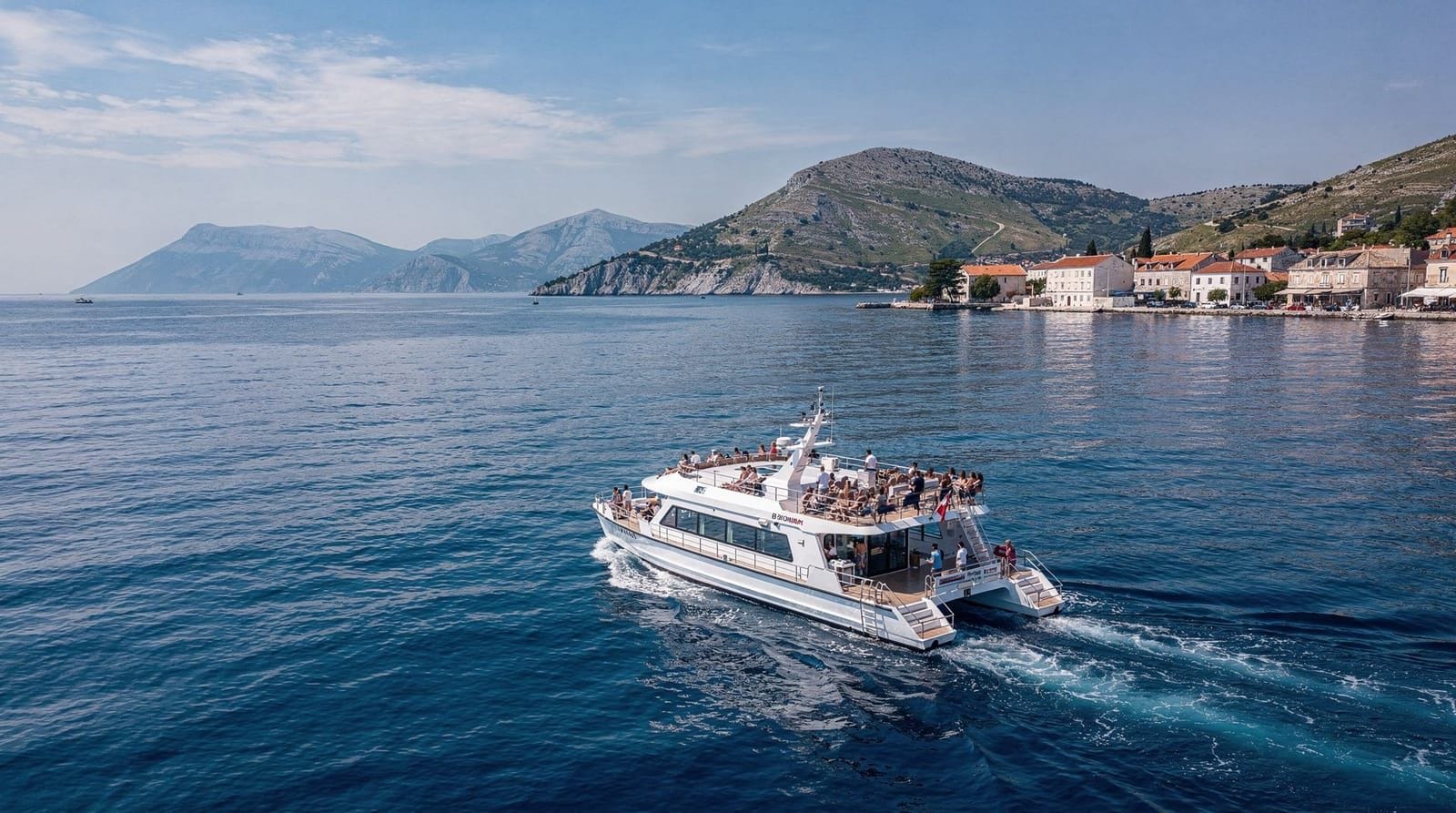
Split: Blue cave and 5 islands tour
Your week in Dalmatia: what to expect
Seven days is just enough time to cover Dalmatia’s essentials without feeling rushed — if you resist the urge to add too many stops. The itinerary below anchors you in Split for three nights and Dubrovnik for three nights, with island time woven in between. You will need no car: ferries and catamarans do the work.
A few realities worth flagging upfront. In July and August, Dubrovnik’s Old Town genuinely heaves with day-trippers and cruise-ship passengers. The city is still worth every minute, but you will share it. The shoulder months — late May, June, September — are significantly more comfortable. Ferry and catamaran tickets on popular routes should be booked ahead in peak season, especially for the Jadrolinija car ferries.
Budget range for this itinerary: €90–160 per person per day (mid-range: guesthouses or apartments, local restaurants, island ferries, one or two paid tours). Dubrovnik reliably costs more than anywhere else on the coast. For a full cost breakdown by category, see our Croatia trip cost guide.
| Bases | Split (3 nights), Korčula (1 night), Dubrovnik (3 nights) |
| Cost | around €650–1,100 per person, flights extra |
| Getting around | ferries and catamarans only, no car needed |
| Best time | late May, June or September |
| Book ahead | Split–Hvar catamaran and the southbound coastal ferries in July–August |
If seven days feels tight, our 10-day itinerary adds Brač and Pelješac without changing the basic shape; the 14-day route extends further north into Istria. For the reverse question — whether a week is really enough — read how many days you need in Croatia.
Day 1: Arrive in Split — settle into the palace
Fly into Split Airport (SPU), which has good connections from most European hubs and from Istanbul and Doha for intercontinental travellers. The airport is 25 km west of the city; a shared shuttle costs around €5–8, a taxi €25–35.
Your base for the next three nights is Split’s Old Town — ideally, inside or immediately adjacent to Diocletian’s Palace. Staying within the palace walls is an experience in itself: you sleep metres from Roman arches and 1,700-year-old stonework. Plenty of apartments and small guesthouses occupy former palace rooms. Book early for summer.
This first afternoon is for orientation. Walk the Diocletian’s Palace from the Bronze Gate on the waterfront through to the Peristyle courtyard. The cellars (Podrumi) are open until early evening and well worth the €10–12 entry. Climb the Cathedral of St. Domnius tower for rooftop views over the city and the islands. In the evening, eat on the Riva promenade or find a konoba tucked into the palace lanes — Konoba Matoni and Konoba Fetivi are solid local choices.
Where to sleep: Apartments within the palace walls; Hotel Peristil for a central mid-range option; Hotel Slavija for budget with character.
Day 2: Split’s old town and a boat tour to the blue lagoon
Mornings in Split belong to wandering. The Pazar market just outside the palace’s Golden Gate runs until noon and sells local produce, cheese and lavender. Walk through the palace to the Cathedral and the baptistery, then head up to the Marjan Hill park on the west side of the peninsula for views over the offshore islands.
In the afternoon, join a half-day boat tour that takes in the Blue Lagoon near Šolta and Trogir — a UNESCO-listed medieval town 27 km west of Split connected to the mainland by a short bridge. It is small enough to see in two hours but genuinely beautiful, all honey-coloured stone and Venetian loggia.
Back in Split by early evening, take a stroll along the Riva at golden hour. Dinner in Trogir is lovely if you are on a boat tour that overnights, or head to Split’s Veli Varoš neighbourhood for a quieter, more residential evening feel.
Getting around today: Afternoon boat tour (booked ahead); Trogir also reachable by bus in 30 minutes (€3).
Day 3: Day trip to Hvar island
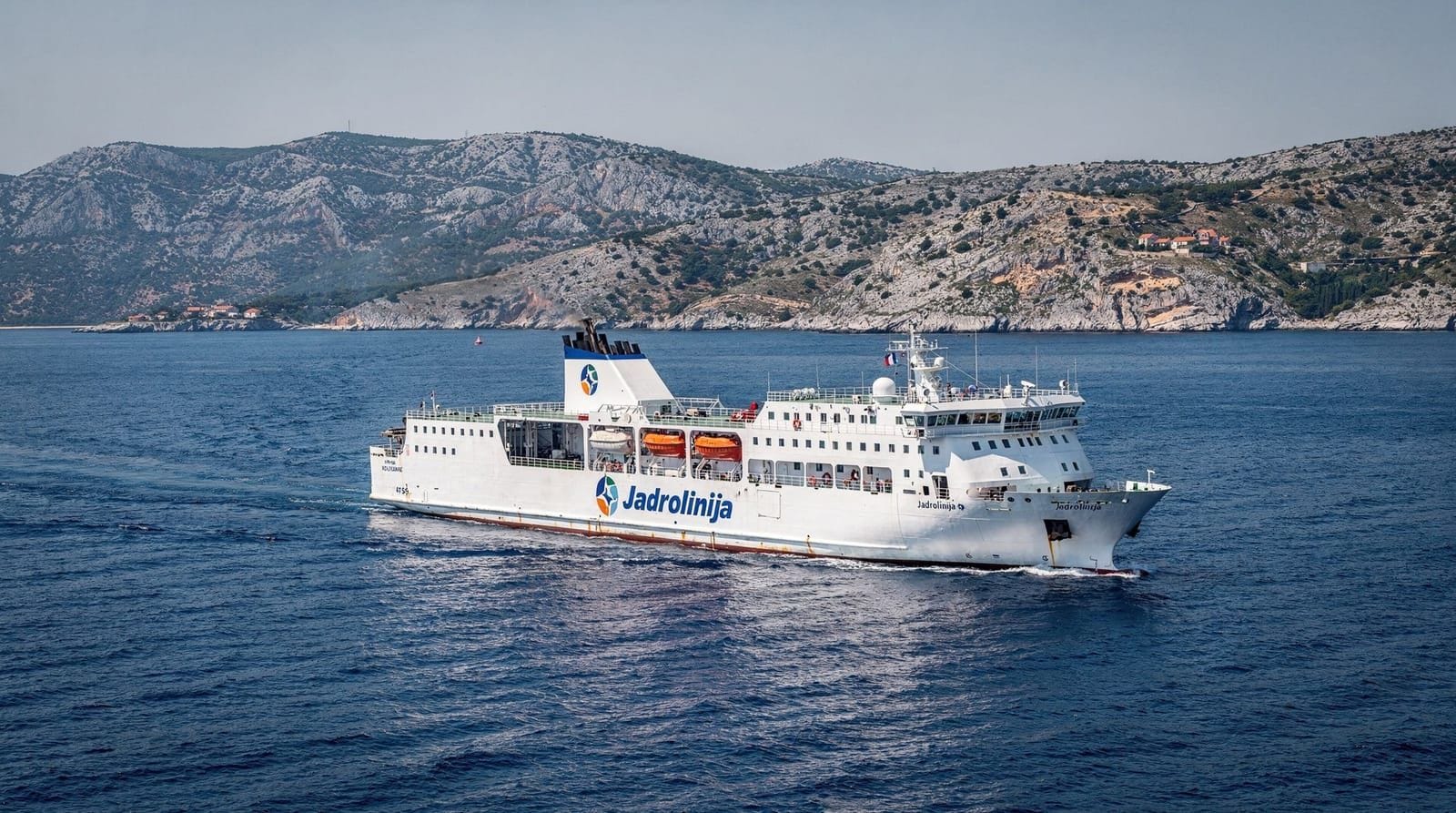
Today is devoted to Hvar, the island that draws the largest crowds and earns most of them. The Jadrolinija car ferry from Split to Stari Grad takes 2 hours; the Krilo/Kapetan Luka catamaran from Split to Hvar Town takes 1 hour (passengers only). The catamaran is faster and drops you in the centre of Hvar Town. Buy tickets at the catamaran dock or online ahead of time in peak season — sailings fill up.
In Hvar Town, climb to the Španjola Fortress above the town for panoramic views over the Pakleni Islands. The main square — the largest in Dalmatia — is framed by an old Venetian arsenal and a 17th-century theatre. Wander the lanes of the old town, pick up local lavender products, and eat lunch at one of the restaurants with harbour views.
If time and budget allow, take a water taxi from Hvar Town harbour out to the Pakleni Islands — a scattering of pine-covered islets with clear water ideal for swimming. The crossing takes 10–15 minutes and costs €5–8 return.
Return to Split by evening catamaran.
Ferry logistics: Catamaran Split–Hvar Town: ~1 hour, €10–15. Book ahead in summer. Return by early evening to avoid being stranded.
Day 4: Split to Korčula via catamaran
Today you move on. The Jadrolinija or Krilo catamaran from Split to Korčula takes around 3 hours and is one of the most scenic journeys in the Adriatic, threading past Hvar and the open sea. Check the current timetable (schedules change seasonally); the morning departure typically leaves around 09:00.
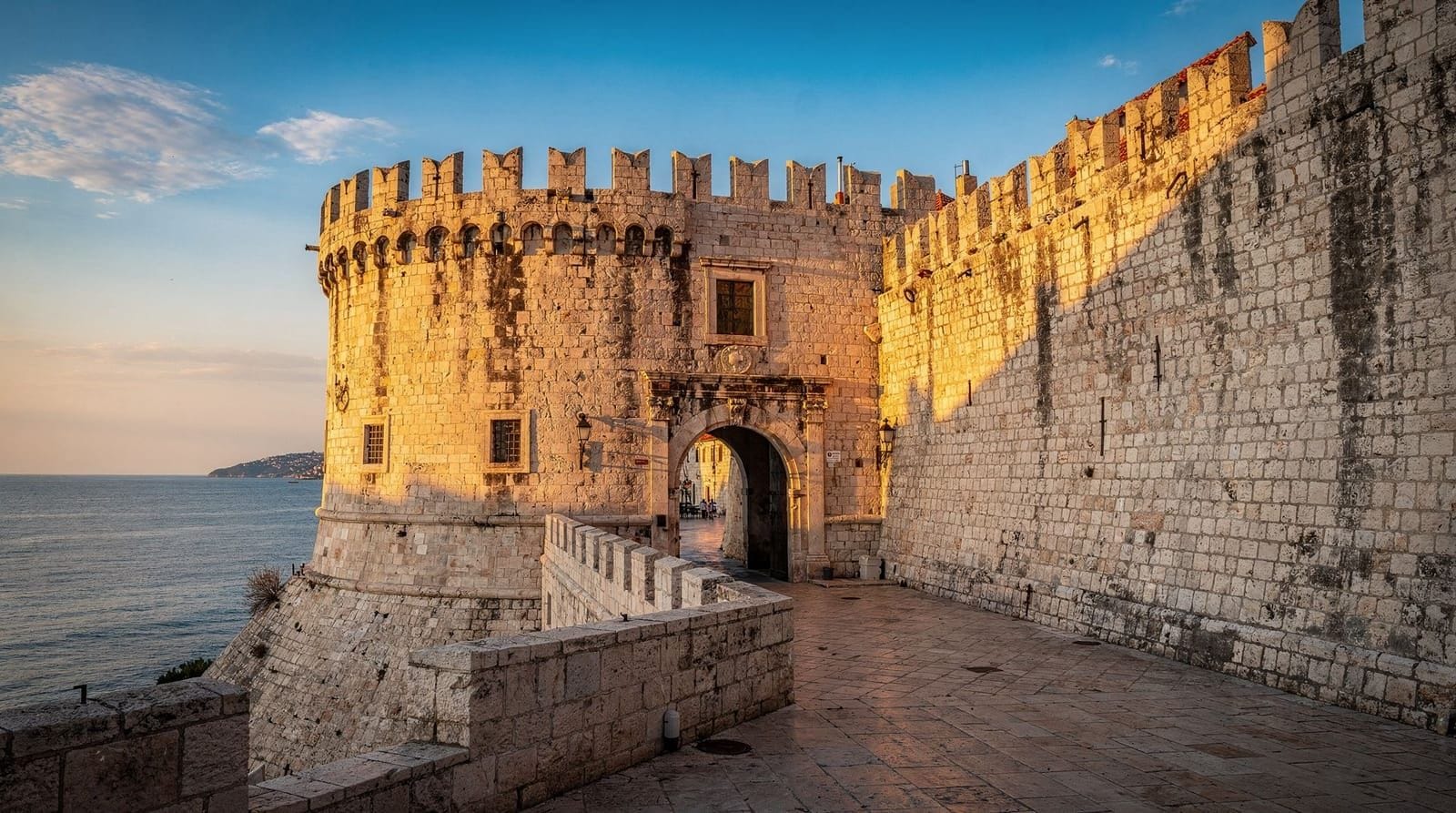
Korčula Town is one of Croatia’s most underrated places — a compact, fishbone-grid old town on a peninsula, with medieval towers, the supposed birthplace of Marco Polo, and excellent Pošip and Grk white wines. The old town is car-free and very walkable. Spend the afternoon exploring the Cathedral of St. Mark and the Marco Polo Tower, and swim off the rocky foreshore.
Stay overnight in Korčula Town — one night here is worth it. Budget guesthouses and mid-range hotels line the waterfront and the lanes of the old town. Eating here is considerably cheaper than Hvar or Dubrovnik: fresh fish, brudet stew and local wine at waterfront konobas.
Where to sleep: Guesthouses in and around the old town; Korčula de la Ville for a mid-range splurge.
Day 5: Korčula to Dubrovnik — the coastal catamaran
The Jadrolinija catamaran from Korčula Town to Dubrovnik calls at Mljet and takes around 3–3.5 hours. This is a morning departure (roughly 09:00, check current schedules), so you have time for an early coffee and a short walk in Korčula before boarding.
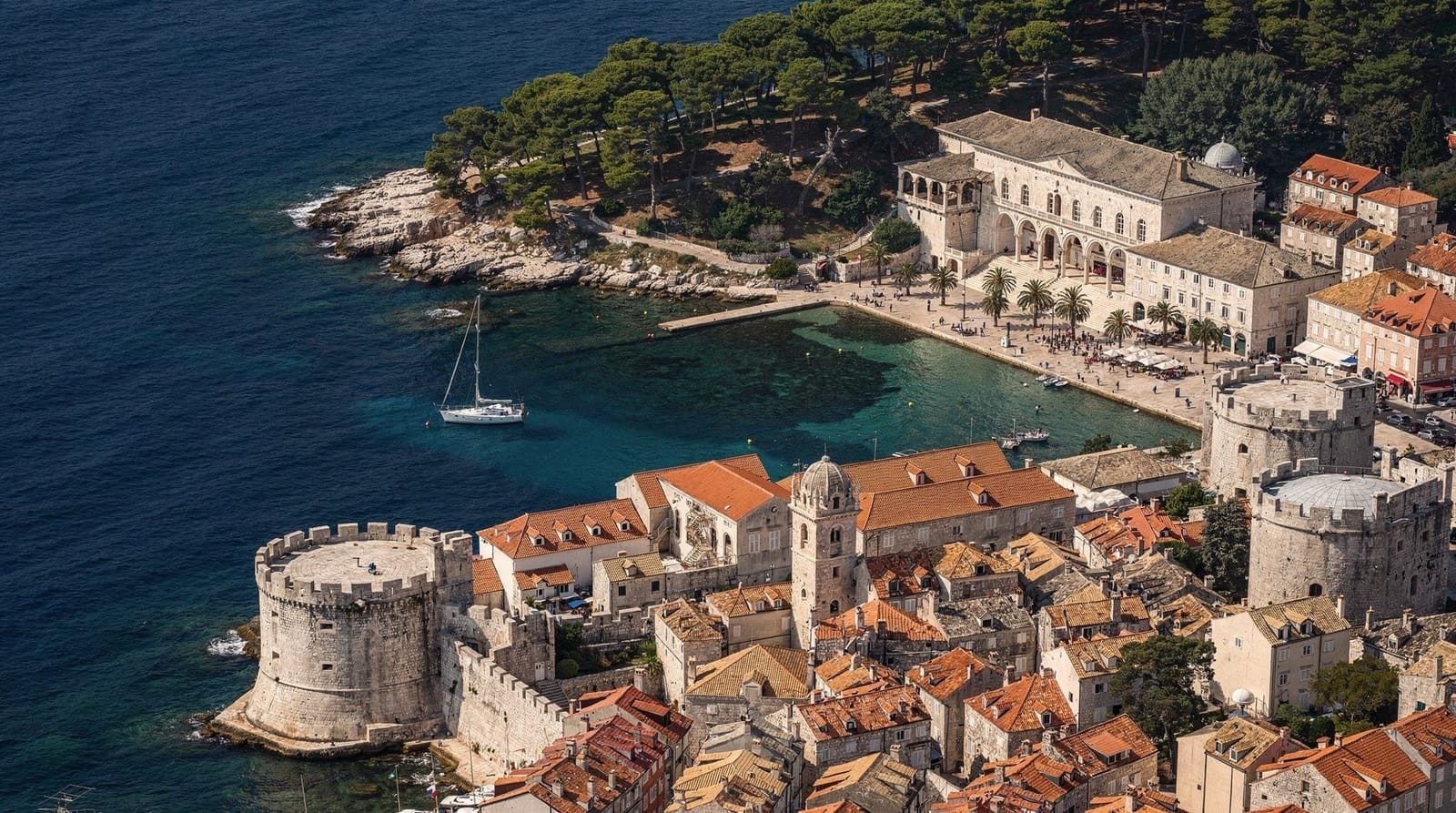
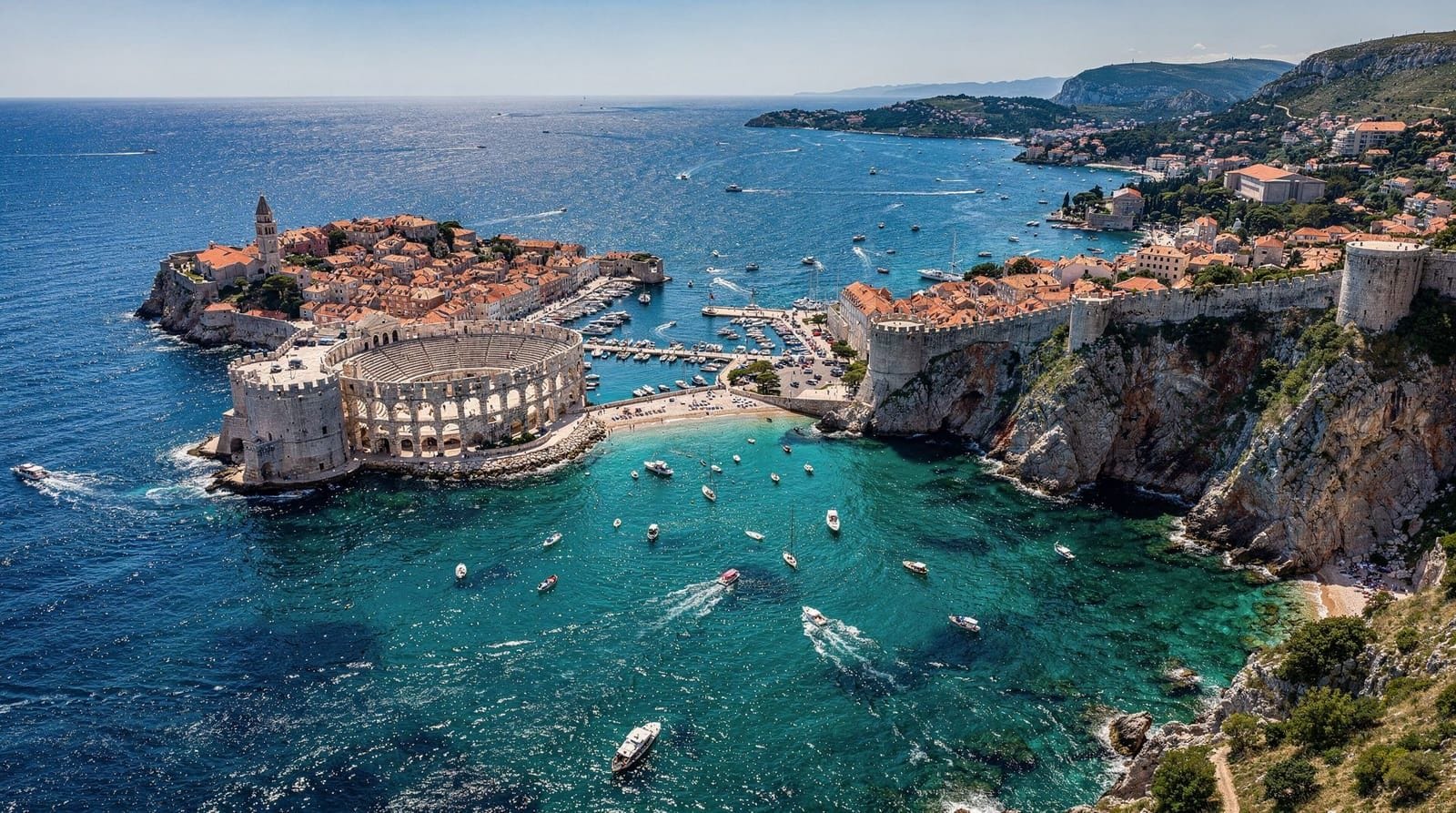
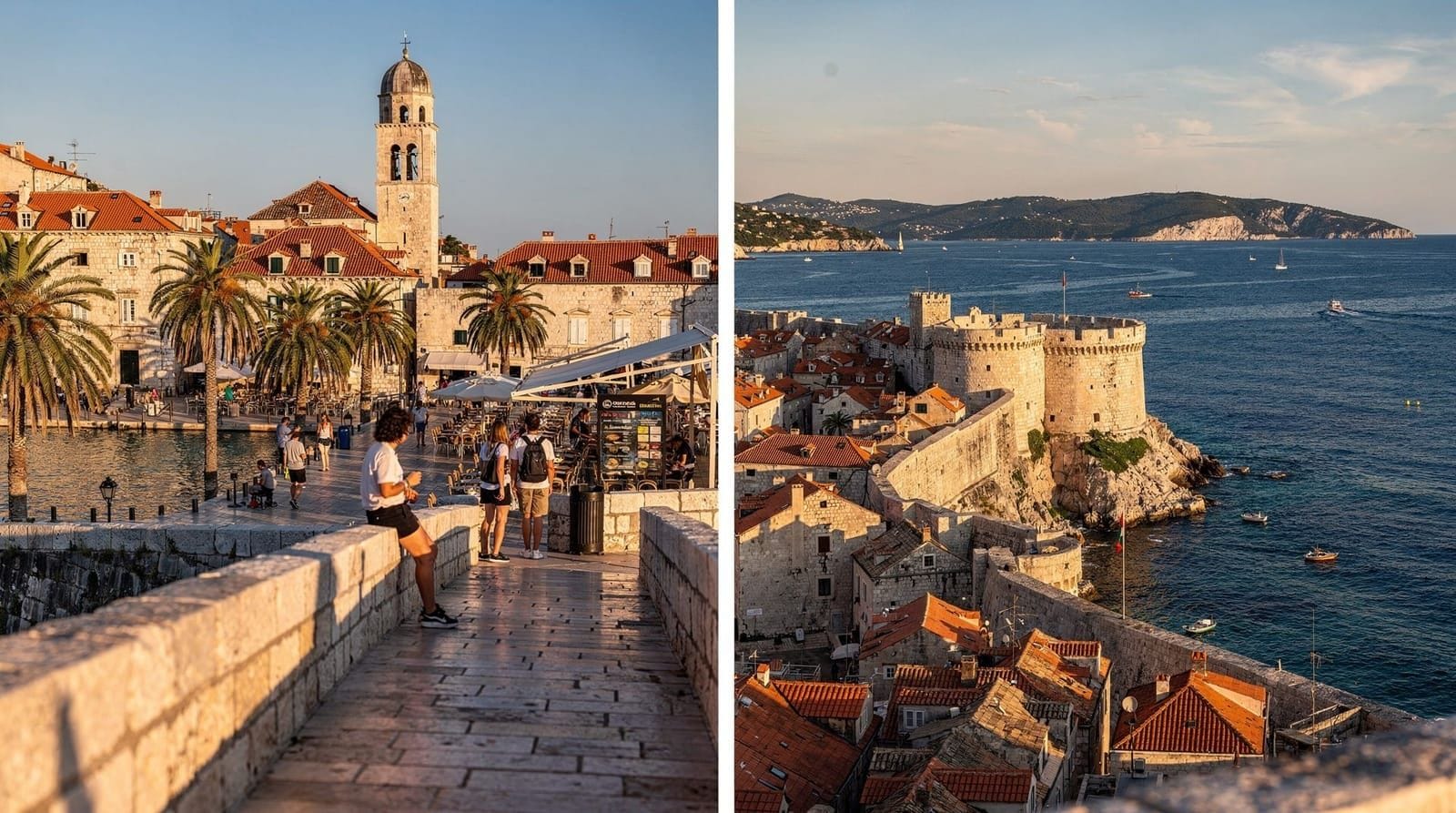
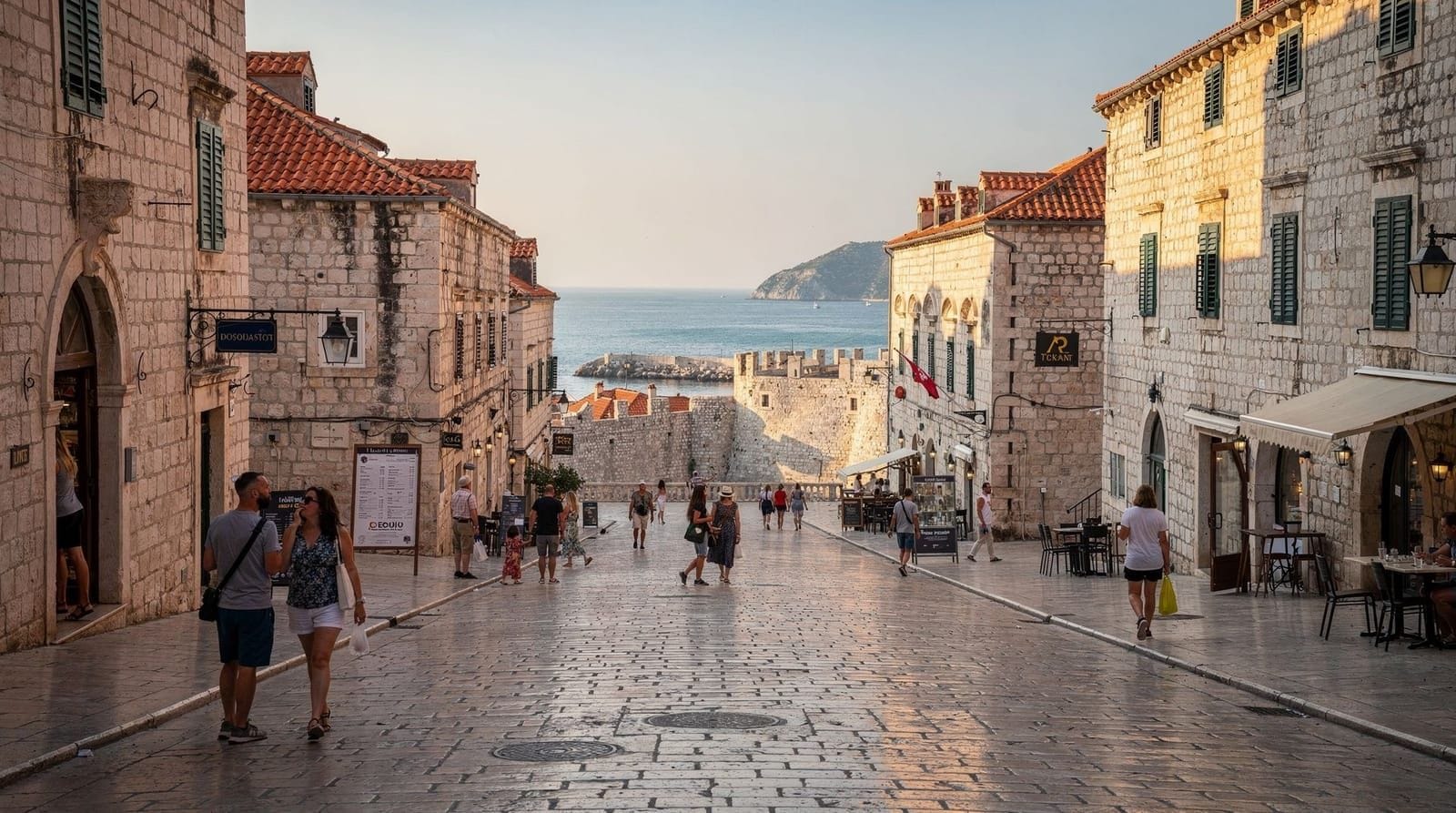
Arriving in Dubrovnik by midday gives you the afternoon for orientation. The Old Town is compact — roughly 2 km of walls — but it rewards slow exploration. The Stradun, the main limestone-paved street, runs east–west and is the city’s spine. Take a walk along the City Walls this first afternoon: the 2 km circuit takes 1–1.5 hours and gives you the best overview of the city, the sea and the islands. Go early morning or late afternoon to avoid midday heat and peak crowds.
The City Walls charge around €35 entry (2026 prices). Worth it, but go first thing in the morning or at dusk for softer light and manageable crowds.
Where to sleep: The Dubrovnik Old Town and the Lapad peninsula neighbourhood (cheaper, 20 minutes by bus). For mid-range: Hotel Stari Grad, Pucic Palace, or well-located Airbnbs.
Day 6: Dubrovnik — Old Town, cable car and evening
Give yourself a full day in Dubrovnik without the pressure of transport. Morning: the Old Town’s churches, markets and the Dominican Monastery with its extraordinary Gothic cloister. Climb the Jesuit Staircase (the Walk of Shame from Game of Thrones — see kings-landing-dubrovnik for more context) and find Fort Lovrijenac on the western promontory, which was the Red Keep.
Midday: escape the worst of the crowd by heading to Lokrum Island, a 10-minute ferry from the Old Harbour (round-trip ferry around €20). The island has a botanical garden, a monastery, a saltwater lake and peaceful shade — and it was also used as a filming location for Game of Thrones.
Late afternoon: take the cable car from just outside the Buža Gate up to Mount Srđ (460 m) for sunset views over the old town and the islands. The cable car costs around €25 return and the top is genuinely spectacular at golden hour.
Evening dinner in the old town. For a splurge, Proto or 360° restaurant. For something more local and affordable, the restaurants on Prijeko Street (parallel to Stradun, one block north) are a step up in quality-to-price from the main tourist drag.
Day 7: Elaphiti Islands boat cruise, then depart
Your last morning: the Elaphiti Islands are a group of small islands accessible by boat from Dubrovnik’s Old Harbour. A half-day or full-day cruise takes in Koločep, Lopud and Šipan — three car-free islands with sandy beaches, olive groves and very little tourism infrastructure. The full-day cruise includes lunch and swimming stops.
If your flight is in the evening, a half-day cruise fits perfectly. Dubrovnik Airport (DBV) is 20 km south of the city; transfers take 25–40 minutes. The Pelješac Bridge has eliminated the need to cross through Bosnia for those driving north, and applies to some bus routes too — no issue for most travellers.
Transport note: The drive and bus from Dubrovnik north to Split takes roughly 4–4.5 hours along the coastal road (or longer in summer traffic). If you are flying from both ends, this itinerary works as a one-way journey: fly into Split, fly out of Dubrovnik.
Day-by-day summary
| Day | Base | Highlight |
|---|---|---|
| 1 | Split | Diocletian’s Palace orientation walk |
| 2 | Split | Blue Lagoon and Trogir boat tour |
| 3 | Split | Day trip to Hvar Town and the Pakleni Islands |
| 4 | Korčula | Catamaran from Split, old town and wine |
| 5 | Dubrovnik | Catamaran via Mljet, City Walls walk |
| 6 | Dubrovnik | Old Town, Lokrum, cable car sunset |
| 7 | Dubrovnik | Elaphiti Islands cruise, depart |
How to shorten or extend this route
If you only have six days, drop the Hvar day trip and add it to Dubrovnik instead — Hvar is easy to reach again on a future trip, and a fourth Dubrovnik day removes the rush from the Elaphiti Islands cruise. Going the other way, our 10-day itinerary uses almost the same skeleton but adds Brač’s Zlatni Rat beach and the Pelješac wine region around Ston, without needing a car. If sailing rather than ferry-hopping appeals more, the dedicated island-hopping itinerary swaps Korčula for Vis and spends more time on the water.
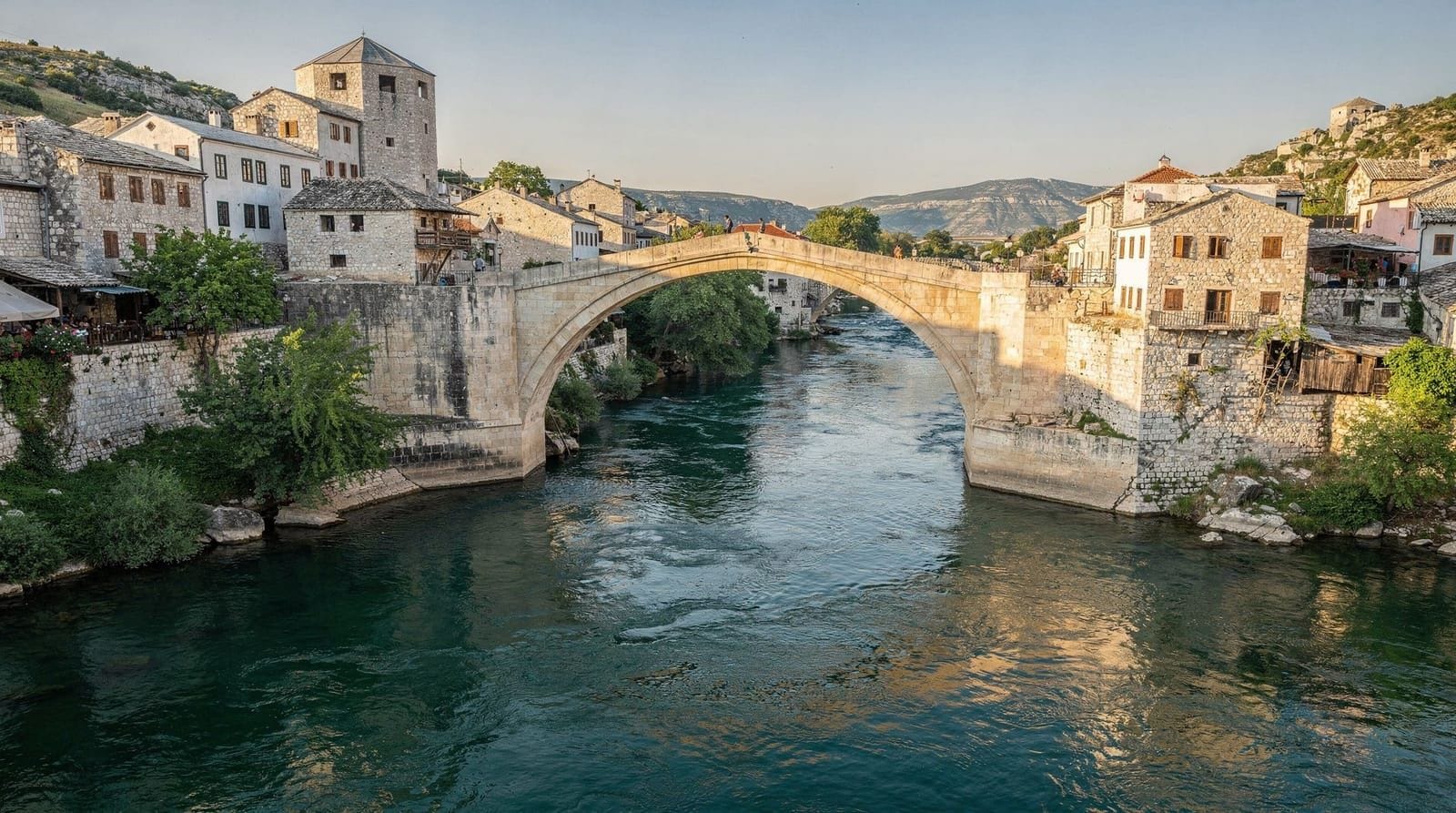
Travellers arriving with more flexibility sometimes fold in Montenegro from Dubrovnik as a long day trip — see the Dubrovnik–Mostar–Kotor circuit if that appeals, though it works better as its own multi-day loop than a bolt-on to this route.
What this route skips (and whether that matters)
Seven days concentrated on Split, Hvar, Korčula and Dubrovnik necessarily skips Zagreb, Istria, Plitvice Lakes and the northern islands entirely. For most first-time visitors this is the right trade-off: Dalmatia’s coastal highlights are what draws people to Croatia, and trying to add the capital or the waterfalls to a one-week trip usually means rushing everything. If Plitvice matters to you, it is a far easier add-on to a Zagreb-based trip than to this coastal route — see the national parks and waterfalls itinerary for a route built around exactly that. For choosing between the two big coastal cities if you only have time for one, Split vs Dubrovnik breaks down the honest differences.
Money and packing notes for a week in Dalmatia
Croatia uses the euro, and cards are accepted almost everywhere except small markets, water taxis to the Pakleni Islands and some konoba tip jars — carry €30–50 in cash for the week. Ferry and catamaran operators (Jadrolinija, Krilo) both take card online; see our ferries guide for how the booking systems differ and which routes genuinely need advance tickets.
Pack for sun and stone: comfortable closed shoes for the City Walls and Korčula’s uneven lanes, a swimsuit you can wear under clothes for spontaneous stops, and a light layer for evening boat crossings, which are breezier than the daytime temperature suggests. A reusable water bottle earns its keep — refill fountains are common in Split and Dubrovnik’s Old Towns.
Dubrovnik half-day sea kayaking tourIf you have an extra free morning in Dubrovnik and want time on the water beyond the Elaphiti cruise, sea kayaking around the city walls from below is a genuinely different perspective on the Old Town and pairs well with an early swim.
FAQ
Is 7 days enough for Croatia? Seven days is enough to properly cover Split, one island and Dubrovnik without feeling rushed, which is what this itinerary does. It is not enough to also add Zagreb, Istria or Plitvice Lakes — for that combination, plan on at least 10–14 days, as in our 10-day or 14-day itineraries.
Do I need a rental car for this itinerary? No. This route is fully car-free by design — ferries, catamarans and the occasional local bus cover every leg, including the day trip to Hvar and the transfer to Korčula and Dubrovnik. A car would add cost and parking hassle in both Split and Dubrovnik without saving time.
Practical information for this 7-day itinerary
Budget per person (7 days, mid-range): €650–1,100 (accommodation, local transport, most meals, key tours). Flights extra. Dubrovnik adds 30–40% to daily costs compared to Split or Korčula.
Best time to go: Late May–June or September for the best balance of weather, ferry schedules and manageable crowds. July–August works but is hotter, pricier and busier — book everything at least 2 months ahead.
Ferries to book ahead: Split–Hvar catamaran (summer) and Split–Korčula–Dubrovnik. Jadrolinija and Krilo both allow online booking.
Without a car: This itinerary is fully car-free. All legs use ferries, catamarans or occasional local buses.
Currency: Euro (EUR) since January 2023. Cards are widely accepted; carry some cash for small markets, water taxis and tips.
Top experiences
Bookable activities with verified prices and instant confirmation on GetYourGuide.