Croatia vs Greece: which Mediterranean destination should you choose?
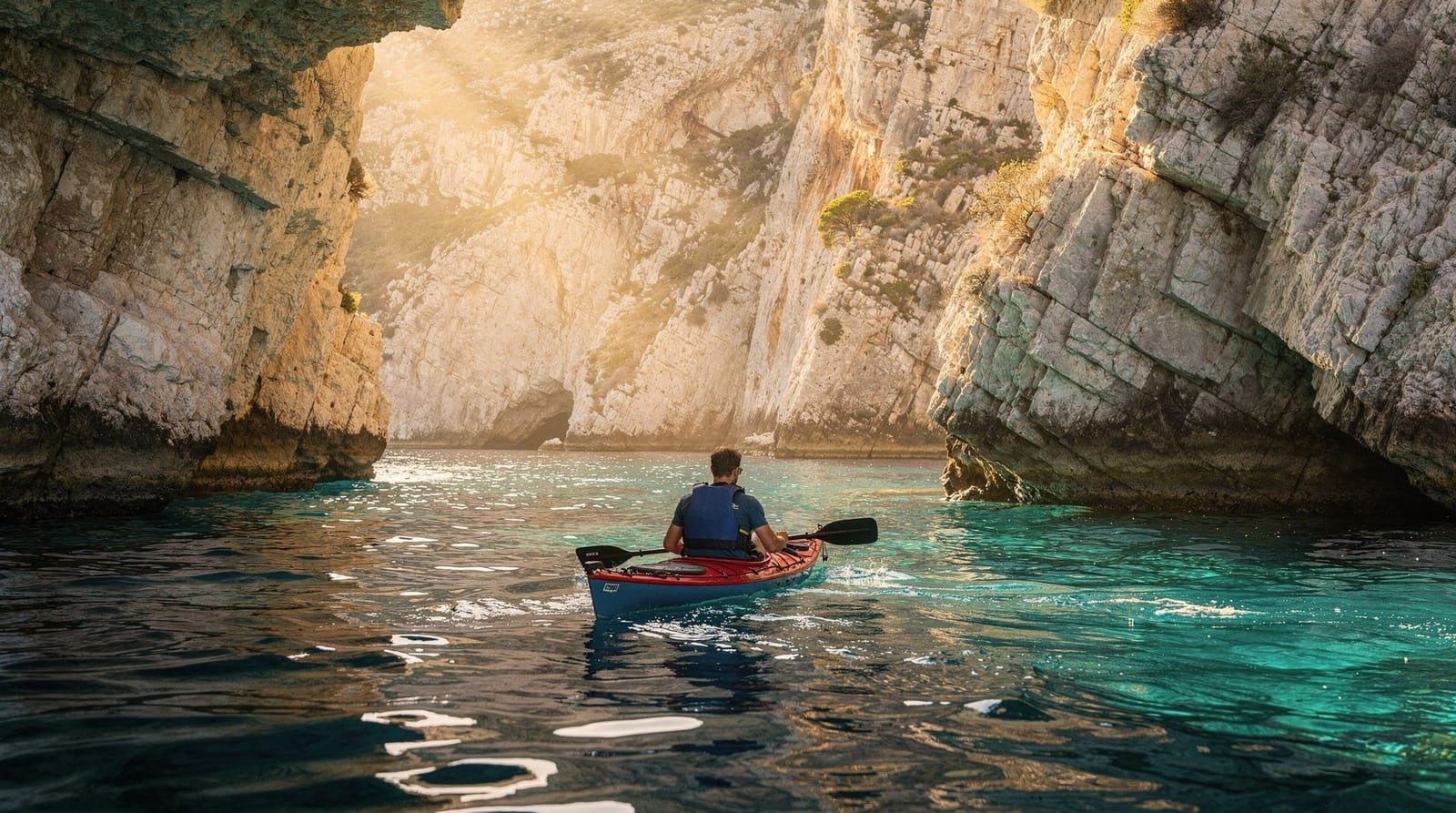
Dubrovnik: Sea kayaking half-day tour
Should I visit Croatia or Greece?
Greece if you want the most iconic Mediterranean islands, warmer waters (especially Aegean), more historical depth (Athens, Delphi, ancient sites), and a broader destination choice at varying price points. Croatia if you want a more compact and varied itinerary combining Roman heritage, national park waterfalls, Adriatic sailing, and a coastline that is arguably more scenically varied. Both are excellent; the choice depends on your priorities.
| Choose Croatia for | Compact islands, sailing, Roman heritage, adventure sports |
| Choose Greece for | Beaches, ancient history, island diversity, warmer water |
| Cost | Broadly similar at mid-range; both have expensive hotspots |
| Island-hopping | Easier and faster in Croatia |
| Best combined trip | 14+ days, overland via Montenegro/Albania |
The Mediterranean choice
Croatia and Greece sit at opposite ends of the Mediterranean (Greece extends the concept into the Aegean), but they compete for the same audience: travellers who want islands, warm water, ancient or medieval heritage, good food, and a coast that delivers the summer Mediterranean fantasy.
This comparison is designed to help you choose. It will be honest about the weaknesses of both destinations as well as their strengths — because the Croatia-vs-Greece question deserves a real answer, not tourism marketing from either side.
What Croatia does better
Compact geography and itinerary efficiency
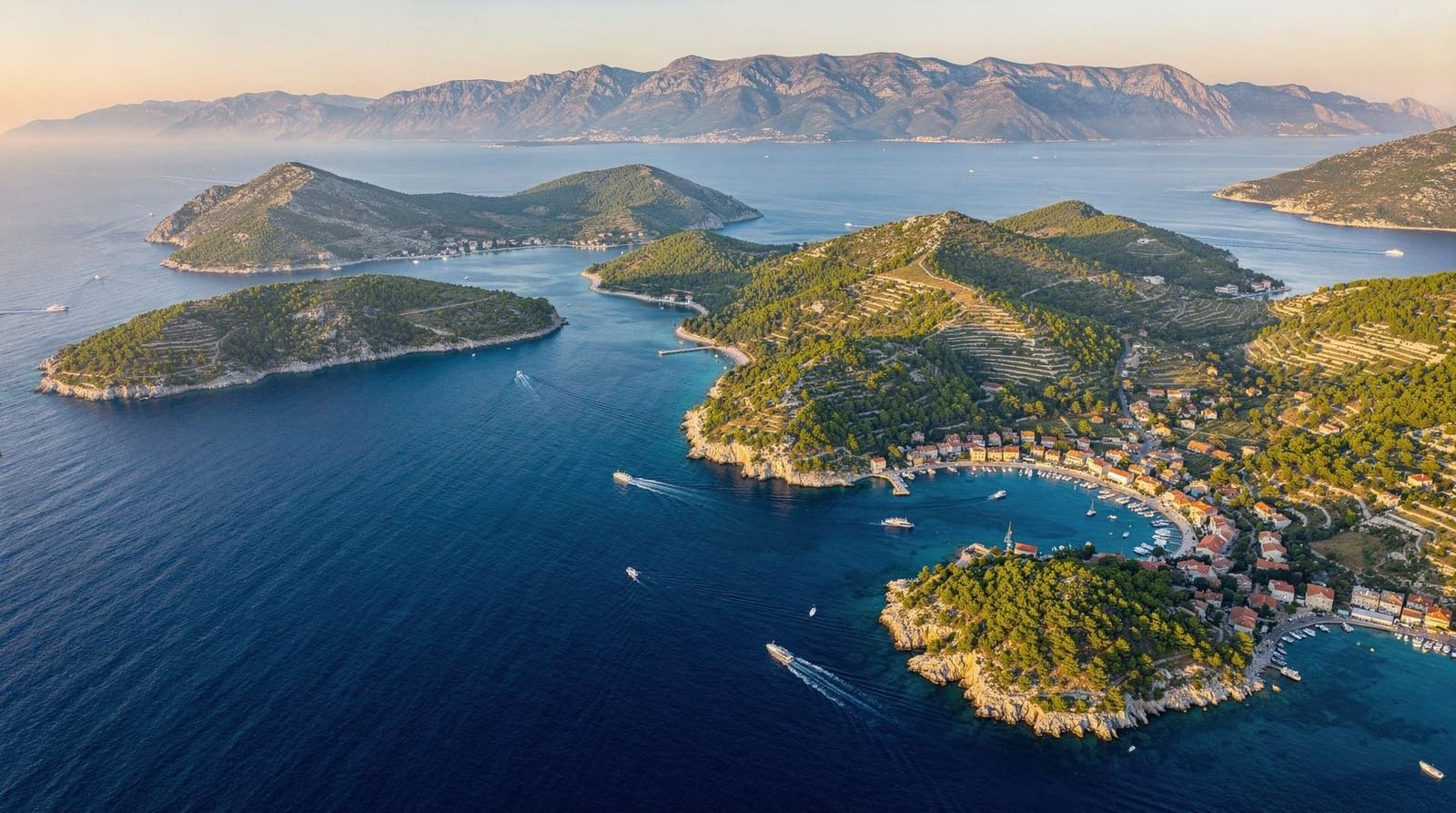
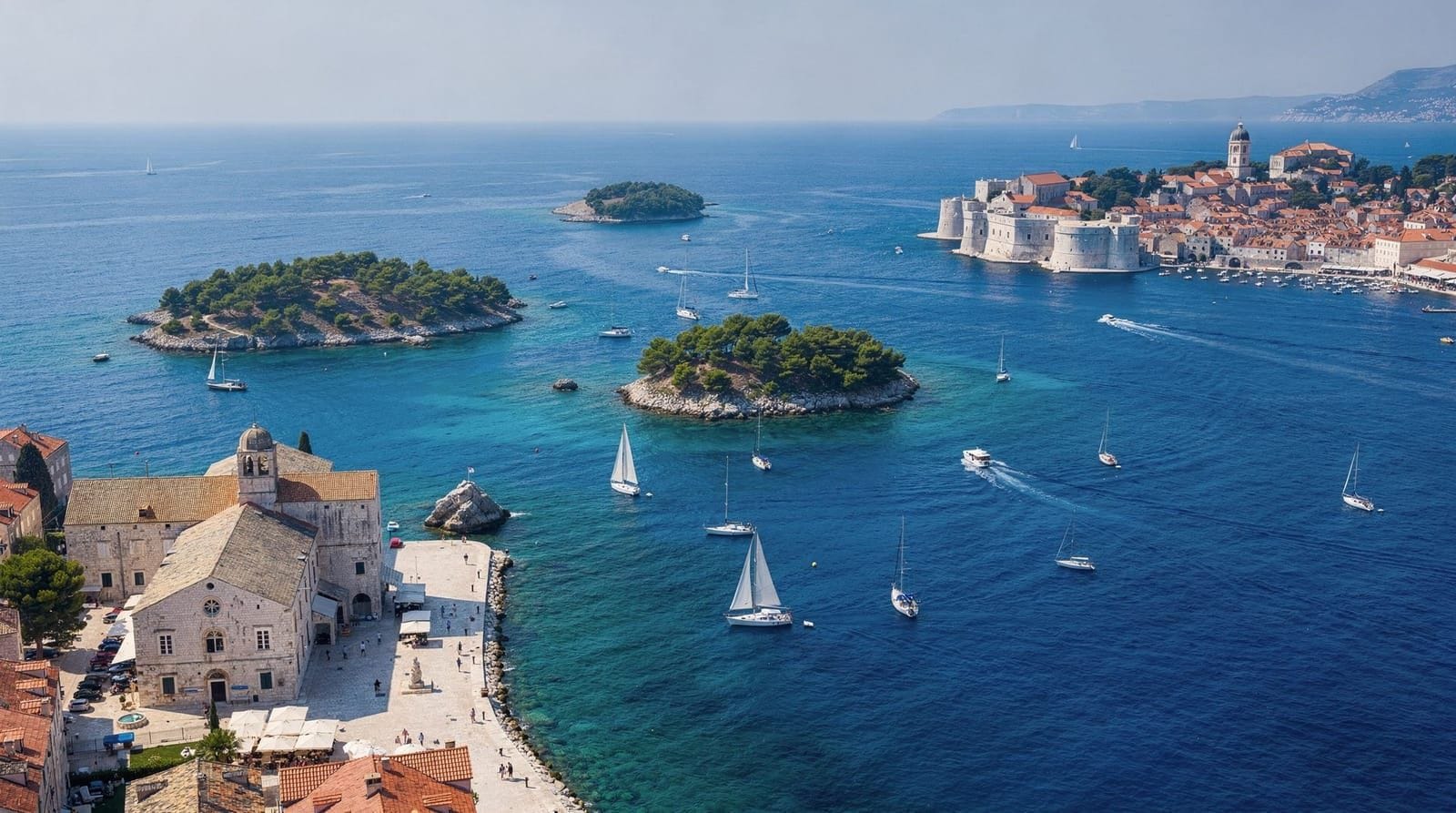
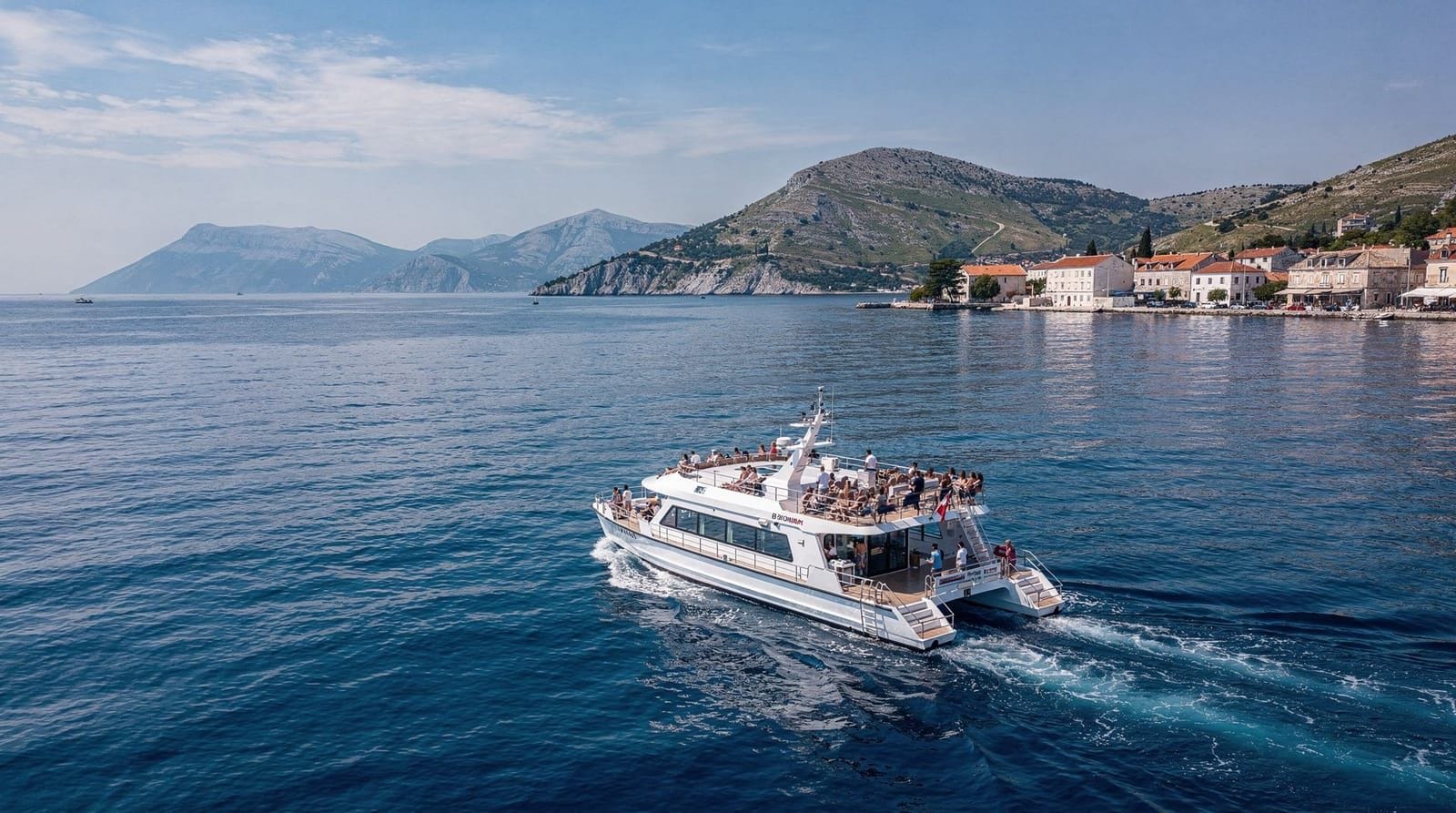
Croatia’s Dalmatian coast is approximately 400 km long with all its major attractions within driving or ferrying distance of each other. A 7-day itinerary from Split can reasonably cover: Split old town, Hvar (50 minutes by catamaran), Brač/Zlatni Rat (1 hour), Krka waterfalls (1.5 hours), Cetina rafting (40 minutes) and Dubrovnik (3 hours by catamaran). This density of varied experiences in a compact geography is harder to replicate in Greece, where significant sailing distances separate the best island groups.
Adventure activities
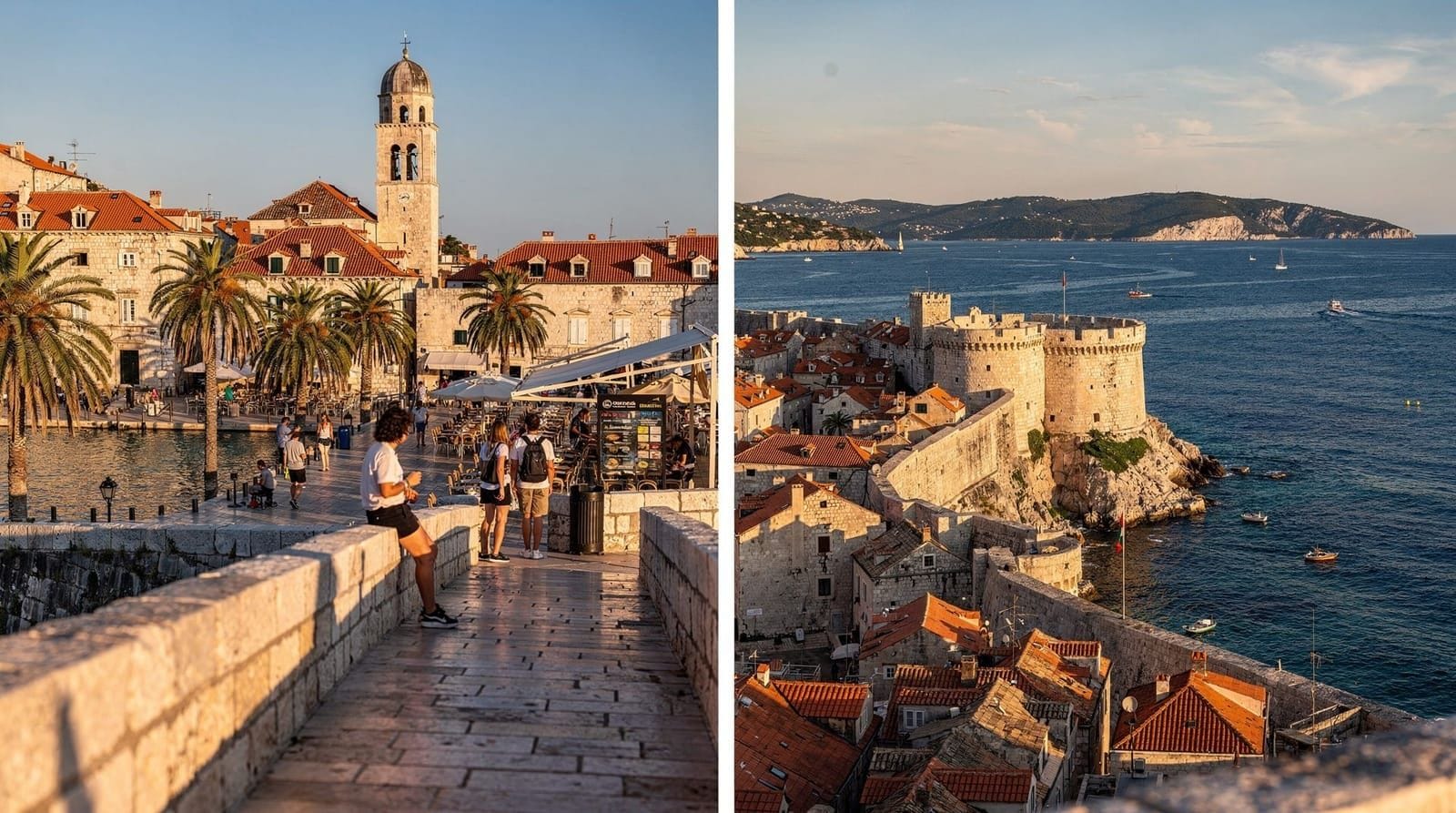
Croatia has a stronger adventure tourism infrastructure than Greece — sea kayaking under the Dubrovnik walls, white-water rafting on the Cetina, ziplining over the Omiš canyon, hiking in Paklenica National Park and Biokovo, cycling the Istrian Parenzana trail. Greece has hiking (Santorini caldera, Samaria Gorge in Crete) and kayaking, but the variety and quality of Croatia’s adventure offer is greater.
Sailing conditions
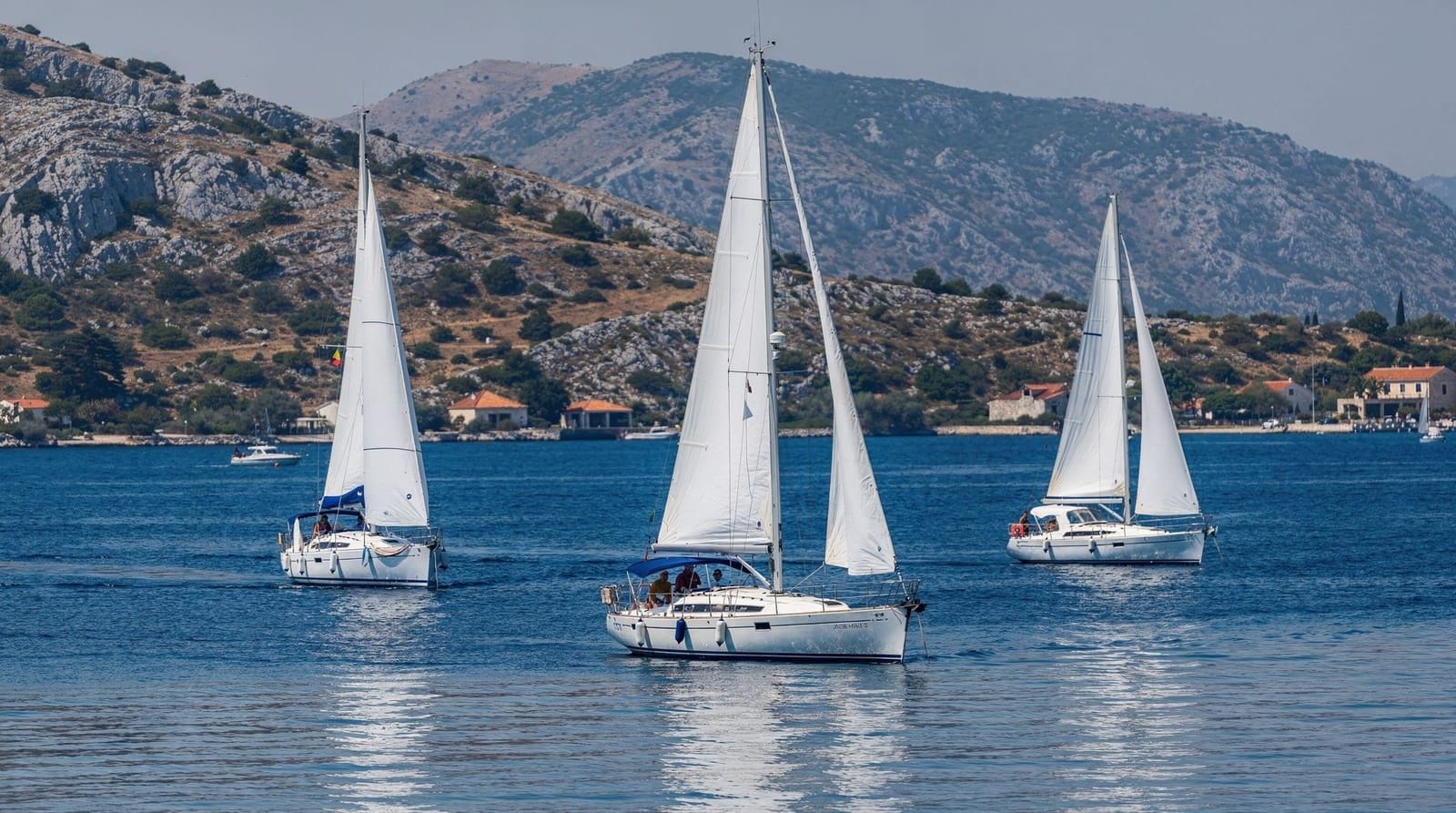
The Dalmatian coast is among the world’s top sailing destinations — sheltered channels, consistent summer winds, dense marina infrastructure, and a high concentration of sailing charter companies in Split. The predictable Maestral sea breeze provides reliable afternoon sailing; the morning is typically flat. For novice and intermediate sailors looking to charter, Croatia’s conditions are more forgiving than the open Aegean.
Roman and medieval heritage (intact)
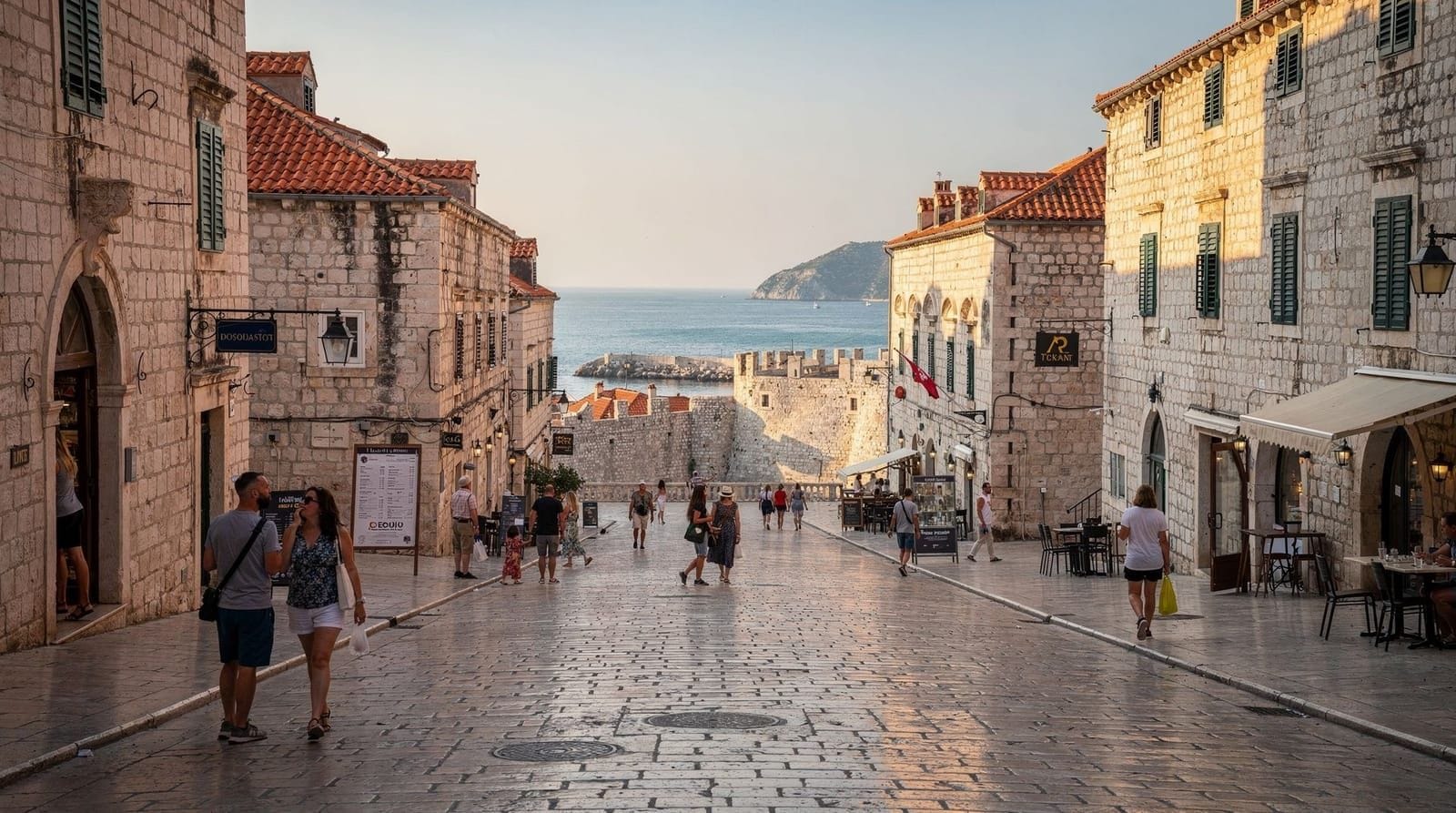
Croatia has remarkable Roman heritage in extraordinary states of preservation: Diocletian’s Palace in Split (lived in continuously for 1,700 years), the Pula Arena (one of the world’s best-preserved Roman amphitheatres), the old towns of Trogir, Šibenik and Dubrovnik. The medieval heritage is similarly excellent. This is heritage that you walk through and eat inside — not just observe from a fence.
The national parks
Greece has impressive natural landscapes (Vikos Gorge, the volcanic Santorini caldera), but Croatia’s combination of Plitvice Lakes (UNESCO terraced lakes), Krka (travertine waterfalls), Kornati (56 bare limestone islands), and Paklenica (canyon and climbing) has no direct Greek equivalent.
What Greece does better
Beaches
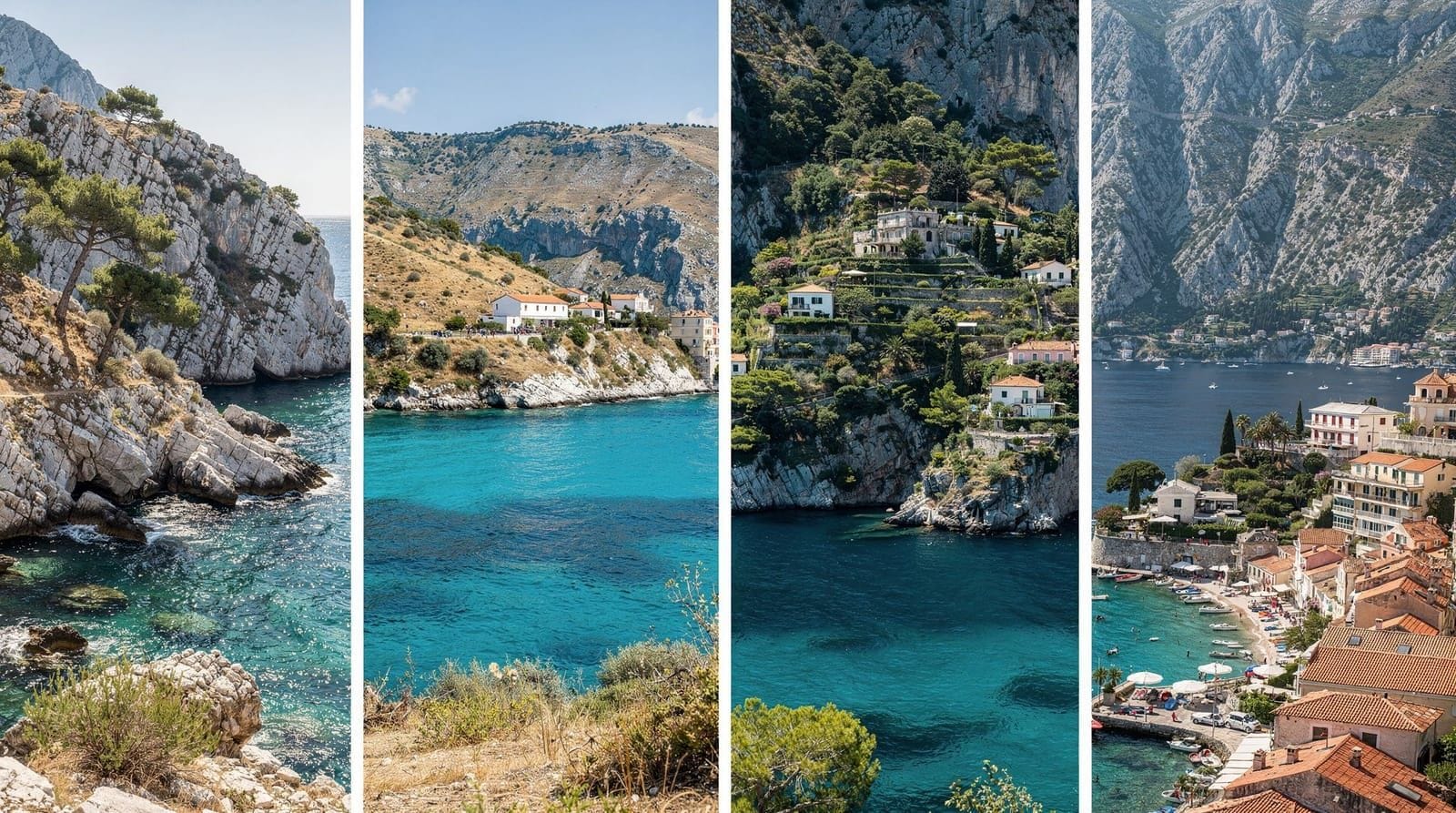
Greece has more beaches, more sandy beaches, and warmer water in late summer. The Aegean’s south-facing islands — Naxos, Paros, Mykonos, Rhodes, Crete — have long stretches of fine sand that Croatia largely cannot match. The Ionian islands (Corfu, Kefalonia, Zakynthos) have world-famous beaches (Myrtos, Navagio) that are genuinely extraordinary. Croatia’s beaches are beautiful — Zlatni Rat on Brač is a design icon, the coves of the Pakleni Islands are perfect — but the breadth of Greece’s beach offer is greater.
Ancient history depth
The Acropolis, Delphi, Olympia, Knossos, Mycenae, Epidaurus — Greece’s ancient site inventory is unparalleled in Europe. These are the sites that define western civilisation. Croatia’s Roman heritage is impressive (Pula, Split), but it operates in a different historical category from the Greek world of the 5th century BC.
Island diversity
Greece’s islands span several distinct groups (Cyclades, Dodecanese, Ionian, Sporades, northeast Aegean) with dramatically different characters — barren and volcanic (Santorini), lush and forested (Corfu), dry and ancient (Delos), mountainous (Samothrace). Croatia’s Dalmatian islands are family-similar in character; Greece’s island diversity is greater.
Athens as a city destination
Athens is a major city destination in a way that no Croatian city quite matches — major museums (the Acropolis Museum is world-class), historical layering, a food scene that has genuinely evolved, and a size (5 million people) that provides the full-spectrum city experience. Zagreb is an excellent small European capital; Athens is in a different category.
Warmer water
The Aegean and southern Ionian reach water temperatures of 26–28°C in late August. The Adriatic at Dubrovnik peaks at around 25–26°C. The practical difference is modest, but travellers prioritising warm swimming will find the southern Greek islands marginally better in August.
Side-by-side summary
| Factor | Croatia | Greece |
|---|---|---|
| Island-hopping ease | High (compact, sheltered) | Moderate (longer distances, open sea) |
| Beaches | Good (mostly pebble) | Excellent (more sandy, warmer water) |
| Ancient history | Strong Roman/medieval | World-class ancient Greek |
| Adventure activities | Excellent (rafting, kayaking, hiking) | Good but narrower range |
| Sailing | Excellent for beginners/intermediates | Better for experienced sailors |
| National parks | Outstanding | Good (Vikos, Samaria Gorge) |
| Food culture | Excellent (Istrian truffle; Dalmatian seafood) | Excellent and widely known |
| Cost | Moderate to expensive (Dubrovnik) | Moderate to expensive (Santorini, Mykonos) |
| Crowds (peak) | Very high at Dubrovnik | Very high at Santorini, Mykonos |
| Year-round viability | Limited on coast (Nov–Mar) | Athens viable; islands also seasonal |
| Water temperature | ~24–26°C (August) | ~26–28°C (August, southern islands) |
The budget question
The “Greece is cheaper” generalisation is partially true and partially myth. Greece’s non-island destinations (Athens, Thessaloniki, Peloponnese) are genuinely affordable — often comparable to or cheaper than Split or Zadar. But the iconic Greek islands are not budget-friendly: Mykonos and Santorini are among Europe’s most expensive summer destinations, comparable to Dubrovnik or Positano. Crete and the less-famous Cyclades offer better value.
Croatia’s budget map is similar: Dubrovnik and Hvar are expensive; Split, Zadar and Istria are more reasonable. Both countries reward travellers who avoid the most-marketed destinations in peak season.
First-timers: which country is the easier introduction?
For a first Mediterranean trip, Croatia has a practical edge in one specific way: its compact geography makes mistakes cheaper to recover from. If you pick the “wrong” base in Croatia, a bus or short ferry ride usually fixes it within a couple of hours. Greece’s island-hopping involves longer, less frequent ferry connections, so a poorly chosen itinerary can cost a full day of lost time. First-time Mediterranean travelers who want a lower-planning-effort trip often do better starting with Croatia’s Dalmatian coast — see the 7-day itinerary or 10-day itinerary for ready-made structures — and saving a more ambitious Greek island-hopping trip for a subsequent visit once they know their own travel style.
That said, first-timers specifically chasing the “postcard Mediterranean” imagery — whitewashed Cycladic villages, infinity pools over the caldera — should go straight to Greece, since Croatia’s aesthetic (Venetian stone towns, pine-covered islands) is a genuinely different visual register, however beautiful in its own right.
Combining both: the overland option
An increasingly popular route for travelers with two weeks or more links Croatia and Greece overland via Montenegro and Albania — Dubrovnik to Kotor (a straightforward day trip or one-way transfer), then south through Albania’s coast to the Greek border. This avoids a flight between the two countries and adds two increasingly popular destinations (Montenegro’s Bay of Kotor, Albania’s Ionian coast) to the itinerary. It requires more logistics planning than a single-country trip but rewards travelers who want the fullest possible picture of the eastern Adriatic and Ionian in one journey. The Dubrovnik–Mostar–Kotor circuit is a good starting template for the Croatia-to-Montenegro leg.
Verdict: who should choose which?
Choose Croatia if:
- Adriatic sailing and island-hopping in sheltered waters are priorities
- Adventure activities (rafting, kayaking, hiking, ziplining) matter
- The Roman heritage of Split and Pula appeals
- A compact itinerary covering many different experiences is the goal
- Istrian food and wine is specifically on your radar
Choose Greece if:
- Long sandy beaches and warm water are the non-negotiables
- Ancient Greek history (Acropolis, Delphi, Mycenae) is a priority
- Island diversity and the character differences between island groups matter
- Athens as a major city destination is part of the plan
- The iconic Santorini/Cyclades imagery is the travel goal
Consider both if:
- You have 14+ days and want to compare the two Adriatic-plus-Mediterranean traditions
- A multi-country Mediterranean circuit is planned (Croatia → Montenegro → Greece via Albania is an increasingly popular overland route)
Frequently asked questions about Croatia vs Greece
Is Croatia or Greece more expensive?
Broadly similar at the mid-range level, but with important nuances. The Greek islands (Mykonos, Santorini) are extremely expensive — comparable to or exceeding Dubrovnik. Athens and the Peloponnese are more affordable. Croatia's Dubrovnik and Hvar are at the premium end; Split, Zadar and Istria are more affordable. Budget travellers find Greece (non-island mainland) slightly cheaper than Croatia's coast overall; luxury travellers find similar premium pricing at the top end of both countries.Which country has better beaches?
Greece, overall — both in quantity and variety. The Greek islands (Crete, Rhodes, Corfu, Santorini, Naxos, Paros) have exceptional sandy beaches, and the Aegean water is warmer in late summer than the Adriatic. Croatia's beaches are mostly pebble/rock (with exceptions like Zlatni Rat on Brač and some sandy beaches near Zadar), and the sea is clear but cooler than the Aegean. Croatia's beaches are beautiful; Greece has more of them and more variety.Which country has more historical sites?
Greece has a broader and deeper history of ancient civilisation — the Acropolis, Delphi, Olympia, Knossos, Mycenae, the ancient theatres. Croatia's historical significance is primarily Roman (Diocletian's Palace in Split, the Pula Arena, Trogir) and medieval (Dubrovnik, Šibenik Cathedral, walled towns). Both are rich; Greece has the more famous ancient sites; Croatia has arguably more intact medieval heritage.Is island-hopping better in Croatia or Greece?
Different in character. Greece's island-hopping (Cyclades, Dodecanese, Ionian islands) involves longer ferry distances and a more open-sea experience — the Aegean crossings are longer and often rougher. Croatia's island-hopping is more contained — the Dalmatian coast islands are closer together, ferries are frequent and the channels are generally sheltered. Croatia is easier and faster for island-hopping; Greece offers more diverse island destinations across a broader geography.Which country has better food?
Both have excellent food cultures; they are very different. Greek cuisine is broader in public recognition (moussaka, souvlaki, tzatziki, Greek salad) and has a strong mezze/sharing culture. Croatian food has a north-south divide: Istrian gastronomy (truffles, Malvazija, local olive oil) is world-class and distinct; Dalmatian cuisine is excellent seafood-and-wine. For the single most distinctive food experience, Istria's truffle culture is hard to beat anywhere. For variety of traditional dishes: Greece has the edge.Which country is better for sailing?
Croatia has a stronger sailing infrastructure and more sheltered waters, making it the better choice for beginner and intermediate sailors. The Dalmatian coast has one of Europe's densest marina networks, sheltered channels between the islands and predictable summer winds (Maestral). Greece's sailing is magnificent — particularly in the Cyclades — but the open Aegean is more challenging for novice crews. For chartering a yacht as a non-expert, Croatia's conditions are safer and better supported.What time of year is best for each destination?
Both peak in July–August with crowds and prices. For both: May–June and September–October are the best windows. Greece's shoulder season extends later into October (Athens is excellent in November). Croatia's shoulder season drops sharply from mid-October on the coast (islands close) but Zagreb and Istria stay interesting. For a first visit to either country, early June or September is the consensus recommendation.
Top experiences
Bookable activities with verified prices and instant confirmation on GetYourGuide.
Top experiences
Best-rated activities across GetYourGuide and Viator.

Blue cave, Mamma Mia and Hvar, 5 islands speedboat tour
- Viator

Blue Cave and Hvar Tour - 5 Islands Tour from Split and Trogir
- Viator

Blue cave, Mama Mia and Hvar, 5 Island Speedboat Tour from Trogir
- Viator

From Zadar: Plitvice Lakes with Boat Ride & Zadar Old town tour
- Viator

Hvar, Brač & Pakleni islands cruise with lunch & drinks from Split & Trogir
- Viator

Blue Cave & Vis Island speedboat tour from Hvar
- Viator