Croatia weather guide
What is the weather like in Croatia?
Croatia has a Mediterranean climate on the coast (hot dry summers, mild wet winters) and a continental climate inland (warm summers, cold winters). The Dalmatian coast gets 2,700+ hours of sunshine annually. Summer (July–August) is hot and dry; the coast is wettest in autumn and winter.
Two climates in one country
Croatia occupies a strip of Europe where a sharp geographical transition happens within a very short distance. The Adriatic coast and islands experience a classic Mediterranean climate — hot, dry summers and mild, moist winters, with over 2,700 hours of sunshine annually in the south. Cross the Dinaric Alps by an hour’s drive inland, and the climate becomes fully continental: hot summers, cold winters, and a more even distribution of rainfall throughout the year.
For trip planning purposes, this distinction matters enormously. The coast in January is cool but mild (8–12°C); Zagreb in January can drop well below 0°C. The coast in August is hot and bone-dry; Zagreb in August is hot and occasionally muggy.
| Coast summer | 26–33°C air, 21–26°C sea, almost no rain |
| Coast winter | 8–16°C, wettest months Nov–Jan |
| Zagreb summer | 26–32°C, more humid, occasional storms |
| Zagreb winter | 0–5°C, frost and occasional snow |
| Sunniest region | Dalmatian coast, 2,700+ hrs/year |
See best time to visit Croatia and Croatia month by month for how this translates into an actual travel calendar.
Dalmatian coast climate
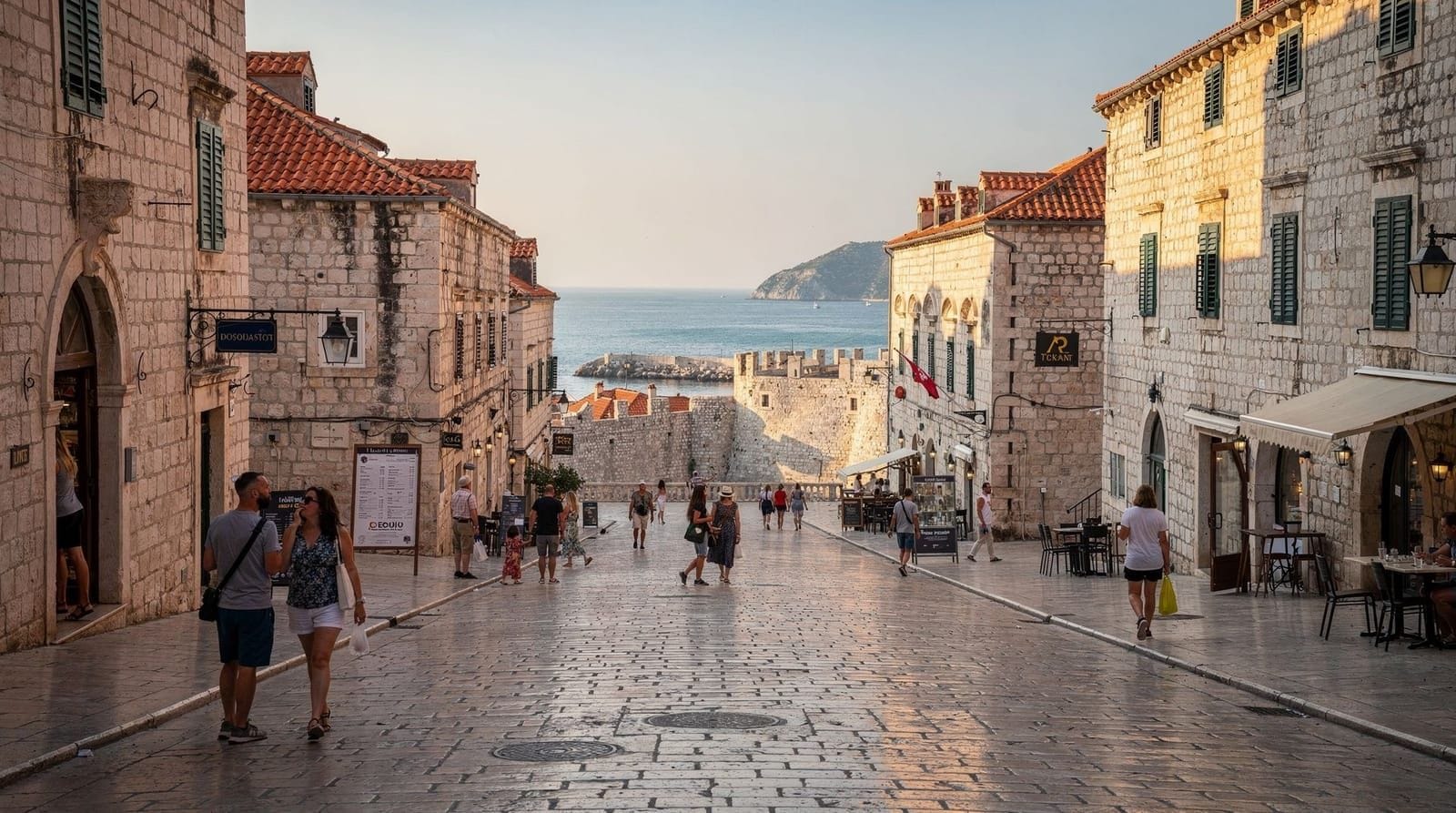
The Dalmatian coast (Dubrovnik, Split, Zadar, Hvar, the islands) is one of Europe’s sunniest regions.
Sunshine: Dubrovnik averages around 2,750 hours of sunshine per year — more than most of the Mediterranean, comparable to the Greek islands. Split averages around 2,700 hours. July and August are virtually cloudless; even November and December get reasonable sunshine between the rain events.
Summer (June–August):
- Air temperature: 26–33°C, with occasional heat waves to 36–38°C
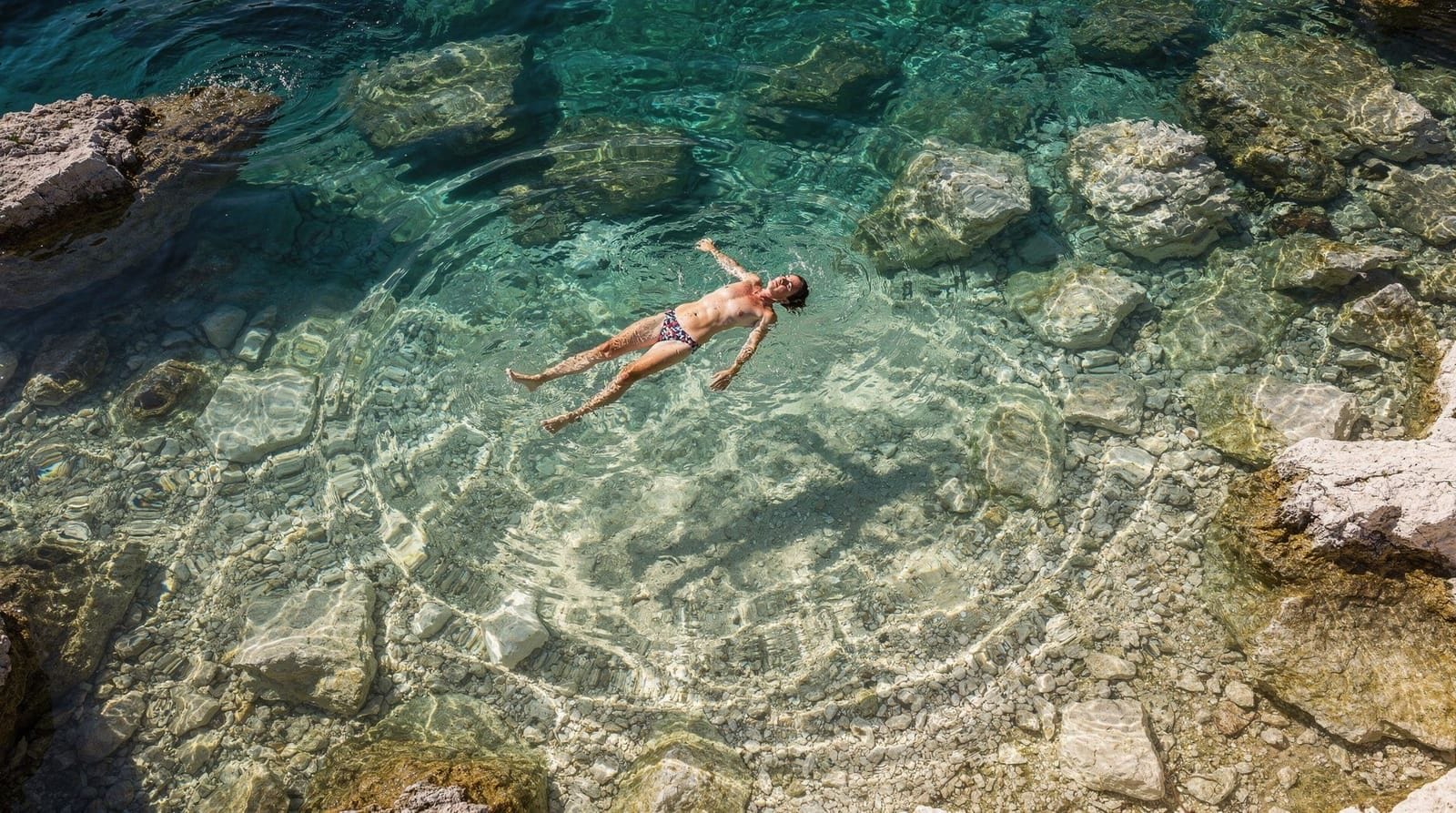
- Sea temperature: 21–26°C (peaking in August)
- Rainfall: Very low — July averages around 30mm in Dubrovnik, mostly brief evening events
- Humidity: Moderate, mitigated by the Maestral sea breeze
- Sunshine: 10–11 hours per day
Shoulder (May, September–October):
- Air temperature: 18–27°C
- Rain chance: Higher than summer but still relatively dry
- Sea temperature: 18–24°C (May), 20–24°C (September–October)
Autumn/Winter (November–March):
- Air temperature: 8–16°C
- Rainfall: Peaks in November–January (100–150mm/month in Dubrovnik — the wettest time of year)
- Sea temperature: 12–16°C
- The Bura wind (see below) is most frequent and strongest in winter
Istria climate
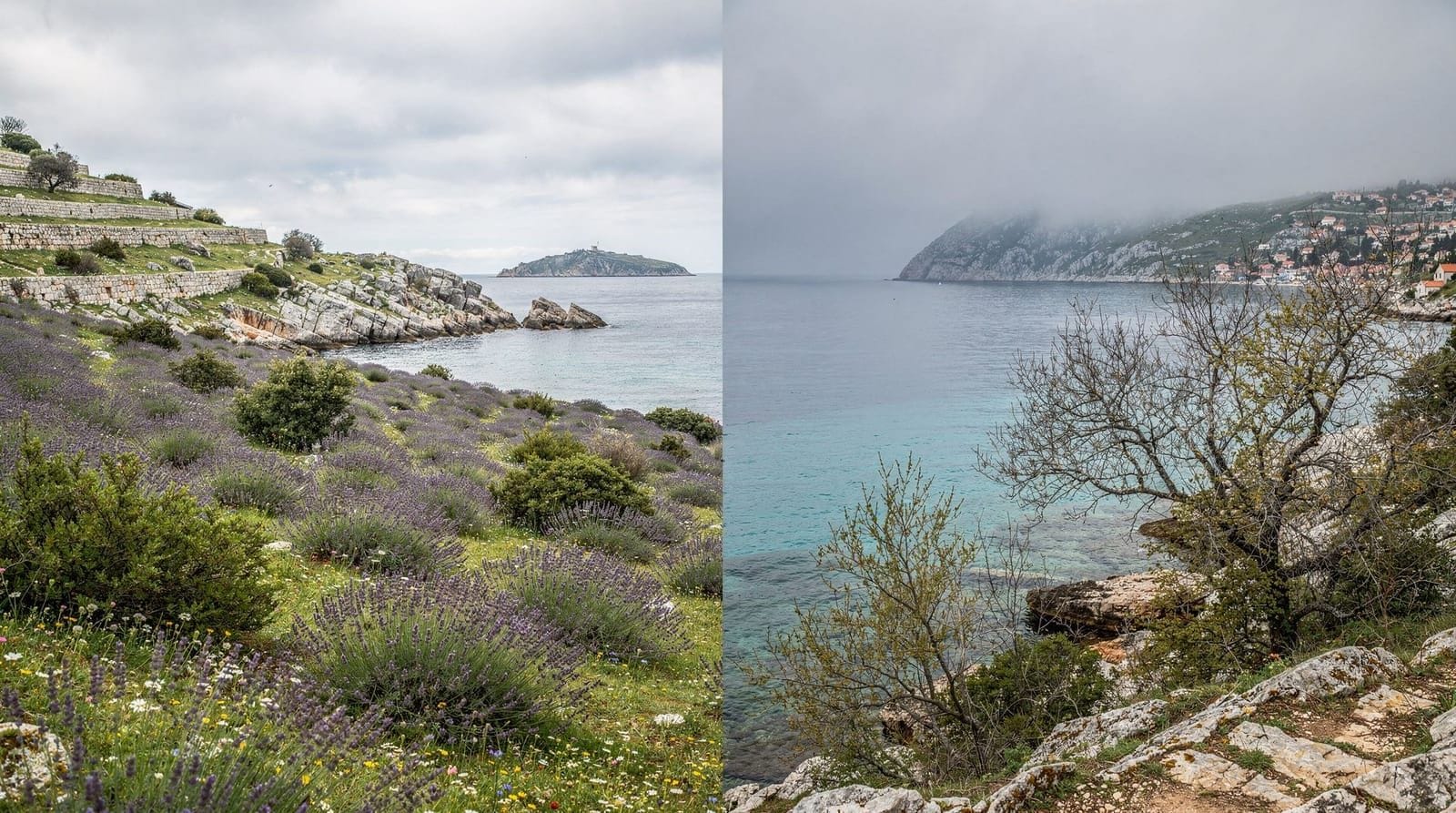
Istria has a similar Mediterranean pattern to Dalmatia but with some differences:
- Spring and autumn are slightly cooler than Dalmatia (the northern Adriatic is more thermally extreme)
- Sea temperatures run 1–2°C cooler than southern Dalmatia at any equivalent time of year
- Autumn (October) brings the truffle season in the interior — the mixed climate of the Mirna valley creates ideal conditions for white truffles
- Winter in the Istrian interior (inland from the coast) is more continental than the coastal strip
Rovinj and Pula average around 2,300 hours of sunshine annually — less than Dubrovnik but still among Europe’s sunniest regions.
Kvarner climate
The Kvarner Gulf (Rijeka, Opatija, Krk, Lošinj) has a distinct climate profile:
The Bura is strongest here. The opening of the Dinaric mountains into the Kvarner Gulf creates a channel for cold, dry air descending from the continental interior. Senj and the northern Kvarner coast are known for Bura winds that can exceed 150 km/h in extreme events. This is most relevant in winter and spring; summer Bura events are gentler.
Opatija has a particularly mild microclimate, sheltered by mountains to the north and east — its belle-époque reputation as a resort for Austro-Hungarian aristocracy was based precisely on this mildness. It remains one of Croatia’s milder winter destinations.
Zagreb and interior climate
Zagreb and the Croatian interior (Slavonia) have a continental climate with more pronounced seasons.
Summer (June–August):
- 26–32°C with occasional heat waves
- More humidity than the coast
- Afternoon thunderstorms possible, particularly August–September
- Sunshine: 8–9 hours per day
Autumn (September–October):
- 15–22°C; comfortable and clear
Winter (December–February):
- 0–5°C average; occasional frosts
- Snow is possible (several times per winter typically); not guaranteed
- Zagreb Advent (December) operates in cold, festive conditions
Spring (March–May):
- 10–22°C; variable; green and pleasant
Zagreb’s continental climate means it experiences more dramatic seasonal change than the coast — and this gives it its particular character: a proper summer city, a proper winter city, and not the mild year-round sameness of southern Mediterranean destinations.
The Adriatic winds
Understanding the Adriatic winds matters for visitors doing sailing, boat trips, or spending time on exposed coast. The main ones:
Maestral (Mistral)
The Adriatic’s benign summer wind. A northwest sea breeze that develops along the central Dalmatian coast, typically beginning mid-morning (around 10–11am) and dying down at sunset. For sailors, it is a gift: consistent, reliable direction, Force 3–4 in good conditions. For coastal visitors, it moderates the summer heat and makes afternoons pleasant even at 30°C air temperature.
The Maestral is strongest and most reliable in June–July. It weakens through August and is variable in September.
Bura (Bora)
The cold, dry northeast wind descending from the Dinaric Alps. The Bura is Croatia’s most dramatic meteorological event when it blows at full strength in winter — waves break over the Kvarner coastal road, ferry services are suspended, and the temperature plummets despite the sky being clear and blue.
For summer visitors, the Bura is usually a gentle northern breeze that provides welcome relief from the heat. For winter visitors to the Kvarner coast, it can be spectacular (and can also interrupt plans).
Jugo (Scirocco)
A warm, humid southeast wind from Africa. The Jugo typically brings cloud, rough seas and mild but damp conditions. It blows in autumn and winter particularly, and can make the Adriatic feel grey and humid for a day or two. Less common in summer; occasional in late September.
Tramontana
A cold north wind, less dramatic than the Bura, occasionally blowing in winter and early spring.
Rainfall and sunshine by location
| Location | Annual sunshine (hours) | Wettest months | Driest months |
|---|---|---|---|
| Dubrovnik | ~2,750 | November–January | July–August |
| Split | ~2,700 | November–January | July–August |
| Zadar | ~2,550 | November–January | July–August |
| Rovinj | ~2,300 | October–December | July–August |
| Zagreb | ~1,900 | May–June; October | February–March |
The coast’s concentrated summer sunshine and minimal summer rainfall create the classic Mediterranean beach-holiday climate. The interior receives more evenly distributed rainfall and less total sunshine.
What to pack for each season
Summer (June–August)
- Lightweight clothing (linen, cotton)
- High-SPF sun protection (the Adriatic sun is intense)
- Sunglasses and a sun hat
- A light layer for evenings (temperatures drop to 20–22°C)
- Water shoes for rocky beaches
- Swimwear — multiple sets if you plan to be in and out of the water
Shoulder (May, September–October)
- Mix of light and slightly warmer layers
- A waterproof or packable rain jacket (rain more likely than in summer)
- Comfortable walking shoes (coastal paths, Plitvice boardwalks)
- A light jacket for evenings (14–17°C in May evenings; 18–21°C in September)
Winter (November–March) — coast
- A proper coat
- Layers (temperatures 8–14°C)
- Waterproof shoes — winter rain is common
- Umbrella or packable rain jacket
Winter — Zagreb and interior
- Full winter clothing: coat, gloves, hat, scarf
- Waterproof boots (snow possible, frost possible)
- Thermals for January–February
Weather and itinerary planning
Coastal road trips: The D8/D8a Magistrala coastal road is spectacular but becomes a traffic bottleneck in summer. In May, September or October, driving it is a pleasure. Plan for the sun being low in the eyes when driving north in the afternoon (westward-facing road sections) or south in the morning.
Plitvice and mountain areas: The 600–800m elevation of Plitvice means it is noticeably cooler than the coast — 5–8°C cooler in summer, significantly colder in winter. Pack a layer even for a summer Plitvice visit. The higher areas of Paklenica, Biokovo and Velebit can have snow from October through May.
Sailing and boat trips: Check weather forecasts before booking longer boat excursions. The Bura can cancel boat trips; the Jugo makes seas rough. Most day-trip boats from Split and Dubrovnik operate in most conditions from May–October; the captains know the local patterns and cancel when necessary.
Ferries: Strong wind events (Bura over Force 7, Jugo over Force 6) can cause ferry cancellations or delays. This is most relevant in winter and early spring; rare in summer. Check jadrolinija.hr for weather-related service updates.
Weather by trip type
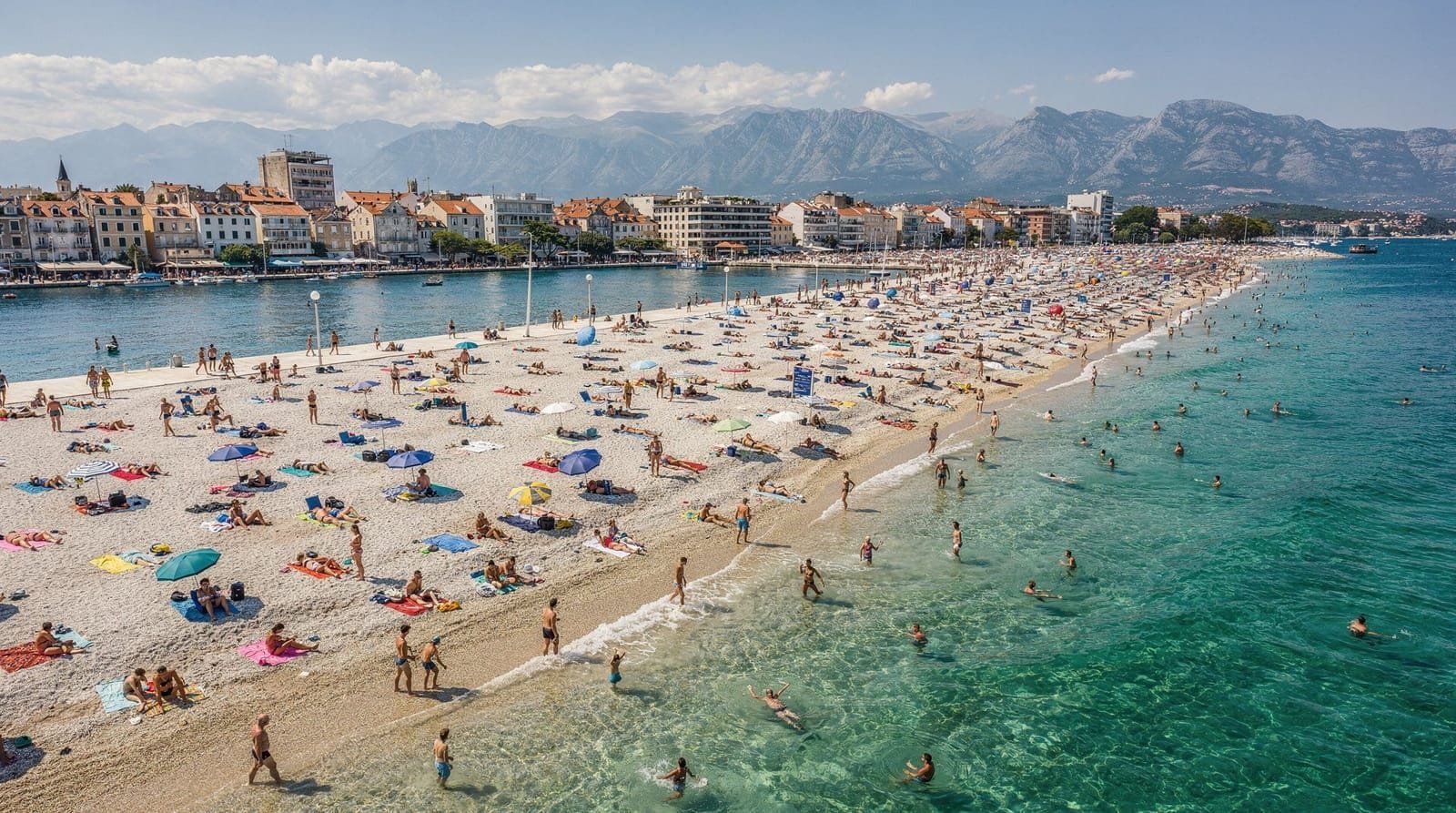
Beach and swimming trips: Aim for mid-June through mid-September, when sea temperatures sit at 21–26°C. May and October can still work for hardier swimmers, especially in the south. See Croatia sea temperatures month by month.
City breaks (Zagreb, Split, Dubrovnik old towns): Spring and autumn are genuinely better than summer — comfortable walking temperatures, no heat exhaustion risk on cobblestones, and thinner crowds. Croatia in May and Croatia in September both make the case for shoulder-season city time.
Hiking (Paklenica, Biokovo, Velebit): Spring and early autumn again win — summer heat on exposed limestone trails is genuinely dangerous without an early start, and winter brings ice and snow at altitude. Carry more water than feels necessary; the limestone terrain offers almost no shade above the tree line, and the Adriatic sun reflecting off pale rock adds to the heat load beyond what the air temperature alone suggests.
Road trips along the coastal D8: July and August traffic on the Magistrala can turn a scenic 3-hour drive into a 5-hour one, particularly around Makarska and the Pelješac approach. Shoulder-season driving is faster and considerably less stressful, with the same views.
Sailing and boat trips: June–September for the most reliable Maestral winds and calmest conditions; the Croatia sailing guide has route-specific detail.
Christmas markets (Zagreb Advent): December, obviously, but pack for genuine continental winter cold — not the mild coastal December visitors sometimes expect.
For a full seasonal breakdown with pros, cons and pricing implications for each window, see Croatia’s shoulder season, Croatia in summer and Croatia in winter.
Frequently asked questions about Croatia weather guide
Does Croatia have a Mediterranean climate?
The coast and islands have a classic Mediterranean climate: hot, dry summers and mild, wetter winters. The interior (Zagreb, Slavonia) has a continental climate with more extreme temperature swings — warmer in summer, significantly colder in winter.How much rain does Croatia get?
The Dalmatian coast is one of Europe's sunniest regions (2,700+ hours of sunshine per year in Dubrovnik). Rain falls mainly in autumn and winter; July and August see very little. Zagreb gets more rainfall, distributed throughout the year.What is the Bura wind in Croatia?
The Bura is a cold, dry northeast wind that descends from the Dinaric mountains onto the Adriatic coast. It can be very strong (gusts over 100 km/h in extreme cases), particularly in winter and spring. In summer, the Bura is usually gentle. It affects the Kvarner and northern Dalmatian coast most.What is the Maestral wind?
The Maestral (northwest wind) is the benign summer sea breeze that develops along the Dalmatian coast, typically beginning mid-morning and dying down at sunset. Sailors prize it; for coastal visitors, it makes the summer heat more bearable.Does Croatia have thunderstorms?
Late summer (August–September) occasionally brings brief but intense thunderstorms, particularly in the interior and at higher elevations. Coastal thunderstorms can occur but are short-lived. They can disrupt ferry services temporarily.What is Croatia like in spring?
Spring (March–May) is mild and green on the coast: temperatures build from 13°C in March to 24°C in May. Rain is possible, particularly March–April. The landscape is vivid. Plitvice waterfalls are at their most dramatic in May from snowmelt.Is it humid in Croatia in summer?
Coastal Croatia is relatively dry in summer thanks to the Maestral sea breeze. It is less humid than many Mediterranean destinations. The interior (Zagreb) can feel muggier; occasional heatwaves combine heat and humidity in late July–August.
Top experiences
Best-rated activities across GetYourGuide and Viator.

Mostar and Herzegovina Tour with Kravica Waterfall from Split & Trogir
- Viator

3Hour ALL-INCLUSIVE Sunset Dolphin Watching from Medulin onSandra
- Viator

Dolphin Watching & Sunset Boat Tour With Drinks & optional Dinner
- Viator

Fantastic DOLPHIN & SUNSET TOUR with dinner ( Pula-NP BRIJUNI )
- Viator

Medulin :All-Inclusive Pirate Boat Dolphin Watching Sunset Cruise
- Viator

Mostar & Kravice waterfalls full-day guided tour from Split
- Viator