Croatia shoulder season
When is Croatia's shoulder season?
Croatia's shoulder season runs late May through June and September through early October. These months offer warm temperatures (22–28°C), swimmable Adriatic water (18–24°C), full transport schedules and prices 20–40% below the July–August peak.
Why shoulder season is Croatia’s best-kept open secret
Croatia’s tourism industry is built around July and August. That is when the planes are full, the hotels charge their maximum rates and the guides sell out weeks in advance. It is also when Dubrovnik’s city walls feel like a theme-park queue and a parking space in Hvar town becomes a competitive sport.
The shoulder season — late May through June, and September through early October — delivers almost all of what makes Croatia remarkable, without most of what makes it exhausting in peak summer.
This is not a compromise. For many travellers, the shoulder months are simply better.
| When | Late May–June and September–early October |
| Air temp | 20–27°C |
| Sea temp | 18–24°C |
| Savings vs. August | 20–40% on accommodation |
| Crowds | Manageable to light |
| Booking lead time | Days to weeks, not months |
Spring shoulder: May and June
May: the golden month
May is the month that experienced Croatia travellers nominate most often when asked when to go. Here is why:
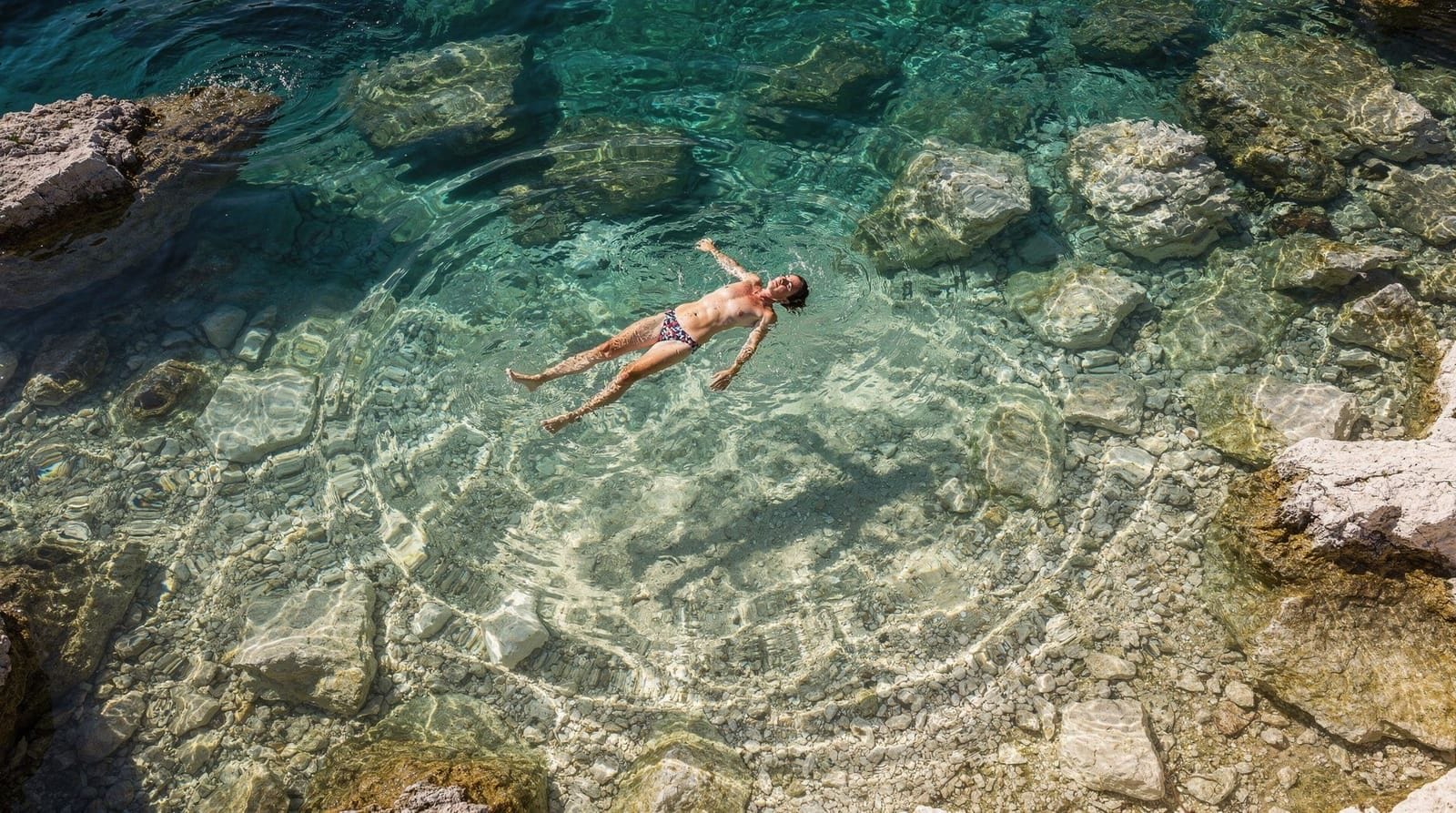
Weather and sea. Air temperatures climb to 20–24°C — warm enough for shorts and long lunches on a terrace, not so hot that midday sightseeing becomes an endurance test. Sea temperatures rise from around 17°C at the start of the month to 19°C by late May. That is swimmable if you are prepared for a brief gasping moment on entry; many visitors find it refreshing rather than cold.
Everything is open. From around the second week of May, the Dalmatian coast is fully operational. Jadrolinija ferry services run close to summer timetables. Hotels, restaurants and tour operators are open. The Blue Cave boats are running. Plitvice Lakes and Krka are accessible.
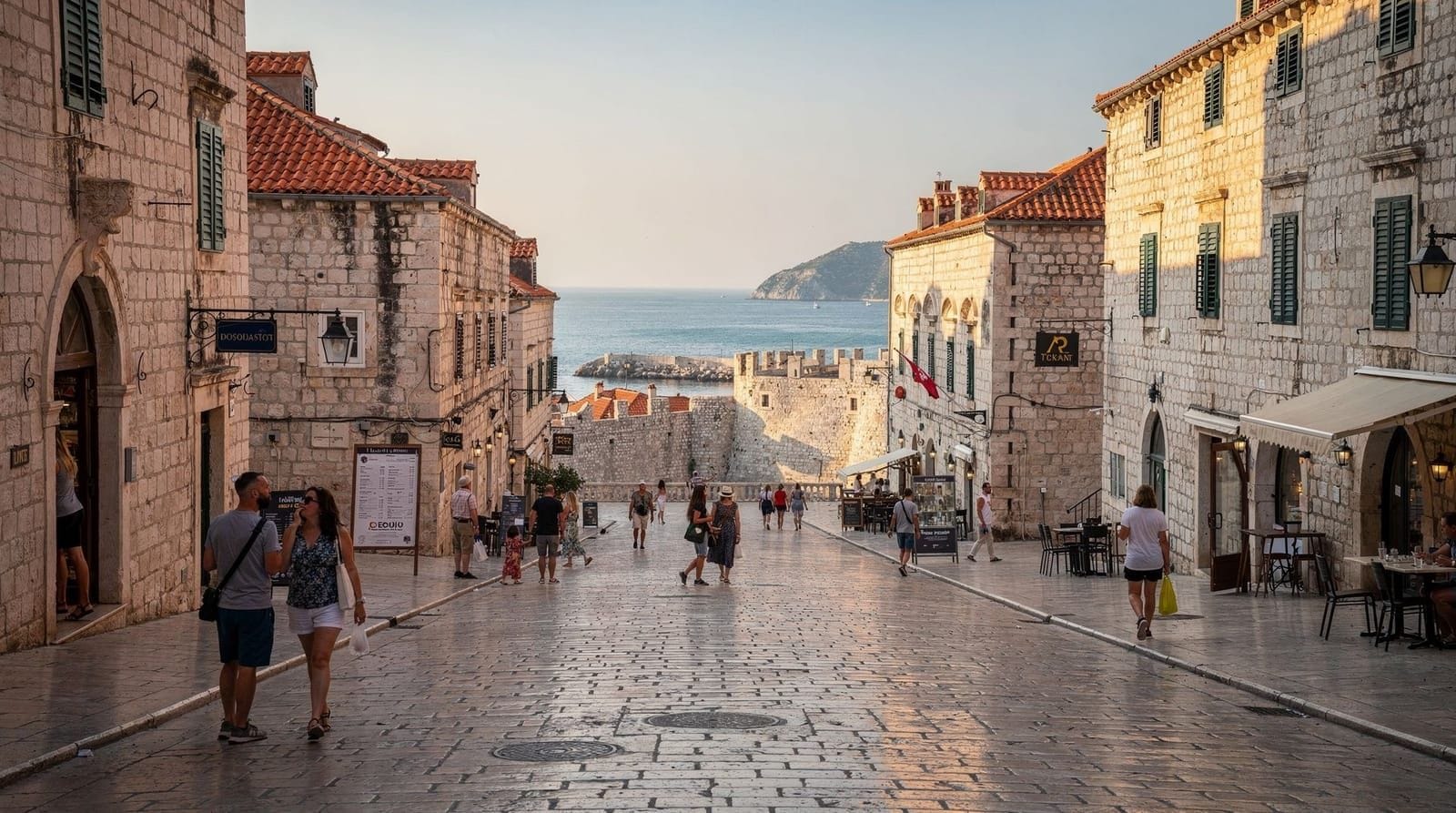
The crowds are gone. You can walk Dubrovnik’s city walls without queuing. You can get a table at a popular restaurant without booking a week ahead. The main square in Hvar has its own character rather than just reflecting the volume of people on it.
Prices. Accommodation runs 20–30% below August levels. Car ferry tickets can be bought the same day. The overall cost of a week in Croatia in May is meaningfully lower than the same week in August.
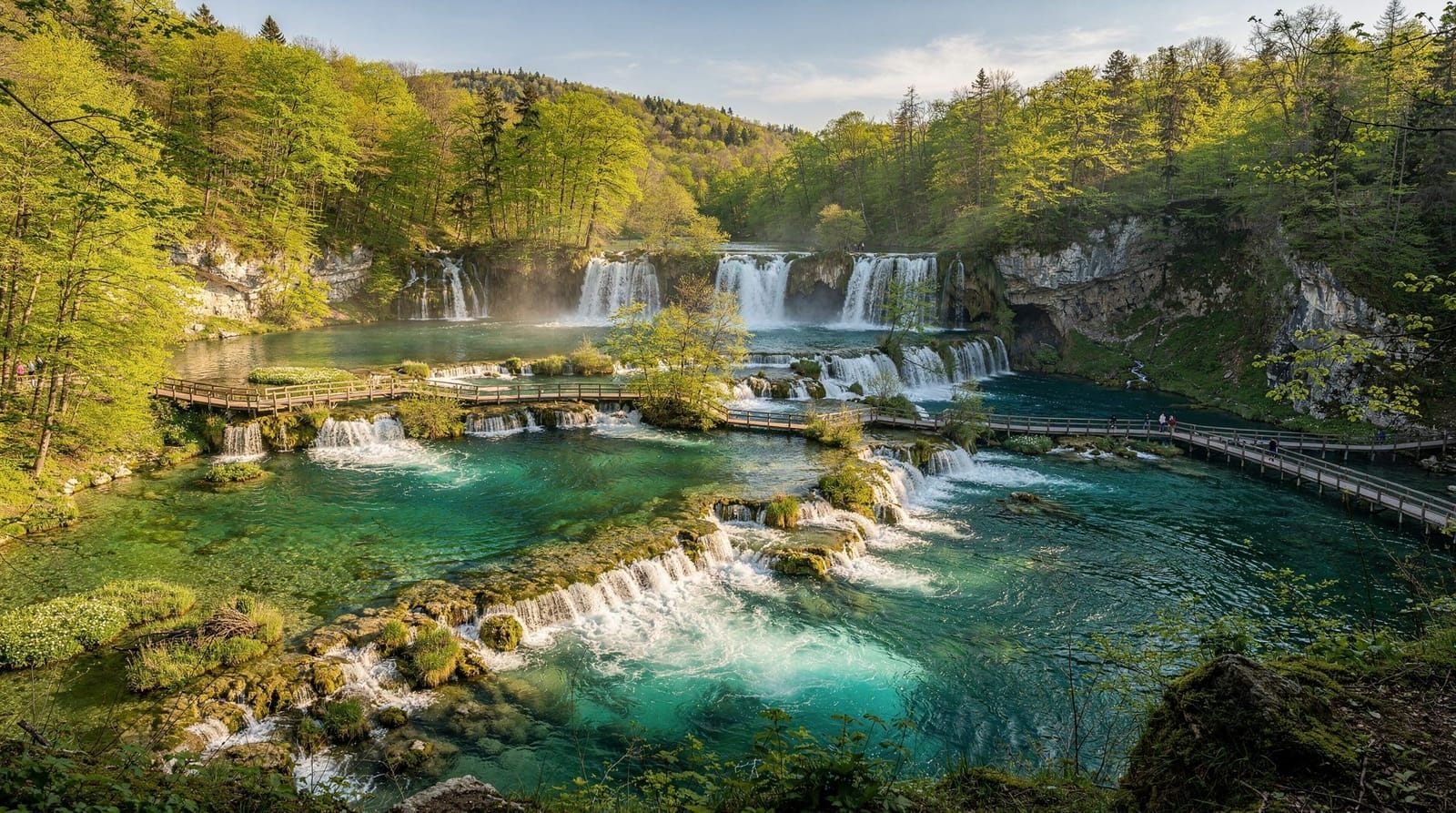
What to expect at Plitvice in May. This is one of the park’s best months. Snowmelt from the Velebit mountains keeps the waterfalls at maximum volume. The boardwalk routes through the lower lakes are at their most dramatic. Entry is easier to obtain than in summer, though online booking is still recommended.
June: the last of the pre-peak
June maintains all of May’s advantages while adding a warmer sea (21–22°C) and longer daylight — the sun sets around 8.30–9pm on the summer solstice.
Early June is the final window before the schools break up across Europe and the summer surge begins in earnest. After mid-June, numbers build noticeably, particularly in Split and on Hvar. By late June, you are in early peak season rather than shoulder season.
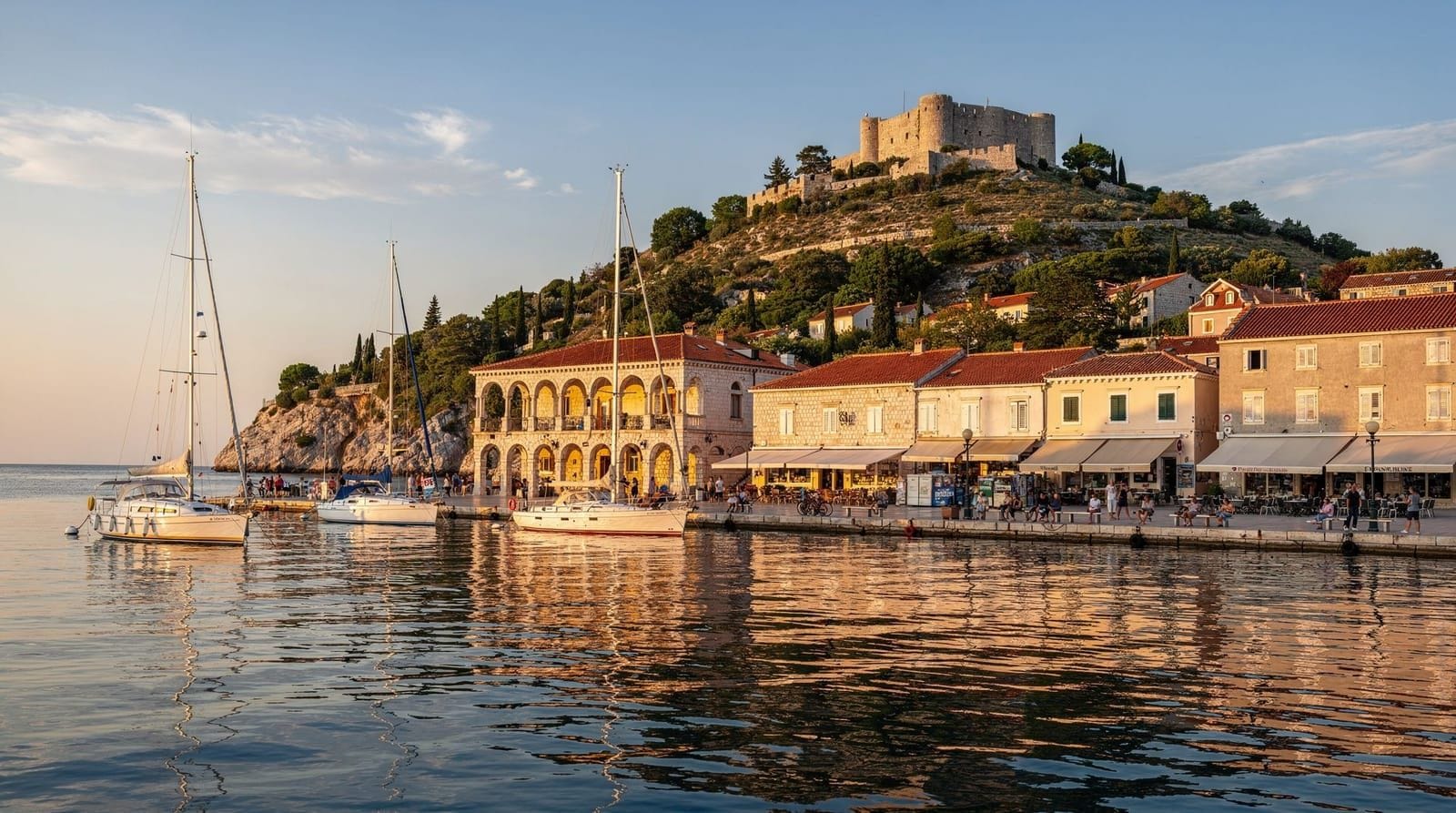
Sailing in June. The Maestral — a reliable northwest sea breeze that develops mid-morning along the central Dalmatian coast — blows steadily in June, making it one of the most consistent months for sailing. Marinas are not yet at their summer maximum, and skippered charter prices are below peak. June is, by some measures, the best sailing month.
Island hopping in June. Ferries run full summer schedules without the booking crunch of July–August. You can be more spontaneous — decide to take the afternoon catamaran to Vis without having planned it three weeks ago.
Autumn shoulder: September and October
September: warm sea, thinning crowds
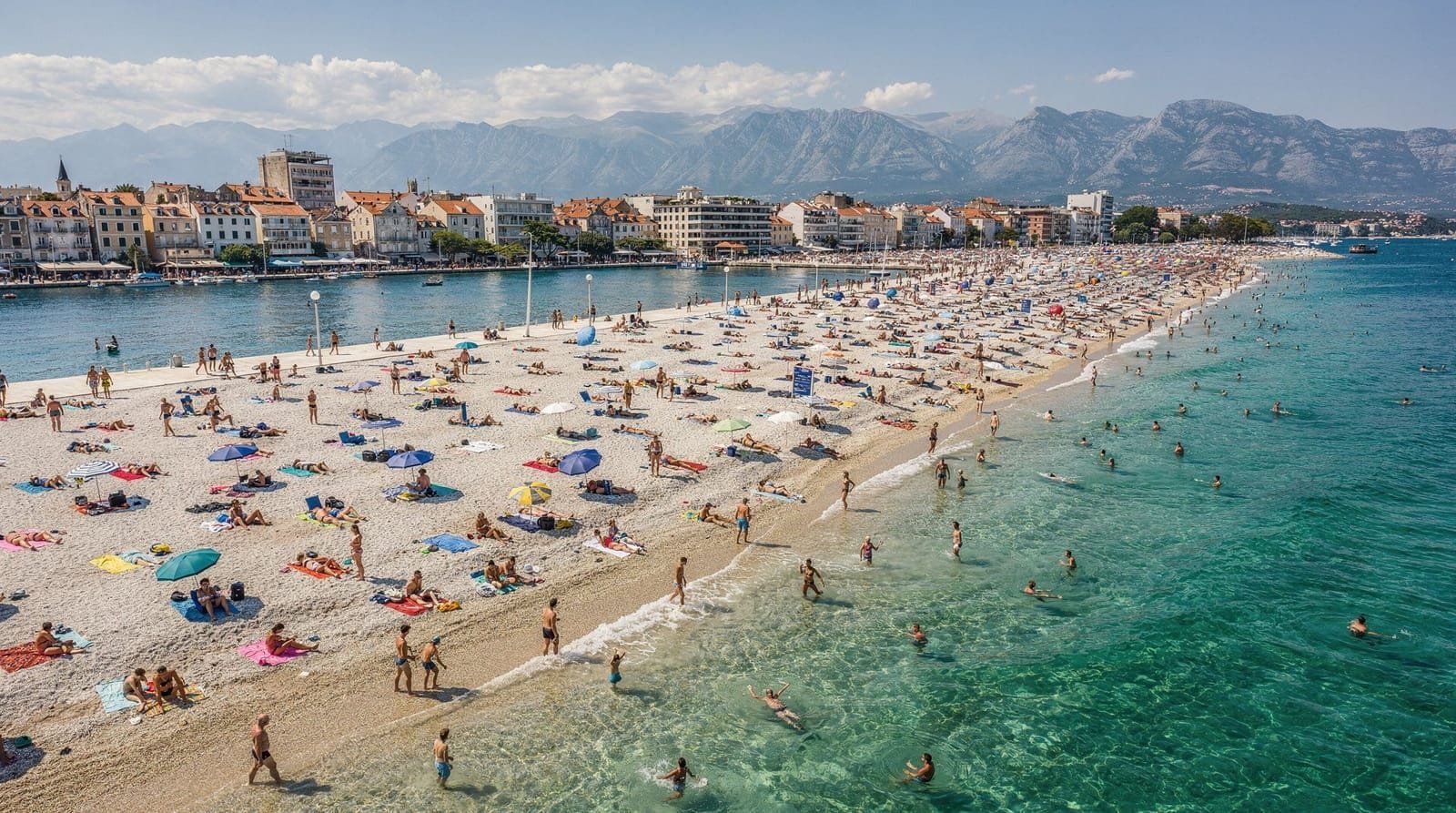
September has a compelling claim to being the best single month in Croatia. The Adriatic sea temperature in September is 23–24°C — the warmest swimming of the year, because the surface water has had all summer to absorb heat. Air temperatures are perfect: 24–27°C with warm but not scorching days.
From 1 September, the crowds thin noticeably. The shift happens fast — many European summer holidays end in the last week of August, and from the first week of September, the main tourist sights become noticeably more accessible. By mid-September, Dubrovnik, while still lively, is far more comfortable than the August peak.
Istrian truffles in late September. The white truffle season opens in the Istrian hill towns — Motovun, Grožnjan and the surrounding forests — in late September. Truffle hunting experiences combine gastronomy and landscape in a way that has no real parallel in summer Croatia.
The ferries question. September is fine for island hopping through roughly the 20th of the month. After that, some catamaran routes begin reducing from twice-daily to once-daily, and a few minor routes are discontinued. Check schedules for specific islands if you are planning a late September visit. Our Croatia ferries guide explains the seasonal pattern.
October: the hidden gem
The first two weeks of October are excellent on the Dalmatian coast: sea at 19–21°C (still swimmable), air at 18–22°C, and almost no crowds. The light in October on the Adriatic is extraordinary — warm and amber, the kind that makes every stone town photograph well.
Prices drop significantly. Accommodation that costs €200 per night in August may be available for €80–100 in October. You can book a table at a good restaurant on the same day. The pace of life on the coast returns to something resembling normality.
After mid-October, the picture changes. Many island businesses close. The coastal road towns thin out. For some people this quiet is exactly what they want; for others it can feel empty. Plan for it.
For Zagreb and inland Croatia, October is excellent with no caveats. The city is in full swing, museums are open, and day trips to Plitvice in autumn colours are genuinely stunning.
The case for shoulder season: a summary
| Factor | Shoulder (May–June, Sept–Oct) | Peak (July–August) |
|---|---|---|
| Air temperature | 18–27°C | 28–33°C |
| Sea temperature | 18–24°C | 24–26°C |
| Crowds | Manageable | Very high |
| Accommodation prices | 20–40% lower | Peak |
| Ferry bookings | Flexible | Book well ahead |
| Plitvice entry | Available online | Book weeks ahead |
| Sightseeing experience | Comfortable | Requires tactical planning |
| Restaurants | Walk-in generally fine | Reserve ahead |
What you give up in shoulder season
Honesty requires acknowledging the trade-offs:
Nightlife. The beach bars and late-night energy in Hvar town are at their absolute peak in July–August. June is lively; September is pleasant but the party is winding down.
Full beach energy. The beaches are less populated in shoulder season — which most people consider an upside — but the festive beach-bar atmosphere that characterises peak summer is muted.
Exact sea warmth. The sea at 18–19°C in May is perfectly swimmable but noticeably colder than August. If this matters to you, September is the better autumn choice (23–24°C) than October.
Shoulder season light and photography
One underrated benefit of travelling outside July–August is the quality of light. The harsh midday glare that flattens colour and forces siesta-style scheduling in high summer is far gentler in May, June, September and October — the sun sits lower, shadows are longer, and the golden hours before 9am and after 6pm stretch further into the day. Photographers who have shot Dubrovnik’s walls or Plitvice’s waterfalls in both peak and shoulder season consistently prefer the latter: warmer tones, fewer silhouettes ruined by crowds of strangers, and skies that haven’t been bleached by the summer haze. This is one of the less quantifiable but most consistently mentioned reasons experienced Croatia travellers gravitate toward May, June, September and October.
Who shoulder season suits — and who it doesn’t
Shoulder season is not universally superior; it depends on what you are optimising for.
It suits: travellers without school-age children who can move dates freely, couples and solo travellers prioritising comfort over nightlife intensity, photographers, food-and-wine travellers (Istrian truffle season falls in shoulder autumn), anyone doing a multi-stop itinerary who wants manageable logistics rather than a queue at every stop, and budget-conscious travellers who want peak-season quality at a lower price.
It suits less well: families locked into school holiday windows (which fall in peak season by definition), travellers specifically chasing Hvar’s July–August party atmosphere, anyone who wants the warmest possible sea above all else (August still wins there, narrowly), and groups who need every single restaurant, club and late-season boat trip running at full peak-season capacity.
Shoulder season by region
Dalmatian coast: May–June and September are outstanding. October is very good (first half). See Croatia in may and Croatia in September for detail.
Istria: June and September–October are prime, with October especially rewarding for food tourism (truffle season, olive harvest). Interior hill towns like Motovun shift from summer festival energy to a quieter, food-and-wine focused pace by late September — arguably Istria’s most flattering season, since the crowds that fill Rovinj’s harbourfront in August thin dramatically while the weather stays warm enough for coastal walks.
Kvarner: The belle-époque resort of Opatija is mild enough year-round; April through October is viable. Krk and Lošinj work well May–June and September.
Plitvice and Krka: May and September are the optimal months — waterfalls are dramatic and queues manageable. April is also good for the waterfalls. October brings autumn colours.
Zagreb and interior: Year-round viable, but spring (April–June) and autumn (September–October) are particularly pleasant for outdoor café culture and the day-trip circuit.
Practical shoulder-season planning
Accommodation: Book 2–4 weeks ahead in June and September for popular coastal spots; a week or less is usually fine in May and October. Prices are noticeably lower across all categories.
Transport: Ferries and catamarans run close to summer schedules in June and September. No need to book car ferry slots weeks ahead — same-day or next-day tickets are generally available. See Croatia ferries guide.
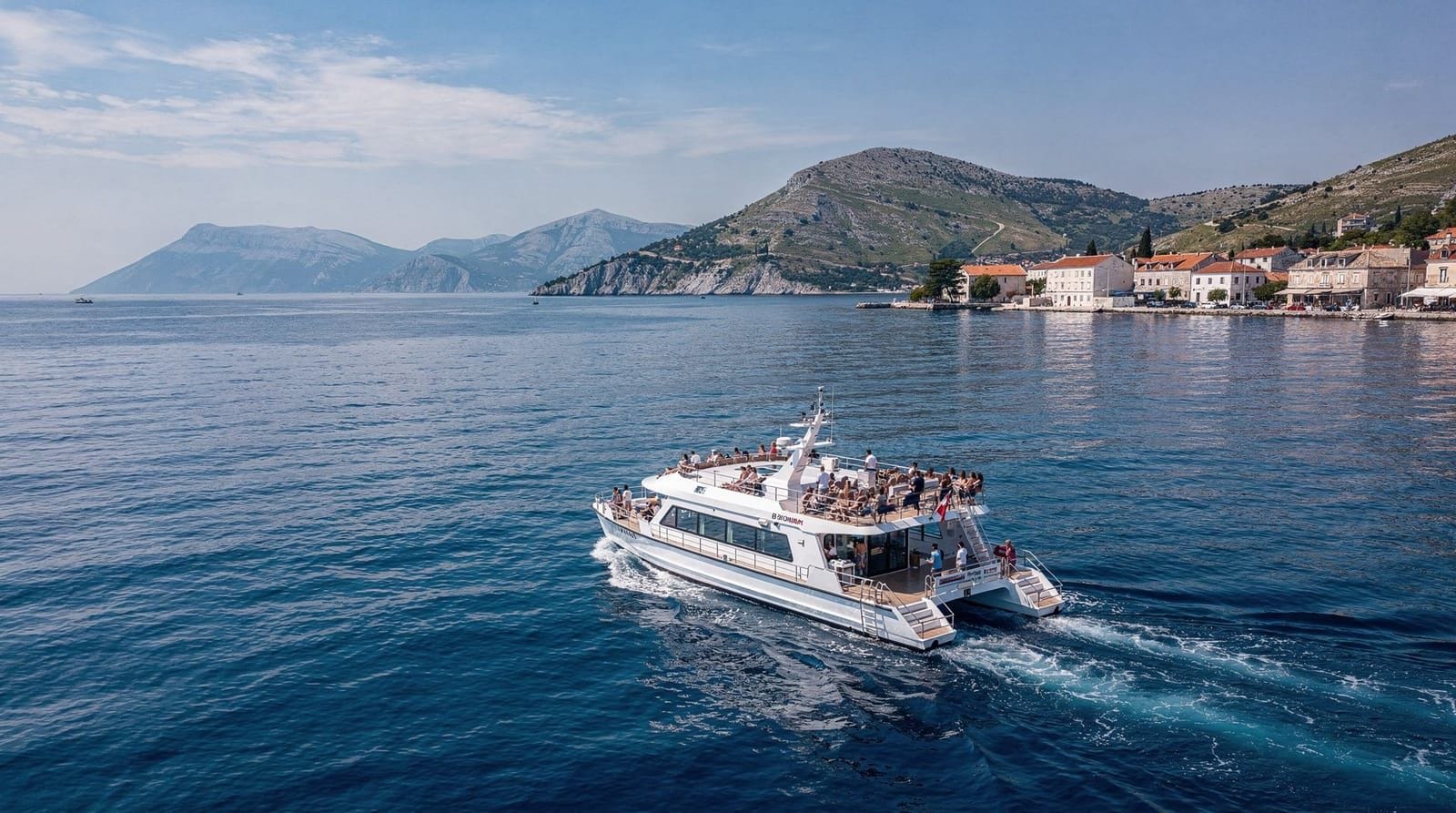
Tours: Most major excursions operate. Boat tours to the Blue Cave and 5 islands from Split run May through October. Some seasonal activities (certain overnight sailing trips) have a shorter season.
Budget: Use the price difference to upgrade — a nicer hotel for the same money, or an extra night. Or simply bank the saving. See Croatia on a budget for cost frameworks.
Frequently asked questions about Croatia shoulder season
Is the sea warm enough in May and June?
June sea temperatures reach 21–22°C — comfortable for most swimmers. May runs 18–19°C, which is fine for the adventurous and acclimated. August adds warmth (25–26°C) but at a significant price and crowd premium.Are all the tourist facilities open in shoulder season?
By late May, essentially everything on the coast is operating: ferries, hotels, restaurants, tour operators. April is patchier, with some smaller island businesses and catamaran routes still starting up.Is September better than June in Croatia?
For sea swimming, September wins (23–24°C). For long days and vibrant pre-season energy, June wins. Both are outstanding months. September sees thinning crowds after 1 September; some ferry routes begin reducing timetables in late September.How much cheaper is shoulder season in Croatia?
Accommodation runs 20–40% cheaper than August in June and September. October can be 30–50% cheaper. You pay less for equivalent quality, and popular restaurants and sights are accessible without the advance planning required in peak season.Can I island hop in shoulder season?
Yes, fully. Ferry schedules from mid-May through September are close to their full summer timetables. October reduces somewhat but major routes continue running. The main advantage is not needing to book car ferry slots weeks in advance.What is Croatia like in October?
Early October (first two weeks) is excellent: sea at 20–21°C, air at 18–22°C, almost no crowds, Istrian truffle season in full swing. After mid-October, some coastal businesses close and ferry timetables thin. It is late-season, not off-season, in early October.Are tours and activities available in shoulder season?
Yes — all major tours, boat trips, kayaking, hiking and cultural activities run through June and September. Some operators have more flexible scheduling than in peak season. In October, availability varies but most main excursions continue running.
Top experiences
Bookable activities with verified prices and instant confirmation on GetYourGuide.
Top experiences
Best-rated activities across GetYourGuide and Viator.

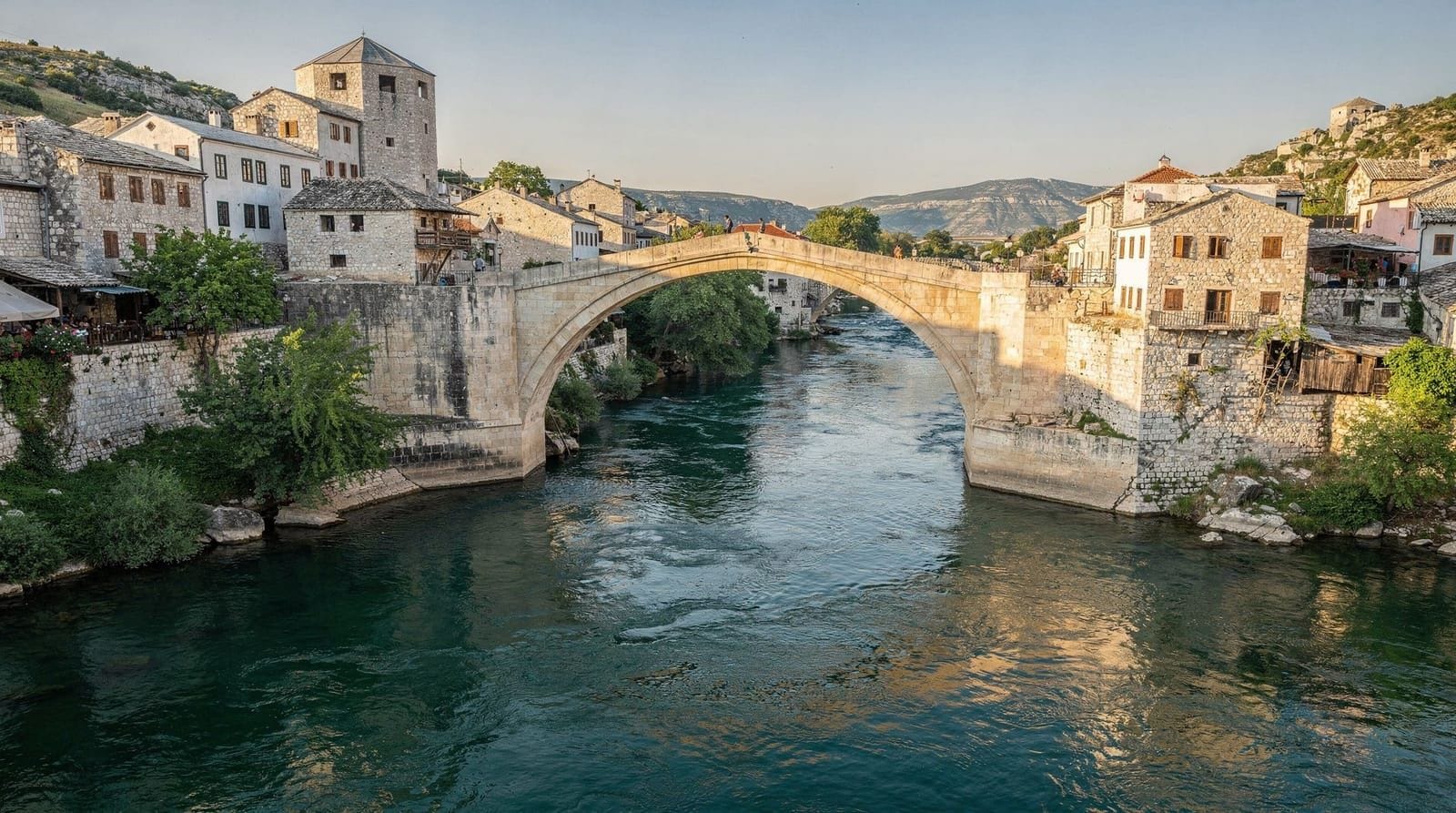
Mostar and Herzegovina Tour with Kravica Waterfall from Split & Trogir
- Viator

3Hour ALL-INCLUSIVE Sunset Dolphin Watching from Medulin onSandra
- Viator

Dolphin Watching & Sunset Boat Tour With Drinks & optional Dinner
- Viator

Fantastic DOLPHIN & SUNSET TOUR with dinner ( Pula-NP BRIJUNI )
- Viator

Medulin :All-Inclusive Pirate Boat Dolphin Watching Sunset Cruise
- Viator

Mostar & Kravice waterfalls full-day guided tour from Split
- Viator