Croatia in September
Is September a good time to visit Croatia?
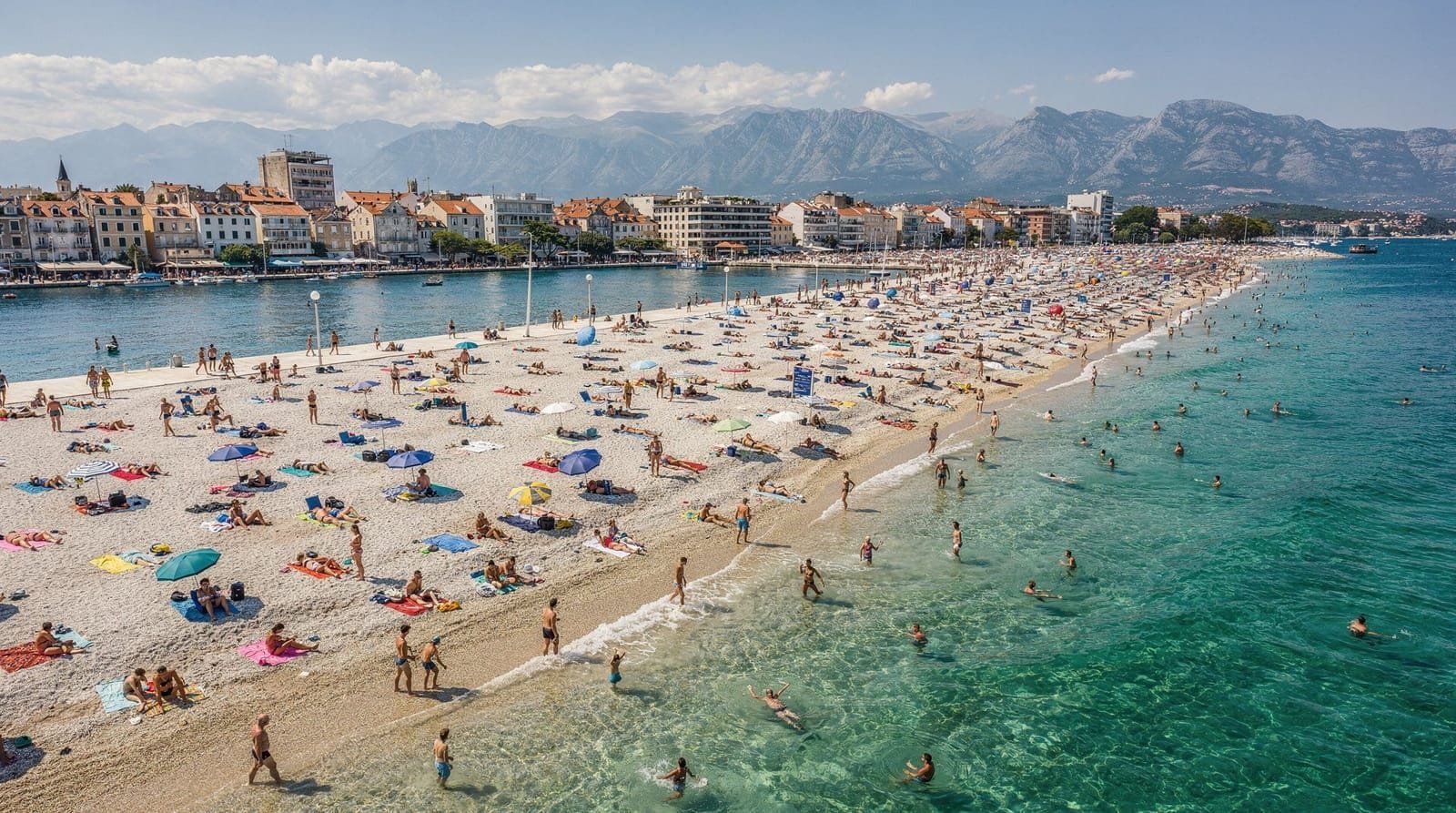
September is arguably the best month for experienced travellers. The Adriatic peaks at 23–24°C — warmer swimming than June — while crowds thin significantly from 1 September. Prices drop below the August peak. The first half of September, in particular, delivers summer conditions with shoulder-season crowds.
| Air temp (coast) | around 24–27°C |
| Sea temp | around 23–24°C, warmest of the year |
| Crowds | busy to 10 Sept, then thin fast |
| Prices vs August | around 10–25% cheaper |
| Best for | swimming, Dubrovnik, islands, Istria truffles from late month |
| Ferries | summer timetables to mid-month, then reducing |
September: the month Croatia becomes itself again
Every year, at some point in the first week of September, the coastal towns of Dalmatia exhale. The August intensity — the cruise ships stacking in Dubrovnik’s harbour, the Hvar main square so crowded you cannot walk in a straight line, the car ferry queue at 5am — subsides. The sea is still warm. The sun is still strong. The restaurants are still good. But suddenly the place has space.
This is what September in Croatia actually looks like, and it is why travellers who know the country well keep returning in this month.
The weather in September
Dalmatian coast (Dubrovnik, Split, Hvar, Zadar):
- Daytime air temperature: 24–27°C
- Evenings: 19–21°C (warm; a light jacket for late evenings)
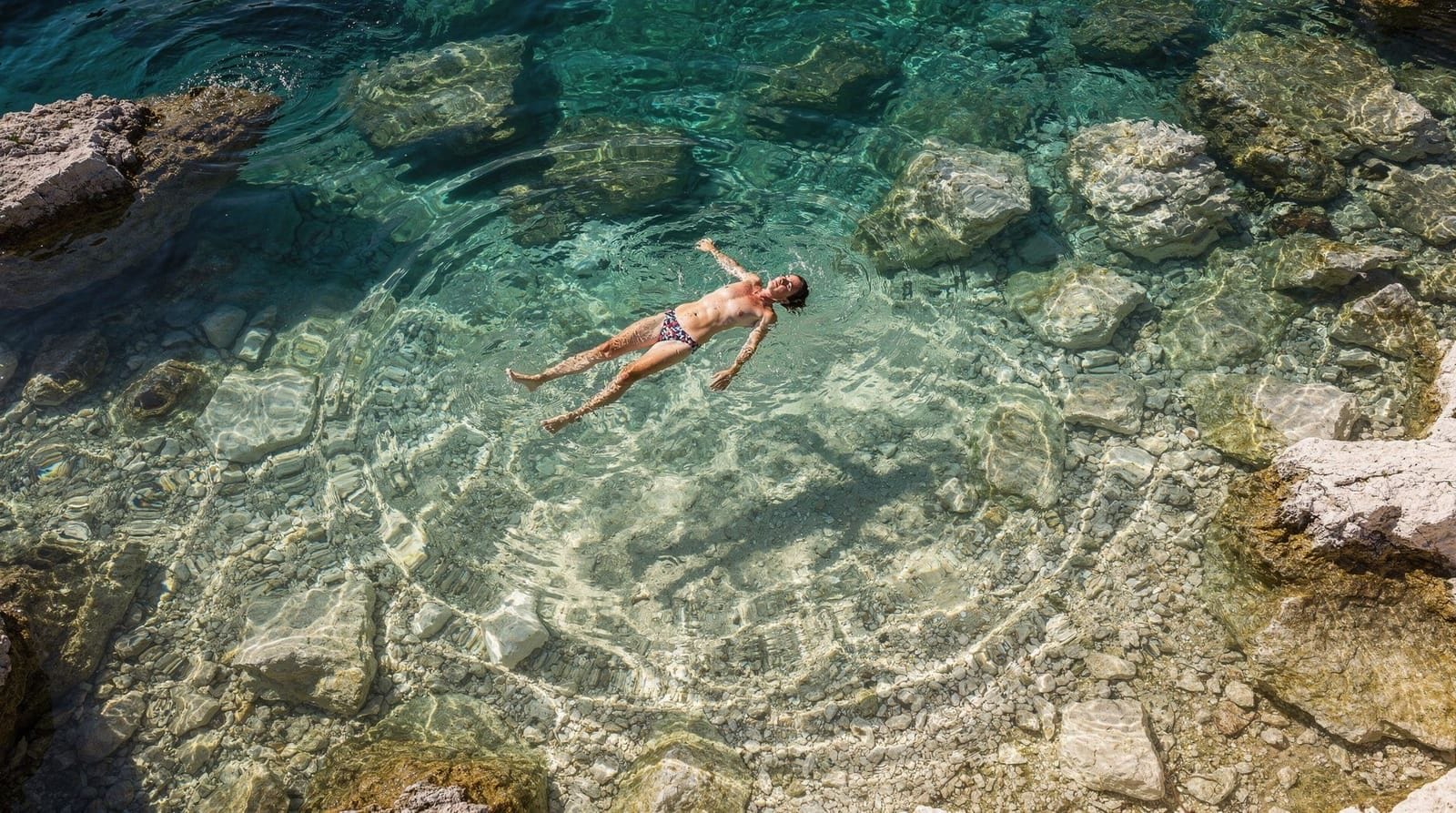
- Sea temperature: 23–24°C — the warmest comfortable swimming of the year for most people
- Sunshine: 8–9 hours per day average, declining slightly through the month
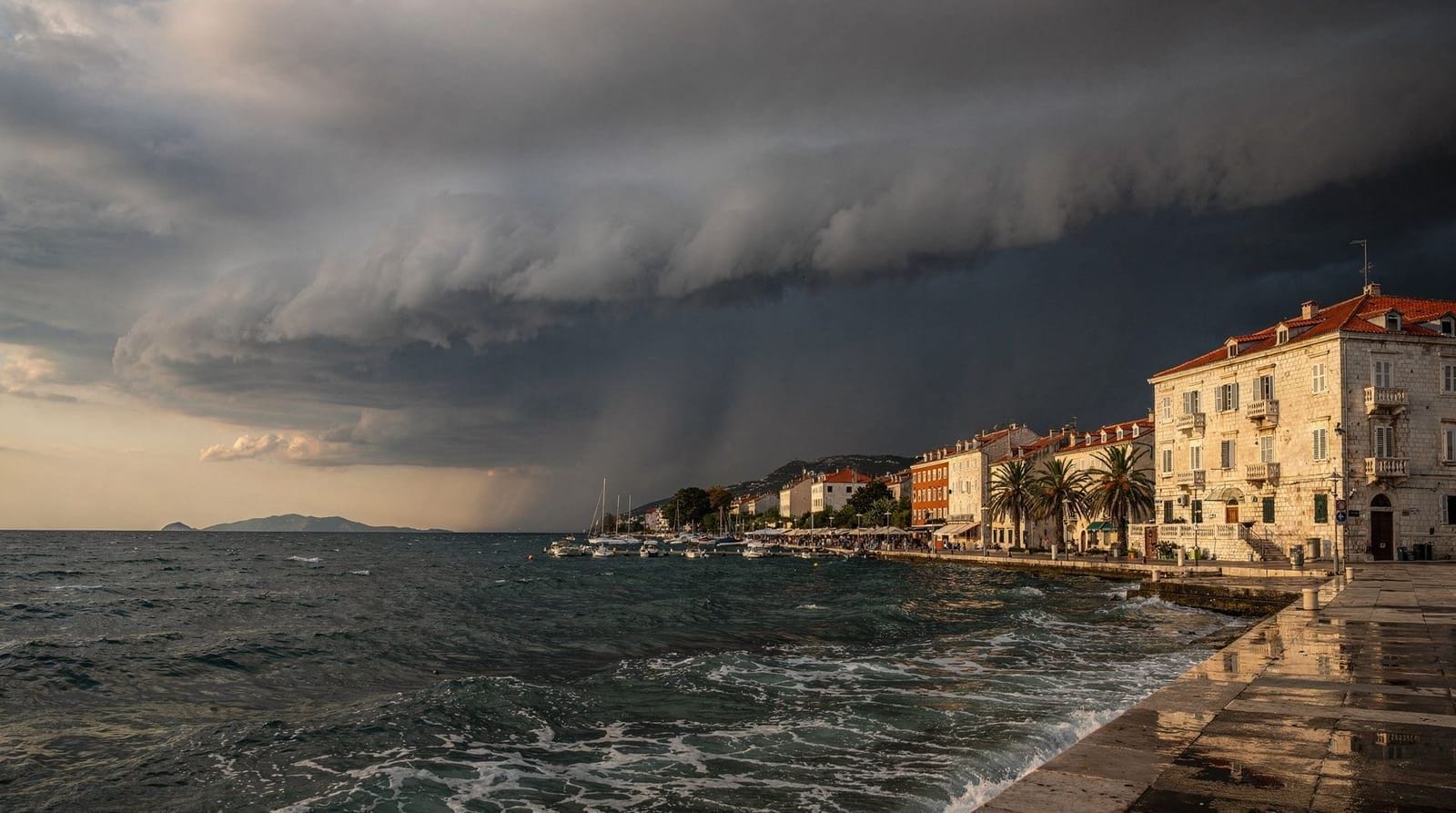
- Rain: minimal in early September; increasing chance of brief afternoon showers by late September
- Sunset: around 7.30pm in early September, approaching 7pm by end of month
Istria (Rovinj, Pula):
- Slightly cooler than south Dalmatia: 22–25°C air, 22–23°C sea
- Truffle season opens late September — the main reason to visit Istria this month
Zagreb and interior:
- 20–25°C in early September; cooling through the month
- Excellent for city breaks and day trips
Plitvice area:
- 17–22°C; cooler than the coast at 600–800m altitude
- Early autumn colour begins in late September; waterfalls well-fed
Why the sea is warmest for swimming in September
This is a genuine physical phenomenon, not just tourism marketing.
The Adriatic sea surface absorbs solar energy continuously from April through August. By August, the surface layer has accumulated as much heat as it will receive all year. In September, the days shorten and air temperatures drop — but the sea cools much more slowly than the air. The thermal mass of the water means it retains its peak temperature well into September.
The practical result: stepping into 24°C Adriatic water in September, with 25°C air and a warm breeze, is more comfortable than stepping into 22°C water in June under a blazing 30°C sun. The contrast between air and sea temperature matters for how the swimming experience feels.
This is why veteran Croatia travellers often describe September as the best swimming month despite it not being the absolute warmest on paper.
For the full sea temperature picture by month, see Croatia sea temperatures.
Crowds: the September reset
The crowd pattern in September has a specific structure:
1–7 September: Still busy — many European summer holidays extend into early September, and the transition is gradual. Dubrovnik and Hvar are noticeably quieter than August but still lively.
8–15 September: The main shift happens here. Most European school holidays have ended. Cruise ship volumes reduce. Restaurant tables are available on the day. City walls can be walked without queuing.
15–30 September: Classic late-season quiet. Major sights are easily accessible. The islands have their character back. Prices continue to ease. Some restaurants and facilities begin shortening their hours.
This means that if you have flexibility, the second week of September onwards is clearly preferable to the first.
September vs October: which side to choose
Both months thin out the crowds, but they trade off differently. September keeps summer’s sea temperature and full restaurant season while crowds fall away from the second week on — it is the closer thing to “summer without the chaos.” October trades a few degrees of sea warmth and shorter days for even lower prices, near-empty sights, and the start of proper autumn colour inland, especially around Plitvice and Istria’s hill towns. If swimming still matters, choose September. If quiet sightseeing and value matter more than the sea, October — and especially its first half — is worth serious consideration. See Croatia’s shoulder season guide for the fuller picture across both months.
Plitvice in September
Plitvice Lakes National Park in September benefits from two factors: reduced visitor numbers and the beginning of autumn.
The summer entry-cap pressure eases significantly from September. You can book tickets with a few days’ notice rather than weeks. The heat that makes the summer boardwalk walks uncomfortable dissipates; walking the two main routes at 24°C is far more pleasant than at 33°C.
By late September, early autumn colour begins appearing on the trees around the lakes — the first golds and reds preceding the full October display. The water remains its characteristic vivid turquoise-green; the autumn contrast between coloured leaves and the blue-green pools is exceptional.
Island hopping in September
The first two weeks of September are excellent for island hopping: full (or close to full) summer ferry timetables, no need to book car spaces weeks ahead, and islands at their most genuinely liveable.
What remains open: Hotels, restaurants, beach bars, tour operators, boat excursions — essentially everything from the summer. The main tourist infrastructure does not begin closing until October.
What begins reducing: Some catamaran routes reduce from twice daily to once daily from around 15 September. Check specific timetables on jadrolinija.hr for your planned routes.
The advantage: You can travel with flexibility. Decide in the morning to take the afternoon ferry to Vis. Walk onto a Split–Hvar car ferry without having booked three weeks ahead. This kind of spontaneous island travel is impossible in August and perfectly feasible in September.
For full ferry planning guidance, see the Croatia ferries guide.
Istria in September: the truffle story
Istria in September-October has a specific, compelling draw that is completely separate from the Dalmatian coast experience: the white truffle season.
White truffles (Tuber magnatum) are found in the oak and hornbeam forests around Motovun, Buzet and Grožnjan in the Istrian interior. The harvest season begins in late September and runs through January, with October typically the peak. The specific micro-climate of the Mirna river valley produces some of Europe’s finest white truffles — a significant claim given that the main competition is Périgord and Alba.
What this means for September visitors:
- Truffle hunting experiences with trained dogs run from late September. A 2–3 hour hunt in the forest, culminating in a tasting meal featuring whatever is found, is one of the memorable food experiences available in Croatia.
- Restaurants in Motovun, Buzet and Rovinj begin featuring fresh white truffles on their menus from late September — pasta, risotto, eggs, and (for those who can afford it) shaved raw over a simple dish.
- The landscape in late September is beautiful — the Istrian hills begin to colour, the morning mists hang in the valleys, and the old hilltop towns have an autumnal atmosphere that summer does not offer.
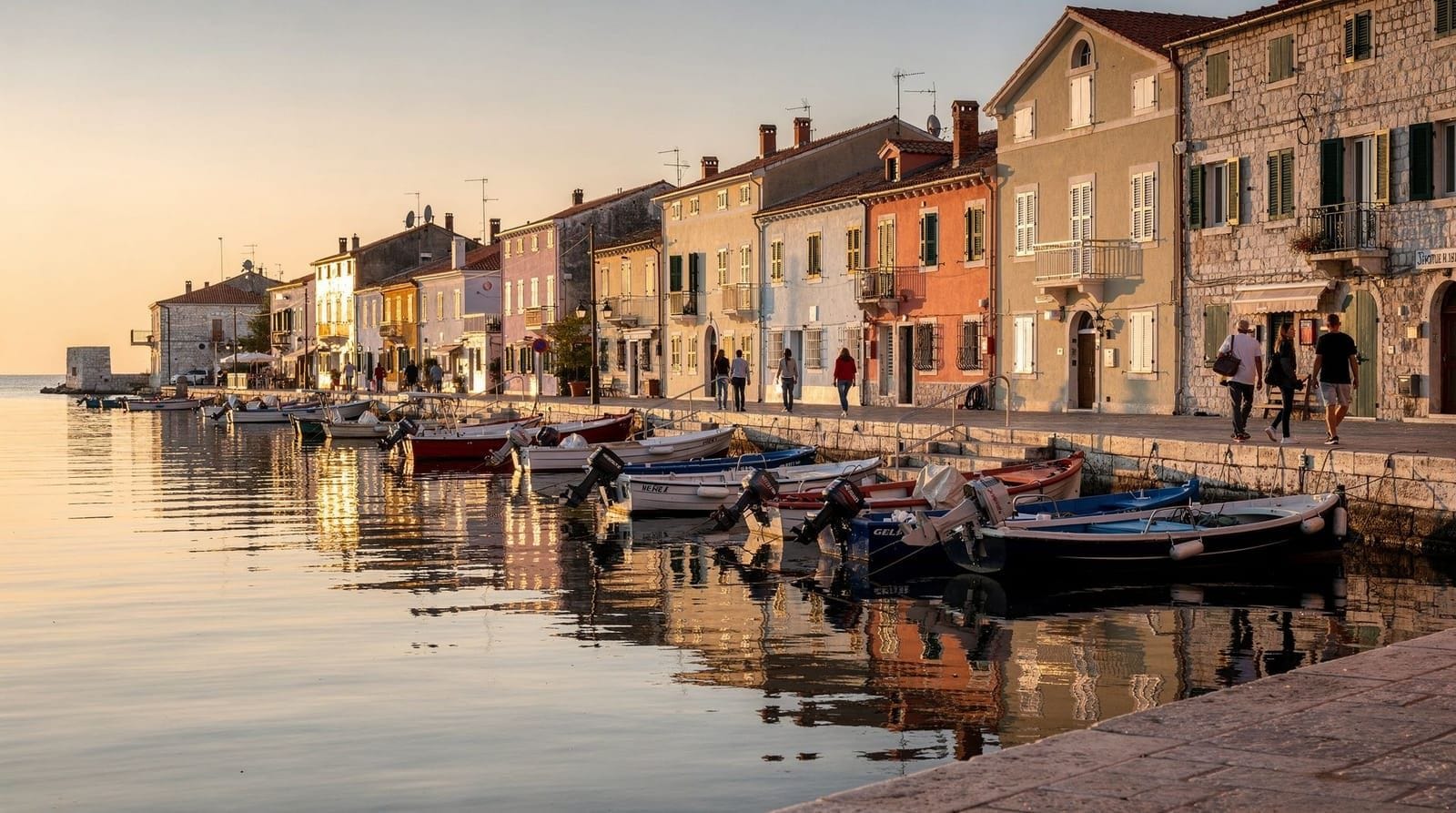
Rovinj in September is also excellent for those not primarily interested in truffles. The summer crowds have eased, the sea is 22–23°C, and the terrace restaurants along the old town waterfront are at their most pleasant.
Dubrovnik in September
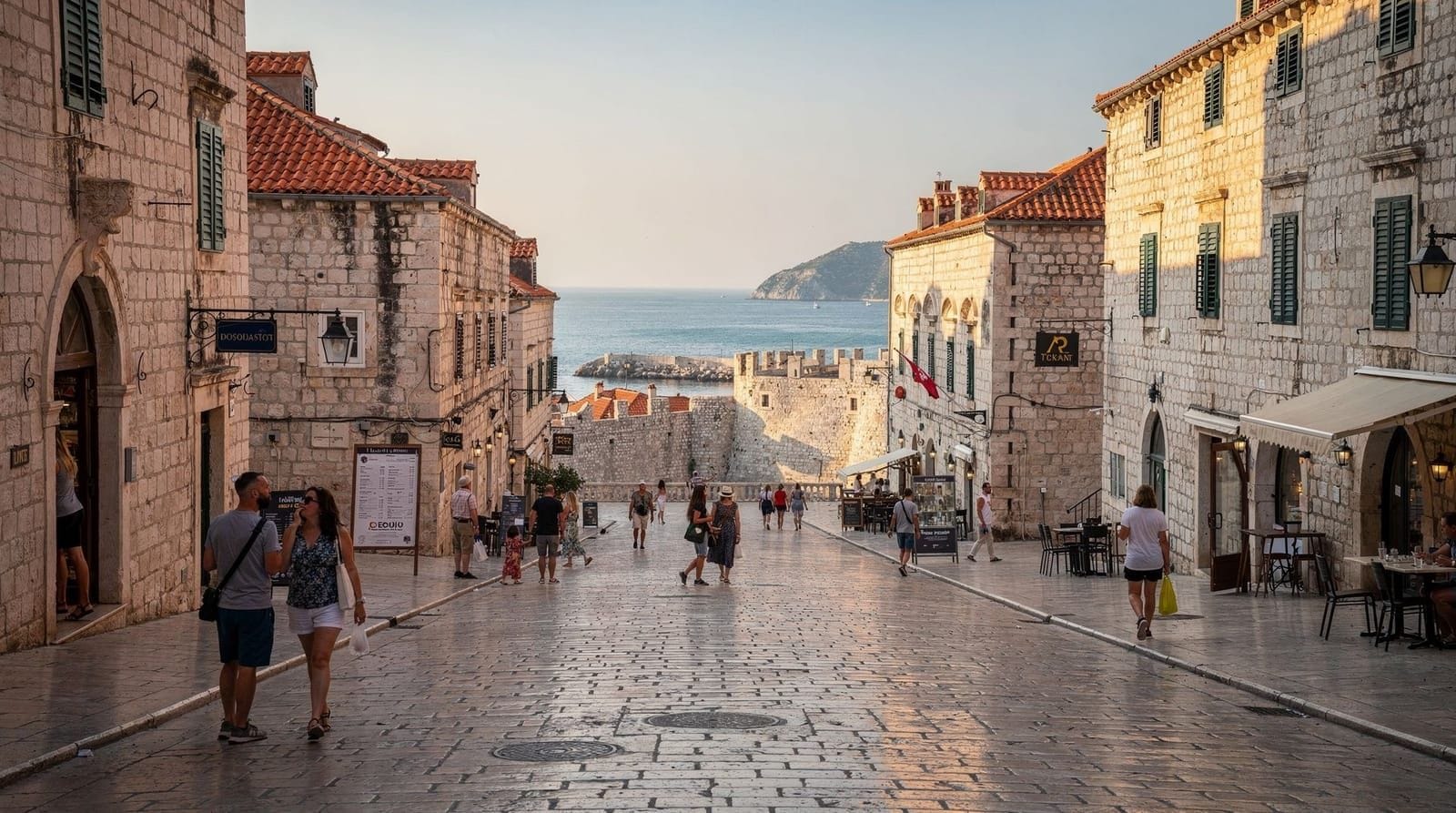
Dubrovnik in September is one of the most compelling arguments for the month. The city that becomes genuinely uncomfortable in August — 10,000 cruise passengers, queues for the walls, the Stradun a slow river of bodies — returns to something approaching normality.
What changes in September:
- Cruise ship frequency reduces substantially (some days none at all)
- The Old Town is walkable at a human pace
- Restaurant tables are available on the day
- The city walls are quiet enough to actually enjoy the views rather than navigate the crowd
What stays the same:
- The walls are magnificent (open and fully operational)
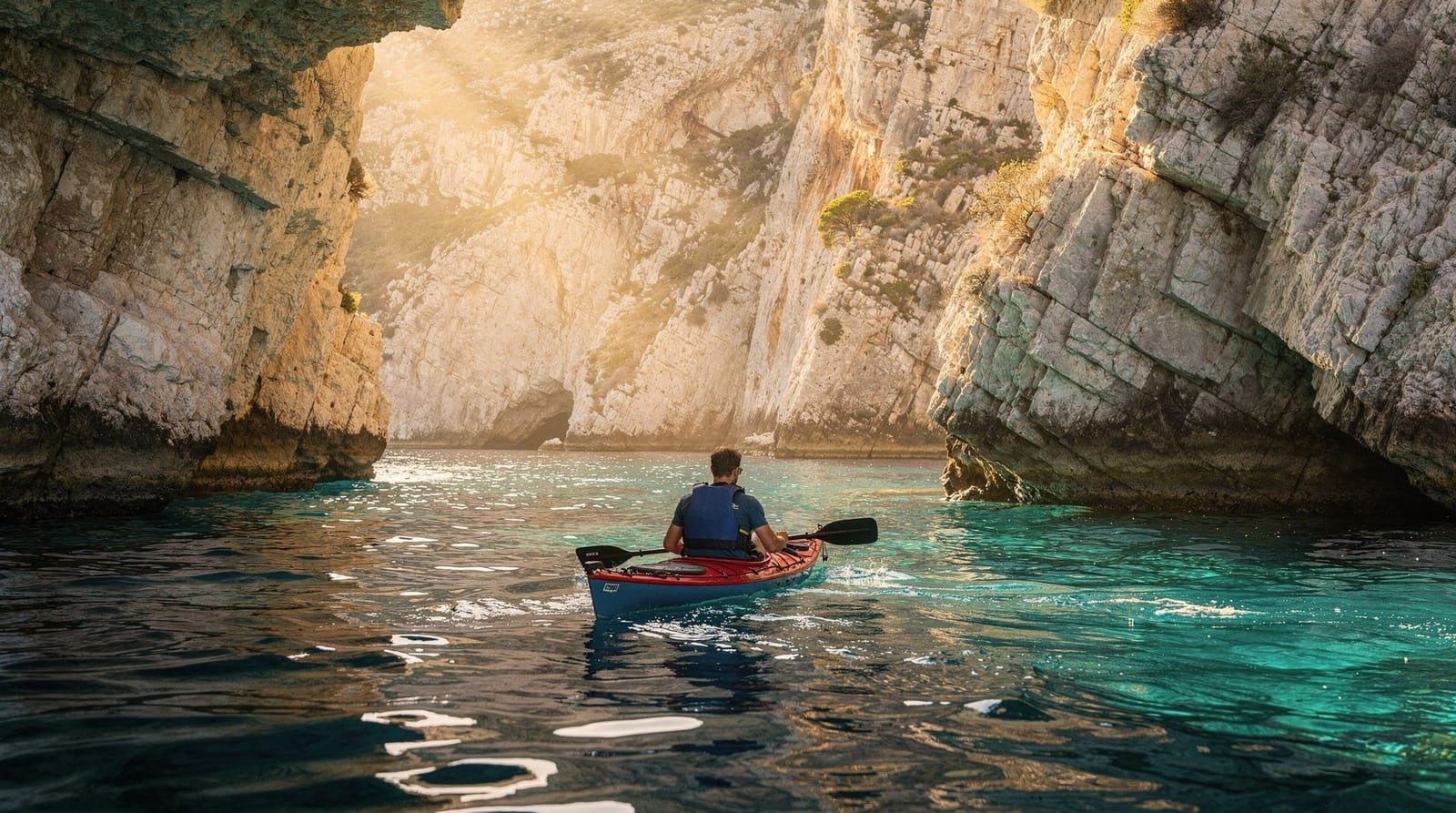
- Sea kayaking around the Old Town and to the Elaphiti Islands continues
- Restaurants are in their full season — actually, September is often when they are at their finest, with peak-season supplies and staff but reduced pressure
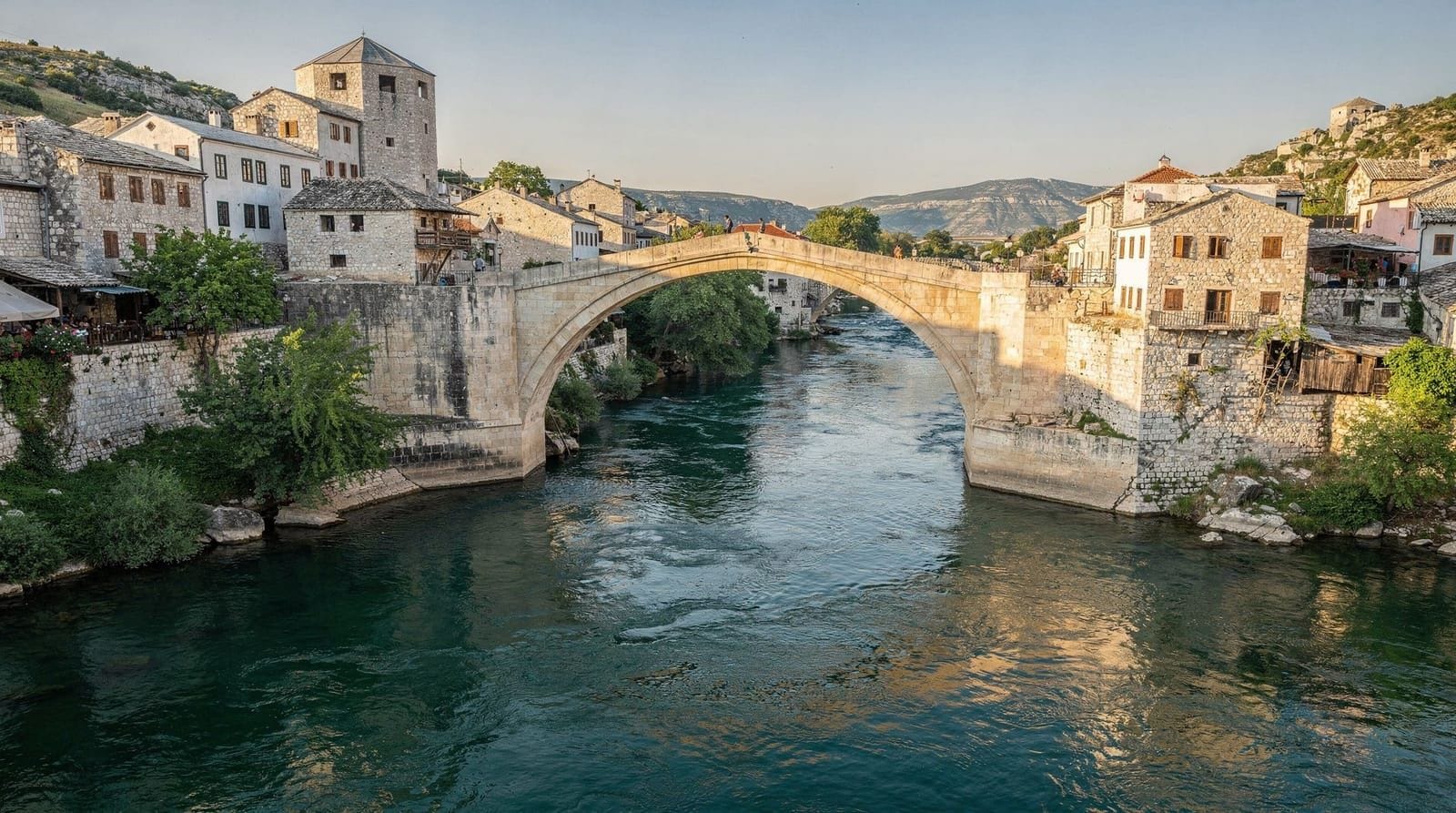
For day trips from Dubrovnik in September — Mostar, Kotor, the Elaphiti Islands — see day trips from Dubrovnik.
Prices in September
September prices sit between the August peak and the October low:
- Accommodation: Typically 10–20% below August in early September, 15–25% below by mid-to-late September. Not the cheapest time, but meaningfully below peak.
- Car rental: Cheaper than August, availability better.
- Ferry tickets: Standard prices year-round for foot passengers; car ferry pricing is the same but without the booking crunch.
- Flights: Can be cheaper than August departures, particularly after the 10th of the month.
For full cost frameworks, see Croatia daily costs and Is Croatia expensive?.
A sample September week: Split, islands and Istria
A realistic one-week September framework that leans into what the month does best: Days 1–2 in Split, walking Diocletian’s Palace in the cooling evenings and using it as a ferry base. Days 3–4 island hopping to Hvar or Korčula, taking advantage of flexible, spontaneous ferry travel that summer’s booking pressure doesn’t allow. Day 5, a Plitvice Lakes day trip from Split or Zadar, timed for the easing entry-cap pressure. Days 6–7 in Dubrovnik, walking the walls at a human pace and sea kayaking to the Elaphiti Islands. This route works precisely because September removes the two biggest summer frictions — ferry booking pressure and Plitvice’s entry queues — without sacrificing warm water or open restaurants.
Practical September planning
Ferry timetables: Check jadrolinija.hr for your specific routes in late September. The main island routes (Split–Hvar, Split–Brač, Split–Korčula) continue through September and into October. Smaller catamaran routes may reduce. Plan your island-hopping itinerary around confirmed timetables rather than assuming summer frequencies continue.
Accommodation: Book 3–4 weeks ahead for the first two weeks of September (still popular); 1–2 weeks ahead for late September is usually fine. October is even more available.
Plitvice tickets: Book 1–2 weeks ahead for September; same-day often available by late September.
Jellyfish: Occasional in September. Ask locally if jellyfish have been spotted in a specific area. Rinse any sting with seawater; antihistamine cream from a pharmacist helps.
Evenings: Temperatures drop to 19–21°C in September evenings — still warm by most standards, but noticeable after a day of 26°C. A light layer for evening is useful.
Is September good for a road trip? Yes, and arguably better than peak summer: traffic on the coastal D8 road thins after the first week, parking in Split and Dubrovnik’s outskirts is easier to find, and the light in the second half of the month is excellent for photography. See the Croatia road trip itinerary for a route that works well timed to September.
Family travel in September: Once European school terms resume in early September, family crowds at major sights drop sharply — a genuine advantage for families able to travel outside school holidays. For families still tied to term time, the first week of September retains a summer feel while being marginally calmer than August. See the Croatia with kids guide for planning specifics.
Frequently asked questions about Croatia in September
How warm is Croatia in September?
Air temperatures average 24–27°C on the Dalmatian coast in September — warm and pleasant without the July–August heat. Sea temperatures of 23–24°C make it the best swimming month in terms of water comfort. Evenings (19–21°C) are pleasant with a light jacket.Are the ferries running in September?
Yes, summer timetables continue through roughly mid-September. From mid-September, some catamaran routes begin reducing to once daily. By early October, the timetable is noticeably thinner. Check jadrolinija.hr for specific route schedules before booking.Is September crowded in Croatia?
The first week of September is still moderately busy — European holidays extend into early September in some countries. From around 10 September, crowds thin substantially. By mid-September, the main sights are noticeably more accessible than in August.Is September good for Plitvice?
Yes — September is one of Plitvice's best months. Entry tickets are easier to obtain than in summer. Temperatures are comfortable. The autumn light on the lakes is beautiful. Early golden colour begins appearing by late September.What is happening in Istria in September?
The white truffle season opens in late September around Motovun and the Istrian interior. Truffle hunting experiences, restaurants featuring fresh truffles and the annual Motovun Film Festival (held in late July/early August but truffle events begin September) make Istria especially rewarding this month.Does Croatia get jellyfish in September?
Jellyfish appear occasionally in the Adriatic during late summer and early autumn. September can see some jellyfish, particularly mauve stingers in certain years and locations. The risk varies by year and area; it is not a consistent problem but worth being aware of.How does September compare to August?
September: slightly cooler air (24–27°C vs 28–33°C), same or slightly cooler sea (23–24°C vs 25–26°C), significantly fewer crowds, 10–25% lower accommodation prices, no need to book a week ahead for restaurants. For most adult travellers, September is preferable to August.
Top experiences
Bookable activities with verified prices and instant confirmation on GetYourGuide.
Top experiences
Best-rated activities across GetYourGuide and Viator.

Mostar and Herzegovina Tour with Kravica Waterfall from Split & Trogir
- Viator

3Hour ALL-INCLUSIVE Sunset Dolphin Watching from Medulin onSandra
- Viator

Dolphin Watching & Sunset Boat Tour With Drinks & optional Dinner
- Viator

Fantastic DOLPHIN & SUNSET TOUR with dinner ( Pula-NP BRIJUNI )
- Viator

Medulin :All-Inclusive Pirate Boat Dolphin Watching Sunset Cruise
- Viator

Mostar & Kravice waterfalls full-day guided tour from Split
- Viator