Croatia, Schengen & the Euro: What Actually Changed for Travellers
| Currency | EUR (since 1 Jan 2023) |
| Borders | Schengen member (since 1 Jan 2023) — no checks from Slovenia/Hungary |
| 90/180 rule | Applies to all non-EU nationals across the whole Schengen area |
| EES | Live since October 2025 — biometric registration at external borders |
| ETIAS | Not yet live as of mid-2026 — check before booking |
Croatia had a big administrative double-header on 1 January 2023: it joined the Schengen Area and adopted the euro simultaneously. Nearly two years on, most travellers barely notice the changes at the border — which is precisely the point. But there are a few practical shifts worth understanding before you arrive, especially with the EU’s new Entry/Exit System (EES) now live and the ETIAS travel authorisation on the horizon.
This is the plain-language update you need.
What Changed on 1 January 2023
Schengen Membership
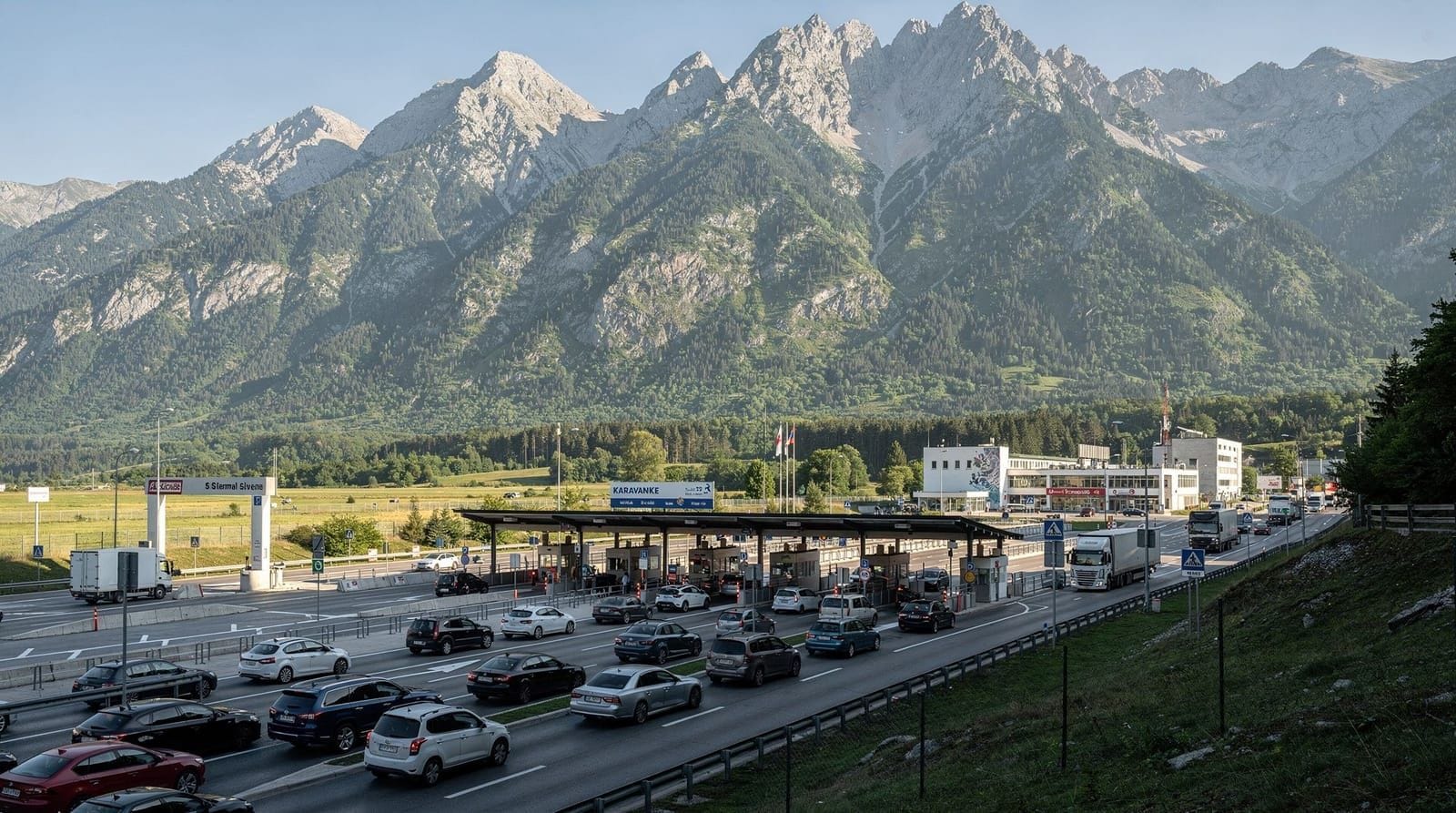
Croatia had been an EU member since 2013 but sat outside Schengen until the end of 2022. The practical consequence: border checks between Croatia and its EU neighbours — Austria, Hungary, Slovenia — were abolished overnight.
For most travellers, this means:
- No passport control when crossing from Slovenia into Istria or from Hungary into Slavonia by road or rail.
- No separate Croatian stamp in your passport — Croatia’s entry is counted within your overall Schengen allowance.
- The 90/180 rule now applies uniformly. Citizens of non-Schengen countries (Americans, Australians, Canadians, British nationals, and others) can stay in Croatia for up to 90 days within any 180-day rolling window — but those days count toward the same allowance used in France, Germany, Greece, Italy, and the other 25 Schengen states. If you spent six weeks in Italy before heading to Dubrovnik, that time comes off your Croatian clock too.
- Border crossings by sea from Montenegro or Bosnia still require a passport check, since neither country is in Schengen.
The Euro Replaces the Kuna
The Croatian kuna (HRK) was retired on 1 January 2023. Croatia now uses the euro (EUR). The fixed conversion rate was 7.5345 HRK to 1 EUR, and kuna notes and coins can no longer be used for purchases.
What this means in practice:
- No currency exchange needed if you’re arriving from another eurozone country.
- ATMs and card payments work exactly as they do in Germany or Spain. Foreign transaction fees depend on your card issuer, not Croatian law.
- Prices feel slightly different. Rounding during conversion meant some things got marginally cheaper, others slightly more expensive. In general, Croatia’s daily costs are in line with the mid-range of southern European destinations.
- Budget planning is cleaner. A mid-range traveller can expect to spend EUR 85–150 per day including accommodation, meals and activities; a backpacker can manage on EUR 45–65. See our full Croatia budget guide for the breakdown.
EES: The Entry/Exit System (Active from October 2025)
The EU’s Entry/Exit System went live in October 2025 and is the most significant practical change for non-EU travellers since Schengen expansion.
What EES Is
EES is a biometric registration system that replaces the old passport-stamping process for non-EU nationals entering Schengen. When you arrive at a Croatian (or any Schengen) external border — an airport, a sea port, or a land crossing from a non-Schengen country — you will now:
- Have your fingerprints scanned (four fingers, usually).
- Have a facial photo taken digitally.
- Have your passport details registered electronically, including your entry date and intended exit date.
This data is stored in a central EU database and is used to automatically calculate how many days you have used within your 90/180 Schengen allowance.
What EES Is Not
EES is not a visa. It does not replace any existing visa requirement, and nationals of countries that currently enter Schengen visa-free continue to do so. EES is simply a digital border registration system.
EES also does not apply to EU, EEA, or Swiss nationals, or to anyone with a long-stay visa or residence permit.
What to Expect at the Border
The main practical effect is that border queues at entry points — particularly at Dubrovnik Airport (DBV), Zagreb Airport (ZAG) and Split Airport (SPU) — have lengthened. Automated EES kiosks are being rolled out, but staffed lanes remain slower than the old passport-stamp process.
Practical tips:
- Arrive at the airport with extra buffer time. If your flight lands at 11pm and your transfer departs at midnight, that is too tight.
- Have your travel documents accessible — some kiosks allow self-service registration before reaching the officer.
- First-time registrations take longer. Subsequent visits within the system’s memory (3 years) are faster, since your biometrics are already on file.
- The 90-day count is now tracked automatically. There is no ambiguity about whether you have days left — the system knows. Overstaying will result in a flagged record visible to all Schengen states.
ETIAS: Coming Soon (Check Before You Travel)
ETIAS (European Travel Information and Authorisation System) is the EU’s version of an ESTA-style pre-travel authorisation, similar to what the US and Australia require for visa-free visitors. It was not yet live as of mid-2026, but is expected to launch in the near future.
Who ETIAS Will Affect
ETIAS will apply to nationals of countries that currently enter Schengen visa-free — including Americans, Canadians, Australians, British nationals, and dozens of others. EU citizens and those with Schengen visas or residence permits are not affected.
What ETIAS Will Involve
- An online application completed before travel (not at the border).
- A fee of approximately EUR 7 for adults (free under 18 and over 70).
- Approval within minutes to a few days in most cases; longer if additional checks are needed.
- Validity of 3 years (or until passport expiry), covering multiple trips.
What to Do Now
Check the official ETIAS website or the EU’s Visa Navigator tool before booking travel, particularly if your trip is more than a few weeks out. The launch timeline has shifted several times, so verify current status from an official source rather than relying on cached travel blog advice.
The Pelješac Bridge: One More Practical Update
Since July 2022, the Pelješac Bridge has connected mainland Dalmatia to the Pelješac Peninsula, bypassing the small Bosnian coastal corridor at Neum. Before the bridge, any road journey from Dubrovnik north to Split technically crossed into Bosnia-Herzegovina for a few kilometres — a minor but occasionally congested border crossing.
That crossing is now optional. The bridge is free to use, carries two lanes each direction, and has eliminated what was previously the most annoying pinch point on the Adriatic coastal road. If you’re road-tripping down the coast, take the bridge.
Day Trips Across Non-Schengen Borders: What Actually Happens
Schengen membership changed Croatia’s borders with Slovenia and Hungary, but it changed nothing about the borders with Bosnia-Herzegovina and Montenegro — neither is in Schengen, so both remain full passport-check crossings. This matters in practice because two of the most popular Dubrovnik day trips cross exactly these borders.
Mostar and the Bosnian border: a day trip from Dubrovnik to Mostar crosses into Bosnia-Herzegovina and back, meaning two passport checks each way. Non-EU passport holders should have at least six months’ validity and check whether their nationality needs anything beyond a passport — most Western nationalities do not, but it is worth confirming before booking.
Montenegro and Kotor Bay: the same logic applies to day trips toward Kotor — a passport check at the Montenegrin border, and the crossing can add 30–60 minutes to a day trip in peak season if traffic backs up. Guided day-trip operators build this buffer into their schedules; independent drivers should do the same.
Montenegro day trip from Dubrovnik — border crossing handled for youNeither of these crossings is affected by EES, since EES applies specifically to external Schengen borders, not to every border a Schengen member shares. Bosnia and Montenegro are non-Schengen neighbours regardless of the EES rollout, so the passport-stamp process there is unchanged.
Long Stays and Remote Work
For travellers wanting more than the standard 90 days, the options are limited but real. Croatia introduced a digital nomad residence permit in 2021, valid for up to a year, for remote workers employed by or contracting for companies outside Croatia. It is a separate application process from tourist entry and requires proof of remote income above a minimum threshold, health insurance, and accommodation — it is not something you can arrange at the border.
Short of that, the 90/180 rule is genuinely hard for tourist stays: there is no informal extension, and overstaying is now tracked automatically by EES across the whole Schengen area, not just within Croatia. Anyone planning a longer stay on the coast — perhaps combining Croatia with working from Split or Zagreb — should plan the visa question before booking flights, not after arrival.
British Travellers: The Post-Brexit Picture
British nationals have been outside the EU’s freedom-of-movement framework since 2021. The current situation:
- Entry is visa-free for up to 90 days in 180 within Schengen.
- British passports are stamped at entry and exit — or, post-EES, registered digitally.
- The 90-day limit is hard. There is no easy extension mechanism for leisure travel. Long-stay options require a Croatian national visa (type D), which is a separate process.
- ETIAS will apply to British nationals when it launches.
British travellers who spent time in other Schengen countries — France, Spain, Portugal, Greece — before arriving in Croatia must subtract those days from their 90-day allowance.
Practical Checklist for 2026 Travellers
Before you book:
- Check whether ETIAS is live and applies to your passport nationality.
- If arriving from outside Schengen (UK, US, Canada, Australia, Bosnia, Montenegro), allow extra time at the border for EES registration on your first visit.
- Count your Schengen days carefully if you are combining Croatia with other EU countries.
- You no longer need to exchange currency if you’re arriving from eurozone countries.
- The kuna is gone — any old kuna notes are collectors’ items only.
For a broader pre-trip planning checklist, see our first-time Croatia guide, and for the full entry formalities breakdown, our dedicated Croatia entry requirements page is kept up to date.
Getting Around Once You’re In
With the practical entry administration sorted, the actual business of travelling Croatia is unchanged: ferries between islands, good coastal roads, and a mix of bus and rail options inland.
The Jadrolinija ferry network remains the backbone of island access. Fast catamarans — Krilo and Kapetan Luka — cover routes like Split to Hvar and Split to Vis. In summer, book well ahead.
Zagreb, Split, Zadar, and Dubrovnik all have reasonable public transport, though a rental car gives the most flexibility for anything outside the main cities. See our driving in Croatia guide for road rules, tolls and what to know.
One logistical note for digital workers: Croatia’s WiFi infrastructure in cities is good, coworking spaces have expanded in Zagreb and Split, and the shoulder season (May–June, September–October) makes working remotely from the coast far more practical than the crowded peak months. Our Croatia solo travel guide covers this in more detail.
For those flying into Zagreb and wanting to combine capital city exploration with a national park visit in one trip: a guided full-day tour from Zagreb to Plitvice Lakes removes the logistics of renting a car and buying park entry tickets separately — a good first day after landing.
The big-picture message: Croatia joining Schengen and adopting the euro has made travel here administratively simpler for most visitors. The EES registration requirement adds a small amount of friction at external borders, but once you’re in the system, subsequent visits are smooth. Plan accordingly, and Croatia remains one of the most straightforward destinations in the Mediterranean.
Before vs after: the quick comparison
| Before Jan 2023 | Now | |
|---|---|---|
| Currency | Kuna (HRK) | Euro (EUR) |
| Slovenia/Hungary border | Passport check | No check (Schengen) |
| Bosnia/Montenegro border | Passport check | Passport check (unchanged) |
| Non-EU entry record | Manual stamp | Biometric (EES, since Oct 2025) |
| Pre-travel authorisation | None | ETIAS expected, not yet live |