Croatia's Most Beautiful Towns: Rovinj, Trogir, Hvar and more
| Most photogenic | Rovinj (Istria) |
| Least crowded UNESCO town | Šibenik |
| Best for an evening walk | Trogir, after the day-trippers leave |
| Best base for two towns | Split (Trogir) or Zagreb (Samobor) |
| Time needed per town | Half a day minimum, a full day or overnight ideally |
Croatia’s towns are the result of centuries of Venetian, Habsburg and Byzantine influence layered onto older Illyrian and Roman foundations. The visual language is unmistakable: bell towers rising above terracotta rooftops, limestone paving worn smooth by generations of foot traffic, harbours where fishing boats share the quay with café tables. But within that shared idiom, each town has a distinct character — and some are significantly more interesting than others.
This is an honest assessment of which towns are worth a proper visit versus a quick stop, and what each one actually offers beyond the photographs.
Rovinj — Istria’s most seductive town
Rovinj sits on a former island (joined to the mainland in the 18th century) on the Istrian coast and is, by most measures, the most beautiful small town in Croatia. The old town core climbs steeply to the baroque Church of Saint Euphemia, whose campanile is visible from far out to sea. Below it, narrow streets barely wide enough for two people descend in all directions toward a harbour of remarkable colour — the painted house facades in ochre, terracotta, dusty rose and sage reflect off the water in a way that is genuinely striking rather than merely photogenic.
Rovinj is a working artists’ colony with a long tradition, and the town still has around fifty resident painters with studios in the old town. Beyond the aesthetic, there is good eating — Istrian truffles feature heavily on autumn menus, and the local Malvazija wine is excellent — and the offshore Crveni Otok archipelago offers easy swimming by boat taxi.
It does get very busy in July and August. The streets of the old town can feel overcrowded by mid-morning in peak season. Come in May, June or September and you will see what makes it genuinely special.
Rovinj guided walking tour — old town and harbourTrogir — the UNESCO island town
Trogir is extraordinary on paper: a tiny island entirely covered by a UNESCO World Heritage old town, connected to the mainland by a bridge and to the island of Čiovo by another. The medieval street grid is intact to a degree unusual even in Dalmatia, and the Cathedral of Saint Lawrence contains a portal by the sculptor Radovan (1240) that is one of the finest pieces of Romanesque work in the Adriatic.
In practice, Trogir is very small and very busy, because it is close to Split and absorbs day-trippers and cruise passengers throughout summer. The town is best experienced early in the morning or in the evening when the day crowds have left. Its restaurants are uneven — some aimed exclusively at tourist throughput — but the architecture alone is worth a few hours.
Stay overnight if your itinerary allows; the old town in the evening, with the cruise ships gone and the light falling on the cathedral, is a different place entirely.
Hvar Town — beautiful, busy, and aware of it
Hvar town has the most polished infrastructure of any Croatian island town: a wide Renaissance main square (one of the largest in Dalmatia), a 16th-century arsenal, a hilltop Venetian fortress with panoramic views, and a harbour lined with yachts that makes the ambition clear. It is genuinely beautiful, and it is genuinely expensive.
The nightlife reputation is real but no longer as dominant as it once was. Hvar today attracts a broad mix — honeymooning couples, sailing groups, food-focused visitors — and the quality of the restaurant scene reflects that. The Pakleni islands just offshore are excellent; the walk up to the fortress reveals the full Dalmatian panorama.
The comparison with Korčula below is worth making: Hvar has more infrastructure and more buzz; Korčula has more soul and fewer crowds. Both deserve a night rather than just a day visit.
Korčula — the understated one
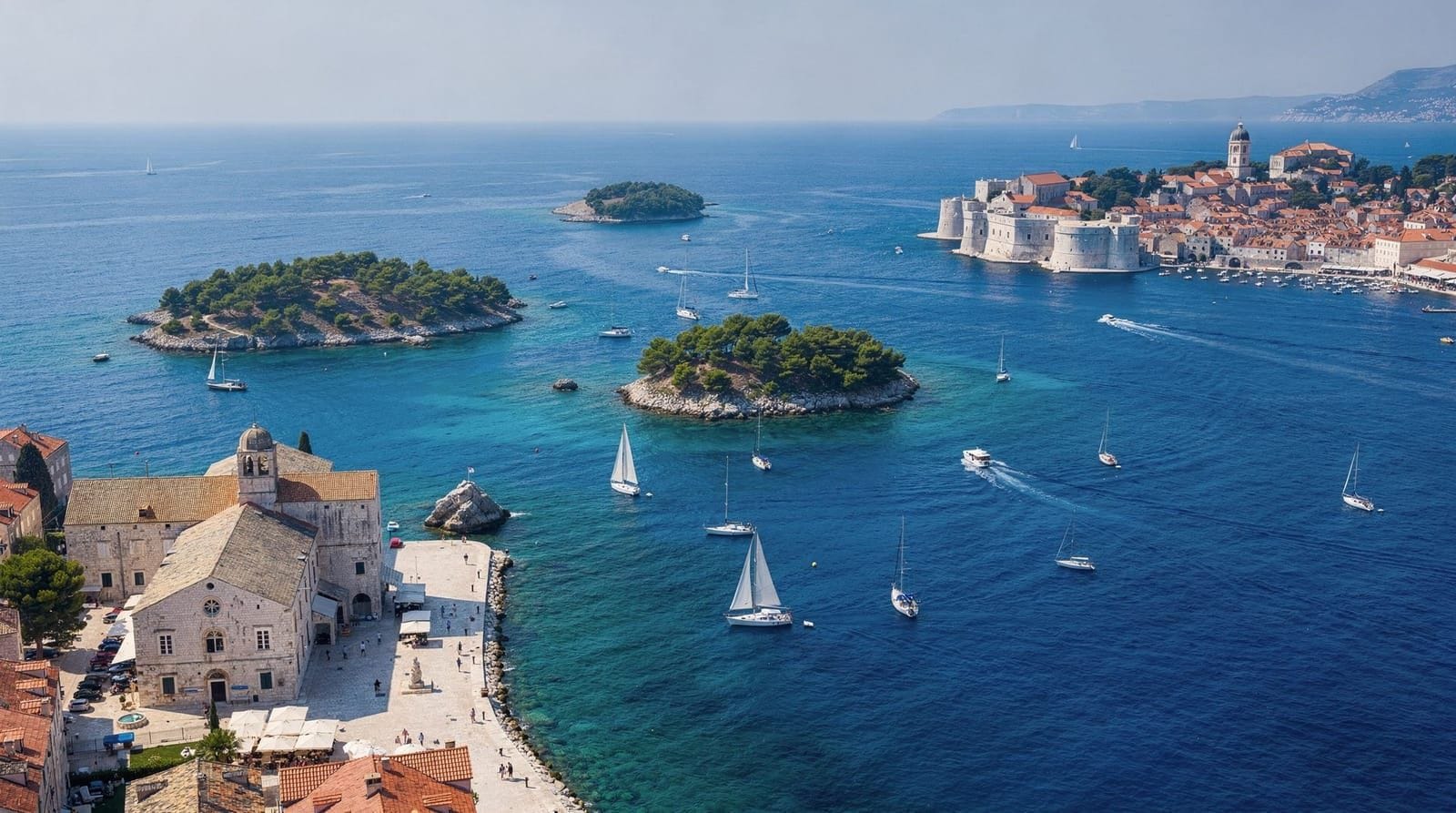
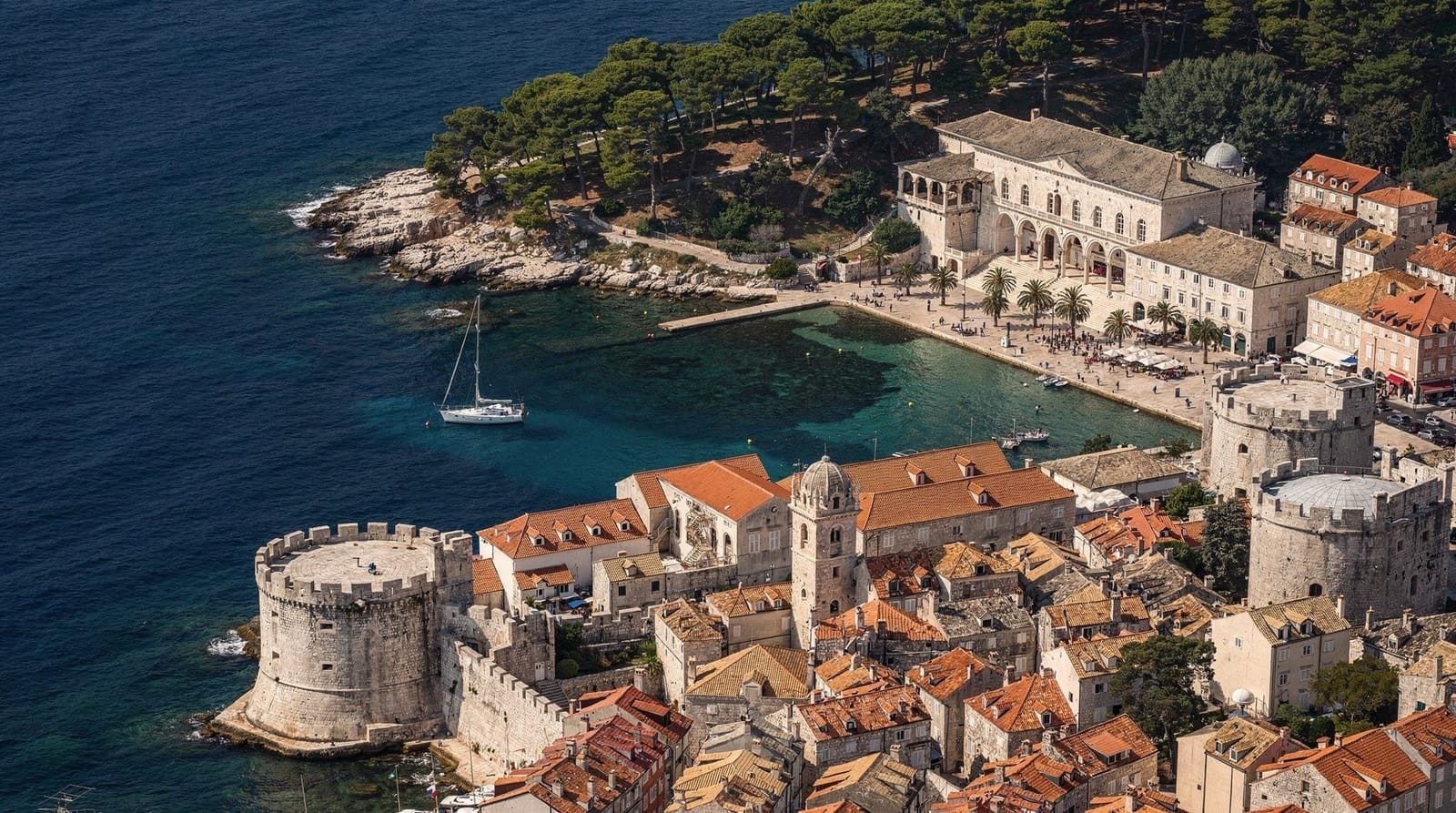
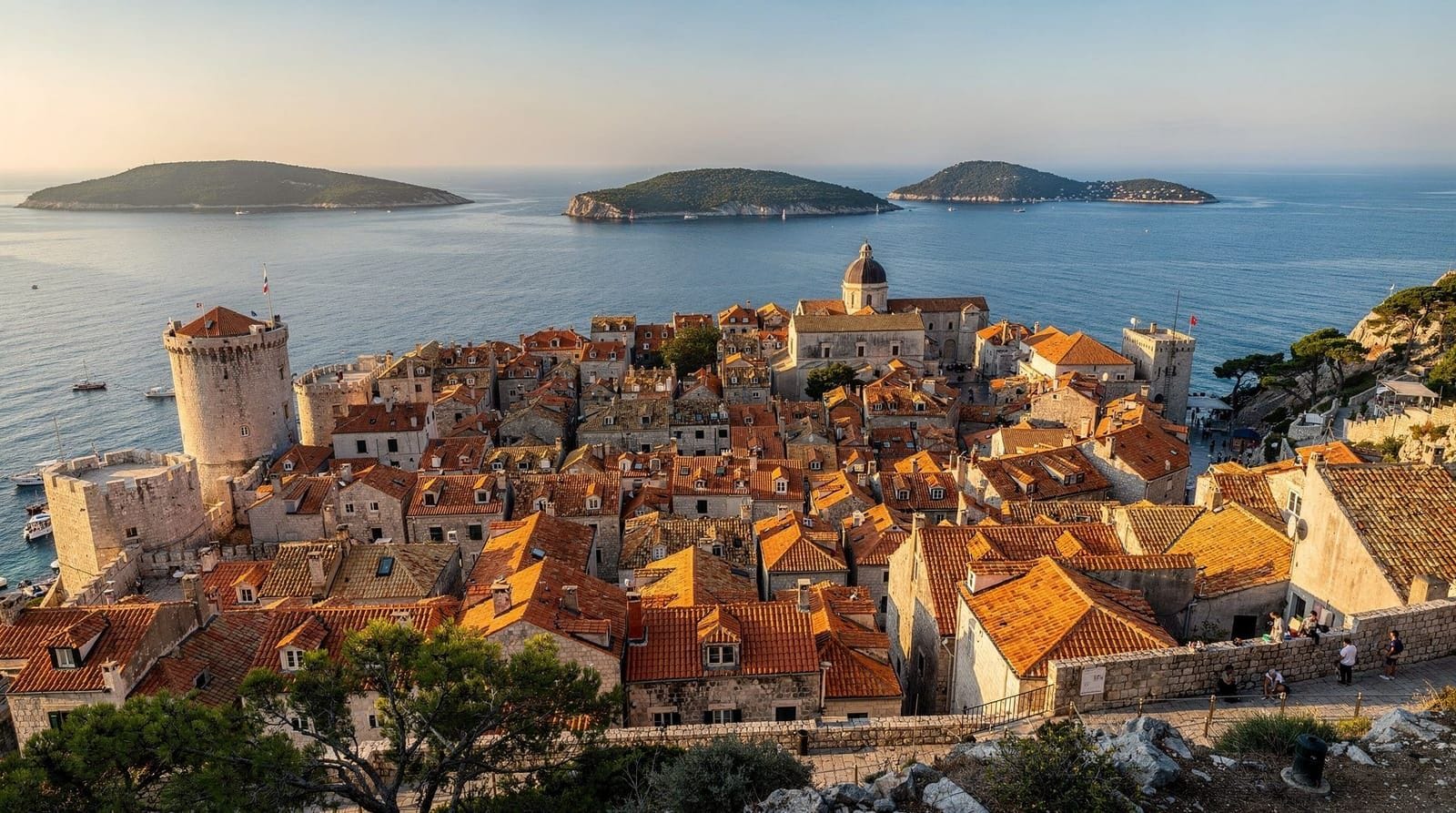
Korčula old town is built on a small peninsula and manages to look, from a distance, like a miniature Dubrovnik — the same terracotta roofscape, the same curtain walls, the same bell tower against the sky. Marco Polo is claimed by local tradition to have been born here, a claim disputed by historians but enthusiastically maintained by the town’s tourism board.
Unlike Hvar, Korčula has not been aggressively developed. The restaurants are quieter, the streets less crowded even in August, and the surrounding wine region — Plavac Mali from the Pelješac peninsula is visible just across the water — adds genuine interest for wine-focused visitors.
Korčula island tour with wine tasting from DubrovnikŠibenik — the underrated cathedral city
Šibenik is the only major Dalmatian town built entirely in the medieval period by Croats rather than by Venetian or Roman settlers, and its Cathedral of Saint James (UNESCO, 1431-1535) is one of the most significant Gothic-Renaissance buildings in Europe. The architect Juraj Dalmatinac used an interlocking stone-slab roof construction technique found nowhere else; the 72 stone portrait heads around the apse walls are an extraordinary piece of medieval portraiture.
The town is less visited than Trogir or Hvar, which works in its favour. The two hilltop fortresses have been converted into a boutique hotel and an outdoor concert venue. The old town streets have a genuine lived-in quality that is different from the more polished tourist destinations.
Šibenik also serves as the logical base for Krka National Park, less than 15 kilometres away.
Poreč — Istria’s Roman grid and a Byzantine masterpiece
Poreč has a UNESCO-listed early Christian basilica, the Euphrasian Basilica (6th century), with Byzantine mosaics comparable in quality to those at Ravenna. Outside the basilica, the town’s Roman street grid — the decumanus maximus is still the main shopping street — is more legible than in many Italian towns of similar age.
Poreč is genuinely touristy: the waterfront is hotel-dense and the surrounding area is large-resort territory. But the basilica alone justifies a stop, and the old town has better restaurants than its resort reputation would suggest.
Motovun — the hilltop surprise
Motovun is an Istrian hill town of around 500 inhabitants with one of the best preserved medieval fortification circuits in the region. The walk along the outer walls — with views across the Mirna River valley toward the Učka mountains — is genuinely vertiginous. The town hosts a respected independent film festival each July.
Motovun’s main practical significance is as the centre of Croatia’s white truffle territory. The truffle season runs October-November for white truffles and extends through winter for black. Organised hunts in the surrounding forests are available from local operators and are far more authentic than the hotel-package versions.
Ston — salt, oysters and walls
Ston is not beautiful in the conventional sense — it is a small, working town at the base of the Pelješac Peninsula — but it has two things that make it worth including. First, the medieval defensive wall system (which rivals those at Dubrovnik in scale, stretching 5.5 kilometres across the peninsula) is one of the most impressive pieces of fortification in the Adriatic. Second, the oyster and mussel beds in the Mali Ston bay just behind the town produce shellfish that appear on menus across Croatia. Eating oysters at a table twenty metres from where they were pulled is a straightforward pleasure.
Cavtat — Dubrovnik’s quieter neighbour
Cavtat sits 18 kilometres south of Dubrovnik and is accessible by local bus or boat. It has a small old town on a wooded peninsula, a pleasant harbour with good seafood restaurants, and the Račić Mausoleum — designed by Ivan Meštrović — which is one of the finest pieces of 20th-century Croatian sculpture.
Cavtat works well as a base for visiting Dubrovnik without paying Dubrovnik accommodation prices. The two places are genuinely connected: Dubrovnik’s airport sits midway between them.
Zadar — Roman stone and the sound of the sea
Zadar doesn’t photograph as a single postcard image the way Rovinj or Trogir does, which is part of why it’s underrated as a town rather than just a ferry hub for the northern Dalmatian islands. Its old town sits on a peninsula with a genuinely dense layer of history: Roman forum ruins sit casually alongside the round pre-Romanesque Church of St Donatus, and the medieval street grid still traces the Roman one beneath it.
What makes Zadar distinct is the Sea Organ — architectural pipes built into the stone steps of the waterfront that turn wave motion into ambient chords — paired with the adjacent Sun Salutation installation, a circle of solar panels that lights up after dark. Both are free, both are unlike anything else on the Adriatic coast, and both make the harbourfront at sunset one of the better places in Croatia to simply sit and listen.
Opatija — Habsburg Elegance on the Kvarner Riviera
Opatija is a different register of pretty from the Dalmatian towns above: a 19th-century Austro-Hungarian seaside resort, built for Viennese aristocracy who wanted a warm-water alternative to the Adriatic’s cooler northern reaches. The result is a promenade of grand villas and hotels, manicured parks and a 12-kilometre coastal walkway (the Lungomare) that runs from Opatija through Lovran and beyond, edged by cypress and camellia gardens.
It is unabashedly formal in a way none of the Dalmatian towns are — more Nice than Dubrovnik — and it makes a good counterpoint if a trip has been entirely Dalmatian islands and old towns up to that point. Rijeka and Krk are both a short drive away, making the Kvarner corner of Croatia a coherent few days on its own.
A note on Dubrovnik
Dubrovnik is not on this list because it requires an article of its own — and because describing it as one of Croatia’s prettiest towns is like describing the Uffizi as a nice gallery. The old town walking tour and Game of Thrones trail give context to what is a genuinely world-class medieval city.
Planning a town-focused itinerary
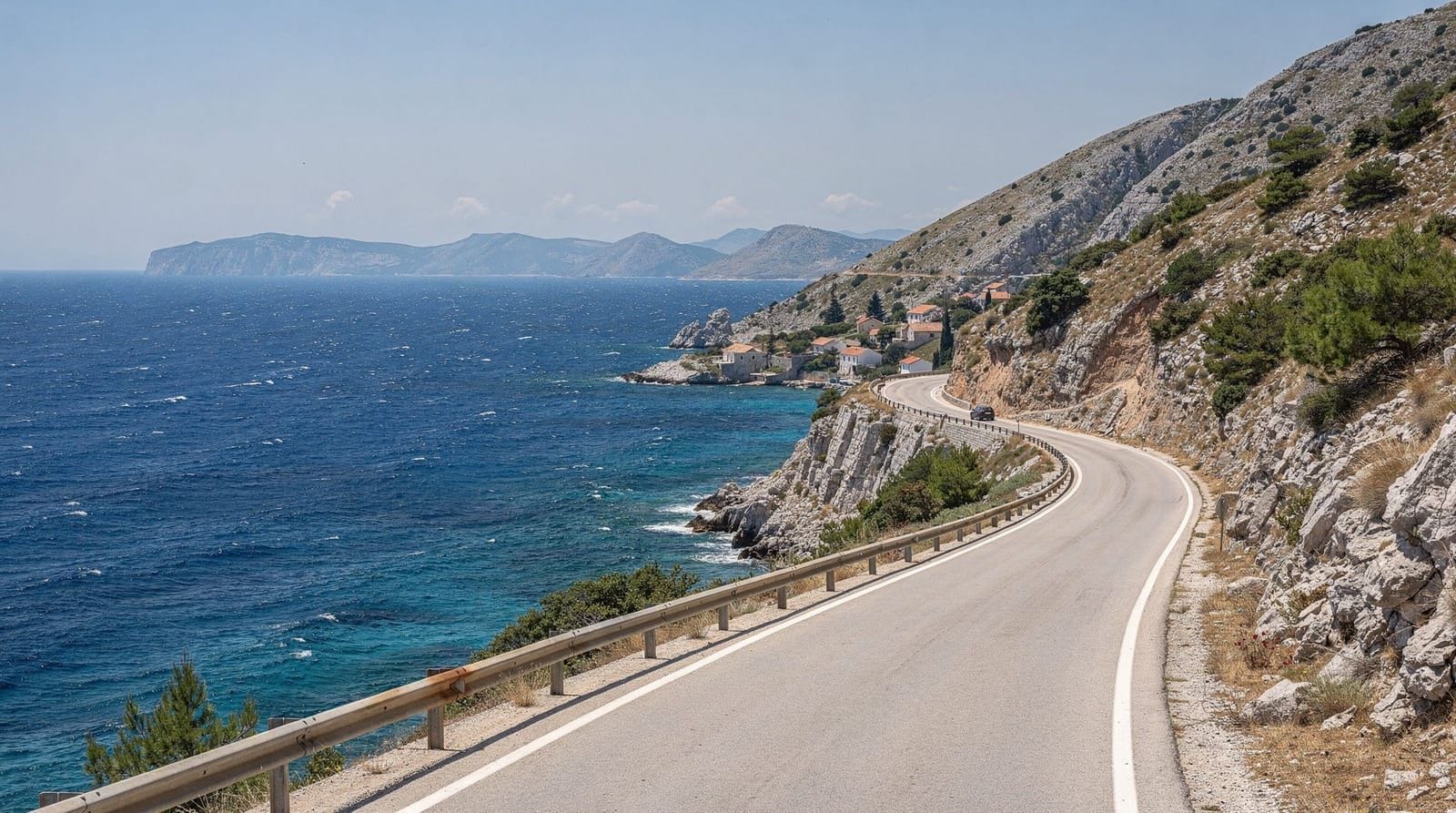
The Croatia 10-day itinerary links several of these towns in a logical sequence. For Istria specifically, the Istria-Zagreb-Slovenia circuit takes in Rovinj, Poreč, Motovun and Pula in a week. The Dalmatian coast road from Split to Dubrovnik passes Trogir, Šibenik, Primošten and Ston, and is manageable in either direction with a car.
The towns on this list share one quality: they are all best seen with time to spare. An hour in Trogir barely scratches the cathedral. A morning in Rovinj covers the old town without leaving room for the harbour at dusk. If your itinerary is very tight, choose fewer towns and stay longer.
Head-to-head: which town for which traveller
| Town | Choose if you want | Crowd level (peak season) |
|---|---|---|
| Rovinj | Maximum photogenic payoff, Istrian food | High |
| Trogir | UNESCO architecture close to Split | High by day, quiet at night |
| Hvar | Polish, nightlife, sailing energy | Very high |
| Korčula | Hvar’s beauty with fewer crowds | Moderate |
| Šibenik | A genuine cathedral city, base for Krka | Low |
| Zadar | History plus something genuinely different (Sea Organ) | Moderate |
| Opatija | Belle-époque elegance, a change of register | Low–moderate |