Diving in Croatia: the Adriatic underwater, dive sites and what to expect
Dubrovnik: 1-day diving package
Is Croatia good for scuba diving?
Yes — the northern Adriatic and Croatian coast offer excellent diving with exceptional visibility (often 15–30 metres), clean cool water, interesting marine life and a range of sites from gentle reef dives to wrecks and underwater caves. Dubrovnik, Split, Hvar and the Istrian coast are the main hubs. Not a tropical warm-water destination, but among Europe's best diving.
The Adriatic underwater
Croatia’s Adriatic coast is one of Europe’s most compelling scuba destinations — not for the tropical reef drama of the Red Sea or the Indian Ocean, but for what the Adriatic does exceptionally well: extraordinary visibility, clean cold water, rich rocky reef habitat, fascinating wrecks and an infrastructure that supports divers at every skill level.
The visibility is the first thing divers notice. On a typical summer day in the southern Adriatic, 20 metres horizontal visibility is not exceptional — 25–30 metres is common offshore. The water is blue in a way that photographs rarely capture: a deep, saturated cobalt below 10 metres that makes the pale limestone seafloor glow.
This guide covers the main diving areas along the Croatian coast, what you can expect to see, how to get in the water, and the practical details that matter when planning a dive trip.
| Where | Dubrovnik, Split & Vis, Hvar, Rovinj/Pula (Istria) |
| Cost | Around EUR 60–85 for a guided two-dive day; EUR 280–380 for Open Water |
| Time needed | A single dive day, or 3–5 days for a certification course |
| Getting there | Dive centre boat transfer from the coastal base, 10–30 min |
| Best time | June and September for warm water, good visibility, fewer crowds |
The diving areas of Croatia
Dubrovnik
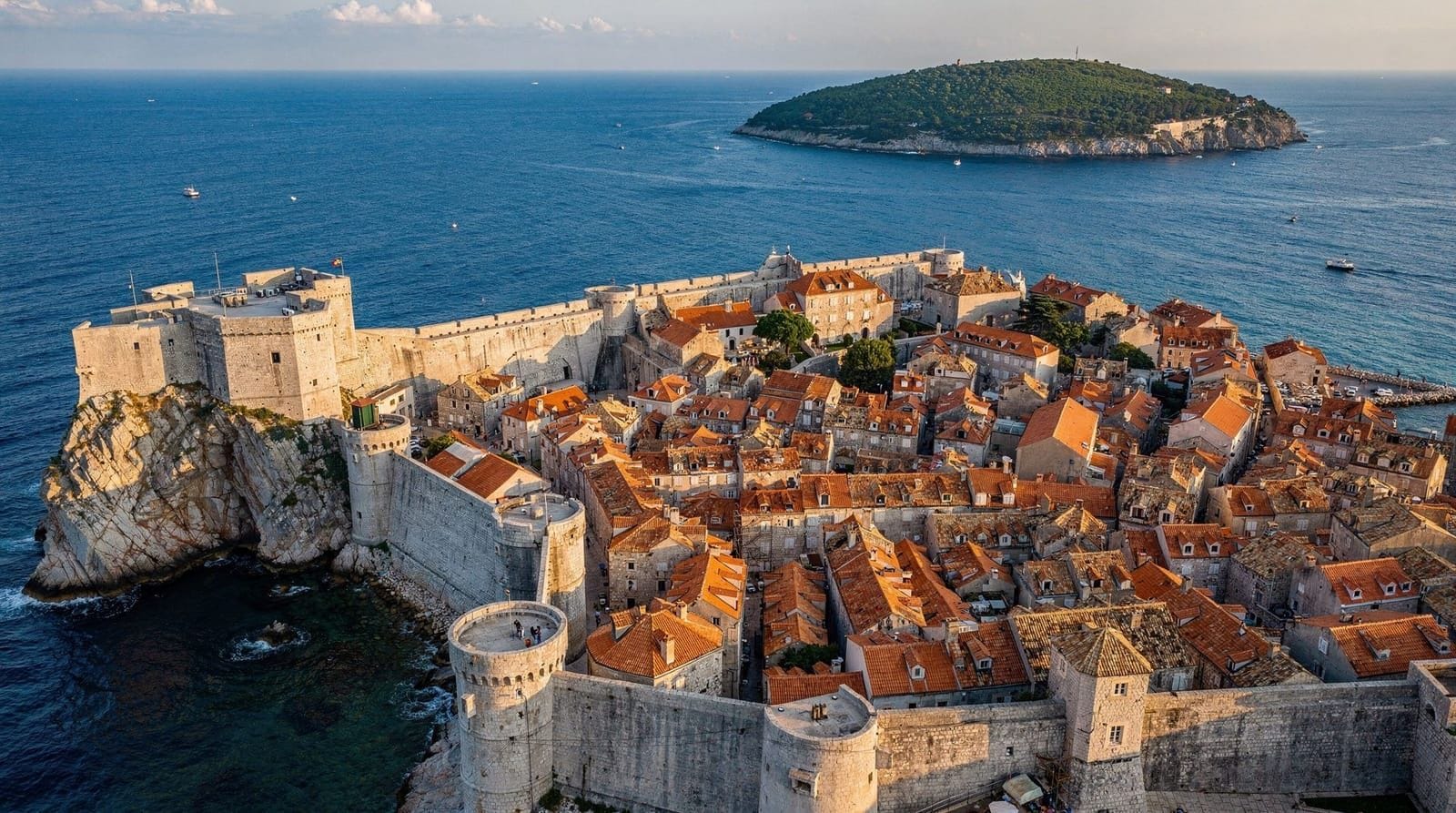
The area around Dubrovnik offers accessible coastal diving without great depth — most popular sites sit at 10–25 metres — but with excellent visibility and interesting terrain. The sea caves below the cliffs near Lokrum island and the western coast have narrow tunnels and caverns filled with sea life that avoids open water. The rocky reef drops south of the Old Town hold octopus, moray eels and large sea bream.
More specialist divers seek out the aircraft wreck (a World War II Bristol Beaufort) lying at approximately 30–35 metres southeast of Dubrovnik — accessible as a day charter from city dive centres. For those who prefer marine life over metal, the kelp beds along the outer Elaphiti Islands offer a different aesthetic.
Certified divers can arrange single dives or day packages directly with Dubrovnik dive centres. Most offer a guided two-dive day (including boat transfer to and from the site) for €60–85 per person, equipment included.
Split and the central Dalmatian coast
Split is the largest dive hub on the Dalmatian coast. The Vis Island channel is within a day-dive charter range, and Vis itself is regarded by many as Croatia’s finest diving destination — pristine water, abundant marine life, caves and blue grottos that the island is famous for above water (the Blue Cave at Biševo) extend underwater into a network of chambers at 30–40 metres.
The Kornati islands within day-charter distance of Šibenik and Zadar are equally spectacular — vertical limestone walls dropping into deep blue, with gorgonian fans from 20 metres and a consistent swell of large fish. Kornati is a national park; a diving permit is required, arranged through your dive centre.
The Makarska Riviera coast has several good sites below the Biokovo escarpment, including underwater boulder fields and caves at medium depth (15–25 metres) accessible from shore-based operators.
Hvar and the islands
Hvar has a growing dive scene concentrated around the southern coast and the Pakleni Islands. The sheltered water inside the Pakleni channel is calm enough for beginners; the outer faces of the larger islands have more interesting topography and larger fauna. Wreck divers target the Baron Gautsch (Austrian Lloyd passenger steamer, 1914, approximately 40 metres) off Rovinj — a significant wreck dive requiring Advanced Open Water certification or equivalent.
Istria: the diving “north”
Rovinj and Pula in Istria have a distinct character from the Dalmatian diving: cooler water year-round (the northern Adriatic loses heat faster), but excellent visibility and several compelling features. The coast near Rovinj has clean rocky reef with gorgonians from 20 metres and good concentrations of large grouper. Pula has its own cave systems and the Roman amphitheatre underwater ruins (submerged Roman quarry infrastructure near the cape).
The Baron Gautsch wreck off Rovinj is the most celebrated dive in northern Croatia — a passenger ferry sunk by an Austrian mine in 1914, lying at 28–42 metres, largely intact. It requires experience and proper briefing but is organised by Rovinj dive centres as a regular charter.
What to expect on a guided dive
For certified divers booking through an established Croatian dive centre, the typical procedure:
-
Croatian Diving Federation card (HRS card). Required by law for all diving in Croatia. Obtained at your dive centre on presentation of your certification card (PADI, NAUI, SSI, CMAS etc.) and photo ID. Fee approximately €15–20; valid for the season. Some dive centres include this in their tour price — confirm when booking.
-
Briefing. Your dive guide will brief the site, maximum depth, dive time, hand signals, and buddy procedures. Croatian dive guides are consistently professional and well-trained.
-
Equipment check. If renting, equipment is prepared and fitted at the dive centre. Bring your own mask if you prefer a precise fit — rented masks rarely fit as well as personal ones.
-
Boat transfer. Most sites require a 10–30 minute boat transfer. Dive boats are purpose-built with entries and exits designed for divers in full kit.
-
The dive. Typically 40–60 minutes at the guided site, at the agreed depth (recreational limit 40 metres; most guided tours stay at 18–25 metres). Surface interval and second dive follow.
For non-certified divers: try dives and courses
Discover Scuba Diving (DSD / intro dive). One to two hours including a confined-water introduction (pool or shallow bay), instruction in basic skills, and a supervised dive to 5–8 metres with an instructor holding your vest. No experience needed; minimum age usually 10–12 years. Cost approximately €50–80 per person. Available at all major Croatian dive centres.
Open Water certification. A 3–5 day course including theory (e-learning can be completed before arrival), confined water sessions and four open-water checkout dives to maximum 18 metres. On completion you are certified for recreational diving to 18 metres worldwide. Cost approximately €280–380 in Croatia, depending on centre and equipment rental. Croatia is a popular choice for Open Water courses because the visibility makes confined-water skills easier to master and the checkout dives are genuinely enjoyable.
Practical dive centre information
Booking. Pre-booking is advisable in peak season (July–August), especially for popular sites like Vis. Most Croatian dive centres have online booking.
Equipment. Croatian centres rent full kits (BCD, regulator, wetsuit, tank, weights) in good condition. Bring your own mask and fins if you have them — particularly the mask, where personal fit matters most.
Nitrox. Enriched air nitrox (32% or 36%) is available at most centres at a small surcharge; bring your nitrox certification card.
Photography. The Adriatic’s visibility makes it ideal for underwater photography. GoPro and basic compact cameras are widely rented from dive centres; bring your own housing for more serious gear.
Croatia’s best dive sites at a glance
| Site | Location | Depth | Highlight | Certificate needed |
|---|---|---|---|---|
| Baron Gautsch wreck | Off Rovinj, Istria | 28–42 m | Intact 1914 passenger steamer | Advanced OW |
| Vis island reefs | Near Vis | 5–30 m | Pristine reef, gorgonians, caves | Open Water |
| Kornati walls | Kornati | 5–40 m | Vertical drops, large fish | Open Water |
| Lokrum caves | Near Dubrovnik | 10–25 m | Sea caves, octopus | Open Water |
| Plitvice Wall | Near Split | 10–35 m | Submerged limestone escarpment | Open Water |
| Biševo Blue Cave area | Near Vis | 5–20 m | Crystal cave approach dive | Open Water |
Combining diving with Croatian island-hopping
A liveaboard or base-and-charter approach opens the most diving options. Several operators run week-long diving itineraries from Split that combine two dives per day with sailing between the southern islands (Vis, Korčula, Mljet). This is the best-value and most interesting way to see multiple sites.
For those combining diving with non-diving activities, the islands accessible on Croatia’s ferry network — Hvar, Brač, Vis — all have dive centres. You can island-hop by ferry and arrange individual dive days at each stop without committing to a liveaboard format.
Fitting a dive day into a wider Croatia trip
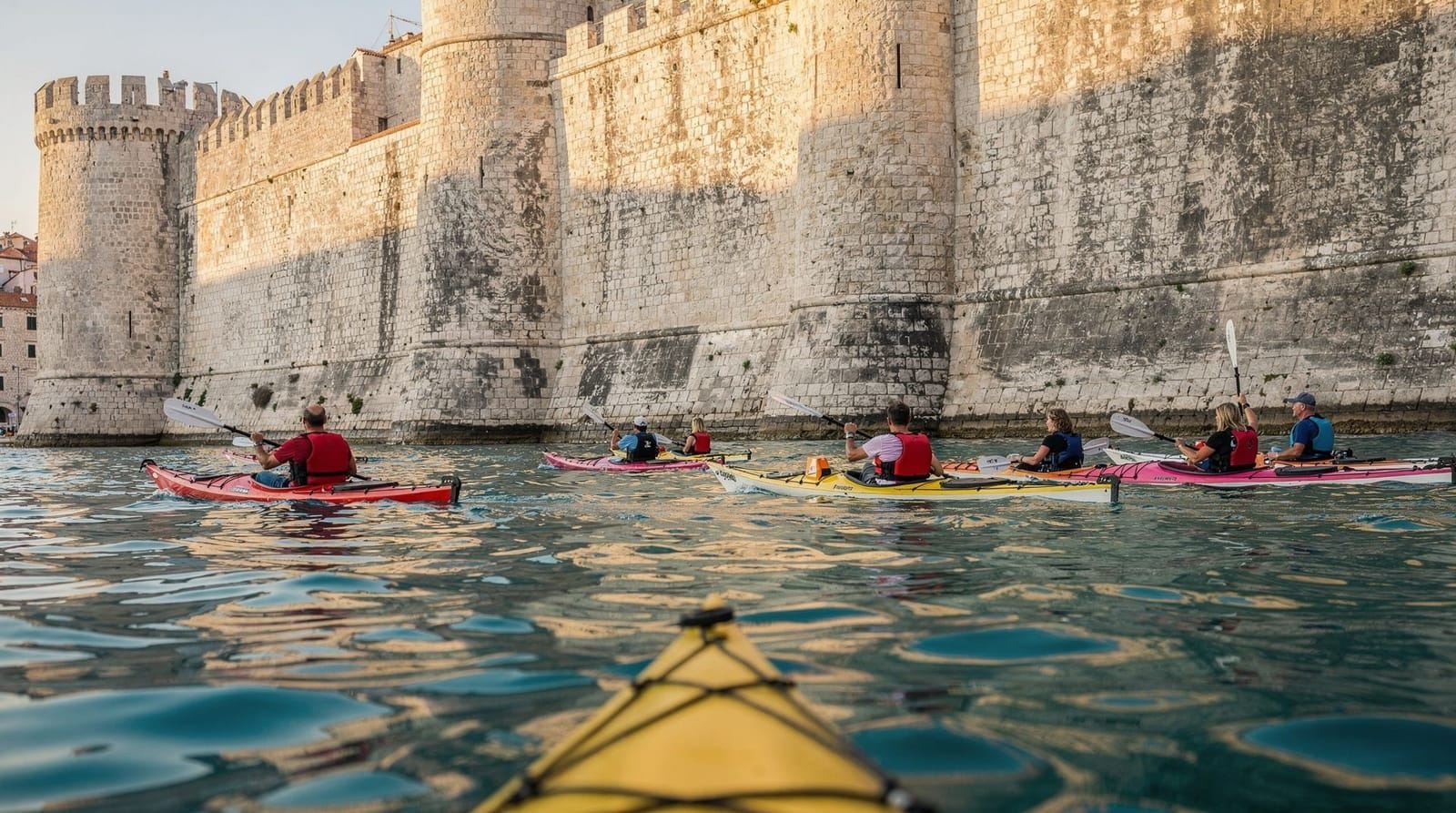
Diving rarely needs to be the whole trip. A single guided dive day fits easily alongside a broader Dalmatian itinerary — pair a Dubrovnik dive day with the rest of our day trips from Dubrovnik guide, or a Split-based dive with the day trips from Split guide if Vis or Kornati diving is on your list. Non-divers in your group are well catered for too: snorkelling and sea kayaking near Dubrovnik cover similar water without certification, and the adventure sports Croatia guide rounds up other options for a mixed-activity trip. If timing your visit around water conditions matters, cross-check the Croatia sea temperatures guide before booking a course in the shoulder season.
Frequently asked questions about Diving in Croatia
What is the water visibility like for diving in Croatia?
Visibility in the Adriatic is one of the main draws for European divers: 15–25 metres is standard in summer, rising to 30+ metres at offshore sites and in early spring before the planktonic bloom. Water clarity is excellent compared to the North Sea, Red Sea included for colour rather than clarity.What is the water temperature for diving in Croatia?
Surface temperatures range from about 12–13°C in winter to 25–27°C in peak summer (August). At depth, temperatures are consistently cooler: 15–18°C at 20–30 metres even in August. A 5mm wetsuit is appropriate for summer diving; a 7mm or drysuit for spring and autumn diving. Water stays diveable year-round for experienced divers.Do you need to be certified to dive in Croatia?
Certified divers (PADI Open Water or equivalent) can join guided dives independently. Non-certified beginners can do Discover Scuba Diving (DSD) or intro dives supervised by an instructor — no prior experience required. Croatia requires a Croatian Diving Federation (HRS) card, available from dive centres on presentation of your certification card; the fee is nominal (around €15–20).What marine life can you see diving in Croatia?
Octopus (very common), moray eels, sea bream, grouper, wrasse, scorpionfish, starfish, sea urchins, gorgonian fan corals at depth, and occasional loggerhead sea turtles. The Adriatic is not a tropical reef — do not expect clownfish and coral walls — but the rocky reef habitat is rich and healthy. Dolphins are occasionally seen at surface.Are there good dive sites near Dubrovnik?
Yes — Dubrovnik has several good sites accessible from the city: the underwater caves below the cliffs near Lokrum, the reef drops south of the Old Town, and the wreck of a World War II aircraft within day-trip distance. Dive centres operate from near the Old Town and offer day-dive packages. Water visibility in the Dubrovnik area is excellent.Can you go diving if you are not certified?
Discover Scuba Diving (DSD) sessions — also called intro dives or try dives — are available at all major dive centres. You spend 30–60 minutes in a pool or shallow water with an instructor before a short guided dive to 5–8 metres. No prior experience needed. If you want to dive deeper or independently, a 3–5 day Open Water certification course is available at most Croatian dive centres.What are the best months for diving in Croatia?
June–October is the main diving season. June and September are ideal — warm enough surface temperatures, excellent visibility, and fewer crowds than peak season. July and August are warmest but have more boat traffic and diver numbers at popular sites. April and May are excellent for visibility (pre-bloom) but require a 5–7mm wetsuit. Year-round diving is possible for cold-water enthusiasts.Is Dubrovnik or Split a better base for diving in Croatia?
Split has the edge for range and quality — it gives day-charter access to Vis, widely considered Croatia's best diving, plus the Kornati walls further north. Dubrovnik's diving is good but more limited: shallower sites, the Lokrum caves and a single well-known wreck within range. If diving is your main priority, base in Split; if diving is one activity among several on a Dubrovnik-focused trip, the local sites are still worth a day.Do I need travel insurance that specifically covers diving in Croatia?
Yes — standard travel insurance policies often exclude or limit scuba diving, particularly beyond certain depths or without a certification on file. Check that your policy covers recreational diving to at least 30–40 metres and includes decompression illness cover, since the nearest hyperbaric chamber may be some distance from smaller coastal dive centres. Reputable Croatian dive centres will ask about insurance before taking you out.
Top experiences
Bookable activities with verified prices and instant confirmation on GetYourGuide.
Top experiences
Best-rated activities across GetYourGuide and Viator.

Rafting on Cetina River Departure from Split or Blato na Cetini village
- Viator

KAYAK ADVENTURE! Wild Coast Exploring - Snorkeling & Cliff Jumps
- Viator

Blue Bay Snorkeling & Cocktails 3 Islands Speedboat Tour
- Viator

Zadar: 3 Islands Luxury Boat Tour with Aperol Spritz & Snorkeling
- Viator

Zadar: Luxury Island Boat Tour, Snorkeling & Unlimited Wine
- Viator

Transparent Kayak Sunset to Dusk Glow Experience from Pula
- Viator