Common Croatia travel mistakes and how to avoid them
Dubrovnik: Deep red wine tour of Peljesac
What are the most common mistakes tourists make in Croatia?
The top five: (1) underestimating distances between regions and planning too many destinations in too little time; (2) not booking car ferry vehicle spaces in advance for July–August; (3) eating exclusively at waterfront tourist restaurants instead of one street back; (4) visiting Dubrovnik only at midday in peak season rather than early morning or evening; (5) using Euronet ATMs and accepting dynamic currency conversion.
Most Croatia travel mistakes follow consistent patterns that appear across visitor feedback regardless of nationality, age or travel experience. They are not obscure errors — they are structural mismatches between how Croatia is marketed, how maps make it appear and how the country actually works.
This guide covers the mistakes that recur most reliably, explains why they happen and provides the specific adjustments that prevent them.
| Costliest mistake | Not booking Dubrovnik/Hvar accommodation ahead for July–August |
| Most common mistake | Planning too many destinations for the time available |
| Easiest fix | Eat one street back from the waterfront |
| Most overlooked | Booking ferry vehicle spaces in advance |
| See also | Croatia tourist traps |
Mistake 1: Planning too many destinations
Croatia’s shape on a map is deceptive. The country is long and thin — 1,777 km of coastline, but only 50–150 km wide. When you look at a map and see Dubrovnik, Split, Hvar, Šibenik, Zadar, Plitvice Lakes, Rovinj and Zagreb as points on the same country, the natural instinct is to connect them all.
The distances in practice:
- Dubrovnik to Split: 220 km (3–5 hours by car depending on route and season)
- Split to Zadar: 155 km (1.5–2 hours by car)
- Zadar to Plitvice: 133 km (1.5–2 hours by car)
- Plitvice to Zagreb: 130 km (1.5 hours by car)
- Zagreb to Rovinj: 260 km (3 hours by car)
A seven-night itinerary covering all these points works out to roughly 1,000 km of driving across the available days. After accounting for time at each destination, you are spending 4–5 hours per day in transit — which is not a holiday.
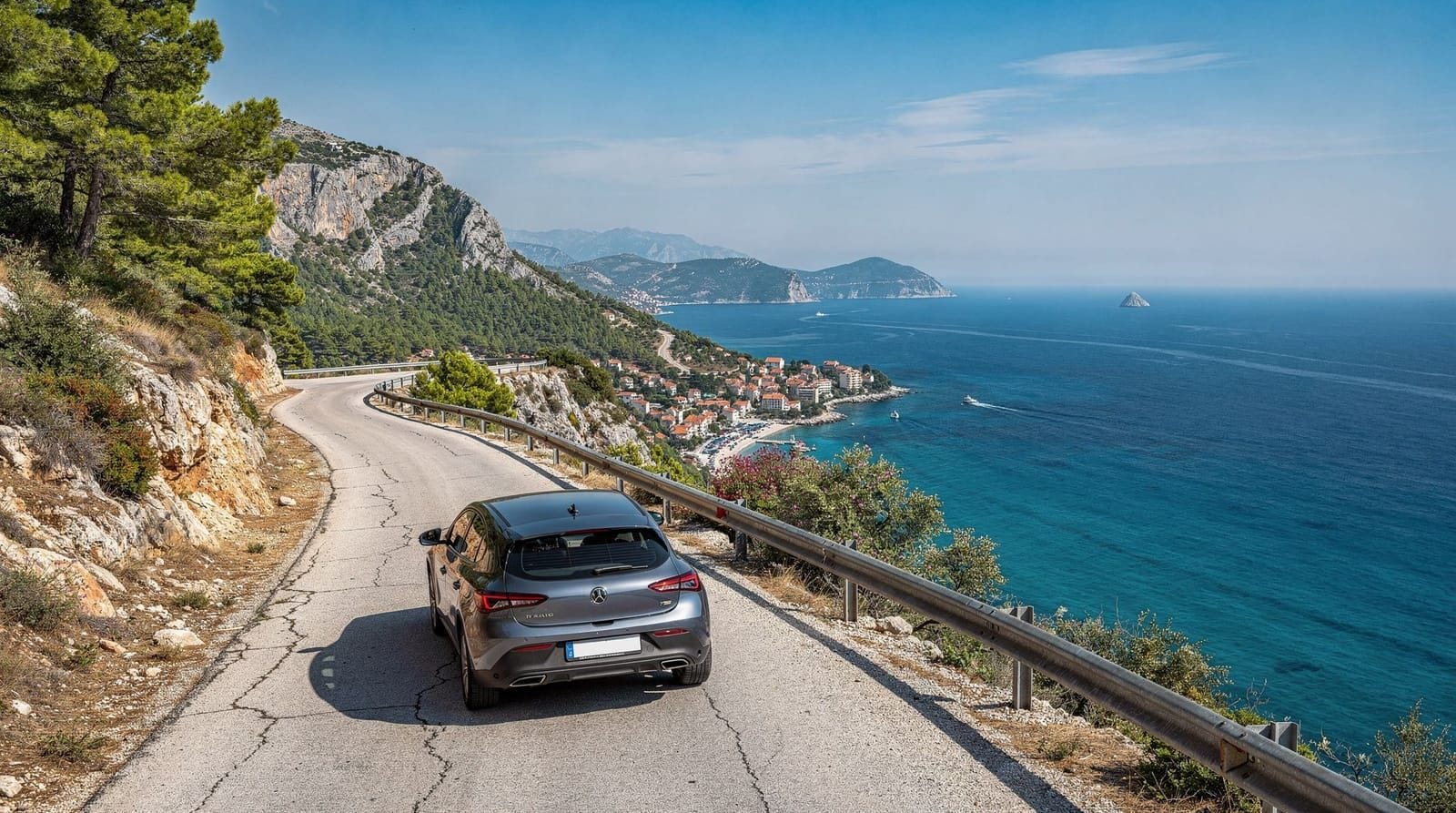
The correction: choose one region for a week-long trip, or two adjacent regions for two weeks. The Dalmatian coast (Dubrovnik + Dubrovnik surroundings + Split + one or two islands) is a complete and excellent week. The north (Zagreb + Plitvice + Istria) is another. Combining them requires two weeks and significantly more driving than either brochure suggests.
For specific route planning, see the Croatia itinerary planning guide and the how many days in Croatia guide.
Mistake 2: Not booking ferry vehicle spaces in advance
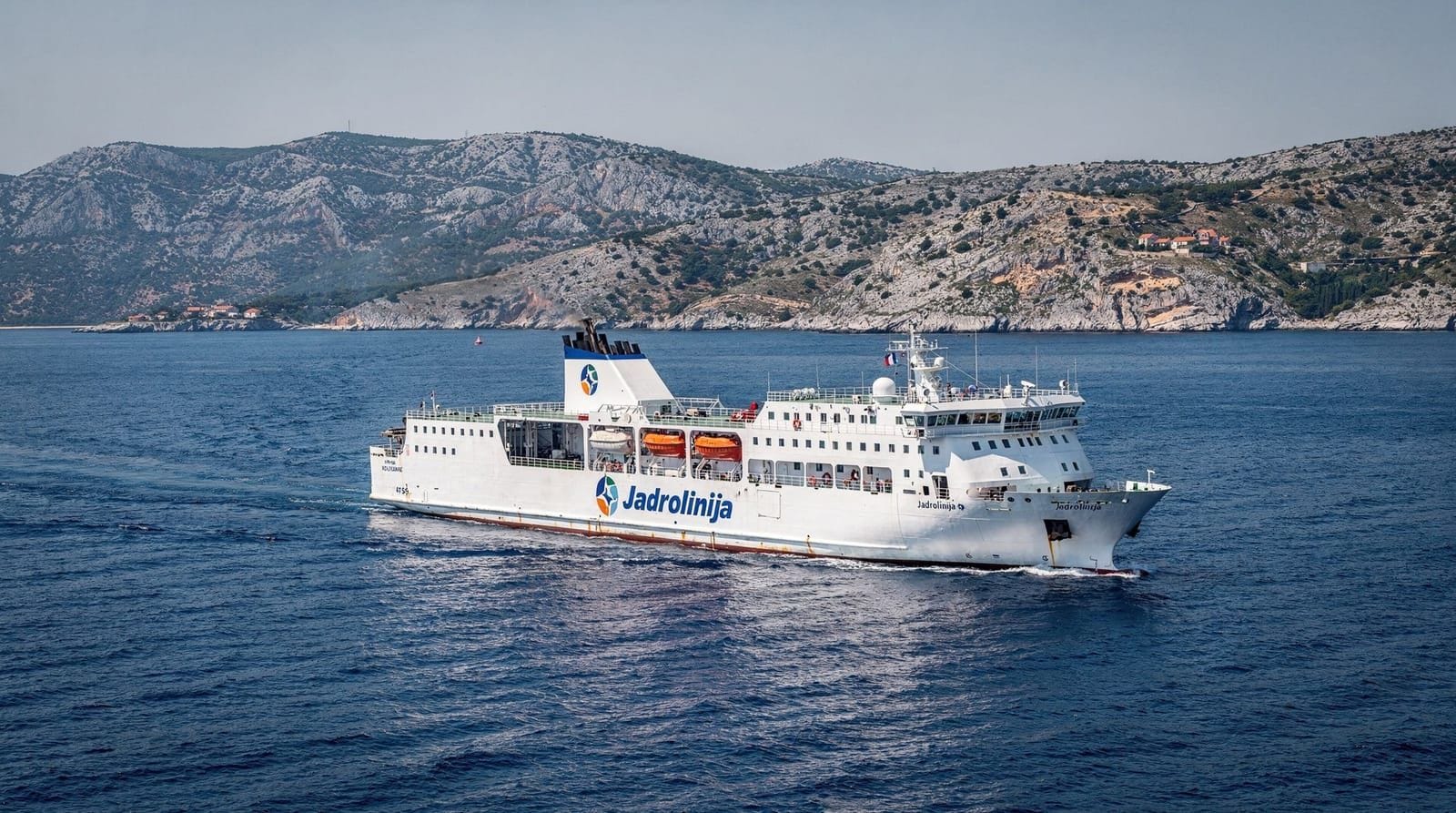
The car ferries between the mainland and the Dalmatian islands — particularly the Split–Hvar route — fill their vehicle spaces far in advance of the sailing in July and August. Walk-on foot passengers can almost always board; cars, campervans and motorcycles are the constrained resource.
The scenario that ruins an itinerary: a family arrives in Split with their rental car on a Tuesday in July, plans to take the 10:00 ferry to Hvar, and discovers at the terminal that vehicle spaces for all ferries that day are full. Their options are: wait at the terminal hoping for cancellations (unpredictable, potentially hours), leave the car in Split and foot-passenger to Hvar (leaving luggage logistics issues), or rethink the island visit entirely.
The correction: book vehicle spaces on Jadrolinija’s website (jadrolinija.hr) the moment you have a firm itinerary. For peak season (late June through August), book 2–4 weeks ahead on popular routes. The booking system is functional and straightforward. See the Croatia ferries guide for the full booking process.
The catamaran alternative: for islands visited without a car — staying for a few days and leaving the car in Split — high-speed passenger catamarans (Krilo, KSC) are faster, often more comfortable and do not require advance booking of vehicle spaces. A useful strategy for many itineraries.
Mistake 3: Eating exclusively at tourist waterfront restaurants
The restaurants along the Stradun in Dubrovnik, the harbour front in Hvar, the Riva in Split and the equivalent strip in every other Croatian coastal town serve a similar menu at prices that reflect their position rather than their cooking quality. Grilled fish, risottos, pasta, Dalmatian plates — competently executed, generically presented, significantly overpriced.
The visitors who eat at these restaurants are not making an uninformed choice — the location is obvious, the menus are in English, the staff speak to them from the pavement. But they are systematically missing the better, cheaper food available within a 100-metre detour.
The correction: before arriving in any Croatian town, identify a restaurant recommendation from a local source. Your accommodation host is the single most reliable source — ask specifically where they eat, not what they recommend for tourists. The Gault Millau Croatia guide (available as an app or book) covers the better local restaurants across the country. A restaurant on a back street with a handwritten specials board and no outdoor terrace visible from the main promenade is almost always better than the promenade restaurant. See the konoba guide for the full theory.
Mistake 4: Visiting Dubrovnik at the wrong time of day
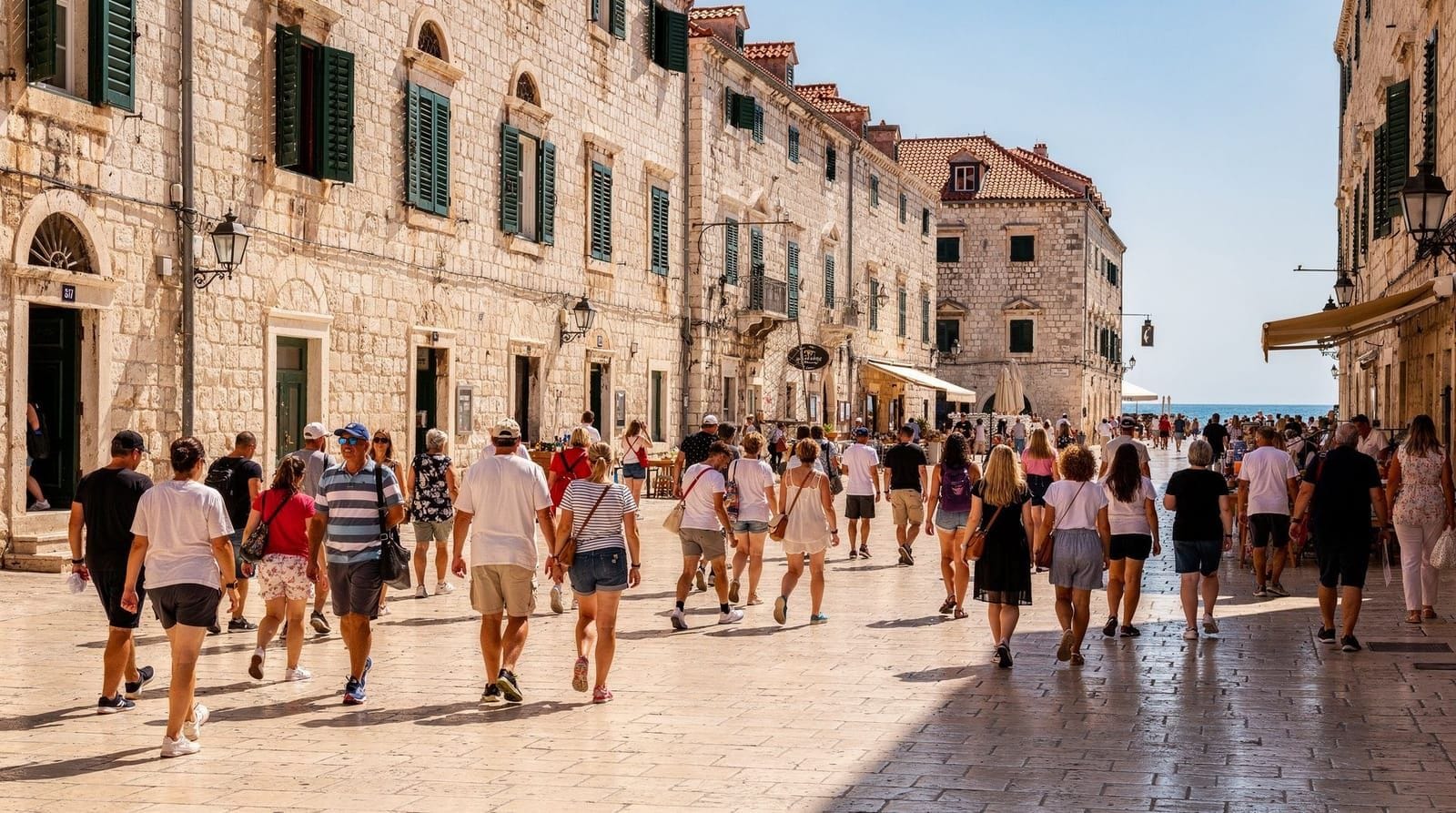
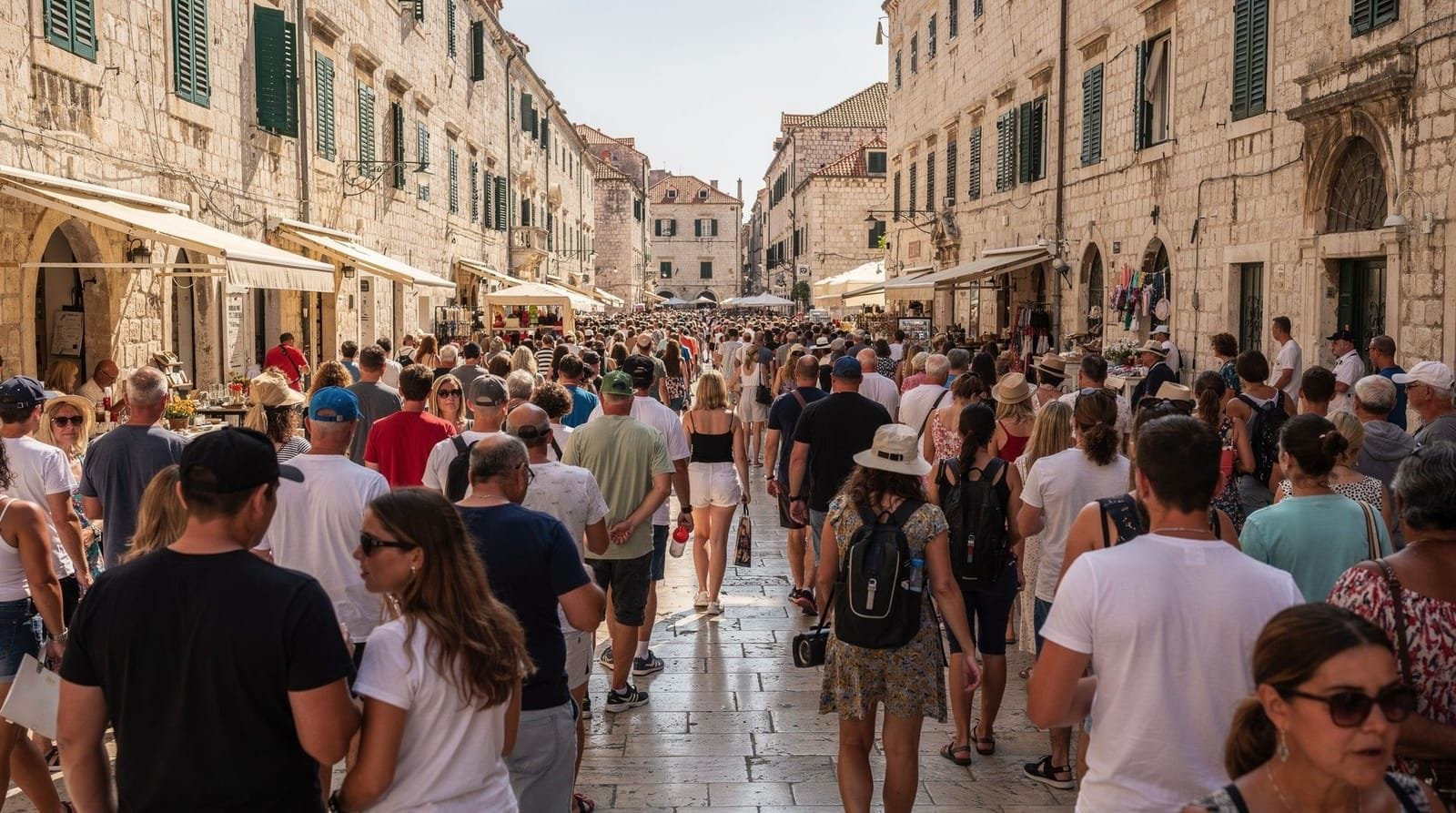
The standard tourist arrival pattern in Dubrovnik is: arrive at 09:30–10:00, spend 09:00 midday on the Stradun and city walls, eat lunch on the Stradun, leave in the afternoon. This pattern results in the worst possible experience of a genuinely exceptional city.
The reality of crowd distribution: cruise ships dock from approximately 08:00 and discharge passengers via shuttle bus to the Old Town, with the main influx from 09:00–10:00. By 11:00, the Stradun is at its maximum density. The cruise ships begin returning passengers from around 16:00, and by 18:00–19:00 the Old Town is dramatically calmer.
The correction: arrive at the Pile Gate at 07:30–08:00. Walk the city before the cruise passengers arrive. Spend the midday heat at a beach or at a quieter location (Cavtat, Lokrum island ferry, a konoba lunch away from the main strip). Return for the Old Town in the evening. See the Dubrovnik Old Town guide for the specific early morning route.
For photographers specifically: the golden hour Dubrovnik guide covers sunrise and sunset positions.
Mistake 5: Euronet ATMs and dynamic currency conversion
Covered in detail in the Croatia tourist traps guide, but repeated here because it is the single most common financial mistake in Croatia and is entirely preventable.
Short version: do not use yellow Euronet ATMs. Use bank-branded ATMs (Privredna banka, Erste, Raiffeisen, ZABA). When any ATM or card terminal offers to charge you in your home currency (“We’ll charge you in British pounds”), always decline and choose EUR. The conversion offered by ATMs and merchants is always worse than the rate applied by your own bank.
A week in Croatia using Euronet ATMs and accepting DCC at every terminal costs an additional €30–60 in unnecessary fees and conversion losses compared to using a bank ATM and paying in EUR. This money buys a good restaurant dinner.
Mistake 6: Underestimating the sun
Croatian Adriatic sun is more intense than most northern European and North American visitors expect. The factors:
- Lower latitude than most of northern Europe (Dubrovnik is roughly the same latitude as Rome)
- Limestone and white stone surfaces that reflect UV radiation
- Time on water (boats, kayaks) that removes shade
- High temperature and low humidity that reduce the physical feeling of heat while solar exposure continues
Sunburn on day one of a Croatia trip is extremely common among visitors from northern climates. It is also entirely preventable with SPF 50+ sunscreen applied before outdoor activities, reapplied every two hours, and supplemented with a hat and sunglasses.
The specific trap: lying on a pebble beach with clear water in 30°C sun feels excellent. Three hours of this produces significant sunburn that affects the next three days of the holiday.
Mistake 7: Assuming the island has everything you need
Some Croatian islands — particularly the smaller and less-visited ones — have limited shops, limited ATMs (sometimes none), limited pharmacies and limited opening hours for what services exist. Island shops frequently close for an extended midday period (13:00–17:00).
Visiting smaller islands (the Elaphiti Islands near Dubrovnik, Vis, Mljet) without sufficient cash, medication or basic supplies is a recurring visitor problem. The island’s single small supermarket may not have what you need; there may not be an ATM; the pharmacy may be open only two mornings per week.
The correction: before boarding any ferry to a less-visited island, ensure you have:
- Sufficient cash (assume no working ATM)
- Any medications needed for the duration of the stay
- Basic provisions for arrival and the first morning (shops may be closed on Sunday or during the afternoon)
- Sunscreen and basic first aid
Mistake 8: Ignoring the Pelješac Peninsula
Between Dubrovnik and Split, most visitors drive straight through or along the coast without stopping. The Pelješac Peninsula — the long finger of land extending westward from the coastal road — contains two things that genuinely excellent Croatian food and wine require:
Ston oysters: farmed in Malostonski Bay since the 15th century, these are among Europe’s finest oysters. Eaten at a small konoba on the bay within hours of being pulled from the water. The experience is genuinely memorable and costs roughly €1–1.50 per oyster. Very few standard itineraries include a Ston stop. The 10-minute detour from the main coastal road is one of the best additions any Dalmatian itinerary can make.
Pelješac wine: the Dingač and Postup appellations produce some of Croatia’s finest Plavac Mali — the indigenous red grape that makes deeply structured wines comparable to southern Italian or Portuguese reds. A stop at one of the peninsula’s wine producers (Miloš, Matuško, Grgić) adds genuine wine-travel value. See the Dingač and Postup wine guide.
A Pelješac wine tour from Dubrovnik covers Ston oysters and a Dingač or Postup winery stop without requiring you to self-drive and plan the detour yourself.
Mistake 9: Not having a printed itinerary backup
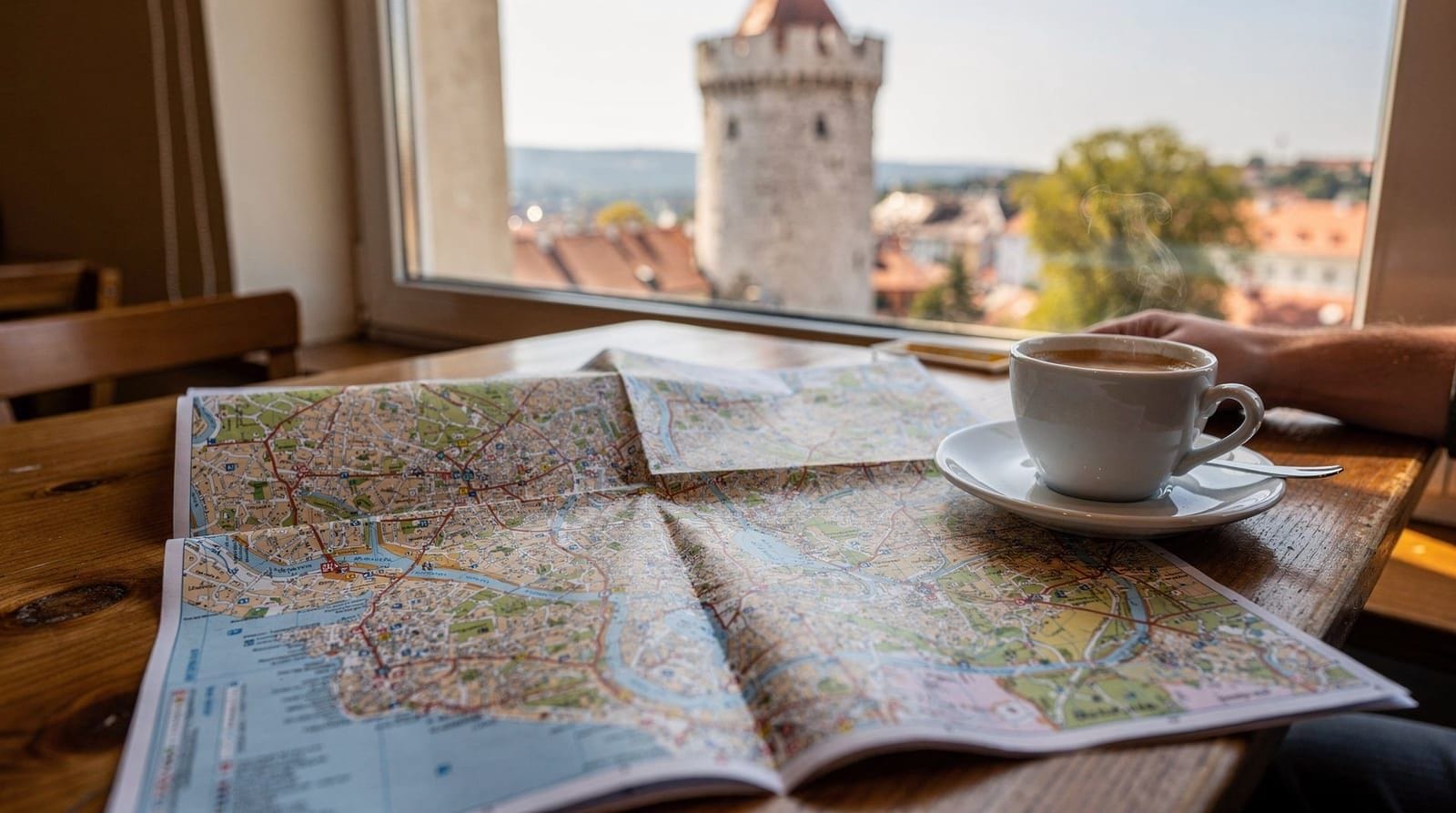
Croatia’s mobile data coverage is good in cities and on the main tourist routes but can be patchy on islands, mountain roads and in national parks. An itinerary that exists only on your phone — including ferry times, accommodation addresses and booking confirmations — creates problems when the signal disappears.
The correction: print or download offline the key documents: accommodation addresses and booking references, ferry booking confirmations with booking numbers, tour booking confirmations, and a basic offline map of the areas you will visit. This is basic travel preparation but is surprisingly often skipped by visitors who rely entirely on mobile connectivity.
Mistake 10: Choosing July or August without preparation
July and August in Croatia are genuinely excellent — the sea is warm, the days are long, the island life is at its most vibrant. They are also the most crowded and most expensive months by significant margins. This is not a reason to avoid Croatia in summer; it is a reason to prepare properly.
If July or August is the only option: book accommodation 3–6 months ahead for Dubrovnik and Hvar. Book ferry vehicle spaces when you have a firm itinerary. Plan to arrive at every major attraction before 09:00. Eat away from tourist waterfront strips. Carry water everywhere. Have a Plan B for every major activity (weather, technical closure or capacity issues are more common in the rush).
If timing is flexible: late May, June and September offer 80–90% of the summer experience at meaningfully lower prices and crowd levels. September particularly — with sea temperatures still at their warmest and crowds visibly thinner — is the most consistently underrated month in Croatia.
See best time to visit Croatia for the full seasonal breakdown.
Mistake 11: Not having a fallback for capacity-limited attractions
Plitvice Lakes, the Dubrovnik City Walls and some island boat tours cap daily visitor numbers, and walk-up availability in peak season is not guaranteed. Arriving without pre-booked tickets and assuming you will simply buy on the day is a recurring source of disappointment, particularly for Plitvice in July–August.
The correction: book timed-entry tickets for Plitvice and the Dubrovnik walls online in advance once your dates are fixed. For popular boat excursions such as the Blue Cave and five-island tours, book at least a few days ahead in peak season — some operators sell out a week or more in advance.
Frequently asked questions about Common Croatia travel mistakes and how to avoid them
How much of Croatia can I realistically see in 10 days?
One region well, or two regions adequately. The Dalmatian coast (Dubrovnik base + Split area + one or two islands) fills 10 days properly. Alternatively, Istria and Zagreb fill 7–10 days comfortably. Trying to combine both coasts with the national parks and Zagreb in 10 days results in long travel days and surface-level engagement with each place.Is there public transport to all the places I want to see?
Public transport covers the main cities well — Split, Dubrovnik, Zagreb, Zadar are well-connected by bus. National parks have bus access (Plitvice from Zagreb or Split, Krka from Split or Šibenik). Islands require ferries. The gaps are in reaching smaller coastal towns, Istria's interior, and moving between islands efficiently. A car significantly expands what is possible.Should I rent a car in Croatia?
For Istria, national parks, or anyone wanting flexibility along the coast, yes. Not essential if you are splitting your time between Split, Hvar and Dubrovnik — the ferry network handles the main connections. A car creates problems in Dubrovnik and Hvar town specifically (parking is scarce and expensive). The middle ground: rent a car for the first half of the trip (Istria, Zagreb, Plitvice), return it in Split, ferry the rest.What should I do if I arrive at the ferry and there are no vehicle spaces?
You wait for the next ferry with vehicle space availability. In July–August this can mean several hours at the port, or rescheduling the entire day. Prevention: book vehicle spaces on the Jadrolinija website when you have a firm itinerary. Foot passenger spaces are almost always available; the vehicle spaces are the constrained resource.Is the sun in Croatia dangerous?
The Adriatic sun is significantly more intense than visitors from northern Europe or North America typically expect, particularly on the water and on limestone surfaces that reflect heat. Sunburn happens fast. High-SPF sunscreen, a hat, sunglasses and staying in shade between 12:00 and 16:00 are not optional in July and August. Hydration is critical.What is the most expensive mistake in Croatia?
Not booking accommodation in Dubrovnik or Hvar in advance for July–August. Last-minute availability in those locations in peak season is rare and extremely expensive. An itinerary with flexible accommodation in Dubrovnik in August is not viable — you will pay a significant premium for any remaining availability or be forced to stay far outside the town.Is it safe to drink tap water from hotel rooms in Croatia?
Yes, tap water is safe to drink throughout Croatia. Using a reusable bottle is practical and environmentally positive. Bottled water is widely available but unnecessary as a safety measure.Do I need to book Plitvice Lakes or the Dubrovnik City Walls in advance?
Yes, in peak season. Both have timed-entry or capacity limits, and walk-up availability is not guaranteed in July–August. Book online once your travel dates are fixed rather than assuming you can buy tickets on arrival.
Top experiences
Best-rated activities across GetYourGuide and Viator.

Mostar and Herzegovina Tour with Kravica Waterfall from Split & Trogir
- Viator

3Hour ALL-INCLUSIVE Sunset Dolphin Watching from Medulin onSandra
- Viator

Dolphin Watching & Sunset Boat Tour With Drinks & optional Dinner
- Viator

Fantastic DOLPHIN & SUNSET TOUR with dinner ( Pula-NP BRIJUNI )
- Viator

Medulin :All-Inclusive Pirate Boat Dolphin Watching Sunset Cruise
- Viator

Mostar & Kravice waterfalls full-day guided tour from Split
- Viator