Dingač and Postup: Croatia's greatest reds, explained
Dubrovnik: Deep red wine tour of Peljesac
What are Dingač and Postup wines and why are they famous?
Dingač and Postup are Croatia's two protected controlled designations of origin (ZOI), both on the Pelješac peninsula and both made from 100% Plavac Mali grapes. Dingač, declared Croatia's first ZOI in 1961, comes from steep sun-blasted terraces above the village of Potomje and produces Croatia's most powerful, concentrated red wines — 14–16% alcohol, dark fruit, tobacco, and dried herbs. Postup comes from gentler nearby slopes and is slightly more elegant. Both age well and are among the finest wines Croatia produces.
In brief: Dingač is Croatia’s most important red wine — the first wine in the former Yugoslavia to receive a protected designation of origin, still made on the same extreme sun-blasted terraces above the Adriatic, still from 100% Plavac Mali, still bottled by the same family names that have been here for generations. Postup, its less famous neighbour from gentler nearby slopes, is often equally interesting and consistently better value. Both are worth going out of your way to taste.
The oldest protected wine zone in the former Yugoslavia
In 1961, Dingač became the first wine to receive a Controlled Designation of Origin (ZOI — Zaštićena oznaka izvornosti) in what was then Yugoslavia. That is not a marketing footnote — it is a mark of the wine’s significance within Croatian wine culture, and evidence that the terroir here was recognised as exceptional decades before wine tourism existed in this region.
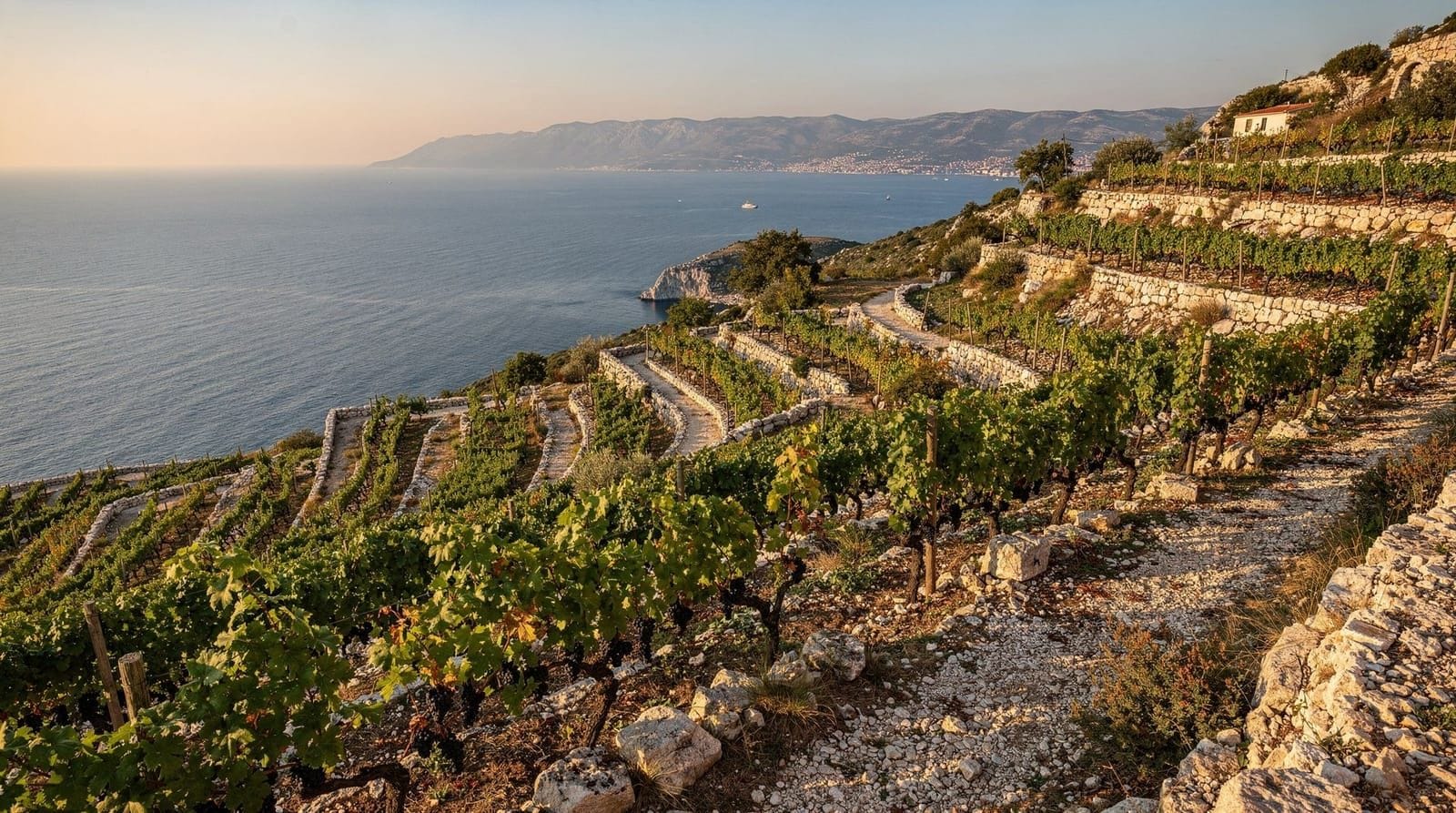
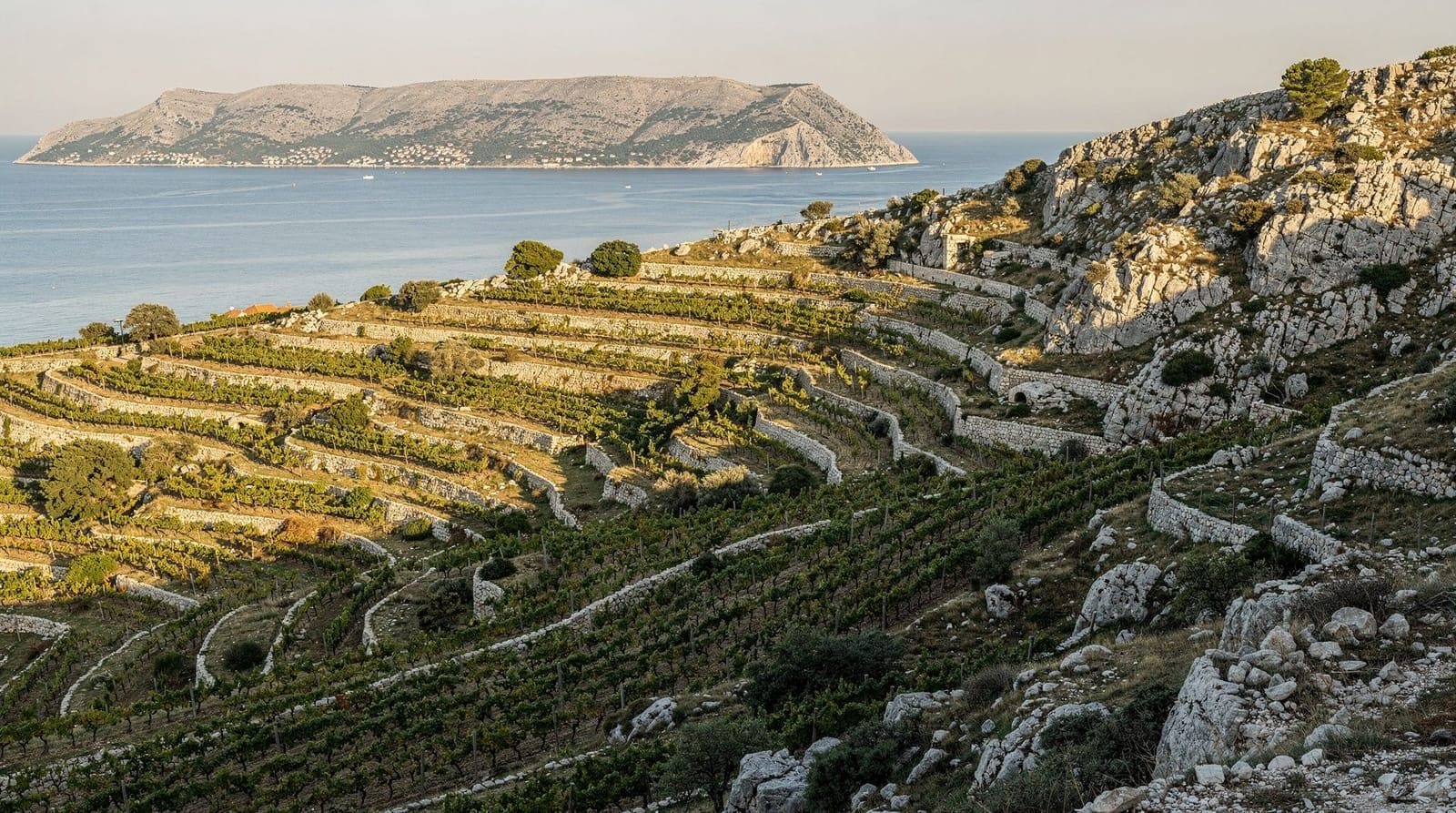
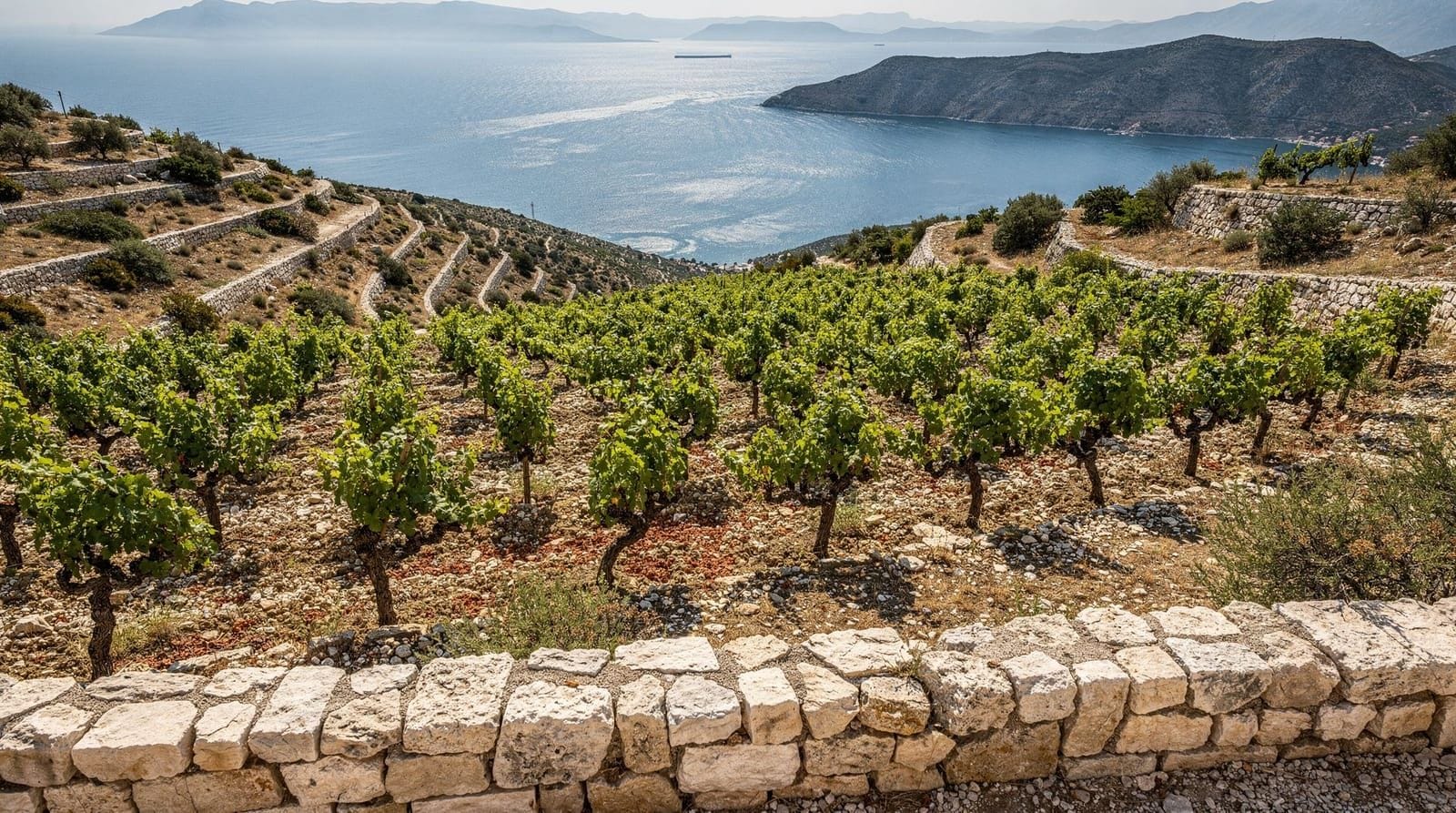
The designation covers a specific zone of south-facing terraced vineyards on the Pelješac peninsula, concentrated above the tiny village of Potomje and a coastal hamlet called Dingač that faces the open Adriatic. To qualify as Dingač, the wine must be made from 100% Plavac Mali grapes grown within these exact boundaries, reaching minimum alcohol levels that reflect the extreme concentration produced by this site.
Postup received its own ZOI designation in 1967, covering a slightly larger zone on similar terrain around Potomje, Trstenik, and Podobuće. The two appellations overlap geographically but are distinct in character — shaped by small differences in slope angle, elevation, and aspect that matter enormously in a region where the sun is intense and water is scarce.
Understanding what makes these appellations work requires understanding the land they come from.
| Where | Potomje, Pelješac peninsula, around 90 km / 1.5–2 h from Dubrovnik |
| Cost | Cellar door around EUR 10–35 for a bottle; guided tours EUR 60–100 |
| Time needed | Half-day to full day for a Pelješac wine tour |
| Getting there | Guided tour from Dubrovnik, self-drive, or ferry from Korčula |
| Best time | April–October for open cellars; harvest (Sept) for atmosphere |
The terrain: karst, heat, and the tyranny of the slope
Pelješac is a limestone peninsula — karst country, where rainwater dissolves through porous rock and there is almost no topsoil. Vines have grown here for centuries because they are among the few things that will. The roots go deep, following fractures in the bedrock to find water; the above-ground growth is stunted but intensely concentrated. Every gram of fruit that the vine produces represents real metabolic effort.
The southern slopes of the Dingač zone are extreme by any standard. Gradients of 35–55% are common — steep enough that mechanical harvesting is impossible and that working the vineyard requires ropes and physical courage. In the hottest weeks of summer, the dark karst rock radiates heat back onto the vine canopy, creating a microclimate several degrees warmer than the already-hot Dalmatian average. A vineyard that faces south-southeast, tilted toward the sea at a 45-degree angle, at 100–200 metres elevation on black rock with no tree cover: this is Dingač.
The Adriatic below moderates temperature extremes to some extent — sea breezes cool the vineyards in late afternoon, and the thermal mass of the water prevents the overnight temperature drops that would stress the vines further. What you get is sustained, extreme ripeness with enough acid structure to keep the wine alive for years.
Postup sits on the same peninsula but on slopes of 15–25% gradient — still steep by normal standards, but not the precipitous terraces of Dingač. The aspect is slightly different, the elevation slightly higher in places, and the result is wines with very similar structural DNA but more moderate alcohol and a shade more elegance.
The grape: Plavac Mali and its origins
Both designations require 100% Plavac Mali — a native Dalmatian grape whose genetic history was only recently unravelled. In 2001, DNA analysis at the University of California Davis confirmed that Plavac Mali is a natural crossing of Dobričić (another Croatian variety, today nearly extinct) and Crljenak Kaštelanski — which is genetically identical to Zinfandel.
That connection to Zinfandel is historically interesting but does not explain the taste of Dingač. Plavac Mali ripens very late, accumulates extraordinary sugar, and has thick skins packed with anthocyanins (colour) and tannins. On the Dingač terraces, where the heat is intense and the yield is naturally tiny, it produces wines of a density and concentration that few Italian or French varieties would achieve in the same conditions.
The variety is grown elsewhere in Dalmatia — the Makarska Riviera, the Dalmatian islands, the Neretva valley — but no other site produces wines with the combination of power and complexity that Pelješac’s best slopes achieve. This is what appellations are designed to protect.
What Dingač tastes like: a glass portrait
Young Dingač (one to three years old) is not an easy wine. It is dense and tannic — a mouthful of dark fruit (blackberry, dried plum, black cherry), dried fig, carob, Mediterranean herbs (rosemary, sage), tobacco, and sometimes a note of dark chocolate or espresso on the finish. The alcohol is real: 14.5–16% is normal, and the wine fills the mouth with warmth. Tannins in a young Dingač are firm and slightly grippy; the acid is moderate.
This is not a wine for solo drinking or for pairing with anything delicate. It is built for the table, for food, for long lunches in stone konobas.
With age — five years is when things start to get interesting; eight to twelve is the sweet spot for the best producers — the tannins soften and integrate, the dark fruit evolves toward dried fruit and leather, mineral notes from the karst appear, and the wine finds a balance and complexity that younger versions only hint at. An aged Matuško Dingač or a Miloš Stagnum from a ripe vintage is not just a good Croatian wine — it is a genuinely memorable experience that holds its own against serious Rhône reds or southern Italian heavyweights.
What Postup tastes like: the quieter sibling
Postup is easier to overlook because it is less famous and the name does not carry the same international recognition. That is partly what makes it worth paying attention to.
The wines share Dingač’s Plavac Mali DNA and much of its flavour vocabulary — dark fruit, tobacco, Mediterranean herbs, firm tannins. But the gradient of the slopes, the slightly higher elevation, and the greater diurnal temperature variation in some Postup zones produce wines with more pronounced acidity, slightly lower alcohol (13.5–14.5% typically), and more approachability in youth. Where young Dingač needs food to open up, young Postup can be drunk with pleasure after an hour in a decanter.
Postup is also often better value — not because the quality ceiling is lower (the best Postup from Matuško or Crvik Vina is excellent wine) but because it lacks Dingač’s name recognition and is priced accordingly. Expect to pay €12–22 for good Postup at cellar door versus €18–35 for equivalent quality Dingač.
For the broader context of Plavac Mali across Dalmatia, and how Dingač and Postup compare to wines from Hvar or the mainland coast, the Plavac Mali guide goes deeper.
Key producers: where to focus your attention
Miloš (Frano Milos)
The reference producer for Dingač — arguably for Croatian red wine altogether. Frano Milos is a former airline pilot who took over his family’s estate and applied obsessive attention to vineyard work and minimal-intervention winemaking. The wines are bottled without excessive manipulation: whole-cluster or partial destemming, aging in a combination of large Slavonian oak and barriques, long maceration that extracts everything the karst terraces have to offer.
The top wine, Stagnum, is made only in exceptional vintages and is not cheap (€45–65 at cellar door). The standard Dingač Barrique is more accessible (€25–35) and is consistently among the best expressions of the appellation. Visiting requires a prior relationship or a letter of introduction — this is not a commercial operation. Organised tours that include Miloš are genuinely rare and worth booking when available.
Matuško Winery
The most visitor-ready estate on Pelješac, and reliably excellent across its entire range. The Matuško family has been making wine in Potomje for three generations; the current generation has invested in a proper tasting room, an impressive collection of aged bottles for comparative tastings, and English-speaking staff. They produce both Dingač and Postup across multiple price tiers — from the entry-level Plavac Mali (excellent value at €10–14) to aged single-vineyard Dingač.
For independent travellers who call ahead, Matuško is the most reliable choice on Pelješac. Tastings run €15–25 per person and typically include five or six wines with food.
Saints Hills
The most design-forward operation on the peninsula, owned by a Croatian entrepreneur (Ivica Matičević) with a passion for both wine and contemporary art. The winery itself is a striking piece of architecture; the labels are designed by a leading Croatian artist. The wines — particularly the Dingač and the white Nevina (a skin-contact field blend) — are consistently among the best on the peninsula. Saints Hills is more accessible than Miloš and has the feel of a modern wine destination rather than a family cellar. Tastings €20–30.
Grgić Vina
Mike Grgich — Miljenko Grgich in Croatian — made the 1973 Chateau Montelena Chardonnay that won the legendary Paris tasting of 1976 (the “Judgment of Paris”), rewriting American wine history. He returned to his ancestral home on Pelješac and established Grgić Vina to prove that the vineyards of his homeland could produce wines of equivalent quality. They can. The Dingač is powerful and age-worthy; the Pošip (from purchased Korčula fruit) is one of the better versions of that variety available.
Crvik Vina
A smaller, less-publicised estate with particular strength in Postup — the wines are more restrained and precise than the big Dingač expressions, with excellent acid structure and real complexity at ten years. If you taste across several estates and find yourself reaching for the Postup, Crvik is worth seeking out.
The Dingački Tunel: the mountain passage that changed Pelješac
The most unexpected piece of wine infrastructure on Pelješac is a tunnel. The Dingač vineyards face south-southeast, toward the open sea and away from the main road. Before 1973, harvested grapes had to be carried up the steep slope by hand or donkey, over the mountain ridge, and down the other side to Potomje — a process that was exhausting, time-consuming, and genuinely damaging to the fruit.
In 1973, a 400-metre tunnel was hand-dug through the mountain at great effort and expense, connecting the Dingač coastal terraces directly to Potomje. Grapes now travel through the mountain in small wagons — a detail that says something about how seriously the producers here take their vineyards, and how central this particular patch of karst is to their identity.
The tunnel entrance on the Potomje side is visible from the road; it is an unremarkable concrete portal but a significant piece of local history. Producers who bring visitors past it usually pause to explain it — the tunnel is as much a part of Dingač’s identity as the wine.
Visiting Potomje: the village, the logistics, the experience
Potomje is a village of a few hundred people in the centre of the Pelješac peninsula. There is no tourist infrastructure — no hotel, no tourist office, no signposted wine trail. What there is: family cellars, vineyards visible from the road, the tunnel, and a handful of producers who will receive you if you have called ahead.
Getting there from Dubrovnik: Drive north on the A1/E65 toward Split, exit at Ston, then take the D414 through Ston and north along the peninsula. Total drive: approximately 1.5–2 hours each way. The Pelješac Bridge (opened 2022) now connects the peninsula to the mainland without needing to cross Bosnian territory — the drive is significantly easier than it was before 2022.
Getting there from Korčula island: The Orebić–Domince ferry runs frequently (every 30 minutes in summer, €4 per person) and takes 15 minutes. Potomje is 10 km east of Orebić by road. If you are already on Korčula, this is the most efficient approach — combine a Korčula wine tasting day with an afternoon on Pelješac.
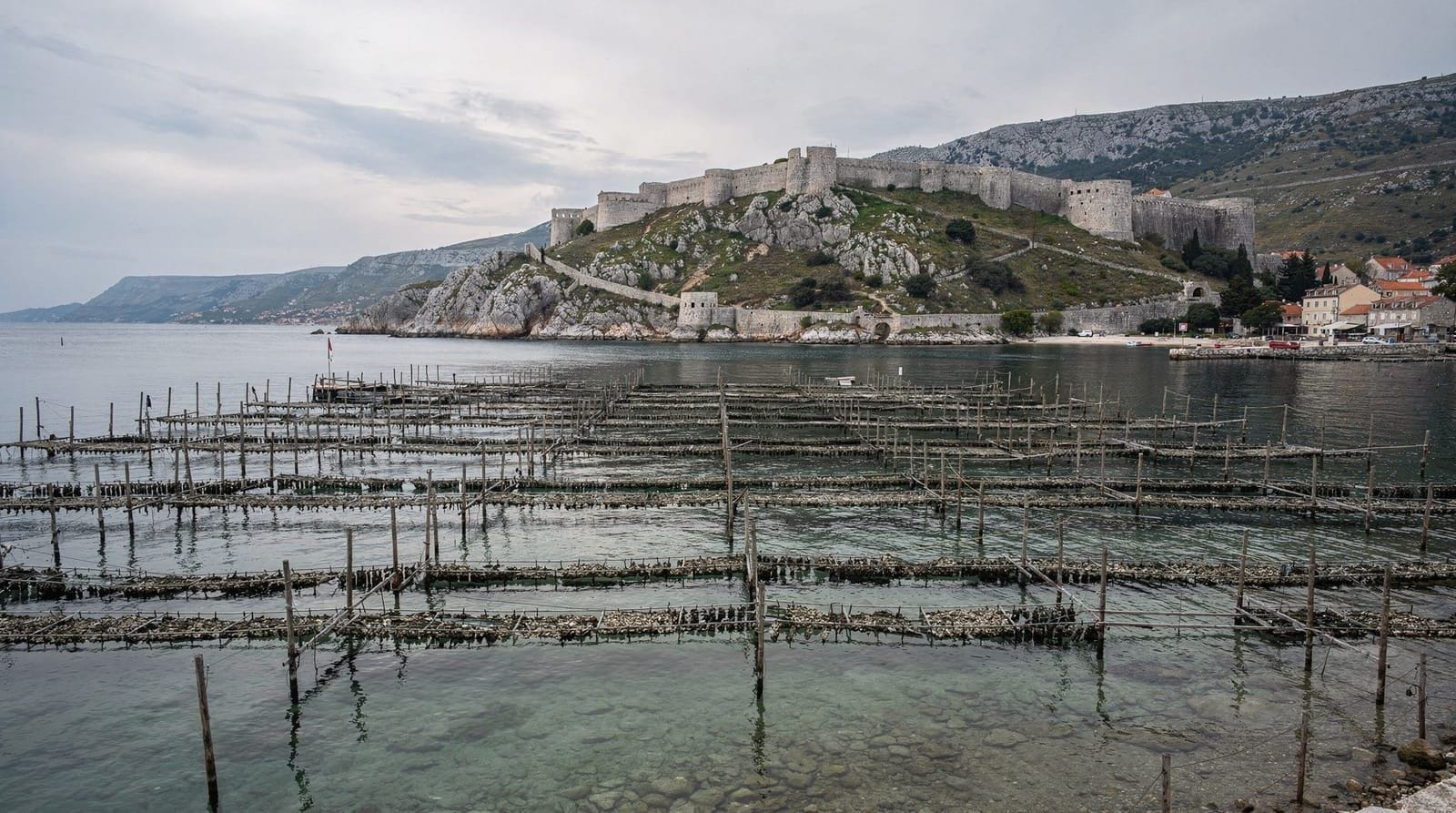
Getting there from Ston: Ston is 15 km south of Potomje. If you begin your day with the oysters of Ston — which you should — you can continue north to Potomje for the afternoon, making it a highly satisfying food-and-wine day on the lower peninsula.
Accommodation on Pelješac: Small guest houses (sobe) and apartments in Orebić and Trpanj offer basic but pleasant accommodation. Staying overnight removes the time pressure of the Dubrovnik return drive and allows evening at a terrace restaurant with a bottle of whatever you bought during the day.
Organised tours: when they make more sense than going alone
For most visitors, organised tours from Dubrovnik are the smarter choice for a first visit to Dingač and Postup country. The reasons are practical: the road to Potomje is narrow and winding; the top producers (particularly Miloš) are not accessible without an existing relationship; and the context a good guide provides — explaining the appellation history, the grape variety, the specific terroir differences between estates — is difficult to replicate from reading alone.
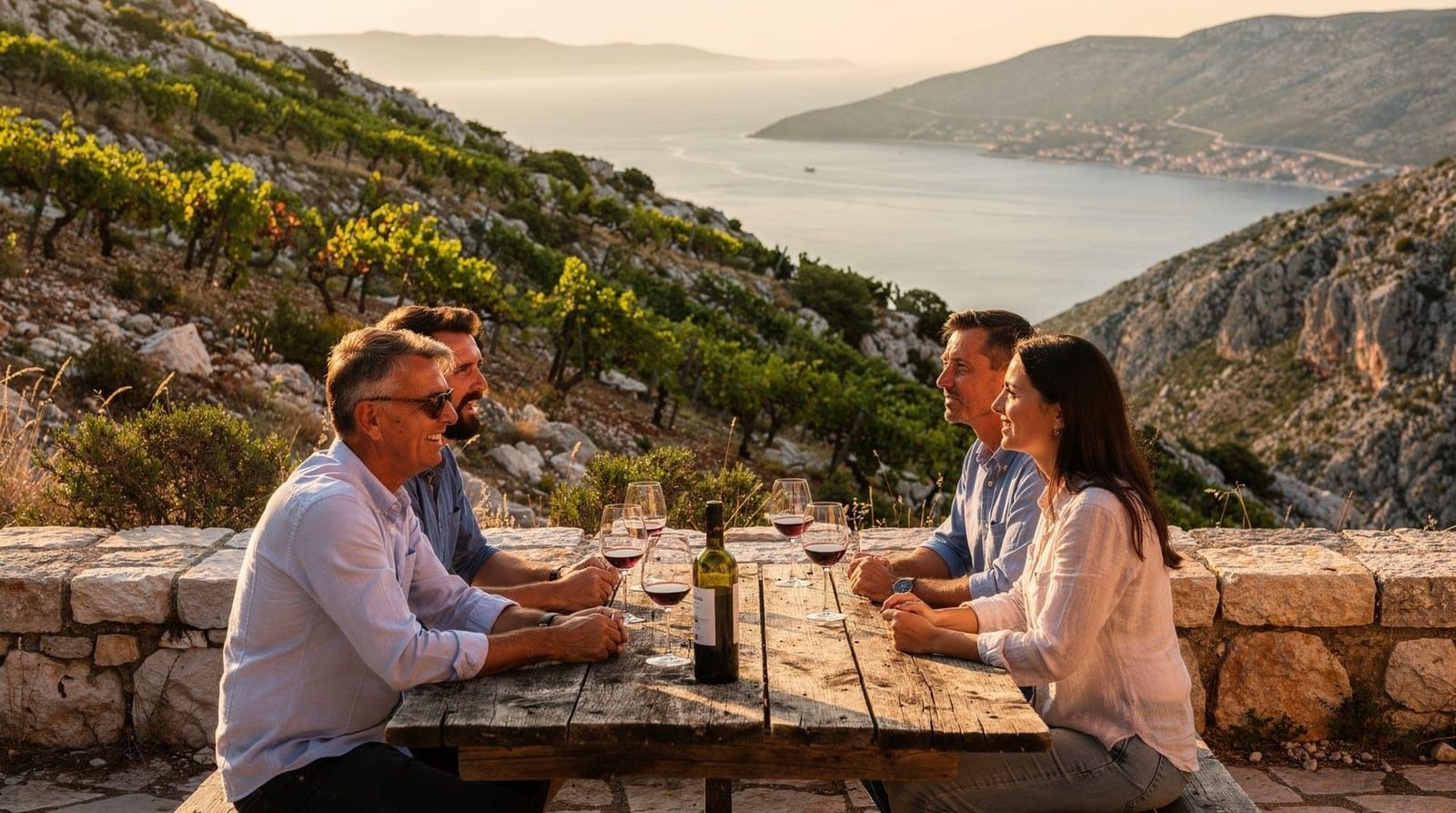
The best Pelješac wine tours visit two or three estates, typically including a combination of Dingač and Postup tastings alongside the estate’s other wines, and include food. Some also include Ston for an oyster tasting at the saltpans — which is a natural pairing given that Ston is 15 km from Potomje and the saltpans there produce oysters that are exceptional with both young Postup and aged Dingač.
For a full-day experience combining wine with the broader food culture of Pelješac — oysters, prosciutto, cheese, konoba lunch — the gourmet combination tours are worth the slightly higher price.
For day trips from Dubrovnik more generally, Pelješac wine tours sit alongside the Elafiti Islands and Mostar as the most consistently rewarding options — and for wine lovers they are in a category of their own.
Food pairings: what to eat with Dingač and Postup
The pairings that work with Dingač are the pairings that have evolved alongside it over centuries of Dalmatian cooking.
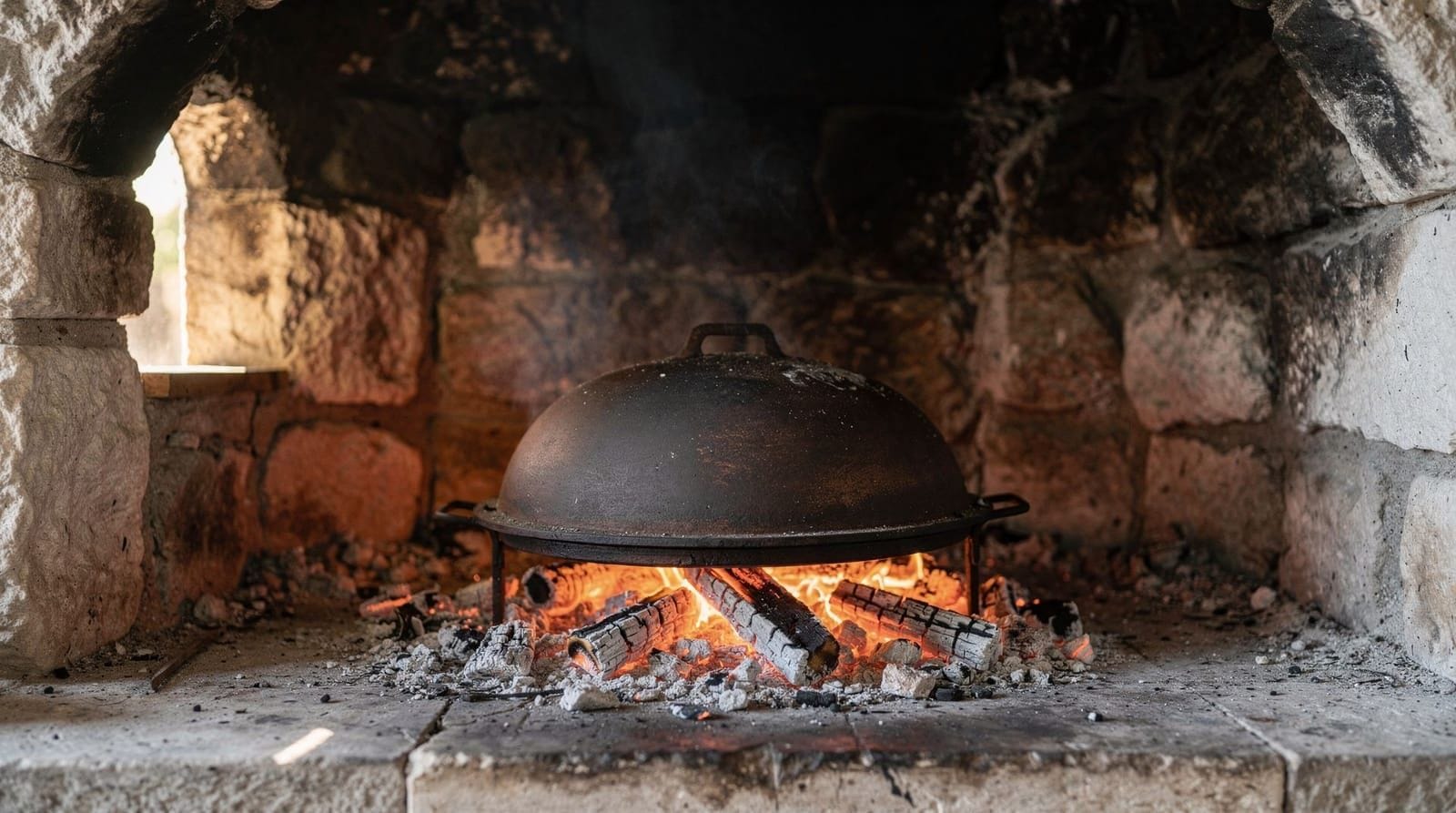
Lamb under the peka: The classic — slow-cooked lamb shoulder or leg under the iron peka bell, with potatoes, vegetables, and herbs. The rendered fat and sweet meat match Dingač’s tannins better than almost anything else. Peka cooking requires advance ordering at any konoba that makes it properly; most need 2–3 hours notice. If you are visiting Pelješac wineries for the day, call ahead to any konoba in Potomje or Orebić and order peka for lunch — it changes the tasting experience entirely.
Pasticada: Braised beef marinated in red wine, prunes, prosciutto, and spices, then slow-cooked for hours. Split’s festive dish and one of Dalmatian cuisine’s great achievements. The sweet-savoury profile and the richness of the braising liquid work perfectly with aged Dingač — the wine’s fruit and the dish’s prune notes echo each other.
Aged Dalmatian cheese: Paški sir from Pag island (available throughout Dalmatia) — a hard, sheep’s milk cheese with a sharp, salty flavour — handles Dingač’s tannins well. Older versions (aged 12+ months) are even better. Local konoba cheese platters often include a mix of ages; ask for the oldest available.
Lamb prosciutto from Pelješac: Less famous than the pork prosciutto of Istria but distinctive and excellent — drier, gamier, intensely flavoured. Buy it at any meat shop in Ston or Orebić and it will be better with Dingač than most charcuterie you will find elsewhere.
What to avoid: Delicate seafood (grilled brancin or sea bream), anything with butter or cream, light salads. Dingač’s alcohol and tannin will overwhelm them and neither the food nor the wine will show well.
When to drink Dingač and Postup
Immediately (young, 1–3 years): Only with a long decant (2–3 hours) and rich food. The tannins are present and the fruit needs time to open. If you buy bottles at the estate and drink them that evening at a konoba, this is the scenario — it works, but patience helps.
Peak drinking (5–8 years for most producers): The tannins have integrated, the dark fruit has deepened into dried fruit and leather, and the mineral notes from the karst begin to show. Most Dingač from Matuško or Saints Hills is excellent in this window. This is the range that a well-chosen bottle from a specialist wine shop or an online Croatian wine retailer might land you in.
Best expressions at 10+ years: Miloš Stagnum and Barrique, aged Matuško Dingač from a ripe vintage, Grgić Vina Dingač from top years. These wines at a decade or more are serious bottles — complex, evolved, the tannins silky rather than firm, the finish long and nuanced. Old Matuško Dingač (the estate keeps a back-catalogue) at a cellar tasting is a genuine revelation.
Postup vs. Dingač for aging: Postup tends to have slightly higher acid, which means it can age gracefully too — though the peak drinking window is generally a few years earlier than Dingač and the maximum complexity slightly lower. A ten-year Postup from Crvik or Matuško is excellent; a ten-year Dingač from the same producers is potentially better.
Buying Dingač and Postup: where and how much
At cellar door (best option): Direct from the producer, prices are €15–35 for Dingač and €10–22 for Postup. Aged expressions (five or more years) run €25–50. Bring cash; card machines are unreliable at smaller estates.
In Dubrovnik: D’Vino Wine Bar stocks a range of Pelješac reds by the glass (€5–12) and by the bottle. The wine shops on Stradun and in the Pile Gate area carry some Dingač and Postup, though stock is variable and prices are higher than cellar door.
In Split: Paradox Wine Bar and the wine shop near Marmontova carry Dalmatian reds including some Pelješac producers. Selection is smaller than Dubrovnik.
In Zagreb: Bornstein wine shop on Kaptol is the best retail source in Croatia for aged Dingač — the cellar includes vintages going back 15+ years from Matuško, Miloš, and Grgić, at prices that reflect both quality and age.
For shipping home: Croatian wine export logistics are improving but still complicated and expensive. Buying at cellar door and packing bottles in check-in luggage (padded with clothing, declared at check-in) is the standard approach. Two bottles in a bag fit in most carry-on; more than six requires checked baggage with specialist wine packaging.
Planning your visit around the calendar
Timing a Pelješac wine day changes the experience more than most visitors expect. April through June brings mild temperatures, blooming vines and quiet tasting rooms — you may have a producer’s full attention rather than sharing it with a busy tour schedule. July and August are the highest season: producers are open longer hours to meet demand, but tastings can feel rushed and the narrow coastal road to Potomje is busier with traffic. September is harvest (berba) — the most atmospheric time to visit, with grapes being picked on the steep terraces and an energy in the village that the rest of the year lacks, though some producers are too busy in the cellar to give a full tasting during peak picking days. October into early November is quieter again, with new vintage barrel samples sometimes available to taste alongside bottled wine — worth asking about if you visit outside summer.
Whatever the season, mornings tend to work better than afternoons for serious tasting, particularly in summer heat, and calling a day or two ahead — even for producers that technically accept walk-ins — measurably improves the attention and time you get.
Weather is also worth checking directly before a self-drive visit: the Pelješac road runs exposed along the coast in places, and while it is rarely closed, strong bora winds in winter and early spring can make the drive unpleasant for anyone prone to car sickness on winding roads. None of this affects organised tours, since operators already build weather and road conditions into their planning.
How Dingač fits into Croatia’s wider wine story
For the full context of Croatian wine — the 130 native varieties, the division between coastal Dalmatia and continental Slavonia and Istria, the white wine picture — the Croatian wine guide covers the landscape from north to south. Dingač and Postup represent the apex of Dalmatian red winemaking, but they sit within a wine culture of real breadth.
Korčula’s whites — Pošip and Grk — offer a completely different experience from the same Adriatic world. Istrian Malvazija represents Croatia’s white wine tradition at its most developed. The two appellations on Pelješac are arguably the most internationally significant wines Croatia produces, but they are one chapter in a longer story.
For practical guidance on how to see Pelješac, Korčula, and the rest of Dalmatia in one trip, the Croatia wine tasting guide covers the logistics of tours, self-drive routes, city wine bars, and festivals in detail. And for the broader 7-day Croatia itinerary, a Pelješac wine day fits naturally between Split and Dubrovnik — one of the most rewarding stops on the classic coastal route.
Dingač and Postup vs the rest of Croatia’s reds
It helps to place Dingač and Postup against the other reds you’ll encounter travelling through Croatia. Plavac Mali from outside the two protected zones — grown on Hvar, the Makarska Riviera or the Neretva valley — can still be excellent, but rarely reaches the same concentration, since those sites lack the extreme heat and poor soil of the Pelješac terraces. Babić from the Šibenik area is lighter and more aromatic, a different style entirely rather than a lesser one. Teran from Istria shares almost nothing stylistically — high acid and earthy rather than dense and tannic — which makes it a useful contrast if you are tasting your way around the country and want to understand how differently Croatian reds can express themselves depending on region.
For most visitors building a wine-focused trip, the practical takeaway is this: if you only have time to taste one serious Croatian red properly, with context and food, make it Dingač or Postup on Pelješac. Everything else is worth exploring, but this is where the country’s red wine reputation is actually earned.
Producers at a glance
| Producer | Style | Cellar-door price | Visitor access |
|---|---|---|---|
| Miloš | Reference-standard Dingač, minimal intervention | EUR 25–65 | Very limited, prior relationship needed |
| Matuško | Most visitor-friendly, full range | EUR 10–35 | Easiest — call ahead, English spoken |
| Saints Hills | Design-forward, modern winery | EUR 20–30 for tastings | Good — modern tasting room |
| Grgić Vina | Powerful Dingač, Judgment of Paris pedigree | EUR 18–40 | Moderate — call ahead |
| Crvik Vina | Precise, restrained Postup specialist | EUR 10–22 | Moderate — smaller operation |
Making a full day of it from Dubrovnik
Most visitors treat Potomje as one stop on a longer Pelješac day rather than a destination on its own. Pairing it with Ston’s oysters at the start of the day and a stop in Korčula at the end makes for one of the most rewarding full days available from Dubrovnik. If you are planning several days around Dalmatian wine specifically, the Croatian wine guide helps decide how much time to give Pelješac versus Korčula’s Pošip and Grk, or the wine bars of Split if your route runs that way. For the broader context of what else fills a Dubrovnik itinerary, see our day trips from Dubrovnik guide.
Frequently asked questions about Dingač and Postup
What does Dingač taste like?
Young Dingač is dense, tannic, and muscular — dark fruit (blackberry, dried plum, black cherry), dried fig, tobacco, Mediterranean herbs, and often a note of dark chocolate or espresso on the finish. Alcohol is typically 14–16%. It needs food or time — ideally both. With five to eight years of age, the tannins soften, the fruit integrates, and complexity emerges: leather, dried tobacco, mineral notes from the karst soil, and a long savoury finish. Aged Dingač from top producers is a genuinely serious wine.What is the difference between Dingač and Postup?
Both are 100% Plavac Mali from Pelješac, but the terroir differs. Dingač grows on extremely steep, south-facing terraces above the Adriatic where the rock radiates heat and grapes accumulate extraordinary sugar and phenolic concentration. Postup grows on gentler slopes around Potomje and Trstenik with slightly more moderate temperatures — the result is wines with similar structure but more acid, more approachability young, and slightly lower alcohol (13.5–14.5% versus 14.5–16% for Dingač). Postup is less famous and often better value.How do I get to Dingač and Potomje?
Potomje is a small village on the Pelješac peninsula, accessible by car via the D414 road from Ston (90 km north of Dubrovnik). The village sits behind a tunnel through the mountain — the Dingački tunel, dug in 1973 to allow harvest transport. From Dubrovnik, the drive takes about 2 hours each way; most visitors combine it with an organised tour. From Korčula island, the Orebić–Domince ferry crosses in 15 minutes and Potomje is 10 km east.Which Dingač producer should I buy?
Miloš (also spelled Frano Milos) is the benchmark producer — the Barrique and Stagnum expressions are exceptional, especially with a few years of age. Matuško is the most visitor-friendly and produces both Dingač and Postup across multiple price points. Saints Hills produces a more modern, design-forward Dingač that is excellent for drinking younger. Grgić Vina (founded by Miljenko Grgich, who made the 1973 Chateau Montelena Chardonnay that won the Judgment of Paris) also produces Dingač worth seeking out.What food pairs best with Dingač?
Lamb is the classic: slow-roasted leg or shoulder, ideally cooked under the peka bell (Croatia's traditional iron cooking dome). Pasticada — braised beef in a prune-and-wine sauce — is another traditional pairing. Strong aged cheeses (paški sir from Pag island, aged Dalmatian goat's cheese), lamb prosciutto, and hearty bean stews all work well. Avoid delicate fish and anything with cream — Dingač's tannins and alcohol will overwhelm them.Can I visit Dingač wineries without a tour?
Yes, but advance booking is essential. Most Dingač producers do not have formal walk-in tasting rooms. Call or email Matuško or Saints Hills at least a week ahead (earlier in summer). Miloš is the most difficult to visit without an existing relationship; try emailing in English — responses sometimes come in Croatian. Organised tours from Dubrovnik solve all logistics: transport on the winding Pelješac road, language, and estate access.Is a Pelješac wine tour or self-driving to Potomje better for a first visit?
A guided tour is the better choice for most first-time visitors. The road to Potomje is narrow and winding, the top producers like Miloš are difficult to access without an existing relationship, and a good guide adds context on the appellation history and terroir differences that is hard to get from a solo tasting. Self-driving makes more sense for a second visit, once you know which specific producers you want to revisit.How does Dingač compare to other prestige reds outside Croatia?
In structure, aged Dingač from a top producer sits closer to a serious southern Rhône red or a concentrated Primitivo di Manduria than to Bordeaux or Napa Cabernet — high alcohol, dense dark fruit, firm tannins that soften with a decade of age, and a savoury, herbal complexity rather than a fruit-forward style. It is priced well below equivalent-quality wines from more established international regions, which is part of why serious collectors have started paying attention.
Top experiences
Bookable activities with verified prices and instant confirmation on GetYourGuide.
Top experiences
Best-rated activities across GetYourGuide and Viator.

Krka National Park Tour with tour Guide & Wine tasting from Split & Trogir
- Viator

Dolphin Watching & Sunset Boat Tour With Drinks & optional Dinner
- Viator

Fantastic DOLPHIN & SUNSET TOUR with dinner ( Pula-NP BRIJUNI )
- Viator

Dubrovnik Guided Group Tour with Ston Oyster tasting from Split & Trogir
- Viator

Zadar Highlights: Old Town, Sea Organ & Local Tastings
- Viator

Zadar: Luxury Island Boat Tour, Snorkeling & Unlimited Wine
- Viator