How many days in Croatia? a realistic breakdown
Split: Plitvice Lakes day tour
How many days do I need for Croatia?
Seven days covers the Dalmatian coast and one or two islands comfortably. Ten days adds Plitvice Lakes and more island time. Fourteen days lets you include Istria or Zagreb. Five days is workable only if you pick one region and stay there — trying to combine Dubrovnik and Istria in five days means spending most of your trip on motorways.
The honest answer to “how many days in Croatia” is: more than you think. Distances are longer than the map suggests, ferry connections add travel time, and Croatia at its best is experienced slowly — a long lunch at a konoba, an afternoon on a quiet beach, an early evening walk through an old town with the day-trippers gone. The following breakdowns are based on those realities, not on the optimistic schedule of a highlight reel.
| 5 days | One region only — Split + surroundings, or Dubrovnik + Montenegro day trip |
| 7 days | The classic trip — Split, one island, Dubrovnik |
| 10 days | Adds Plitvice Lakes and a second island |
| 14 days | Adds Istria and/or Zagreb without feeling rushed |
| Routing | North-to-south (Zagreb/Split → Dubrovnik) beats the reverse |
Minimum days per destination — the honest table
Before getting into full itinerary scenarios, here are minimum recommended nights per destination:
- Dubrovnik: 2 nights minimum, 3 ideal
- Split: 2 nights minimum, 3 if adding Krka or Trogir
- Hvar: 2 nights minimum (1 night gives you almost nothing)
- Brač: 1–2 nights (Zlatni Rat beach + Bol town)
- Vis: 2–3 nights (the Blue Cave from Vis is different to the Split tour)
- Korčula: 2 nights minimum
- Zadar: 1–2 nights (easier to day-trip if staying nearby)
- Šibenik: 1 night, or a day trip from Split or Zadar
- Plitvice Lakes: 1 full day trip, or overnight for early park access
- Zagreb: 2 nights minimum, 3 if you are genuinely interested in the city
- Rovinj / Istria: 3–5 nights for the region
5 days — coast only, no islands
Five days is tight. The most common mistake is trying to cover too much ground, ending up with two nights in each of three places and spending a large proportion of the trip in transit. Instead, commit to one stretch of coast and explore it properly.
Option A: Split + surroundings (best for first-timers)
Day 1: Arrive Split. Evening walk through Diocletian’s Palace — the best introduction is simply wandering the alleys inside the palace walls at dusk, when the crowds thin and the stone glows. Find a table in the peristyle for a drink. Day 2: Palace guided tour in the morning (understanding what you are actually looking at transforms the experience); Marjan Hill in the afternoon for city views; Bačvice beach area in the evening for a local atmosphere. A guided tour of Diocletian’s Palace pays dividends here — what looks like a jumble of alleys starts to make sense once the history of the structure is explained. Day 3: Day trip to Trogir (30 minutes by bus or boat) — a UNESCO-listed walled town built on its own small island, compact enough to cover fully in half a day. The cathedral is remarkable; the waterfront is good for lunch. Return to Split by afternoon. Day 4: Day trip to Krka National Park — closer to Split than Plitvice and more practical as a day trip. The Skradinski Buk waterfall section is the highlight. Alternatively, join a boat tour from Split to the Blue Cave on Biševo island and several smaller islands — a long but spectacular day. The five islands and Blue Cave tour from Split hits several highlights in one day. Day 5: Final morning in the old town market (Pazar), open-air stalls for local cheese and olive oil; depart from Split.
Option B: Dubrovnik + Montenegro
Day 1: Arrive Dubrovnik. City walls in the late afternoon. Day 2: Full day in the Old Town — Stradun, Fort Lovrijenac, Lokrum boat. Day 3: Day trip to Kotor (Montenegro) — one of the most dramatic bay settings in Europe. Day 4: Elaphiti Islands boat tour. Day 5: Final morning in Old Town before departure.
What you cannot do in 5 days: Combine Dubrovnik and Istria. The drive is 5–6 hours each way. You would spend two of your five days in the car.
Planning your routing: north-to-south vs south-to-north
The order in which you travel Croatia matters more than most travellers realise, and the geographic reality of the country shapes this decision significantly.
The north-to-south argument
Flying into Zagreb or Split and finishing in Dubrovnik is the most natural direction of travel for most itineraries. You work through the increasingly spectacular southern Dalmatian coast, building toward what many consider the visual climax — Dubrovnik and the islands south of Hvar. Ferries from Split reach Hvar, Vis and Korčula with multiple daily departures in summer, and the fast Krilo catamaran runs all the way to Dubrovnik via intermediate islands. You finish at Dubrovnik Airport (DBV) and fly home directly.
The practical strength of this route: Split has better flight connections at lower prices than Dubrovnik for most European markets, so arriving into SPU and departing from DBV — what airlines call an “open jaw” itinerary — is usually cheaper than two flights into the same airport. It also means you do not backtrack.
The south-to-north argument
Starting in Dubrovnik has one real advantage: you get the most intense, highest-demand destination out of the way first, when you are freshest and your Dubrovnik accommodation reservation is most important to honour. After Dubrovnik, everything is relatively easier.
The operational problem: Dubrovnik is a geographic dead end. It sits at the very southern tip of Croatia, connected to the north by a single coastal road and the fast catamaran. There are no ferry connections to the islands north of Vis from Dubrovnik — you either backtrack by catamaran or bus to Split, or you skip the central Dalmatian islands entirely. Most travellers who start in Dubrovnik end up spending more transit time than those who travel north-to-south, because getting back up the coast to Split (the ferry hub) is unavoidable.
The one-way flight strategy
If your primary concern is efficiency, the cleanest solution is a one-way flight structure: fly into Zagreb (ZAG) or Split (SPU), travel south through Dalmatia, and fly home from Dubrovnik (DBV). This eliminates all backtracking and lets you move at a natural pace. Open jaw tickets between two different Croatian airports are widely available from most European airlines and often cost the same as or less than a return to a single airport. Budget carriers including Ryanair, easyJet and Wizz Air all operate this configuration in summer.
If you must do a return to the same airport, choosing Split (SPU) makes more practical sense than Dubrovnik (DBV): Split’s ferry connections are richer, there are more accommodation options at every price point, and you can reach Dubrovnik cleanly by the Krilo catamaran or coastal bus at the end of your trip, then return the same way.
Why Dubrovnik as a base creates routing problems
Visitors who base themselves in Dubrovnik and try to day-trip north to Split or the central Dalmatian islands quickly discover that the distances are long. Split is 4 hours by bus or 3 hours by fast catamaran — manageable as a day trip technically, but a full day largely in transit. Hvar from Dubrovnik requires taking the catamaran to Split and switching ferries. Trying to do island hopping from a Dubrovnik base adds significant travel time to every excursion.
The practical conclusion: treat Dubrovnik as a destination and endpoint, not as a base for exploring the rest of the coast. Two or three nights in Dubrovnik is the right allocation; using it as a hub for Dalmatia is not.
7 days — the classic Dalmatian coast trip
Seven days is the sweet spot for first-time Dalmatia. It covers the main coastal sites, one or two islands, and leaves enough margin not to feel rushed.
Suggested 7-day framework: Split, Hvar, Dubrovnik
Day 1: Arrive Split. Evening in Diocletian’s Palace. Day 2: Full Split day — palace tour, market, Marjan Hill. Day 3: Ferry to Hvar (1 hour). Check in; wander Hvar Town fortress. Day 4: Day trip to Vis from Hvar, or the Blue Cave and Pakleni Islands.
The Blue Cave and five islands tour from Split can be booked from Split instead of Hvar if you prefer — it covers Hvar, Vis, Biševo’s Blue Cave and Šolta in one long day.
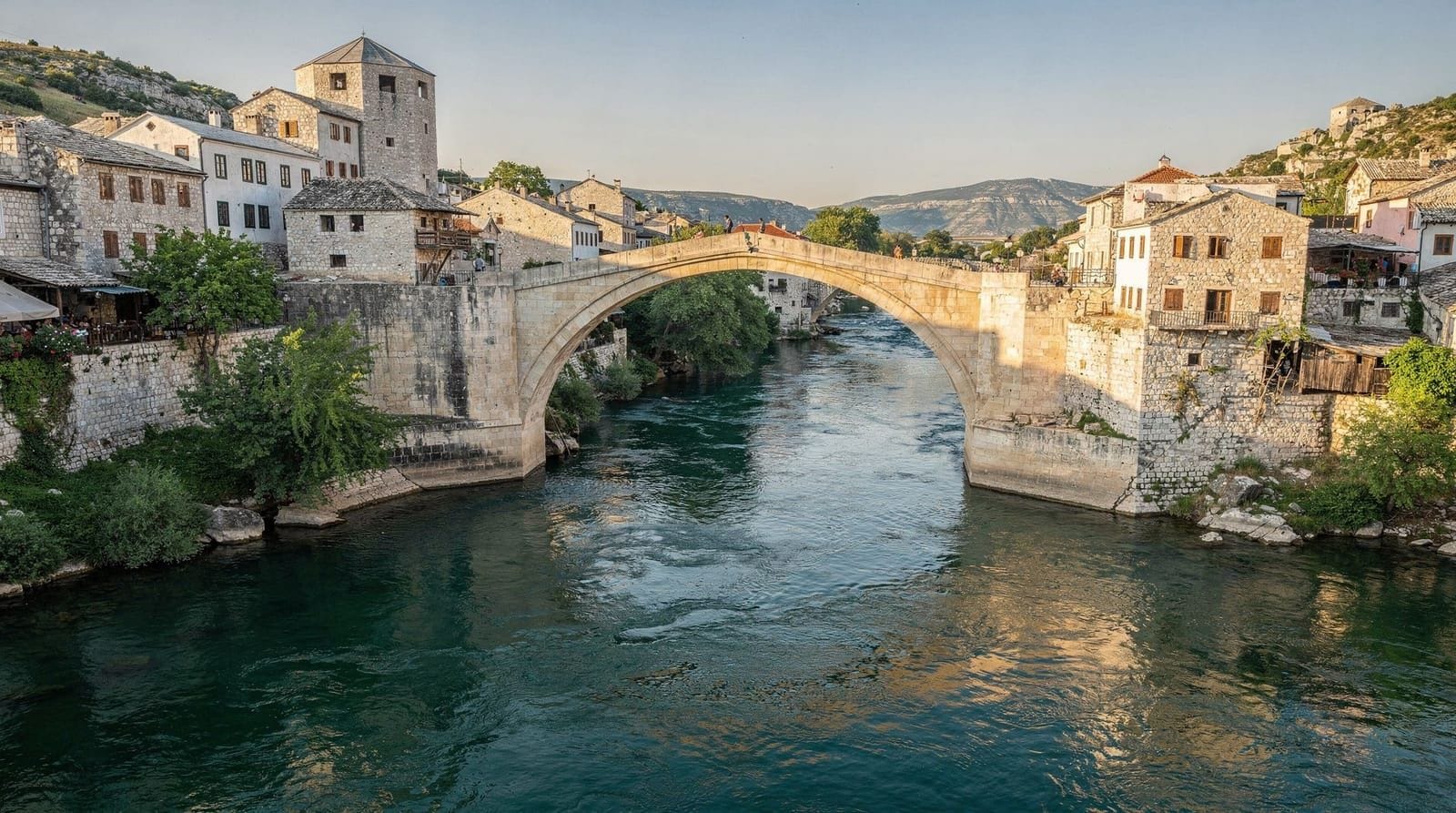
Day 5: Ferry Hvar to Dubrovnik (direct catamaran in summer, or via Split). Arrive afternoon. Day 6: Full Dubrovnik day — walls (early), Old Town at leisure, Lokrum. Day 7: Day trip to Mostar or Kotor, or morning departure.
Distance reality check: Split to Dubrovnik by fast catamaran (Krilo) takes about 3 hours in summer. By bus it is 4 hours. By car via the coastal road it varies enormously depending on August traffic — the Pelješac Bridge (opened 2022) removed the Bosnia-Herzegovina border crossing at Neum and shaves time off the drive.
10 days — coast, islands, and Plitvice
Ten days allows a more complete Dalmatian trip with the addition of Plitvice Lakes — the national park inland that is one of Croatia’s most visited sites.
Suggested 10-day framework: Split, islands, Plitvice, Dubrovnik
Days 1–3: Split (2 nights). Day 2 for city; Day 3 for Trogir or Šibenik. Days 4–5: Hvar (2 nights). Ferry from Split. Day trip to Pakleni Islands or Stari Grad Plain. Day 6: Travel day north — ferry or bus to Zadar or Šibenik for an overnight. Day 7: Plitvice Lakes full day. Either join a guided tour from the coast, or use Zadar as a base (1.5 hours from the park).
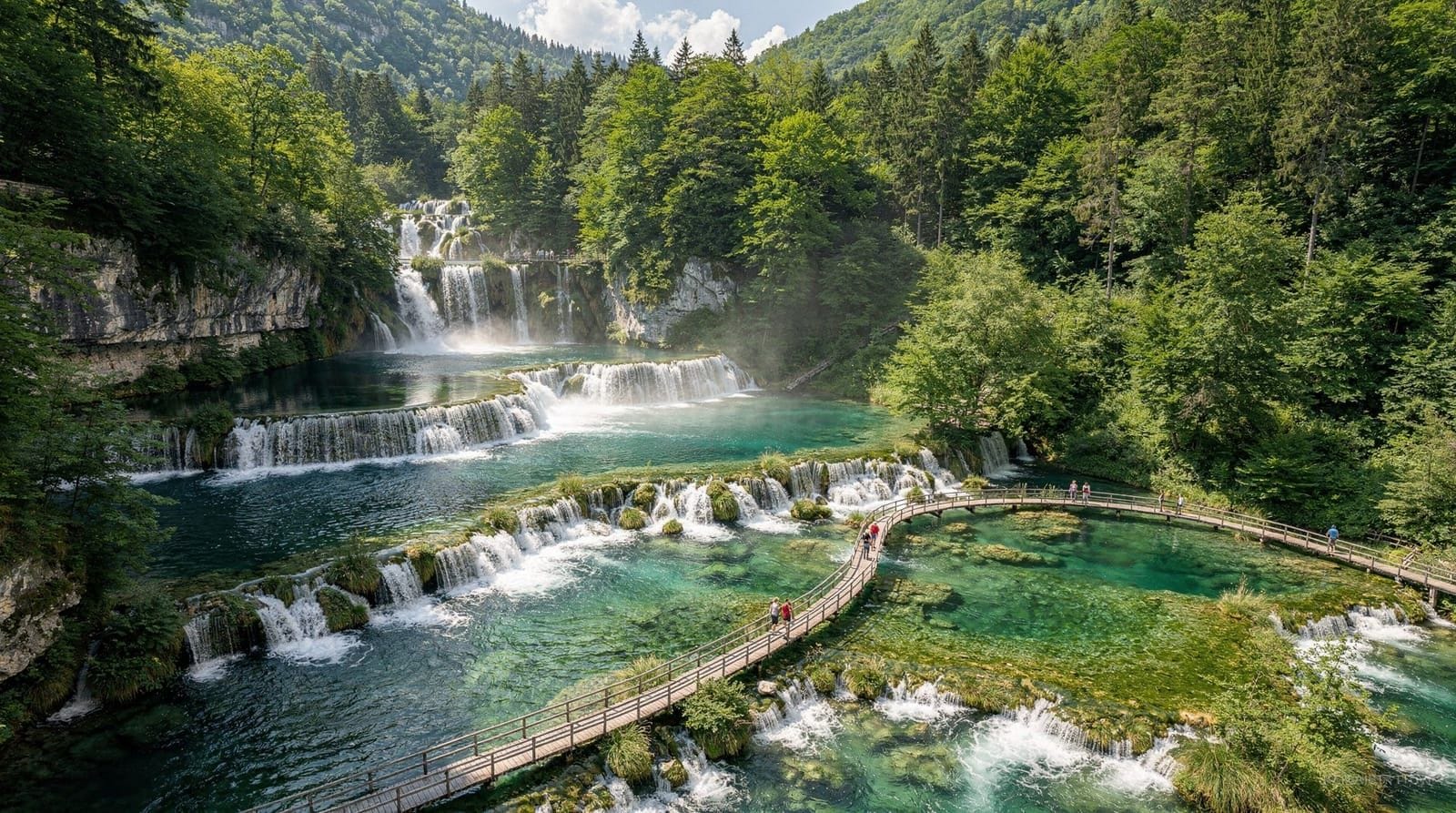
A day tour to Plitvice from Split handles the logistics of transport and park entry — the drive from Split is 2 hours each way and the park requires either careful route planning or a guide.
Day 8: Travel south. Zadar or Šibenik to Dubrovnik by bus or car (3–4 hours). Days 9–10: Dubrovnik. Day trip to Mostar or Elaphiti Islands.
Alternative 10-day structure: Some travellers prefer to base in Zagreb for days 1–3 (the capital plus a Plitvice day trip), then take the overnight train or a short flight to Split, and work south from there. This works particularly well if your international flight arrives at Zagreb’s airport.
Island-focused alternative: If Plitvice is less important than more island time, swap it for a third island stop — Korčula or Vis both work well slotted between Hvar and Dubrovnik on the coastal catamaran route. This trades the inland detour for a slower, more water-based ten days, and removes the north–south backtracking that Plitvice otherwise requires.
14 days — coast, islands, Istria, and Zagreb
Fourteen days is the first trip length that comfortably incorporates Istria and Zagreb alongside a full Dalmatian itinerary without feeling rushed. Do not try to do all of Dalmatia, all of Istria and Zagreb in two weeks — it still requires prioritisation.
Suggested 14-day framework
Days 1–2: Zagreb. The capital, Dolac market, Gornji Grad, Museum of Broken Relationships. Day trip to Samobor. Day 3: Zagreb to Plitvice Lakes (2 hours south). Full day in the park; overnight near the park entrance for early access. Day 4: Plitvice to Split via Zadar (half day in Zadar — Sea Organ, Roman forum, Greeting to the Sun). Days 5–6: Split. Palace, market, Marjan. Days 7–8: Hvar. Ferry from Split.
A private boat tour of Hvar’s south coast and Pakleni Islands is one of the best experiences on the Dalmatian coast and worth the splurge.
Days 9–10: Dubrovnik. City walls, Lokrum, Old Town at leisure. Day 11: Day trip to Mostar or Kotor from Dubrovnik. Day 12: Flight or long drive north to Istria (Pula or Rovinj). Days 13–14: Rovinj (2 nights). Explore Istrian coast and one hilltop village.
Skip-Zagreb variant: If Zagreb doesn’t appeal, the same 14 days work well as three regions instead of four — extend the Dalmatian coast and island time by 2–3 days and use the freed days for a proper Istria stay (Rovinj, Pula and one hilltop village like Motovun, rather than a rushed pass-through). This avoids the day-12 to day-14 fatigue of the full four-region version.
Honest assessment: Days 12–14 involve significant travel (Dubrovnik to Istria is genuinely 5–6 hours by car). If you want to do this without feeling the day-13 fatigue, build in a night somewhere mid-route — Rijeka or Opatija works as a transitional stop.
What to cut when time is short
The most common painful discovery is that you do not have time for everything and have to choose. Here is a ranked guide to what to cut when:
Cut first: A second or third island if you have under 10 days. One island done properly beats three rushed. This is the single most common overcorrection — travellers see three islands on a map close together and assume they can be combined easily, forgetting that each transfer costs a half-day even on paper-fast catamaran connections.
Cut next: Zagreb, unless you arrive or depart there. It is a good city, but it is the least regretted omission on a tight coast-focused trip.
Think carefully before cutting: Plitvice Lakes. It is the most-visited site in Croatia for a reason, and the journey (especially on a guided day trip) is manageable. But if it requires giving up two nights of coastal time, some travellers choose Krka instead as a nearer, lighter alternative.
Do not cut: At least one day of doing nothing in particular at a beach, café or harbour. The Croatian coast is not primarily a sightseeing exercise — it is a place to inhabit.
Turning this into an actual schedule
The day counts above are starting points, not fixed plans — the Croatia itinerary planning guide walks through building a real day-by-day schedule around whichever length you land on, including booking order and buffer days for ferry delays. If this is your first Croatian trip, pair it with the first time in Croatia guide for the mistakes that most commonly blow up a tight schedule. And whichever length you choose, the getting around Croatia guide and ferry vs catamaran guide are worth reading before you fix your route — island connections in particular can add or save a half-day depending on which service you book.
For trips built primarily around island time rather than the mainland coast, see the island-hopping itinerary guide for a structure that swaps some of the coastal days above for more time on the water.
Frequently asked questions about How many days in Croatia? a realistic breakdown
Is 5 days enough for Croatia?
Five days is enough for one region done properly: Split plus Hvar and Brač, or Dubrovnik plus a Kotor day trip, or Istria. Trying to combine Dubrovnik and Split in five days with island time is tight and leaves little margin for ferry delays or a slow morning.Is 7 days enough for Croatia?
Seven days is the sweet spot for a first Dalmatian coast trip. A well-planned week covers Split (2 nights), Hvar or another island (2 nights), Dubrovnik (2 nights) and a day trip, with one travel day built in.How many days do you need in Dubrovnik?
Two full days is the minimum to do Dubrovnik justice: the city walls, the Old Town, Lokrum Island and a sunset. Three days lets you add a boat excursion to the Elaphiti Islands or a day trip to Mostar or Kotor.How many days do you need in Split?
Two days works for Diocletian's Palace, the Marjan Hill walk and the market. Three days allows a day trip to Trogir or Krka, or more time to adjust to the pace before moving on.How many days for Plitvice Lakes?
Plitvice is best as a full day trip (minimum 5-6 hours in the park) from Zagreb, Split or Zadar. Staying overnight near the park allows you to enter at opening time before the tour buses, which is the best possible experience.Is 10 days enough to see the highlights of Croatia?
Yes — ten days covers the Dalmatian coast, one or two islands, and Plitvice Lakes with enough breathing room to actually enjoy each place rather than just photograph it.Is Croatia worth visiting for just 3 days?
Three days is only viable as a weekend break, most practically in Dubrovnik or Split independently. You will scratch the surface, enjoy what you see and leave wanting more. It is not a wasted trip, but you will not experience island life or the national parks.
Top experiences
Bookable activities with verified prices and instant confirmation on GetYourGuide.
Top experiences
Best-rated activities across GetYourGuide and Viator.

From Zadar: Plitvice Lakes with Boat Ride & Zadar Old town tour
- Viator

Mostar and Herzegovina Tour with Kravica Waterfall from Split & Trogir
- Viator

3Hour ALL-INCLUSIVE Sunset Dolphin Watching from Medulin onSandra
- Viator

Dolphin Watching & Sunset Boat Tour With Drinks & optional Dinner
- Viator

Fantastic DOLPHIN & SUNSET TOUR with dinner ( Pula-NP BRIJUNI )
- Viator

Medulin :All-Inclusive Pirate Boat Dolphin Watching Sunset Cruise
- Viator