Croatia tourist traps: what to avoid and where to go instead
Split: Blue cave and 5 islands tour
What are the main tourist traps in Croatia?
The worst tourist traps in Croatia are: Stradun and harbour-front restaurants (pay double for worse food than one street back), Euronet ATMs (poor rates and hidden fees — use bank ATMs only), misleading tour operators selling 'Blue Cave' trips that include only a distant view rather than entry, Krka swimming restrictions that catch visitors by surprise, and over-priced transfers that charge five times the taxi rate.
Croatia’s success as a tourism destination has created exactly the conditions that produce tourist traps: high visitor volumes, imbalances between tourist and local knowledge, and service providers who can charge far above market value simply by positioning themselves at high-footfall locations. None of the traps described here are unique to Croatia — they are the standard features of over-touristed European destinations — but the specific forms they take in Croatia are worth knowing before you arrive.
| Worst offenders | Waterfront restaurants, Euronet ATMs, budget Blue Cave tours |
| Biggest money-saver | Walk one street back from any waterfront |
| ATM rule | Use bank-branded machines; always pay in EUR |
| Krka swimming | Prohibited at Skradinski Buk since 2021 |
| Airport transfer alternative | Local bus, a fraction of private transfer cost |
The waterfront restaurant strip
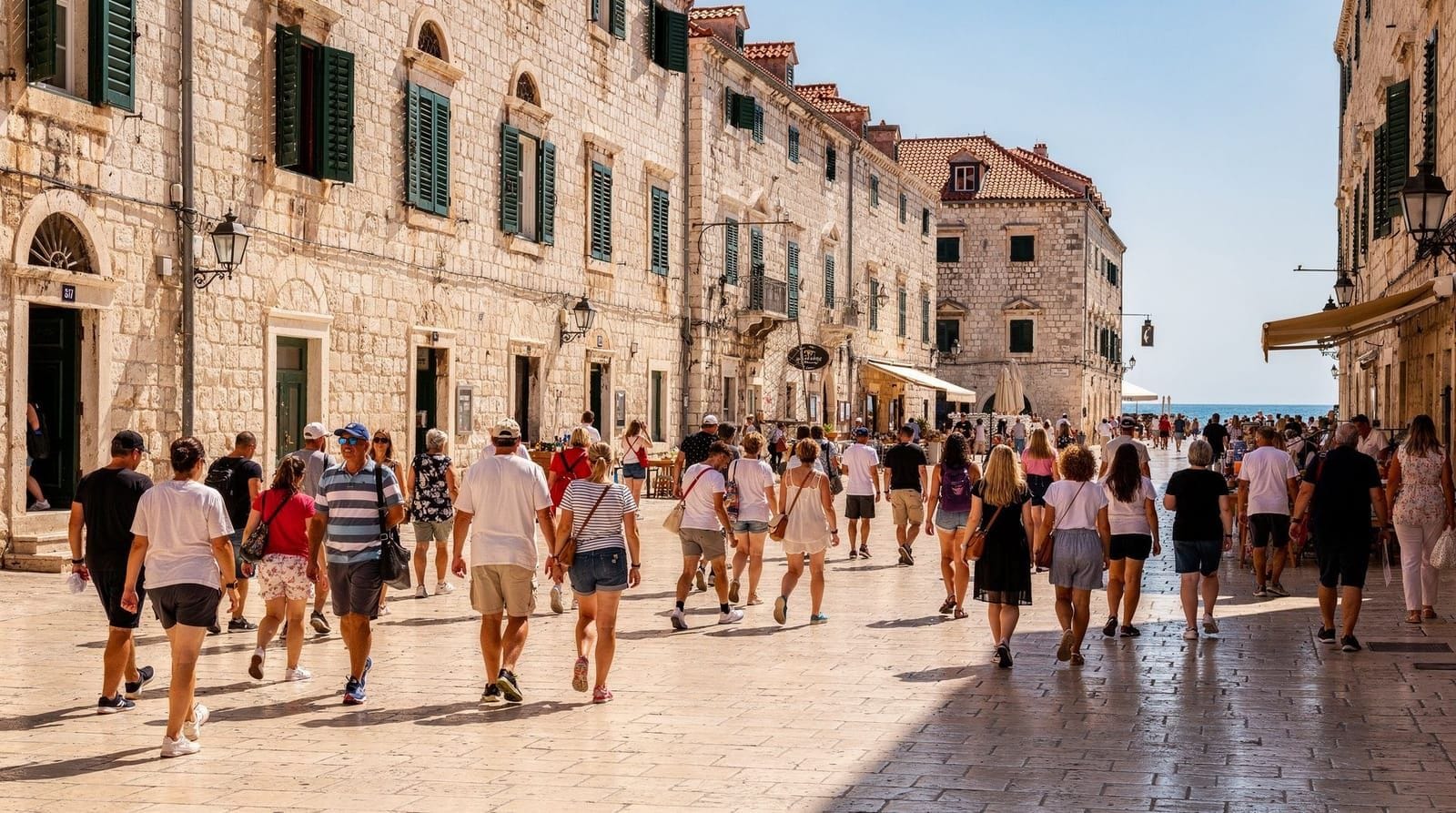
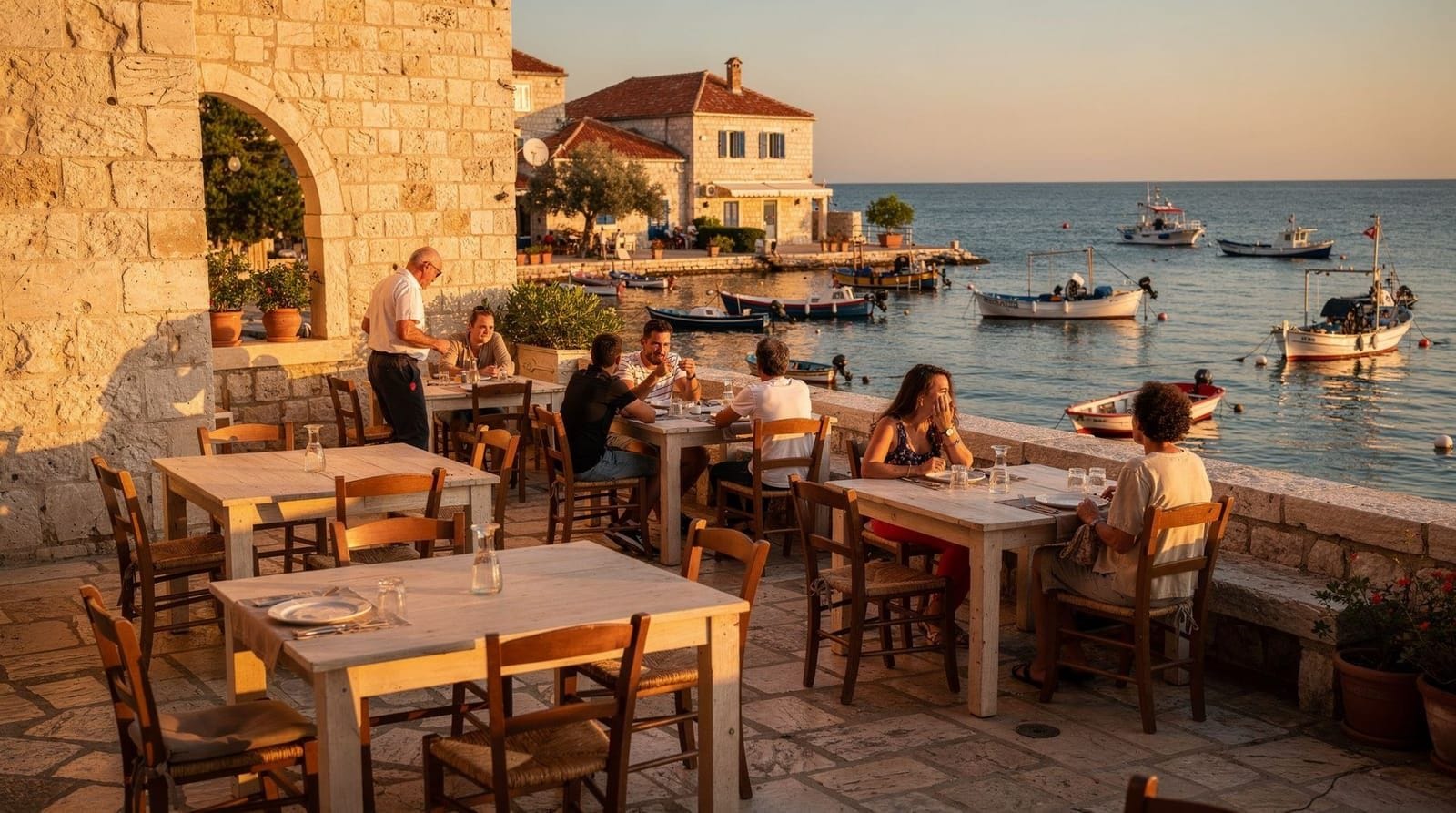
Every major Croatian coastal town has it: the row of restaurants along the most prominent waterfront or pedestrian street, with outdoor seating, laminated menus with photographs, English-speaking staff who approach passers-by, and prices that are 30–50% above the neighbourhood behind them.
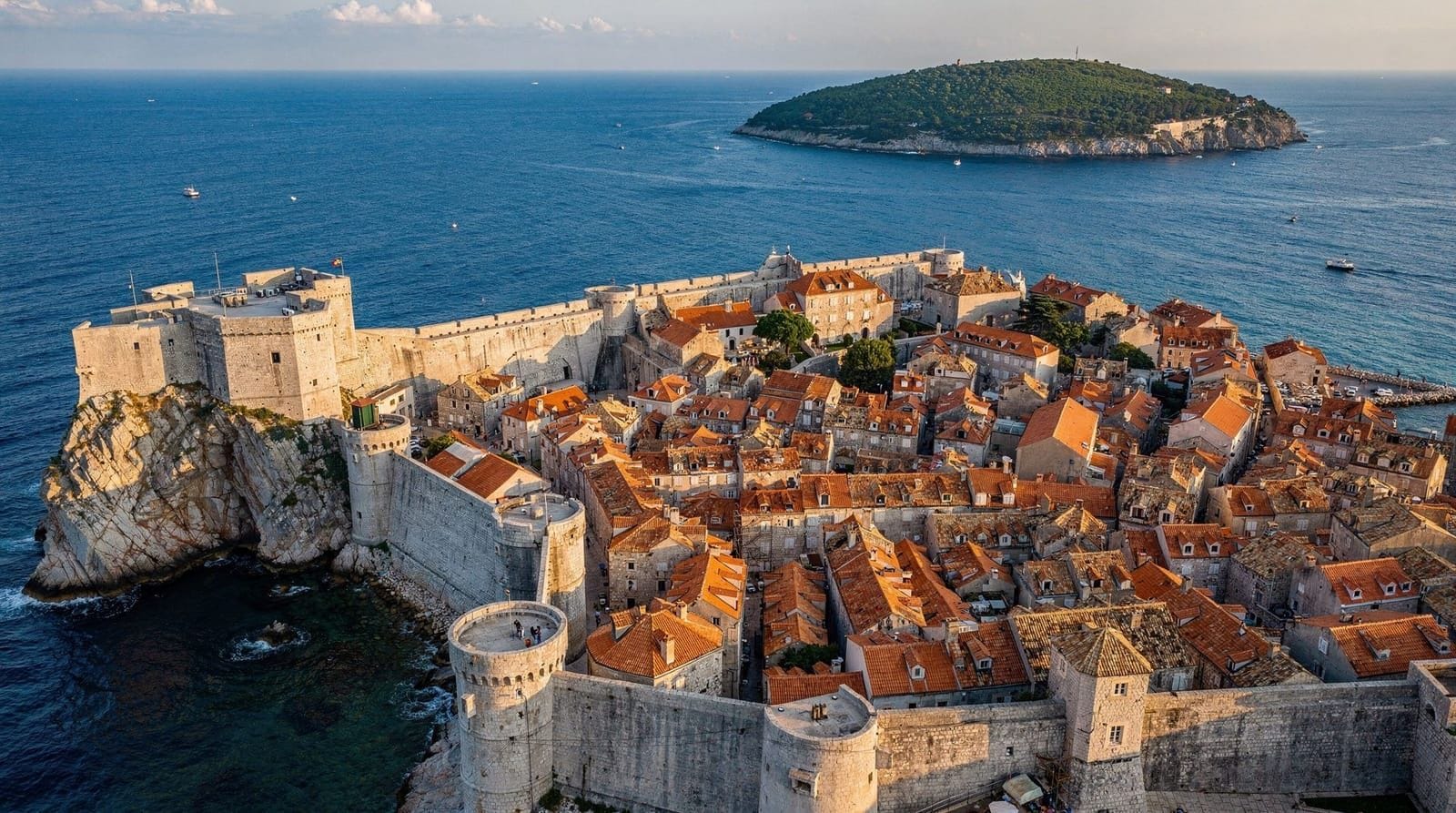
In Dubrovnik: the Stradun and the streets immediately adjacent. The restaurants are not dishonest — the food is usually acceptable — but it is generic Adriatic tourist fare at luxury prices. A grilled fish meal for two with wine runs €60–80.
In Hvar: the harbour promenade. Cocktails at €15–20 are the starting price; the sit-down restaurant meals are priced accordingly.
In Split: the Riva waterfront and the immediate surrounding area. The Palace area restaurants are the expensive zone; the eastern side of the city (Varoš neighbourhood, the streets around the market) is the alternative.
The alternative: one of the most reliable rules in Croatian eating is that the restaurant quality and price ratio improves immediately as you move away from the tourist waterfront. Ask your accommodation host for a recommendation and specify that you want somewhere locals eat. In almost every Croatian town this leads to a significantly better meal at a significantly lower price.
The konoba: a genuine konoba — a traditional family-run restaurant, often in a converted stone building — typically has a handwritten specials board, no photographs on the menu, a wine list featuring regional producers and a pace of service that assumes you will be there for two hours. It is the opposite in every way of the tourist waterfront restaurant. See the konoba guide for how to identify and find them.
Euronet ATMs — the yellow cash machine problem
Euronet ATMs are bright yellow standalone cash machines common at Croatian airports, tourist areas and harbours. They are not illegal, but their business model is built on three fee mechanisms that disadvantage tourists:
- Flat transaction fees: typically €3–5 per withdrawal, higher than bank-branded ATMs
- Dynamic Currency Conversion (DCC): the machine offers to charge you in your home currency rather than EUR, at an exchange rate that favours Euronet. The machine presents this as helpful (“We’ll charge you in British pounds so you know exactly what you’re paying!”). It is not helpful — the exchange rate is worse than your bank’s rate and Euronet pockets the difference.
- Exchange rate markup: even when paying in EUR, the Euronet rate is sometimes marginally worse than bank-branded ATM rates
Solution: use ATMs attached to Croatian banks (Privredna banka Zagreb, Erste, Raiffeisen, ZABA, OTP). They are plentiful in towns and cities. When any ATM — Euronet or bank-branded — presents the DCC offer, always choose to be charged in EUR.
The full guidance on ATMs, cards and money management is in the money in Croatia guide.
”Blue Cave” tours that disappoint
The Blue Cave (Modra Špilja) on Biševo island near Vis is one of Croatia’s most extraordinary natural phenomena: a sea cave where filtered light from an underwater opening illuminates the interior in an intense blue-silver colour. The experience inside the cave is genuinely spectacular.
The problem: the cave is small, popular, and entry depends entirely on sea conditions (calm water required for the small boats to enter). Some tour operators from Hvar, Split and other ports sell “Blue Cave tours” at budget prices that include:
- A boat ride past the cave without guaranteed entry
- Group boats that may not be prioritised for limited daily cave entry slots
- Tours that are cancelled or redirected to alternative locations if conditions are poor, with partial refunds that do not compensate for the full cost
What to look for in a legitimate tour: explicit confirmation that the tour includes actual cave entry (not just a visit to the island), a clear refund or alternative policy for poor weather, and honest information about the typical wait time (which can be 1–2 hours during the entry queue).
The blue cave guide covers legitimate tour operators and the logistics of a proper cave visit.
Krka National Park: the swimming question
Krka National Park built much of its early reputation on the visual image of swimming in the travertine pools at Skradinski Buk — the stepped cascade system where fresh water tumbles over ancient calcium deposits into pools below. For years, swimming was permitted; the photographs circulated widely.
Current situation: swimming at Skradinski Buk has been prohibited since 2021. The prohibition is enforced. Visitors who arrive expecting to swim at the main falls are turned away.
Swimming is still permitted in limited areas of the park (check current rules at the park entrance — the permitted zones can change seasonally). The park remains very beautiful as a walking and boat tour destination. But the swimming experience that many older guide books and reviews describe is no longer available.
Alternative: the Cetina River near Omiš offers legitimate swimming and rafting. Plitvice Lakes prohibits swimming. Sea swimming at the beaches near Krka town itself is unrestricted.
Hvar over-reservation and reality
Hvar town is frequently described as Croatia’s most glamorous destination. This is accurate in the sense that it attracts a young, affluent international crowd, the setting is beautiful and the social scene in the main square and harbour bars is genuinely lively.
What is less honestly described:
The party reputation distorts expectations: Hvar town’s nightlife cluster (the bars around Hvar square and the Carpe Diem complex on Stipanska beach) creates a specific party-resort atmosphere that dominates the town’s character in July and August. If you are not part of this scene, the atmosphere can feel alienating.
The price level: Hvar town is the most expensive place to stay and eat on the Dalmatian coast. Budget accommodation does not exist in the centre. Restaurant prices are equivalent to or above Dubrovnik.
Alternatives on the island: Stari Grad (the older town on the north coast) is quieter, cheaper and historically more significant — it was a Hellenic settlement and the surrounding agricultural plain is a UNESCO cultural landscape. Jelsa is a smaller, family-oriented harbour town with lower prices. The interior villages and the Pakleni Islands archipelago offer a completely different quality of Hvar experience.
The honest recommendation: if the Hvar nightlife scene is what you are specifically seeking, Hvar town in July–August is exactly what you want. If you want island beauty, swimming, food and wine without the party overlay, Stari Grad or Jelsa are better choices.
Transfers and taxis
Airport transfers: private transfer companies quote fixed prices for airport-to-hotel journeys. From Dubrovnik Airport to the Old Town, the journey is 25 minutes; transfer companies typically charge €40–80. The local Platanus bus (line 11) covers the same route for approximately €3–5. For solo travellers the bus is a clear choice. For two or more people, a metered taxi is more competitive than a private transfer company.
Old Town taxis: Dubrovnik’s Old Town is a pedestrian zone — taxis stop at the Pile Gate rather than inside. Operators selling “Old Town hotel transfer” services that take your luggage to the gate and help you carry it to your accommodation are legitimate services for visitors with significant luggage, but confirm the price before engaging.
Water taxis: legitimate water taxis operate between Dubrovnik’s harbour and points along the coast and to the Elaphiti Islands. Prices are set and should be confirmed before departure. Ad hoc “boat trip” offers from individuals at the harbour without a formal operating structure are less reliable.
Tour operator quality variation
Croatia’s GoT tourism boom and the general growth in experiential tourism has created a large number of tour operators, ranging from excellent specialist guides to package-only operators who bundle a location visit with minimal added value.
Signs of a quality operator: clearly specified itinerary (which exact sites, in what order, with what included), transparent pricing that specifies what is and is not included (admission fees, transport, meals), cancellation policy that protects the visitor in poor weather, and recent reviews that specifically mention guide quality (not just location).
Signs of a problematic operator: vague descriptions (“visit the best of Croatia”), no mention of group size limits, prices that are suspiciously below market rate, no clear refund policy for weather cancellation.
The GoT tours compared guide applies this analysis specifically to GoT tour operators.
National park timing and crowds
Plitvice Lakes is one of Croatia’s most visited sites. Visitor numbers in July and August are managed through timed entry tickets, but the park is still genuinely crowded in peak season. Two specific issues:
The entry time gap: the timed entry system means visitors arrive in clusters. The 09:00–10:00 cluster is typically the largest. A 07:00 entry (the earliest slot in summer) is significantly better for photography and walking comfort.
The route choice: some routes in Plitvice are far more crowded than others. Route H (entering from Entrance 2 at the bottom and walking uphill) is often less congested in the morning than the standard Route C/D combination. Ask at the entrance which route has the current lighter load.
Krka: Krka National Park is closer to Split (accessible by bus or boat tour) and therefore heavily visited on day trips from the coast. The boat tour from Skradin town to Skradinski Buk is excellent but the park is best visited in May–June or September to avoid the peak crush.
Booking a legitimate Blue Cave tour
Given how often budget “Blue Cave” tours disappoint, it’s worth being specific about what a legitimate booking looks like. Reputable operators clearly state that cave entry (not just a boat ride past the island) is included, give an honest estimate of queue time, and explain their weather-cancellation policy upfront rather than burying it in terms and conditions.
Split Blue Cave and 5 islands day tourCar rental add-on pressure
A trap that catches drivers rather than pedestrians: rental car counters at Croatian airports frequently push extra insurance products, fuel policies and equipment add-ons at the desk that were not part of the online booking price. Common tactics include implying the base insurance is inadequate (sometimes true, sometimes an upsell), offering a “full-to-full” fuel policy at a worse rate than filling up yourself, and pushing pre-paid GPS or child seats at inflated daily rates when your own phone or a pre-booked seat would be cheaper.
What to do: read your booking confirmation’s insurance terms before arriving, decline add-ons that duplicate cover you already have (check your credit card and travel insurance first), and photograph the car for existing damage before driving off regardless of what the counter staff says. The renting a car in Croatia guide covers the insurance categories in detail so you know what you’re being offered.
Overpriced parking “assistance” in old towns
In peak season, individuals in high-visibility vests sometimes appear near Dubrovnik’s Pile Gate or Split’s Riva directing tourists to “available” parking for a cash fee — occasionally legitimate, sometimes simply directing you to free or already-paid public parking while collecting an unofficial fee. Official paid parking always has a marked machine or attendant booth; if someone is waving you toward a spot and asking for cash with no visible signage or receipt, treat it with scepticism and look for official signage instead.
Fake “local” guides and unlicensed operators
Croatia requires tour guides to be licensed, and licensed guides carry identification they should show if asked. Unlicensed individuals occasionally approach tourists near major sights (Diocletian’s Palace, the Pile Gate in Dubrovnik) offering informal tours at a lower price. The information provided is frequently inaccurate, and there is no recourse if something goes wrong. Book through an established operator or platform with reviews rather than accepting an approach on the street — the price difference is rarely large enough to justify the risk.
The “photo spot” scam pattern
A newer pattern at popular photo locations (certain Dubrovnik viewpoints, Instagram-famous Plitvice angles) involves individuals offering to take your photo and then requesting payment, or directing you to a “better” viewpoint that turns out to be a paid platform or private property with an entrance fee not disclosed upfront. This is not dangerous, but it is worth knowing about in advance so you aren’t caught off guard. A polite decline is sufficient; genuinely free viewpoints are well documented in guides like our Dubrovnik old town guide and golden hour Dubrovnik guide.
Souvenir pricing
Croatian souvenirs — lavender products from Hvar, truffle products from Istria, olive oil, wine, embroidered textiles — range from excellent quality at fair prices to tourist-area markups on the same products.
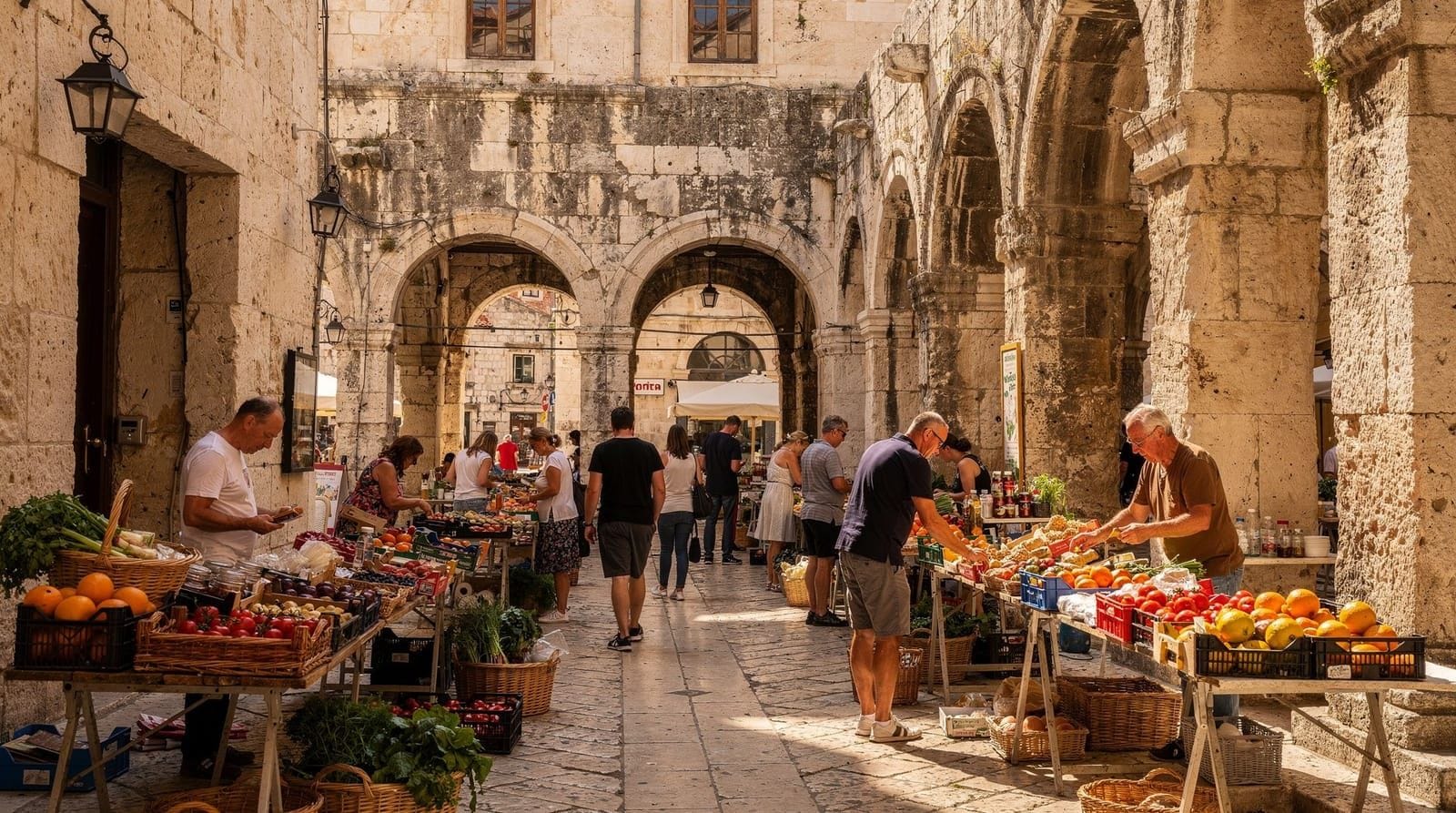
Lavender: products from Hvar sold in the town’s souvenir shops carry a significant location premium. The same quality lavender oil, sachets and cosmetics are available at Hvar’s market stalls and directly from producers in the island interior for materially lower prices.
Truffle products: Istrian truffle oil, pasta and sauces are legitimately excellent products but the price variation between tourist shops in Rovinj or Motovun and purchasing directly from producers in the interior is substantial. A visit to a local producer rather than a town gift shop saves money and is a more interesting experience.
Wine: buying wine from producers directly (Pelješac for Plavac Mali, Istria for Malvazija) rather than tourist shops saves money and allows direct producer interaction. See Plavac Mali guide and Istrian Malvazija guide.
Frequently asked questions about Croatia tourist traps
Are the waterfront restaurants in Dubrovnik really that bad?
Not always 'bad' in terms of quality — the food is usually competent — but consistently overpriced and generic compared to alternatives one or two streets back. You are paying a premium for the view and the location rather than the cooking. A good konoba 100 metres from the Stradun charges 30–40% less and frequently serves better food.What is wrong with Euronet ATMs specifically?
Euronet ATMs charge high flat fees per transaction, apply dynamic currency conversion (DCC) by default (which charges you in your home currency at an unfavourable rate), and frequently offer exchange rates significantly worse than bank-branded ATMs. Avoiding them entirely and using bank-branded cash machines is the single easiest money-saving step in Croatia.Is the Krka swimming situation a trap?
It is more of an information problem than a deliberate trap. Swimming in the Krka falls area was historically permitted and many older travel guides still show it. Swimming at Skradinski Buk (the main falls in Krka National Park) has been prohibited since 2021. Visitors who arrive expecting to swim at the falls are disappointed. The park is still very beautiful; the falls can no longer be entered.Are Blue Cave tours misleading?
Some are. The Blue Cave (Modra Špilja) on Biševo island is a genuinely remarkable experience when entered by small boat in the right conditions (mid-morning, calm sea). Budget tour operators from Hvar and Split sometimes sell 'Blue Cave tours' that include a boat ride past the cave without proper entry, or tours that are turned back by sea conditions. Read the tour description carefully to confirm what is actually included.Are tourist transfers from Dubrovnik Airport overpriced?
Private transfer companies from Dubrovnik Airport typically charge €40–80 for the 25-minute journey to the Old Town. The local bus (line 11) costs approximately €3–5 and runs directly to Pile Gate (the Old Town entrance) every 30–60 minutes. For two or more people, a metered taxi is competitive; for one person, the bus is clearly the better value.Is the 'fresh catch of the day' always fresh?
In the main tourist waterfront restaurants, not always. Frozen fish presented as fresh is not uncommon in high-volume tourist restaurants during the peak season crush. Signs of genuine freshness: the fish arrives whole (not pre-portioned), the eyes are clear, the staff can tell you what species it is in the local language. At a genuine konoba slightly off the tourist circuit, the likelihood of genuinely fresh fish is much higher.Are Dubrovnik city walls tours necessary or a trap?
The city walls are excellent and worth the €35 ticket price independently. Guided tours of the walls add value for visitors who want historical context and GoT filming location identification. The trap version is operators who sell overpriced 'exclusive' wall tours that provide nothing beyond what the standard ticket access and good preparation offer. The standard wall entry ticket is not a tourist trap; the premium tour packages built around it sometimes are.
Top experiences
Best-rated activities across GetYourGuide and Viator.

Mostar and Herzegovina Tour with Kravica Waterfall from Split & Trogir
- Viator

3Hour ALL-INCLUSIVE Sunset Dolphin Watching from Medulin onSandra
- Viator

Dolphin Watching & Sunset Boat Tour With Drinks & optional Dinner
- Viator

Fantastic DOLPHIN & SUNSET TOUR with dinner ( Pula-NP BRIJUNI )
- Viator

Medulin :All-Inclusive Pirate Boat Dolphin Watching Sunset Cruise
- Viator

Mostar & Kravice waterfalls full-day guided tour from Split
- Viator