Korčula Wine Guide — Pošip, Grk and Island Winemaking
Korcula: Island wine and sightseeing tour
What wines is Korčula famous for?
Korčula is famous for two indigenous white grape varieties found almost nowhere else in the world: Pošip and Grk. Pošip is full-bodied, mineral and stone-fruited, grown across the island but centred on the village of Čara — it is Croatia's most celebrated white wine. Grk is rarer still: grown only in Lumbarda on Korčula's eastern tip, with all-female vines and tiny yields, it produces intensely mineral, saline whites with a petrol-and-honey character in older vintages. Together they make Korčula one of the most interesting white wine islands in the Mediterranean.
| Where | Čara & Smokvica (Pošip), Lumbarda (Grk) — inland Korčula |
| Cost | Around EUR 12-20/bottle at the cellar door |
| Getting there | Ferry from Dubrovnik or Split, or 15-min crossing from Orebić |
| Best time | June or September for cellar visits; avoid midday summer heat |
| Booking | Serious producers appreciate a call or email ahead |
The island of white wine
Korčula is long and narrow, running east-west like a pointing finger into the Adriatic, its pine forests and olive groves sheltering stone villages that have been making wine since before the Romans arrived. The island is known to most visitors for its medieval walled town, the supposed birthplace of Marco Polo, and the waters that separate it from the Pelješac peninsula to the north. But for anyone interested in Croatian wine, Korčula is significant for a different reason: it is home to two of the most distinctive indigenous white grape varieties in Europe, grown nowhere else of consequence in the world.
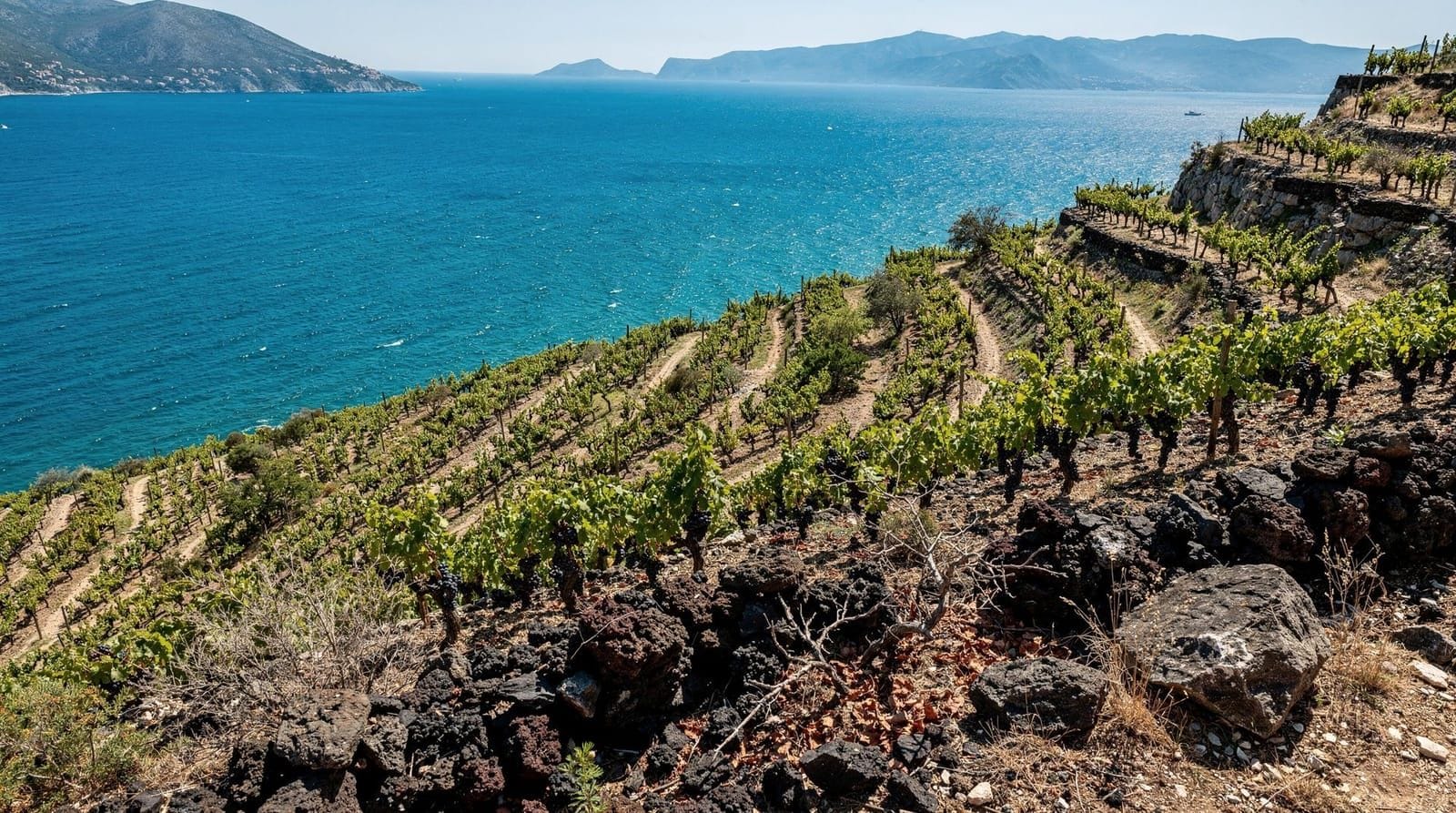
Pošip and Grk are the wines of Korčula. They are not simply alternatives to each other — they are produced in different villages, from fundamentally different vines, using different techniques, and they taste nothing alike. What they share is a rootedness in this specific island landscape: the white limestone karst, the Adriatic salt air, the shallow soils above the rock, the particular quality of light that bakes the island from June through September and concentrates sugars in the grape without destroying the acidity that structure requires.
Understanding Korčula’s wines means understanding two distinct personalities — the generous, full-bodied warmth of Pošip and the mineral, austere intensity of Grk — and recognising that both are expressions of the same island identity.
Pošip: Croatia’s finest white wine
The grape and where it grows
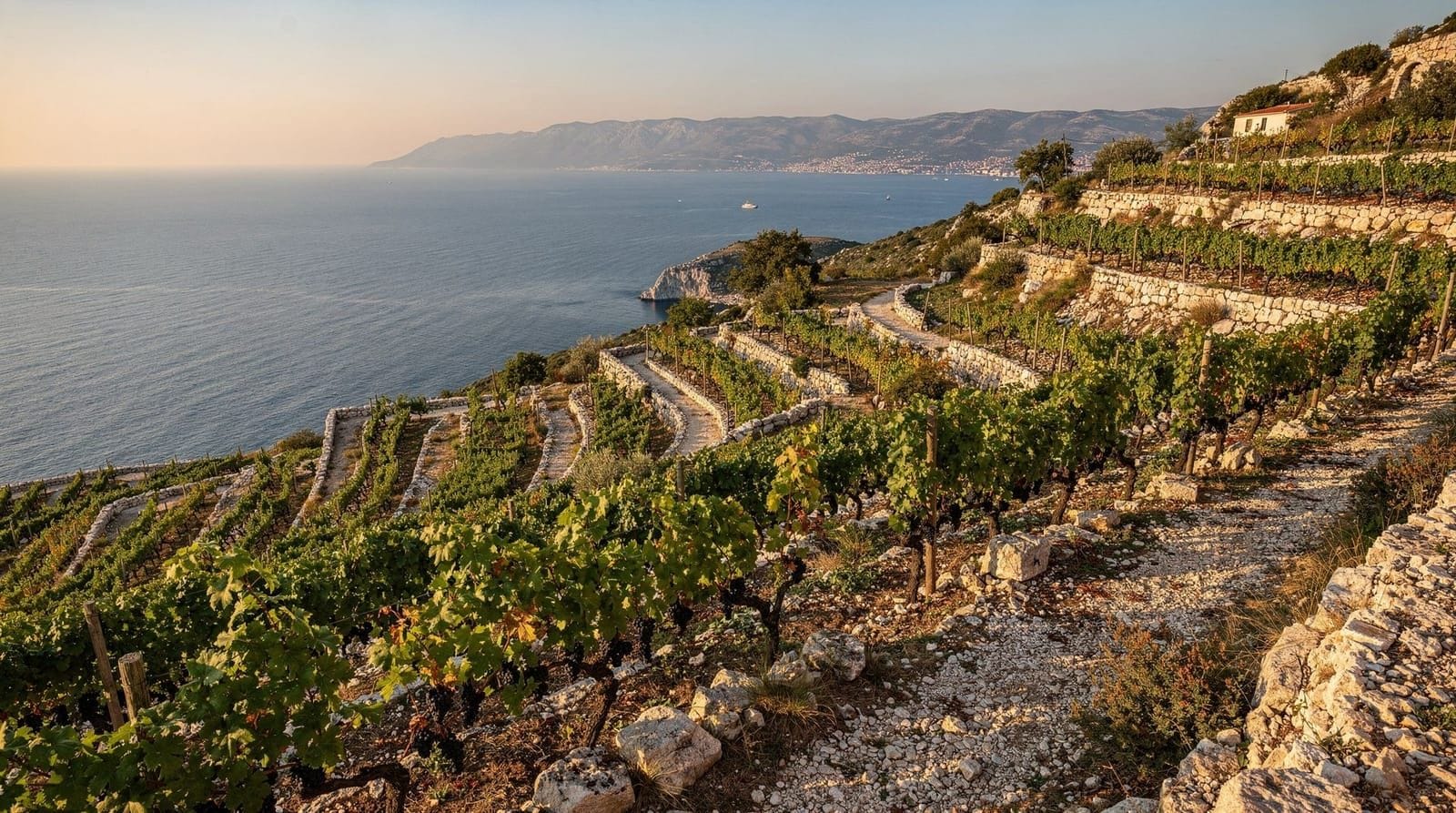
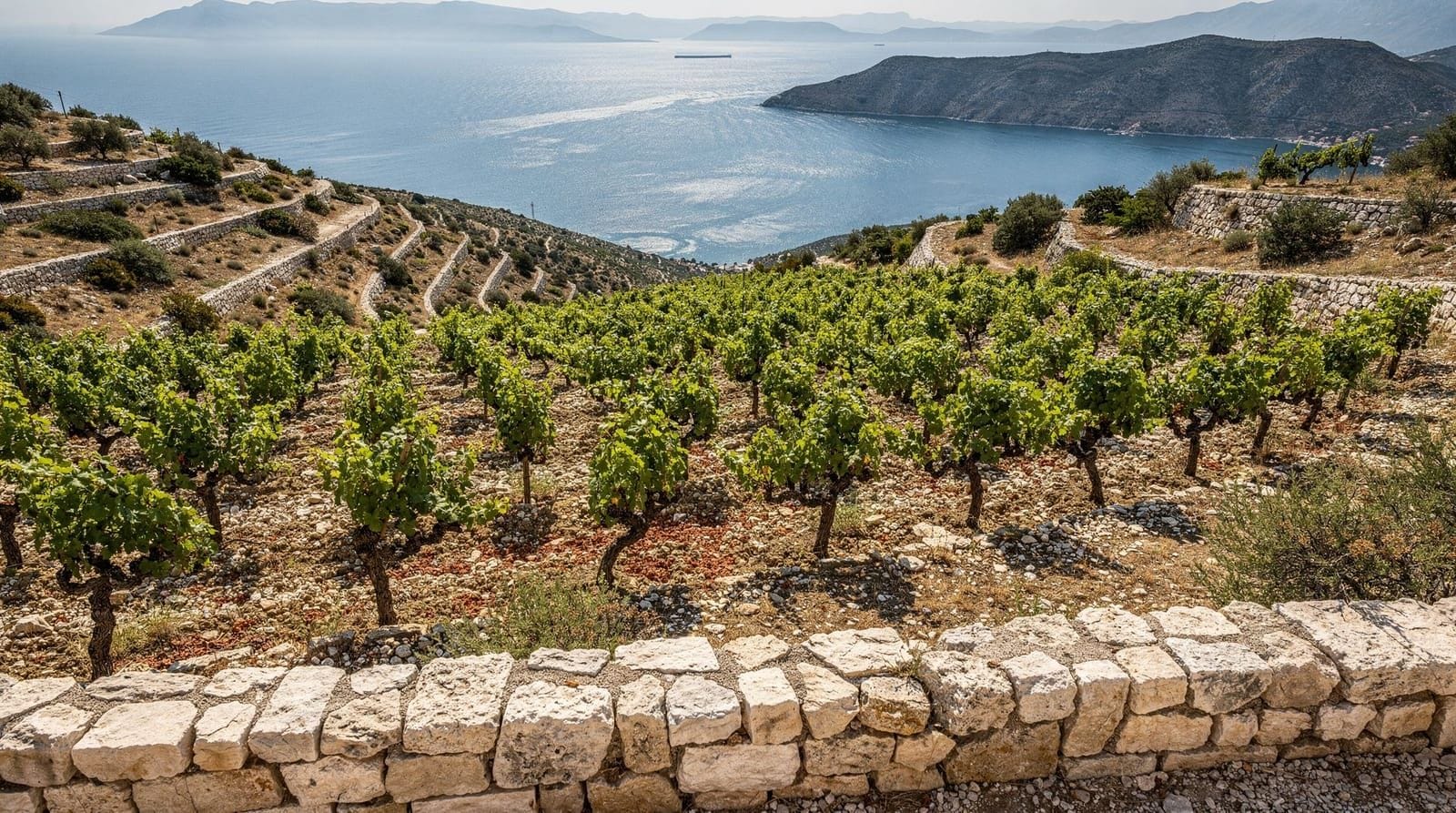
Pošip is indigenous to Korčula — its origins are not fully documented but it appears to have been grown on the island for many centuries, with the first written records dating to the 18th century. Today it is cultivated across Korčula and on a small scale on neighbouring islands, but the heartland is the interior of the island: the villages of Čara and Smokvica, where the altitude (100–200 metres above sea level), south-facing slopes and thin limestone soils create the conditions for the finest expressions.
The name Pošip (pronounced approximately po-SHEEP) is sometimes spelled without the acute accent, and you will occasionally see it transliterated as Posip in export markets. However it is written, the wine in the glass at its best is something of quietly impressive quality that often surprises visitors expecting something rustic or anonymous.
How Pošip tastes
The standard, unoaked Pošip is full-bodied for a white wine — the alcohol typically runs 13–14%, the texture is round and generous — with aromatics of white peach, ripe pear, dried apricot, white flowers and a slight herbal note (wild fennel, rockrose). On the palate, a good Pošip has the stone fruit centre, then a distinctly mineral and saline finish that signals the limestone and sea air of its origin. It is dry, relatively low in obvious acidity for its body, and finishes long and clean.
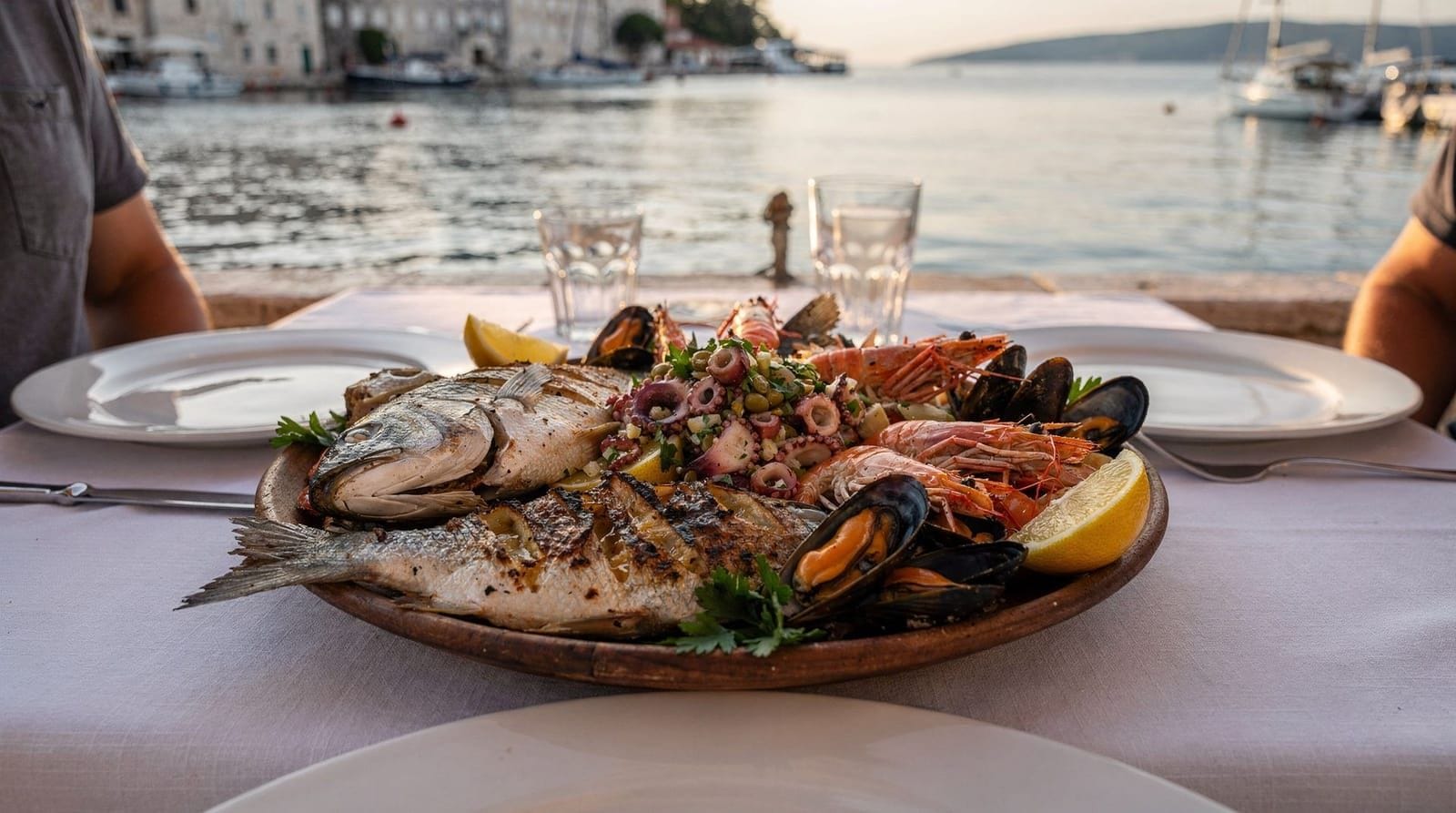
This is a wine that works beautifully with food rather than on its own. Its weight and mineral character make it the natural partner for almost any seafood dish — but it is capable enough to handle richer preparations without disappearing.
Barrel-aged Pošip from the best producers adds further dimensions: vanilla, light toast, beeswax, greater textural richness. These wines can age for five to eight years, developing a nutty, oxidative complexity similar to aged white Burgundy at a fraction of the price. If you encounter a Pošip with four or five years of age from a producer like Bire, try it — the transformation from the young wine is striking.
The village of Čara
Čara is a small inland village that sits at the heart of Pošip production on Korčula. It has no harbour, no beach, no obvious tourism draw beyond the wine — which is precisely why it has maintained a quiet, functional character that feels more like the real life of the island than the tourist-polished towns on the coast. The roads around Čara run through vine rows on terraced slopes; the village itself has a handful of family cellars where you can taste and buy without ceremony.
Driving or cycling from Korčula town to Čara takes about 20 minutes on narrow inland roads. A scooter makes the journey easier and allows spontaneous stops; cycling is feasible but involves some uphill effort. The cellar doors in Čara and Smokvica are generally open during summer months, though the most serious producers benefit from a short email or phone call ahead.
Smokvica
The second major Pošip village, Smokvica sits a little further along the same inland ridge. Several respected estates are based here, including Toreta, whose Pošip is widely distributed in Croatian restaurants and represents good value for quality. The village has a small enoteca where local wines are available by the glass.
Grk: the rare wine of Lumbarda
A grape with no male vines
Grk is perhaps the most botanically unusual wine grape grown in Croatia. Every vine in a Grk vineyard is female — the plant produces only female flowers, which lack pollen and cannot self-fertilise. To produce fruit at all, Grk must be planted alongside a pollinator variety: typically Plavac Mali or Maraština, whose pollen, carried by wind or insects, fertilises the Grk flowers. Without the pollinator rows interspersed through the vineyard, the Grk vines would produce almost no berries.
This biological dependency is not unique to Grk — there are other dioecious or functionally female grapevines — but it is unusual enough to be a defining characteristic of the variety. Combined with the already small production area (under 100 hectares total, confined to the Lumbarda area on Korčula’s eastern tip), the extra management complexity of maintaining pollinator rows, and the naturally low yields even in good years, Grk is one of the scarcest wines made in Croatia.
Where Grk comes from
Lumbarda is a small, quiet village at the far eastern end of Korčula island, about 8 kilometres from Korčula town by road. The landscape here is different from the pine-covered interior: the terrain is lower, more open to the sea, with sandy pockets among the limestone that are unlike anything else on the island. Local tradition holds that Grk was brought to Lumbarda by Greek colonists who settled the village in the 4th or 3rd century BC — the name itself means ‘Greek’. Amphorae and other evidence of ancient settlement have been found in the area, lending some credibility to the story, though the vine’s precise origin remains uncertain.
The Grk vineyards of Lumbarda are low-lying compared to the Pošip vineyards in the island’s interior — the sea is very close, and the saline air circulation is intense. This proximity to the Adriatic is visible in the wine’s character: more than almost any other Croatian white, Grk tastes of the sea.
How Grk tastes
Young Grk is not an easy wine. It is lean, austere and demanding: high acidity, very dry, intensely mineral with a saline, almost briny quality, and a bitterness in the finish that can catch new drinkers off guard. The fruit character is understated — green apple, citrus zest, white flowers — and secondary to the mineral and structural aspects of the wine. It needs food; alone, it can feel aggressive.
With two or three years of bottle age, Grk begins to open. The bitterness softens, the acidity integrates, and mineral complexity develops into something more layered. With five or more years, the best Grk develops the petrol-and-honey aromatic character associated with aged Riesling — a phenomenon involving the terpene compound TDN that also occurs in aged Grüner Veltliner and some aged Meursault. This transformation makes old Grk genuinely surprising to anyone who only knows the variety in its youth.
Production quantities are so small that older vintages are rarely available except at the wineries themselves or at a handful of specialist wine shops in Dubrovnik and Zagreb.
Pairing Grk with Ston oysters
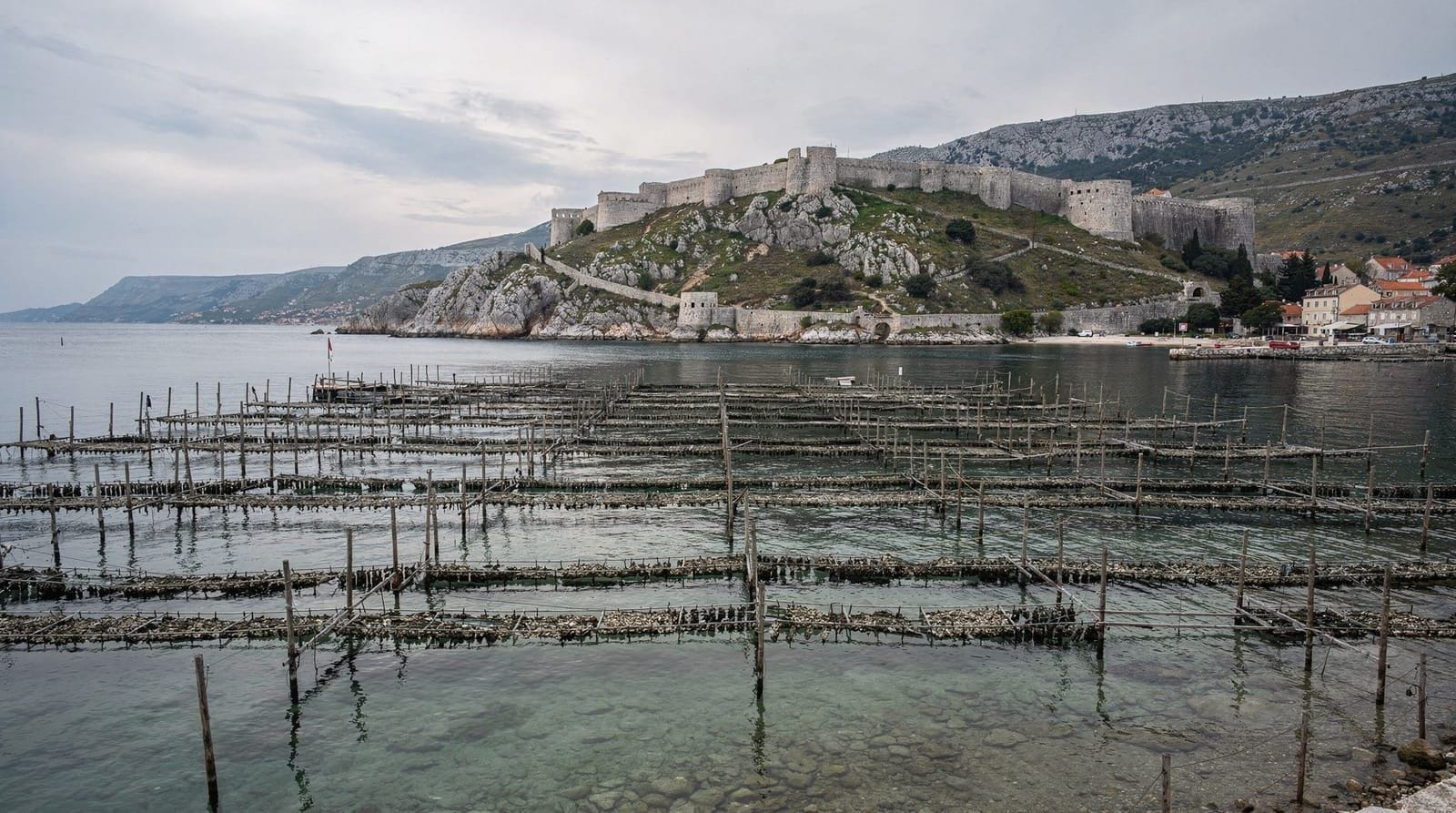
The pairing of Grk with oysters from Mali Ston bay — just across the water on the Pelješac peninsula — is one of Croatia’s most celebrated food-wine combinations. The oysters, grown in pristine Adriatic water near the town of Ston, have a clean, mineral, saline character with very little of the creamy richness of Atlantic oysters. Grk’s matching salinity, lean structure and mineral intensity creates a combination where wine and food seem to amplify each other rather than contrast. Neither overwhelms; both express the sea.
If you are visiting Korčula and Pelješac in a single day — easily done via the Orebić ferry — beginning with Ston oysters and a glass of Grk before driving up to Dingač for Plavac Mali in the afternoon is a logical and deeply satisfying itinerary.
Rukatac (Maraština): Korčula’s everyday white
Alongside Pošip and Grk, Korčula also grows Rukatac — known elsewhere in Dalmatia as Maraština. This is a lighter, crisper, less distinguished white that serves as the island’s everyday wine: drunk young, very cold, by the carafe at harbourside restaurants. It is not a wine to seek out specifically, but if you order house white in Korčula town or a local konoba, you are likely drinking Rukatac or a blend that includes it. The wine does its job well at that level: refreshing, clean, inexpensive.
Key producers on Korčula
Bire (Čara)
The producer most often cited as making Korčula’s finest Pošip. The Bire family estate in Čara produces both a standard Pošip and single-vineyard bottlings that represent the ceiling of what the variety can achieve. The barrel-aged version develops remarkable complexity and can age for a decade. Prices are reasonable given the quality — expect EUR 12–20 at the cellar door. Visits possible in summer; contact ahead in other months.
Toreta (Smokvica)
One of Korčula’s most established and respected names. Toreta’s Pošip is widely distributed in Croatian restaurants and hotels, making it often the first encounter visitors have with the variety. Consistent, well-made, honestly priced. The winery also produces a rosé and a small quantity of Plavac Mali from vines on the Pelješac side.
Zure (Lumbarda)
The definitive Grk producer. Ivan Zure’s wines from the Lumbarda sandy-limestone soils are widely considered the best interpretation of the variety, expressing its mineral and saline character with clarity and precision. Production is tiny — the vineyard is small, yields are low, and the female-vine challenge limits output further. Bottles often sell out before the next vintage arrives. Visit the winery in Lumbarda if possible; the setting is beautiful and Ivan or a family member can usually explain the biology of the Grk vine in memorable detail.
Korta Katarina (Orebić, Pelješac — Korčula-sourced Pošip)
Based across the strait in Orebić on Pelješac, Korta Katarina sources Pošip from Korčula vineyards. This is a polished, well-funded estate with a stylish tasting room and a range that includes Dingač, rosé and Pošip. The Pošip, made from bought-in Korčula fruit, is reliably excellent and the tasting experience is one of the most visitor-friendly in the region.
Drinking Pošip and Grk without a car
Not every visitor wants to rent a scooter and navigate inland roads, and it is entirely possible to drink both wines well without leaving Korčula town. Several enotecas and wine bars in the old town stock bottles from Bire, Toreta and Zure, and a handful of restaurants — particularly those with serious seafood menus — keep Grk by the glass specifically for pairing with oysters or carpaccio. Ask directly for Pošip from Čara or Smokvica by name rather than simply “house white”, since the default carafe wine is more often the everyday Rukatac. This approach loses the cellar-visit experience but keeps the wine itself, and it is the practical option for anyone arriving by ferry for a single afternoon rather than a full day.
Buying bottles to take home
Both wines travel well and make a distinctive souvenir, though Grk is genuinely hard to find outside Korčula and sells out at the winery within months of release most years. If you find a bottle you like at a cellar door, buying two or three on the spot is sensible rather than assuming you can order online later — most of these are small family operations without significant export infrastructure. Pošip is more widely distributed and can often be found in specialist wine shops in Dubrovnik, Split and Zagreb if you miss the chance to buy on the island itself. Check airline liquid allowances for checked baggage before flying home with bottles, and pack them well — Croatian glass is not always bubble-wrapped by default at small cellar doors.
Getting to Korčula and around the island
From Dubrovnik
Summer catamarans connect Dubrovnik to Korčula town in 2.5–3 hours. Car ferries operate from the Dubrovnik area year-round but involve a longer journey. For a day trip combining Dubrovnik, Pelješac wine and Korčula wine, the guided tour option is almost universally recommended — the ferry logistics, the driving on Korčula’s narrow roads, and the need to not drink while navigating all argue for a guided approach.
From Split
High-speed catamarans from Split reach Korčula in approximately 2–2.5 hours in summer. Car ferries take longer but run more reliably outside the summer catamaran season.
From Pelješac
The most convenient transfer: a 15-minute car ferry from Orebić (at the western end of Pelješac) to Dominče, just outside Korčula town. This crossing runs regularly throughout the day and makes the Pelješac-Korčula combination easy to manage in a day, particularly if you have a car on Pelješac.
Getting around Korčula
The island is 47 kilometres long — large enough that walking between wine villages is impractical. Options: rent a car or scooter in Korčula town (the most flexible option), hire a taxi or local driver for wine village visits, or book a guided tour that handles transport. Bicycles are available to rent and the interior roads are bikeable if the heat is not too intense; June and September are the most comfortable months for cycling.
Booking wine tours to Korčula
Guided tours to Korčula that combine island sightseeing with wine tasting at local producers are available from Dubrovnik and Split. These typically include boat or ferry transport, stops at Čara or Smokvica for Pošip tasting, and the option to visit Lumbarda for Grk if the itinerary allows:
For a day tour from Dubrovnik that combines Korčula with Pelješac wine, allowing you to taste both Pošip and Grk alongside Dingač and Postup:
The most popular combined Korčula and Pelješac wine day from Dubrovnik:
For the broader context of Croatian wine — all regions, all varieties and the best tours across the country — see the Croatian wine guide. If you are weighing Korčula against the other major wine islands, the best Croatian islands guide and the Hvar vs Brač vs Korčula comparison offer useful perspective on the differences.
The wine of Korčula is one of the strongest reasons to include the island in your Croatia itinerary. Not because it competes with Pelješac on power and drama — it does not try to — but because Pošip and Grk offer something the mainland cannot: the particular, irreplaceable taste of island limestone, island sea air and island viticulture practised by families who have been doing this for generations.
Pošip and Grk side by side
| Pošip | Grk | |
|---|---|---|
| Village | Čara, Smokvica | Lumbarda only |
| Style | Full-bodied, round, generous | Lean, austere, high acid |
| Alcohol | 13-14% | 12.5-13.5% |
| Best young or aged | Drinkable young; best producers age 5-8 years | Needs 2-3+ years to soften |
| Food match | Grilled fish, scampi, risotto | Raw seafood, oysters, carpaccio |
| Availability | Fairly widely distributed in Croatia | Scarce — tiny production, sells out fast |
When to visit the cellars
Cellar doors in Čara, Smokvica and Lumbarda are at their most reliably open from June through September, though this is also when the interior roads are hottest and least comfortable for cycling. Late May and October offer a quieter, cooler alternative if the producer confirms they are open — many small family estates scale back opening hours outside high season, so a short email or phone call the day before saves a wasted trip. Harvest, typically early-to-mid September, is a particularly interesting time to visit if a producer will allow you to see the picking and pressing, though this is at their discretion and rarely advertised.
A one-day Korčula wine route
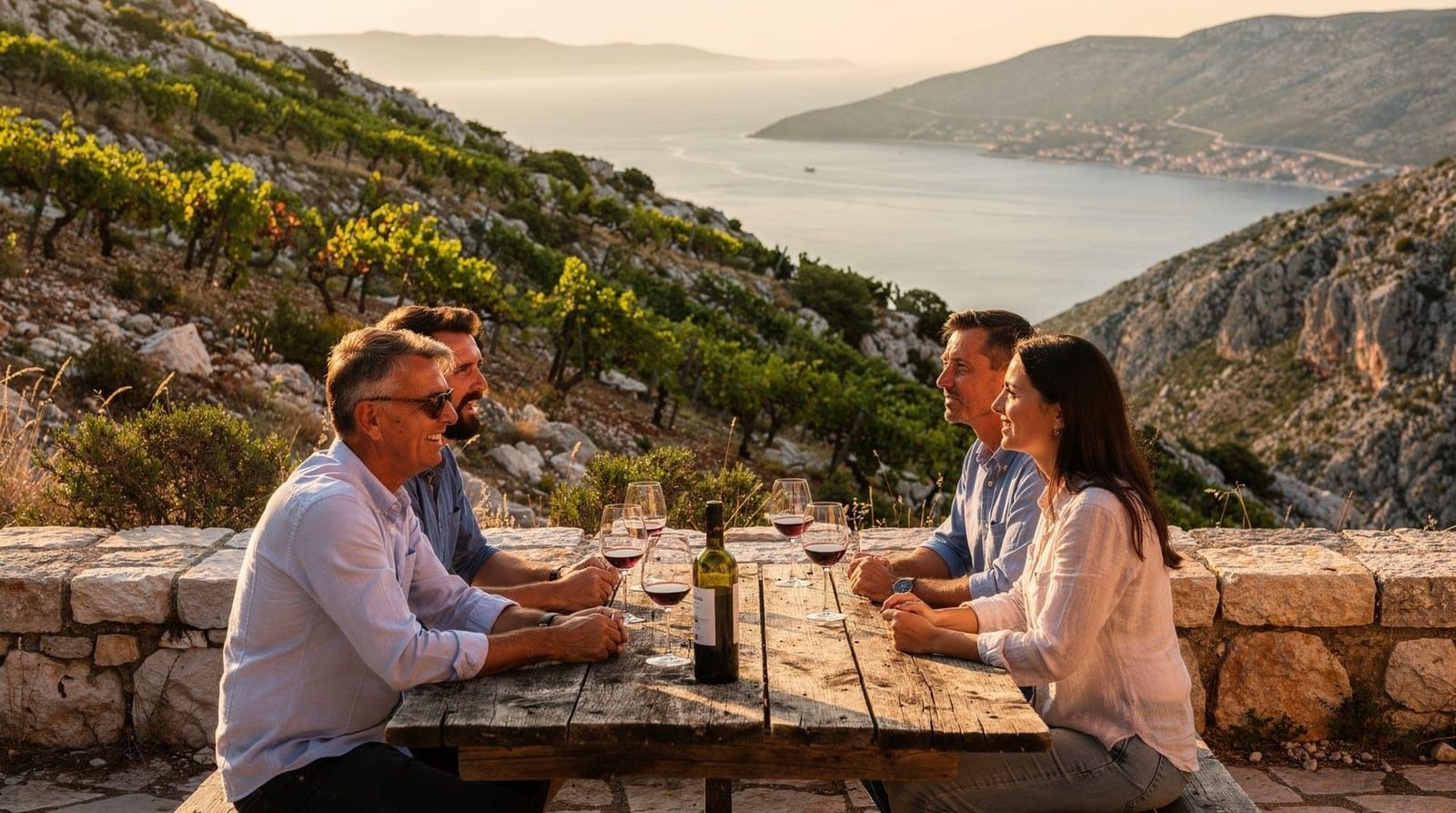
For visitors with a single day on the island, a practical route starts in Korčula town, heads inland to Čara for a Pošip tasting (roughly 20 minutes by car or scooter), continues to neighbouring Smokvica for a second producer, then crosses the island to Lumbarda for Grk and, ideally, a seafood lunch by the water. This loop covers all three wine villages in around four to five hours including tastings, leaving time to return to Korčula town for the evening. Doing this independently requires a rental car or scooter and a designated non-drinking driver; a guided wine tour removes that constraint entirely and typically covers two or three cellars with a knowledgeable local guide.
Frequently asked questions about Korčula Wine Guide
What is Pošip and what does it taste like?
Pošip is an indigenous white grape variety grown primarily on the island of Korčula, concentrated around the village of Čara. It produces full-bodied wines (13–14% alcohol) with aromas of peach, white plum, apricot and white flowers, alongside a distinctive mineral and saline finish that reflects the island's limestone soils and proximity to the sea. Unoaked versions are fresh, food-friendly and ready to drink immediately; barrel-aged versions develop additional texture and complexity and can age for 5–8 years. Pošip is widely considered one of Croatia's two or three finest white wines.What is Grk and why is it so rare?
Grk is an ultra-rare white grape variety grown only in Lumbarda, a small village on the eastern end of Korčula island. The vines are all female — meaning they lack the ability to self-pollinate — and require a different variety (Plavac Mali or Maraština) to be planted nearby as a pollinator for the fruit to set. This biological quirk, combined with already thin yields and the very limited growing area (under 100 hectares total), makes Grk one of the rarest wines in Croatia. The name translates as 'Greek' — a reference to the possible ancient Greek origins of the vine, brought by Greek colonists who settled Lumbarda in the 4th or 3rd century BC.How does Grk compare to Pošip in style?
They are quite different despite both being white wines from Korčula. Pošip is round, full-bodied, generous and approachable — think stone fruit, mineral finish, immediate pleasure. Grk is leaner, more austere, higher in acid, intensely saline and mineral. Young Grk can be almost stark: angular, very dry, with a bitter mineral edge. With age (3–7 years), it develops petrol, honey and beeswax notes reminiscent of aged Riesling — a complexity that no one expects from a wine made on a small Croatian island. Grk is for wine enthusiasts who like their whites cerebral rather than easy.Where are the main wine villages on Korčula?
The main wine villages are Čara (Pošip heartland, the most important village for white wine production on the island), Smokvica (also significant for Pošip, with several family estates), and Lumbarda (the only village where authentic Grk is produced, at the eastern end of the island). Korčula town itself has wine shops and restaurants with good island wine selections but fewer vineyards. The interior of the island — pine forests, olive groves, stone walls — connects these villages by narrow roads that are best navigated by scooter or bicycle.Who are the best Korčula wine producers?
For Pošip, the most respected names are Bire (Čara — often cited as the benchmark producer, with single-vineyard Pošip of real complexity), Toreta (Smokvica, consistent quality, approachable prices), and Korta Katarina (Orebić, across the strait on Pelješac, but sourcing Pošip from Korčula vineyards). For Grk, the key producer is Zure (Lumbarda) — their Grk is considered the definitive expression of the variety. Production volumes are tiny and bottles sell out quickly each vintage. Also in Lumbarda, Baldo Violić produces small quantities of serious Grk.How do I get to Korčula for wine tasting?
Korčula is reached by ferry or catamaran. From Dubrovnik, a catamaran runs in summer (about 2.5–3 hours) and car ferries operate year-round from Dominče near Korčula town. From Split, high-speed catamarans reach Korčula in about 2–2.5 hours. From Pelješac, a short car ferry (15 minutes) crosses from Orebić to Dominče near Korčula town — this is the easiest route if combining Pelješac wine with Korčula in a single day. Guided day tours from Dubrovnik combining Pelješac and Korčula are available and solve the transport challenge in one booking.What food pairs best with Pošip and Grk?
Pošip is the versatile option: pair it with grilled fish (sea bass, dentex, bream), scampi in garlic and olive oil, white fish pasta, grilled squid and risotto. Its structure and body allow it to match richer seafood preparations — scampi buzara, lobster with pasta, monkfish. Grk is better matched to more delicate preparations where its mineral intensity can shine: raw or lightly dressed seafood, oysters, carpaccio of sea bass, fresh clams. The classic local pairing is Grk with Ston oysters — the saline, mineral wine and the clean, iodine-forward shellfish are made for each other.
Top experiences
Bookable activities with verified prices and instant confirmation on GetYourGuide.
Top experiences
Best-rated activities across GetYourGuide and Viator.

Krka National Park Tour with tour Guide & Wine tasting from Split & Trogir
- Viator

Dolphin Watching & Sunset Boat Tour With Drinks & optional Dinner
- Viator

Fantastic DOLPHIN & SUNSET TOUR with dinner ( Pula-NP BRIJUNI )
- Viator

Dubrovnik Guided Group Tour with Ston Oyster tasting from Split & Trogir
- Viator

Zadar Highlights: Old Town, Sea Organ & Local Tastings
- Viator

Zadar: Luxury Island Boat Tour, Snorkeling & Unlimited Wine
- Viator