Oysters of Ston (Mali Ston) — the complete guide
Dubrovnik: Traditional food tour
Are the oysters in Ston, Croatia worth the trip?
Yes. The European flat oysters (Ostrea edulis) from Malostonski zaljev are among the finest in the Mediterranean — farmed in exceptionally clean brackish water since Roman times. A dozen costs EUR 15–25, eaten metres from where they were harvested. The 55 km drive from Dubrovnik takes about an hour and fits easily into a half-day.
| Where | Mali Ston, Pelješac peninsula, 55 km from Dubrovnik |
| Cost | Around EUR 15–25/dozen; EUR 35–55/person for a full meal |
| Time needed | Half-day (60–90 min for Ston walls + lunch) |
| Getting there | Car ~55 min via Pelješac Bridge; bus 1.5–2hrs; organised tour |
| Best time | October–April for oyster quality; September for the best all-round combo |
Why Ston oysters matter
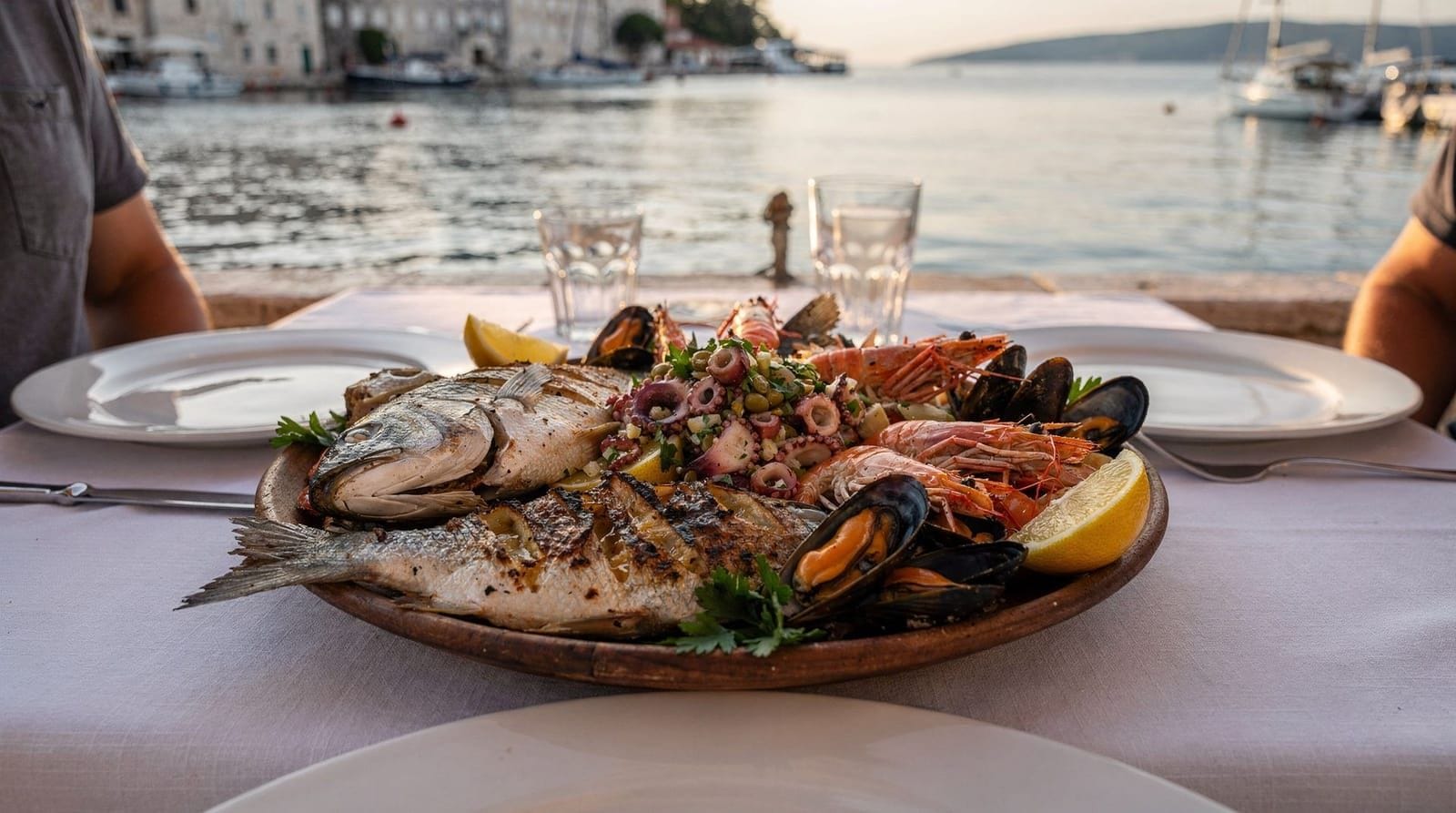
There are few food experiences in Croatia as direct, as honest, and as genuinely extraordinary as sitting at a wooden table in Mali Ston, squeezing a wedge of lemon over a freshly pried oyster, and tasting the Adriatic in a single mouthful. The oysters of Malostonski zaljev — the Bay of Mali Ston — are not a tourist gimmick. They are one of the oldest continuously farmed shellfish products in Europe, harvested from waters that remain, by almost any measure, among the cleanest in the Mediterranean.
If you are spending time in or around Dubrovnik or along the Dalmatian coast, making the trip to Ston is not optional. It is the kind of afternoon that earns its place as a trip highlight.
The bay that makes the oyster
Malostonski zaljev is a long, sheltered inlet on the eastern flank of the Pelješac peninsula. The geography here is specific and consequential. Freshwater streams draining from the limestone karst of the Dinaric Alps feed into the bay from the north, mixing with clean open-Adriatic saltwater that flows in from the south. The result is a brackish environment — slightly less saline than full ocean water — that is extraordinarily rich in phytoplankton, the microscopic algae that bivalves filter-feed on.
The combination of constant water circulation (the bay is open enough to flush regularly), low industrial pressure, and this nutrient density means the oysters here grow quickly and develop a flavour profile unlike anything produced in more homogeneous marine environments. Locals describe the taste as the bay itself: mineral-forward, briny, with a subtle sweetness and a long, clean finish.
Croatian water quality authorities test Malostonski zaljev regularly. It consistently ranks in the highest category (A) for shellfish production — meaning the oysters can be eaten raw without any depuration treatment. This is not something to take for granted: many of Europe’s major oyster-producing bays require additional purification steps before sale.
Two thousand years of cultivation
Oyster farming in Mali Ston is not a modern agri-business invention. Roman sources from the 1st century AD reference the shellfish of the Illyrian coast, and there is strong archaeological and textual evidence that the bay was systematically cultivated during the Roman period. The Republic of Ragusa — the medieval city-state centred on today’s Dubrovnik — formally regulated oyster harvesting in the bay from the 14th century onward, issuing licenses and setting quotas to prevent over-exploitation. That regulatory tradition, remarkably, has never really stopped. The same families who farm the bay today trace their concessions back generations.
This continuity matters for quality. The farming knowledge — when to thin the beds, how to space the collectors, how to read the water — is accumulated over lifetimes and passed down. You will not find venture-capital-backed aquaculture operations in Mali Ston. You will find families in small boats doing what their grandparents did.
European flat oyster vs Pacific oyster
Most oysters sold in supermarkets and restaurant chains across Europe are Pacific oysters (Crassostrea gigas), introduced to European waters from Japan in the 1960s and 70s. They grow fast, tolerate a wide range of conditions, and are reliable in flavour if unexciting — briny and clean, but without great depth.
The oysters of Mali Ston are something different: the European flat oyster, Ostrea edulis. This is the native species, the one Romans ate, the one that was nearly wiped out across Atlantic Europe by a combination of over-harvesting, disease (Bonamia parasite), and habitat loss. In most of its former range — the Thames estuary, the coast of Brittany, the Galician rias — Ostrea edulis is now rare and expensive, a luxury product. In Mali Ston, it is simply what they grow.
The difference in eating is immediately apparent. The flat oyster is rounder in shell, smaller in meat, and considerably more complex in flavour. Where a Pacific oyster gives you a clean ocean hit, a Mali Ston flat oyster gives you layers — first brine, then a copper-mineral note, then something faintly sweet and vegetal, then a finish that lingers. Serious oyster eaters tend to find the Ostrea edulis superior in every way except convenience; the slower growth rate (three to five years to market size, versus one to two for Pacific varieties) is why they cost more and why they’re rarer.
How the farming works
The oyster beds in Malostonski zaljev are operated on a concession system, with individual families holding rights to specific sections of the bay floor. The traditional method uses long ropes suspended between wooden stakes or floating buoys, from which the juvenile oysters attach and grow. The young spat settle naturally from the water column — unlike industrial aquaculture that uses hatcheries — onto collector materials hung in the bay in spring.
Over the following three to five years, the oysters are periodically thinned, moved to different depths, and cleaned of competing organisms. Harvesting happens by hand from small wooden boats, the farmers working low to the water, pulling the ropes up to check growth. It is slow, physical work, utterly unchanged in its essentials for centuries.
Because growth depends on natural spat settlement rather than hatchery seeding, yields vary year to year with water conditions — a good plankton bloom in spring means a strong crop three to five years later, and a poor one shows up as a leaner harvest down the line. This is one of the reasons supply stays limited and the oysters are never exported at any real scale: the bay simply cannot be scaled up the way an industrial hatchery operation can, and the families who hold the concessions have shown no interest in trying.
Mussels (dagnje) are farmed alongside the oysters on the same rope systems, and are harvested on a much shorter cycle — twelve to eighteen months. You will see both on every menu in the village.
Where to eat in Mali Ston and Ston
There are three restaurants that consistently justify the journey from Dubrovnik. All three sit directly on or very close to the water in Mali Ston village, and all three source their shellfish from the bay outside their door.
Restaurant Kapetanova Kuća is the oldest and most storied of the Mali Ston establishments, operating since 1974. The terrace hangs over the bay. The oysters are pristine — served classically with lemon and a carafe of house white — and the rest of the menu covers the full range of Dalmatian seafood and grilled fish. This is the place that put Mali Ston on the food map; it remains the benchmark. Booking ahead is strongly recommended in July and August.
Restaurant Bota-Šare Ostrea sits at the far end of the Mali Ston waterfront, equally well regarded, slightly more contemporary in its kitchen approach. The chef here does more with the shellfish than pure classicism — you will find oysters gratin, oyster soup, and thoughtful wine pairings from the Pelješac peninsula. The house Plavac Mali Bijeli is excellent with the raw platter.
Restaurant Vila Koruna occupies a terrace position between the two, with a slightly more relaxed atmosphere and strong value at lunch. Their mussel dishes are particularly good — black risotto (crni rizot) made with cuttlefish ink alongside fresh dagnje is a Dalmatian classic done here with real skill. For visitors on a tighter budget, this is the place to get the full Mali Ston experience without the premium pricing.
In Ston town itself (1.5 km from Mali Ston), there are several konobe and casual restaurants near the salt pans, better for a simple lunch than a full seafood experience. See the konoba guide for what to expect from these traditional Croatian dining rooms.
A few smaller, family-run konobas along the Mali Ston waterfront — without the name recognition of the big three — are worth considering if the main restaurants are full or if you prefer a quieter, less polished setting. Quality is generally consistent across the village because most places are sourcing from the same handful of family concessions in the bay; the differences are more about atmosphere, wine list and price than about the oysters themselves. If you have a shellfish allergy in your group, note that oysters and mussels are prepared in the same kitchens as most other dishes, so flag it clearly when ordering rather than assuming a separate “safe” menu exists.
How to eat them
The protocol for Ostrea edulis in Mali Ston is classical and minimal. The oyster arrives on the half-shell, alive, on a bed of ice or coarse salt. You add a squeeze of lemon — nothing more. Some locals use a few drops of vinegar with shallot (mignonette), but this is more of a French habit than a local one. You slide the oyster into your mouth with a small fork or directly from the shell, chew two or three times to release the flavour, and swallow.
Do not drown the oyster in hot sauce. Do not bread it. Do not bake it unless you genuinely dislike raw shellfish, in which case the gratin preparations at Bota-Šare are an honest alternative. But the raw, fresh, lemon-only version is the reason to make this trip.
Order a dozen between two people as a starter — that is a dozen oysters, roughly six each, at EUR 15–25 per dozen depending on the restaurant and the size grade. Follow with the mussel risotto or grilled fish. Budget EUR 35–55 per person including wine and water for a proper meal.
Wine pairings from the Pelješac peninsula
Pelješac is better known for its big red wines — Dingac and Postup, both made from the native Plavac Mali grape — but the peninsula also produces white wines that are among the most food-compatible whites in Croatia. With oysters specifically, you want something with high acidity, mineral character, and relatively low residual sugar.
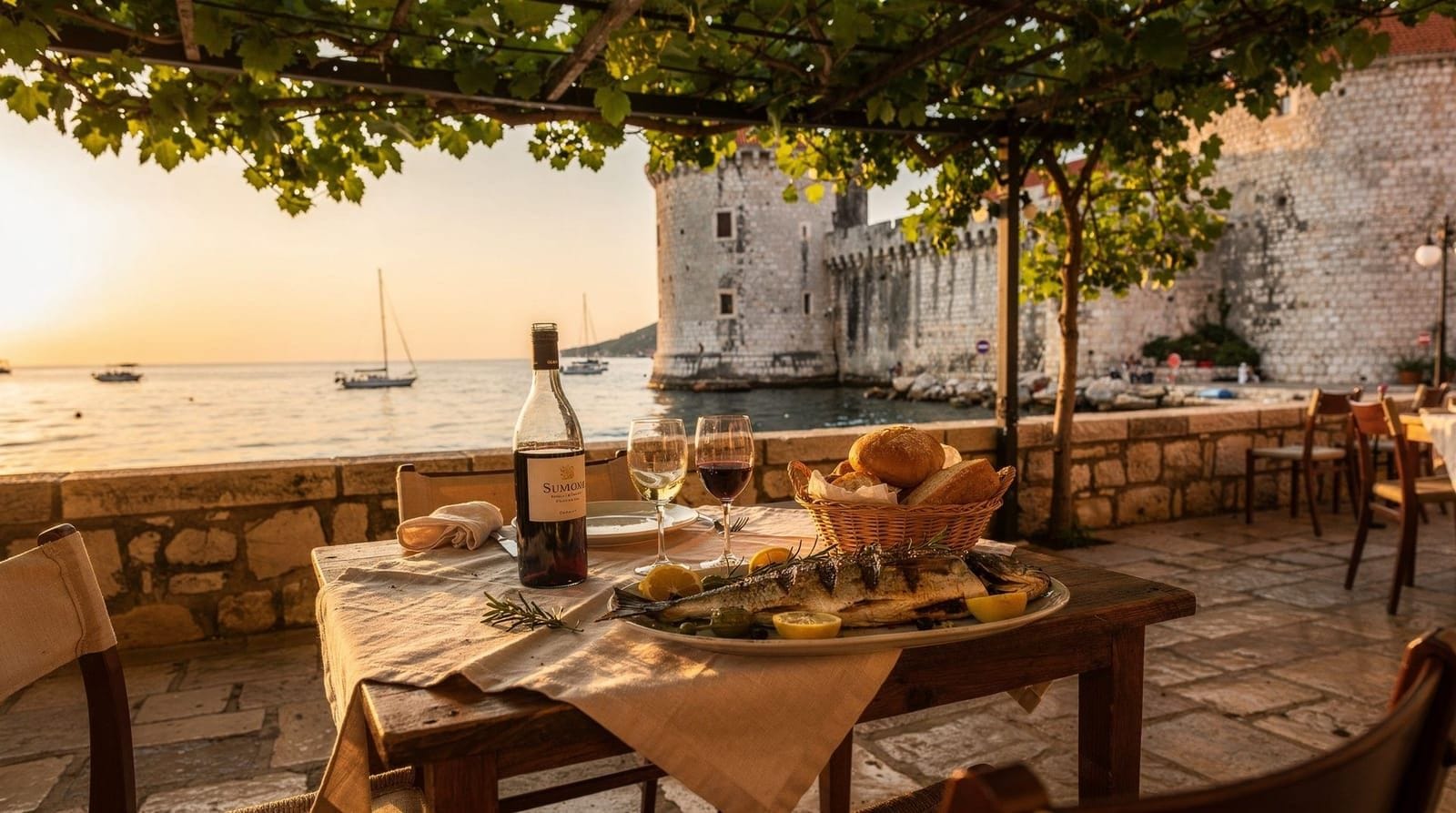
The local choice is Rukatac (also called Marastina in some parts of Dalmatia), a native white that grows well on Pelješac and produces a wine with citrus, green apple and a saline-mineral finish that mirrors the oyster beautifully. It is rarely exported and largely unknown outside the region — ordering it at a Mali Ston restaurant is both culinarily correct and a way of drinking something genuinely rare.
From nearby Korčula, the Posip grape makes a richer, more textured white that holds up to the flat oyster’s complexity. The Korcula wine scene has grown considerably in the last decade and Posip is now attracting international attention.
Grk, grown almost exclusively on sandy soils around the town of Lumbarda on Korcula’s eastern tip, is another outstanding pairing — it has a distinctive bitterness on the finish that cuts through the oyster’s richness in a way that feels designed.
Save the Dingac and Postup reds for the lamb, the roasted meat, or the peka dishes. With oysters they overwhelm.
The town of Ston: medieval walls and salt pans
Most visitors come for the oysters and spend their time entirely in Mali Ston village. This is understandable but slightly wasteful, because Ston town — the larger settlement 1.5 km to the west — is historically extraordinary.
The walls of Ston are the defining feature: a system of medieval fortifications that once enclosed both Ston and Mali Ston in a single defensive circuit totalling approximately 5.5 km. Built by the Republic of Ragusa from the 14th century onward to protect the strategically vital salt pans, they rank among the longest preserved medieval walls in Europe. Today you can walk substantial sections of the walls — the climb is steep in places but the views over the salt flats and the bay are worth it. Entry costs around EUR 10 per adult.
The salt pans (solane) below the walls have been in continuous production since at least the 14th century. Ston salt, harvested by hand using traditional wooden tools, has a following among chefs and food producers across Croatia. You can buy small packets at the local shops — a genuinely useful souvenir that packs flat and does not break.
Allow 60–90 minutes for Ston before or after lunch in Mali Ston. The combination — walls in the morning, oysters at midday, a glass of local white on the terrace — is close to a perfect half-day.
Getting there from Dubrovnik
The practical details matter. Ston is 55 km from Dubrovnik by road, which now means crossing the Pelješac Bridge — a 2.4 km cable-stayed span opened in 2022 that connects the Pelješac peninsula directly to the Croatian mainland, ending the previous requirement to drive through Bosnian territory (the Neum corridor).
By car or rental: The fastest and most flexible option. From Dubrovnik, take the D8 northward, cross the Pelješac Bridge, and follow signs for Ston. The drive takes 50–65 minutes depending on traffic. You can park easily in both Ston and Mali Ston outside peak summer weeks. If you have a rental car for your Dalmatian coast trip, this is the obvious choice.
By bus: There are a small number of daily bus departures from Dubrovnik’s main bus station toward Ston and the Pelješac peninsula. Journey time is approximately 1.5–2 hours. The schedule is infrequent enough that you need to plan carefully — check Arriva Croatia’s timetable or ask at the bus station. The bus serves Ston town; getting to Mali Ston requires a 1.5 km walk or taxi.
By organised tour: Several operators run day trips from Dubrovnik that combine Ston with wine tasting on the Pelješac peninsula and sometimes the town of Korčula. This is a good option if you are not renting a car and want a structured experience with transport included.
Seasonal considerations
The oysters of Mali Ston are available year-round, but there are meaningful seasonal differences in quality and experience.
October through April is prime season for the European flat oyster. Outside the summer spawning period, the oysters are at their fullest, richest, and most flavourful. The bay water is cooler and plankton-dense. Restaurants are quieter. Prices may be slightly lower. The weather on the Pelješac peninsula in autumn and winter is mild by northern European standards — often 12–18°C with sunshine — and the walls of Ston feel almost theatrical in the low winter light.
May and June see the oysters beginning their reproductive cycle. Quality remains high through May; by late June the texture can become slightly milky (this is the spawning condition, harmless but different in flavour). The shoulder season weather is excellent for the drive and the walk along the walls.
July and August are the most popular months. Quality dips slightly during peak spawning, but the restaurants still serve excellent product because they know what they are doing. The crowds on the Pelješac road and in the restaurants are real — book ahead. The beach energy on Pelješac itself is high if you want to extend the day.
September is arguably the single best month to combine the oyster pilgrimage with broader Dalmatian travel. The spawning is over, the waters are still warm, the tourist density has dropped significantly, and the post-summer oysters are recovering their richness rapidly.
| Season | Oyster quality | Crowds | Notes |
|---|---|---|---|
| Oct–Apr | Peak — fullest, richest | Quiet | Best value, mild Pelješac weather |
| May–Jun | High, softening late | Moderate | Good weather for the walls walk |
| Jul–Aug | Dips (spawning) | Busy — book ahead | Still good, but not the peak version |
| Sep | Recovering fast | Dropping quickly | The best all-round combination |
Pairing with peka, not just oysters
Oysters are the opening act, not the whole meal, for most visitors making the Pelješac detour. If you have time for a second course beyond the mussel risotto or grilled fish, peka — the slow-cooked, bell-baked Dalmatian classic — is the natural next step, though it needs ordering hours in advance at most konobas, so it rarely fits into the same sitting as a spontaneous oyster lunch. Plan ahead if you want both on the same trip, or treat Ston oysters and a peka meal elsewhere on the Dalmatian coast as two separate highlights of the same trip.
Buying oysters to take home
Several of the family oyster farms sell direct from their boats or small waterfront stalls in Mali Ston, at roughly EUR 1.50 per oyster — cheaper than any restaurant. This works well if you’re self-catering nearby or want to shuck your own with friends, but European flat oysters are alive and perishable: buy them the day you plan to eat them, keep them cool and shaded, and consume within a few hours. They are not a practical souvenir to carry home across borders or on a flight — the salt from the Ston pans, sold in small packets at shops in Ston town, travels far better and makes a more realistic gift.
Sustainability and the future of the bay
The concession system that has protected Malostonski zaljev for centuries is also what keeps it sustainable today: individual families holding long-term rights to specific sections of the bay have every incentive to farm within its limits rather than exhaust it. Unlike hatchery-based industrial oyster farming, the wild-spat collection method used here depends entirely on the bay staying clean and the natural reproductive cycle staying healthy — which is part of why Croatian authorities monitor water quality so closely and why the July–August spawning dip in flavour is treated as a natural rhythm to work around rather than a problem to engineer away. Choosing to eat here, rather than at a generic seafood restaurant serving imported Pacific oysters, supports a genuinely small-scale, multi-generational fishery rather than an industrial one.
Connecting the day trip with broader Pelješac and Dalmatia
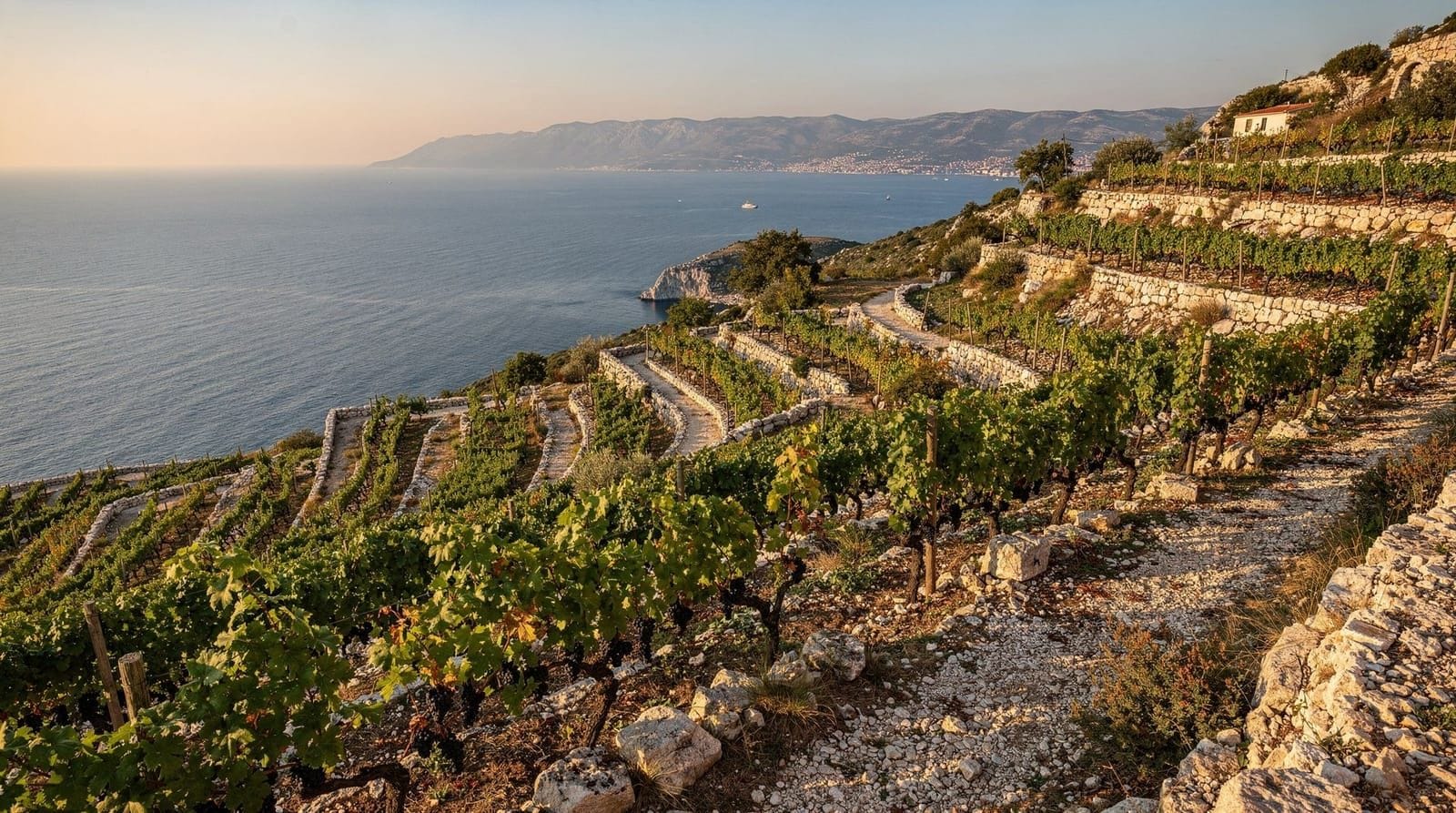
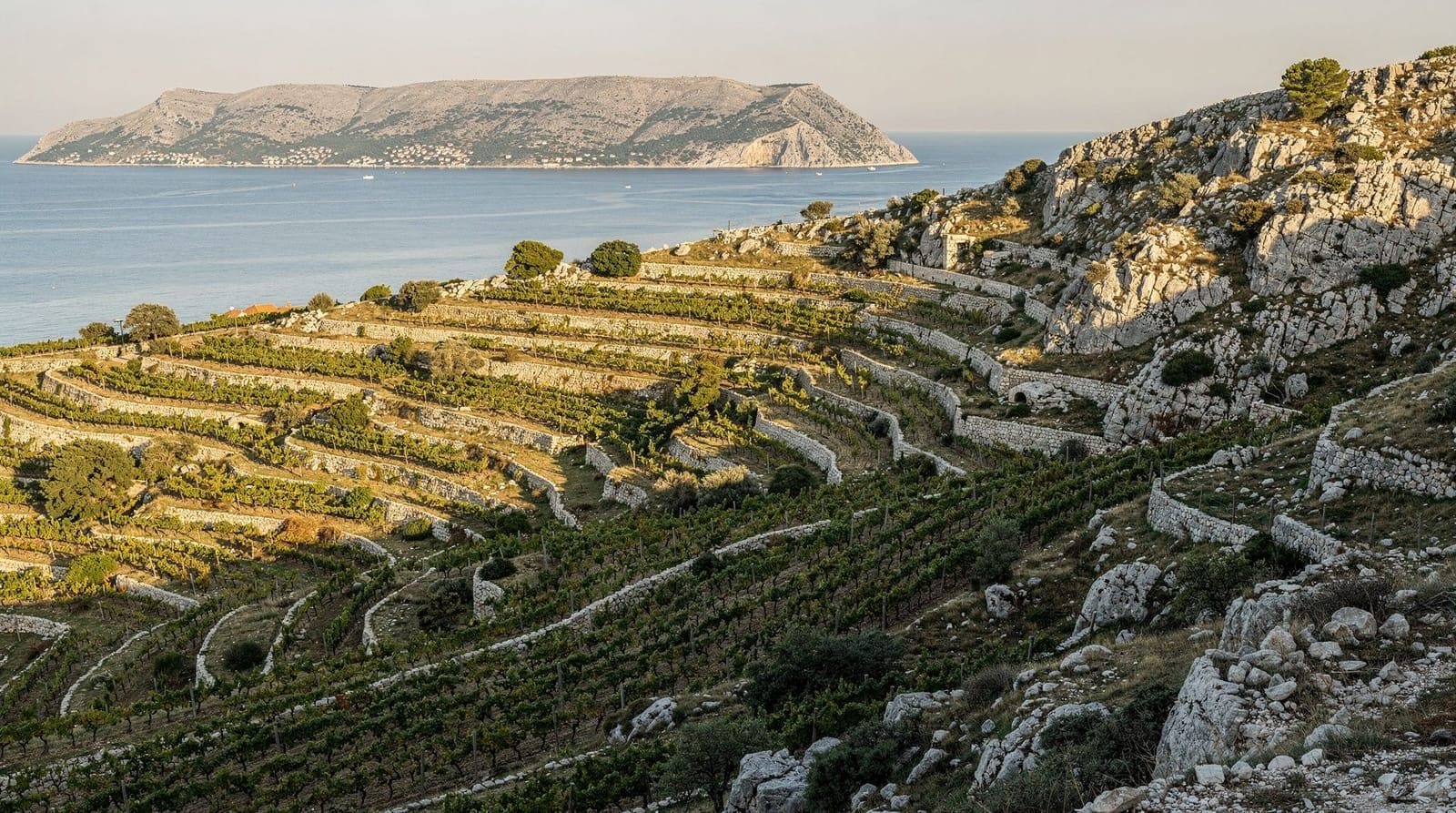
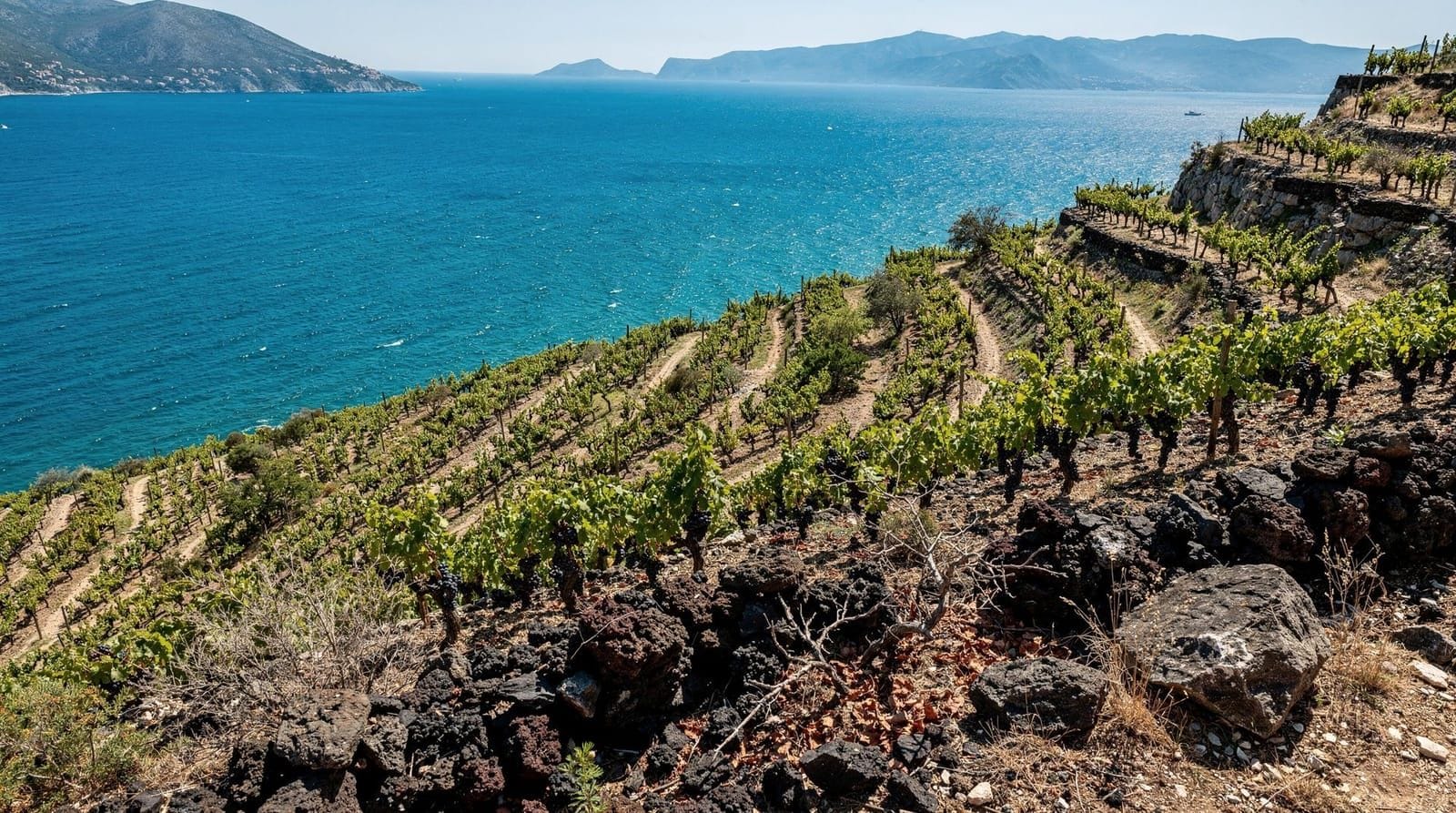
A visit to Mali Ston fits naturally into a longer sweep of the southern Dalmatian coast. From Ston, you can continue along the Pelješac peninsula to Korčula (via ferry from Orebić), visiting the vineyards of Dingac and Postup along the way — a landscape of steeply terraced vines facing the Adriatic, producing Croatia’s most celebrated red wines.
Alternatively, combine the oyster stop with time in Cavtat or the Elaphiti Islands on the way back toward Dubrovnik for a varied day that covers seafood, history and island scenery. Either combination keeps driving time reasonable while adding a second, quite different highlight to the same day.
From Split, Ston is about 140 km — a longer proposition at around 2 hours each way — but viable as a day trip if you want to anchor it with a Pelješac wine tour. The day trips from Split guide covers the logistics in detail.
For a full food context, read the Dalmatian cuisine guide before you go — it explains the broader framework of coastal Croatian cooking into which oysters and mussels fit. And if you’re pairing food with wine across the whole trip, the Croatian wine guide covers all the major regions and grapes.
Frequently asked questions about Oysters of Ston (Mali Ston)
What makes Ston oysters different from other oysters?
Mali Ston bay is fed by both the open Adriatic and freshwater streams from the Neretva river basin, creating a brackish environment unusually rich in plankton and minerals. The native European flat oyster (Ostrea edulis) grown here has a deeper, more complex flavour than Pacific varieties — mineral, briny, with a long finish. The bay is one of the cleanest shellfish habitats in the Mediterranean, tested regularly by Croatian authorities.How much do oysters cost in Ston?
Expect EUR 1.50–3 per oyster depending on size and restaurant. A dozen is typically EUR 15–25 at a konoba. Some growers sell directly from their boats or small kiosks at the waterfront for around EUR 1.50 each. Mussels (dagnje) are cheaper, often EUR 6–9 for a generous portion.When is the best time to eat oysters in Ston?
October through April are the prime months for European flat oysters — they're at their richest and fullest outside spawning season (June–August). The oyster farms and restaurants in Mali Ston stay open year-round, though visiting in the shoulder season (May–June or September–October) gives you good quality plus comfortable weather and fewer crowds.How do I get from Dubrovnik to Ston?
Ston is about 55 km north-west of Dubrovnik on the Pelješac peninsula, roughly a 50–65 minute drive via the D8 coastal road and the Pelješac bridge. There is a local bus (Libertas/Arriva) that runs a few times daily, but a rental car or organised day tour gives you the flexibility to visit both Ston and Mali Ston properly.Which wines pair best with Ston oysters?
The Pelješac peninsula produces some of Croatia's finest reds and whites. With oysters, reach for a chilled Plavac Mali Bijeli (white Plavac), a Grk or Posip from nearby Korcula, or a Malvazija if you can find it locally. The local white Rukatac grape also works well. Avoid heavy reds — Dingac and Postup are for the lamb that follows, not the shellfish that opens the meal.Is it possible to tour the oyster farms in Mali Ston?
Yes. Several family operations offer short boat tours to their beds, where you pull oysters directly from the water and taste them on the spot. Ask at Restaurant Kapetanova Kuca or at the Mali Ston waterfront. These tours are informal, usually 30–60 minutes, and often included or discounted when you eat at the associated restaurant.What else can I see in Ston besides oysters?
Ston town itself is worth at least an hour. The medieval defensive walls — the longest in Europe outside China at around 5.5 km — still stand almost intact. The salt pans (solane) have been harvested continuously since the 14th century. Mali Ston, the smaller village 1.5 km away, is the actual oyster and mussel hub with its cluster of seafood restaurants right on the bay.
Top experiences
Bookable activities with verified prices and instant confirmation on GetYourGuide.
Top experiences
Best-rated activities across GetYourGuide and Viator.

Krka National Park Tour with tour Guide & Wine tasting from Split & Trogir
- Viator

Dolphin Watching & Sunset Boat Tour With Drinks & optional Dinner
- Viator

Fantastic DOLPHIN & SUNSET TOUR with dinner ( Pula-NP BRIJUNI )
- Viator

Dubrovnik Guided Group Tour with Ston Oyster tasting from Split & Trogir
- Viator

Zadar Highlights: Old Town, Sea Organ & Local Tastings
- Viator

Zadar: Luxury Island Boat Tour, Snorkeling & Unlimited Wine
- Viator