Working Remotely from Croatia: The Digital Nomad Guide
Croatia as a Remote Work Base: What You’re Actually Getting Into
Croatia has been edging onto remote workers’ radars for years, and since its entry into the Schengen Area and adoption of the euro in January 2023, it has become a genuinely practical option — not just an aspirational one. The country offers fast internet in urban areas, a Mediterranean quality of life, a highly walkable coastline, and relatively low costs compared to Western Europe. It also has some real friction points that are worth understanding before you book a three-month stay.
This guide covers everything: the best cities to base yourself, internet reliability, coworking spaces, visa rules, and realistic daily costs. It’s aimed at people who want to work a real schedule, not just answer emails from a sun lounger.
| Best base overall | Zagreb — cheapest, most coworking, year-round |
| Best coastal base | Split or Zadar, outside July–August |
| Visa-free stay | 90 days in any 180 (Schengen) |
| Digital nomad visa | Up to 1 year, renewable, income threshold applies |
| Typical budget | Around EUR 900–1,900/month depending on city & season |
Visa Situation: Who Can Stay and for How Long
Croatia joined the Schengen Area on 1 January 2023. This has significant implications for remote workers:
EU/EEA citizens: No restrictions. You can stay indefinitely and work remotely without any special permit.
Non-EU nationalities (US, UK, Canadian, Australian, etc.): Under Schengen rules, you get 90 days in any 180-day period across the entire zone. Croatia is no longer a workaround for Schengen exhaustion as it was before 2023.
Croatian Digital Nomad Visa: Croatia introduced a temporary residence permit for digital nomads in 2021. As of 2026, this remains available for non-EU citizens who:
- Work remotely for a foreign employer or clients outside Croatia
- Earn at least EUR 2,539.32/month (approximately — the threshold is set at 2x the average Croatian salary)
- Hold valid health insurance
- Have no Croatian-sourced income
The visa is granted for up to one year and is renewable. It does not lead to a tax residency obligation if you stay under 183 days, but verify this with a tax advisor for your specific nationality. Applications are made at Croatian embassies abroad or, in some cases, in-country.
ETIAS: The EU’s pre-travel authorisation system for visa-free nationalities is expected to launch in 2026. It applies to non-EU citizens entering any Schengen country, including Croatia.
Best Cities for Remote Work
Zagreb
Zagreb is the most practical city in Croatia for long-term remote work. It has the most developed coworking ecosystem, the best transport connections (train, bus, airport), a proper coffee culture with real cafés suited to working, and significantly lower costs than the coast.
The city is not as photogenic as Dubrovnik or Split, but that is actually an advantage for productivity. You are not constantly distracted by the idea of being on holiday. The Upper Town (Gornji Grad), the streets around Tkalčićeva, and the neighbourhoods of Gornji Grad and Maksimir are all comfortable places to live.
Internet quality in Zagreb is very good. Most coworking spaces and apartments offer fibre connections with 100–500 Mbps speeds. Cafés are generally reliable enough for calls, though you should confirm before a critical meeting.
A mid-range monthly budget in Zagreb: EUR 1,200–1,600 covering rent, food, coffee, and local transport. If you go budget, EUR 900 is achievable. Zagreb is easily underestimated — do not skip it for the coast without at least a week here first.
Coworking options in Zagreb:
- HUB385 — the most established space, good community, central location
- ProInvent — more corporate, better for focused work
- Startupbootcamp — startup-adjacent, open coworking available
Split
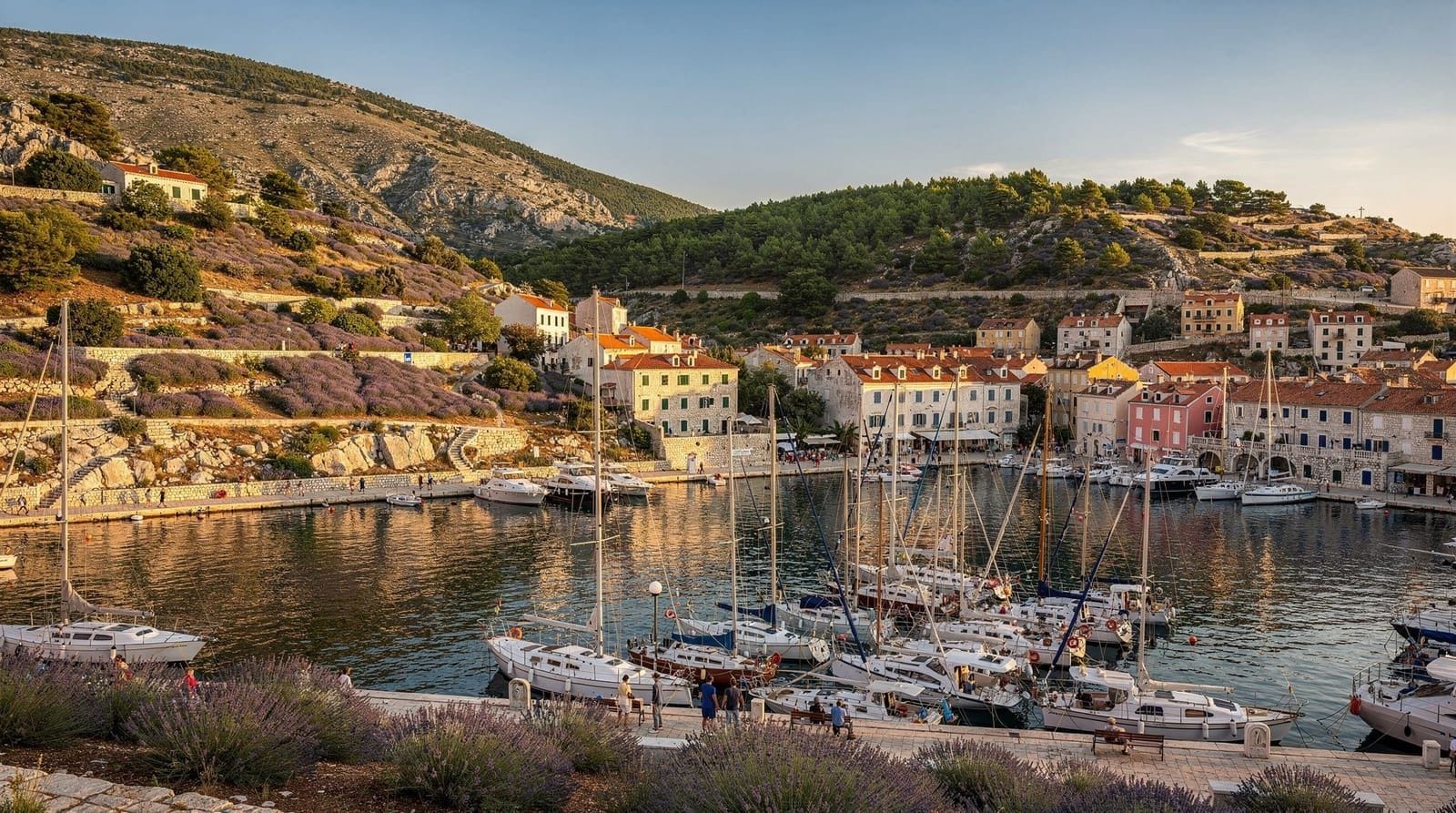
Split is the coastal option that actually works for remote workers. It has coworking spaces, increasingly fast apartment internet, and a year-round population that keeps services running outside summer. The old town inside Diocletian’s Palace is beautiful but impractical for daily work — find accommodation in Meje, Bačvice, or Spinut instead.
Internet quality has improved markedly. Most modern apartments have fibre or cable connections. The coworking scene is smaller than Zagreb but functional:
- Virtual Club — well-known space with hot desks and dedicated options
- Kadar Creative Hub — smaller, more creative atmosphere
The cost of living in Split is notably higher on the coast during summer. Outside of July–August, rent prices drop significantly. A mid-range monthly budget: EUR 1,400–1,900 in summer; EUR 1,100–1,500 in shoulder season.
Split also offers easy access to islands for weekends, and the Croatia ferries guide will help you navigate the ferry network without wasting time.
Zadar
Zadar is an underrated pick. It has an old town, a proper local economy (unlike Dubrovnik which is almost entirely tourist-dependent), a university population that keeps services alive year-round, and access to Plitvice Lakes for weekend escapes.
Internet here is solid; coworking is limited but growing. Most nomads work from apartments or cafés. Costs are lower than Split: expect EUR 1,000–1,400/month for a comfortable mid-range lifestyle. The flight connections to Zadar Airport have improved significantly, making it easier to access than it was even three years ago.
Rovinj and Istria
Rovinj is tempting for aesthetics — it is one of the most beautiful towns in Croatia. But it is very small, and outside June–September many services reduce hours. Better as a short stay than a long base.
Pula is more practical: a real city with year-round life, the famous Roman amphitheatre, and proximity to Rovinj and Poreč. It has better internet infrastructure and lower costs than the Dalmatian coast.
Dubrovnik: usually the wrong choice
Dubrovnik is worth naming explicitly as a nomad base to avoid, or at least to think twice about. It is almost entirely tourist-dependent, which means costs spike hard in summer, long-term rentals are scarce because owners favour short-term tourist lets, and the old town itself is beautiful but impractical for daily errands and focused work. If you want the Dalmatian coast specifically, Split gives you similar sea access with a functioning, less tourism-saturated local economy. See Split vs Dubrovnik for a fuller comparison if you are torn between the two.
Internet Quality: Honest Assessment
In cities and larger coastal towns: excellent. Most modern apartments have fibre, and speeds of 100–500 Mbps are common. Mobile data (4G) is reliable throughout most of the country. Croatia’s main mobile operators — A1, T-HT (T-Mobile), and Telemach — all offer competitive SIM plans. You can pick up a Croatian SIM card at the airport or any operator shop for around EUR 15–25 including data.
In smaller islands and rural areas: variable. Islands like Hvar, Korčula, and Brač have adequate 4G for email and video calls but can be patchy during peak summer when networks are congested. For serious remote work, islands are better as weekend destinations than primary bases. Check our Croatia SIM and eSIM guide for current operator recommendations.
Coworking Spaces: What Exists
Croatia’s coworking culture is growing but not yet as mature as Lisbon, Barcelona, or Berlin. In Zagreb you will find proper options with community events and networking. In Split and Zadar, the spaces are functional but smaller. On the islands, formal coworking is almost non-existent.
Day pass rates: approximately EUR 15–25/day
Monthly hot desk: EUR 150–280/month
Dedicated desk: EUR 250–400/month
In shoulder season, many cafés will happily let you work for the price of a coffee and lunch. Croatians have an extremely strong café culture — Croatian coffee culture runs deep, and you can spend three hours at a table nursing a macchiato without anyone rushing you.
Realistic Daily Costs
Based on mid-range spending, not backpacker or luxury:
| Category | Zagreb | Split (shoulder) | Split (summer) |
|---|---|---|---|
| Rent (monthly, 1-bed) | EUR 600–900 | EUR 700–1,000 | EUR 900–1,400 |
| Groceries | EUR 250–350/mo | EUR 270–380/mo | EUR 300–420/mo |
| Eating out | EUR 12–20/meal | EUR 14–22/meal | EUR 16–28/meal |
| Coworking | EUR 150–280/mo | EUR 150–250/mo | EUR 180–300/mo |
| Transport | EUR 30–50/mo | EUR 20–40/mo | EUR 20–40/mo |
Croatia is not as cheap as Southeast Asia or Eastern Europe, but it is notably more affordable than Western European capitals — and the quality of life, food, and climate compensate considerably.
Healthcare and Insurance
Croatia has a public healthcare system (HZZO), but as a short-term visitor or nomad without local contributions, you will rely on private health insurance. European Health Insurance Cards (EHIC) are valid for EU citizens. For non-EU nomads on the digital nomad visa, valid international health insurance is a requirement.
Private clinics in Zagreb and Split are competent and not excessively priced by European standards. Emergency services are available nationwide.
A Few Practical Notes
Banking: Croatia uses EUR as of January 2023. ATMs are widespread. Revolut and Wise work without issue. Most shops and restaurants now accept cards, though rural areas and smaller islands still lean cash-heavy.
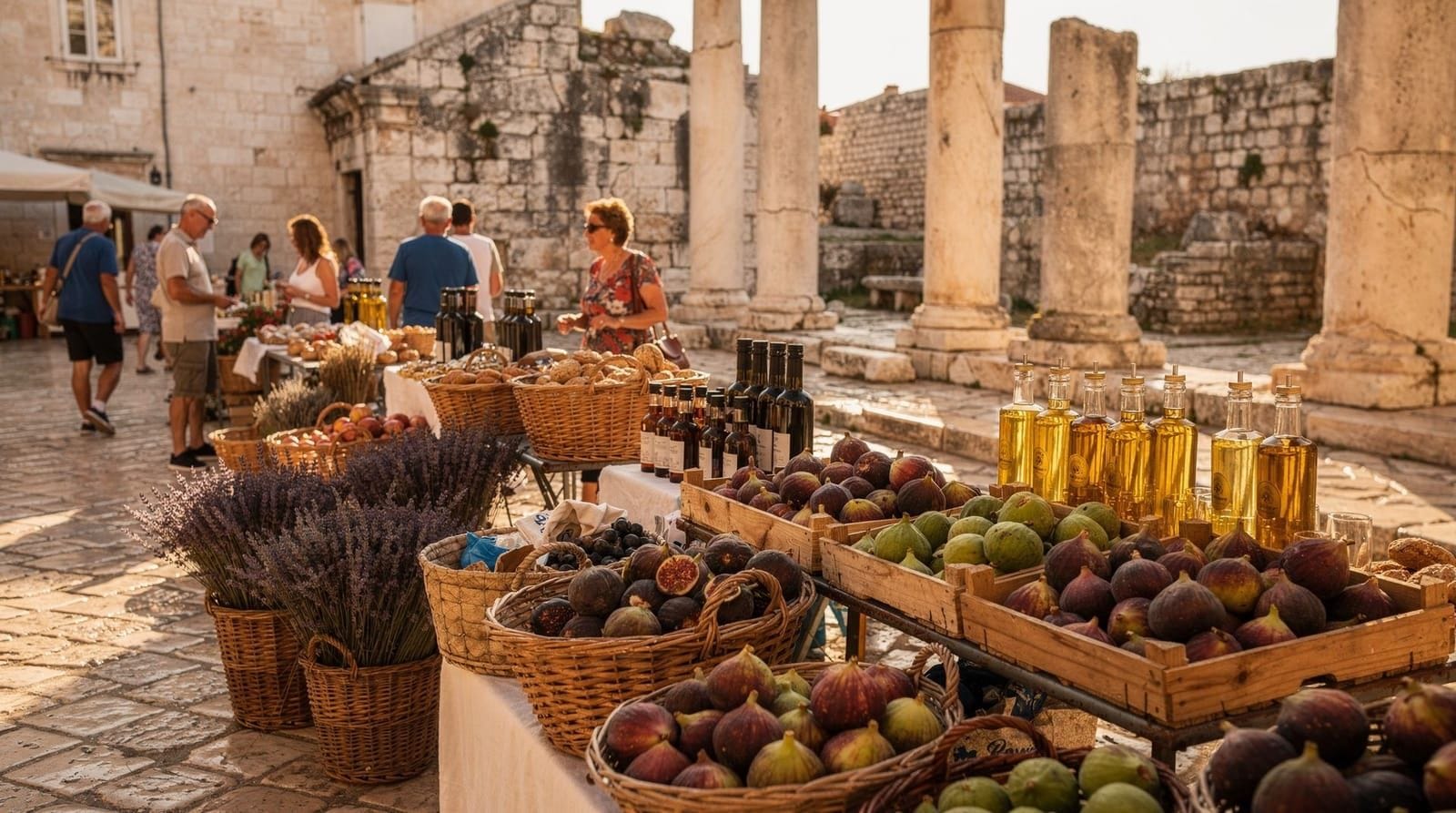
Groceries and food: Supermarket chains like Konzum, Spar, and Lidl are present across the country. Farmer’s markets (tržnica) in Zagreb and Split offer excellent fresh produce at lower prices than supermarkets. Do not overlook the local konoba — traditional taverns where lunch menus (often three courses) run EUR 12–18.
Language: Croatian is the official language, but English is widely spoken among working-age adults in cities and tourist areas. You will not struggle.
Tax: Croatia is not a tax haven. If you establish residency (more than 183 days), you may be subject to Croatian income tax. The digital nomad visa is specifically designed to avoid this, but your situation depends on your home country’s tax treaties. Get proper advice before committing to long stays.
When to Go (and When to Stay Away)
For remote work, September to May is the sweet spot. The weather is milder, costs are lower, crowds are gone, and you can actually focus. Shoulder season in Croatia is genuinely lovely — the sea is still warm in September and October, and the light is extraordinary.
July and August in Split or Dubrovnik are not recommended for remote work unless you specifically thrive in chaos and heat. Noise levels, tourist density, and inflated prices all work against productivity. Zagreb in summer is actually pleasant because the city empties out (locals leave for the coast) and it becomes quieter.
If you want to understand what Croatia looks like stripped of tourist noise, read our guide to Croatia in autumn — many long-term nomads consider October their favourite month in the country.
Explore Zagreb properly with a food tour before settling inBottom Line
Croatia works as a remote base, with caveats. Zagreb is the most practical city. Split is coastal and liveable outside peak season. Zadar is underrated and affordable. The visa situation is workable for non-EU citizens via the digital nomad permit. Internet is reliable in cities and increasingly on the coast.
What Croatia offers that most digital nomad hotspots do not: a genuinely functioning European country with real infrastructure, excellent food and wine, easy access to nature and history, and enough off-season quietness to actually get work done. The trade-off is that it is not the cheapest option and the coworking scene is still developing.
For most people reading is Croatia worth visiting — yes, and particularly so if you can stay long enough to find your rhythm. Weekend trips are one of the real perks of basing here long-term: from Zagreb, Zagorje’s castle circuit or a run down to the coast are both easy; from Split or Zadar, island-hopping or the national parks are a bus or ferry away rather than a flight.