Why May, June and September are Croatia's Best Months for Value
| Savings vs August | Around 20–40% on accommodation in June/September |
| Sea temperature | 17–20°C May, 22–24°C June, 25–27°C September |
| Best overall month | September (from the second week) |
| Underrated month | May, especially for Plitvice and green landscapes |
| Trade-off | Some island bars/restaurants close after early September |
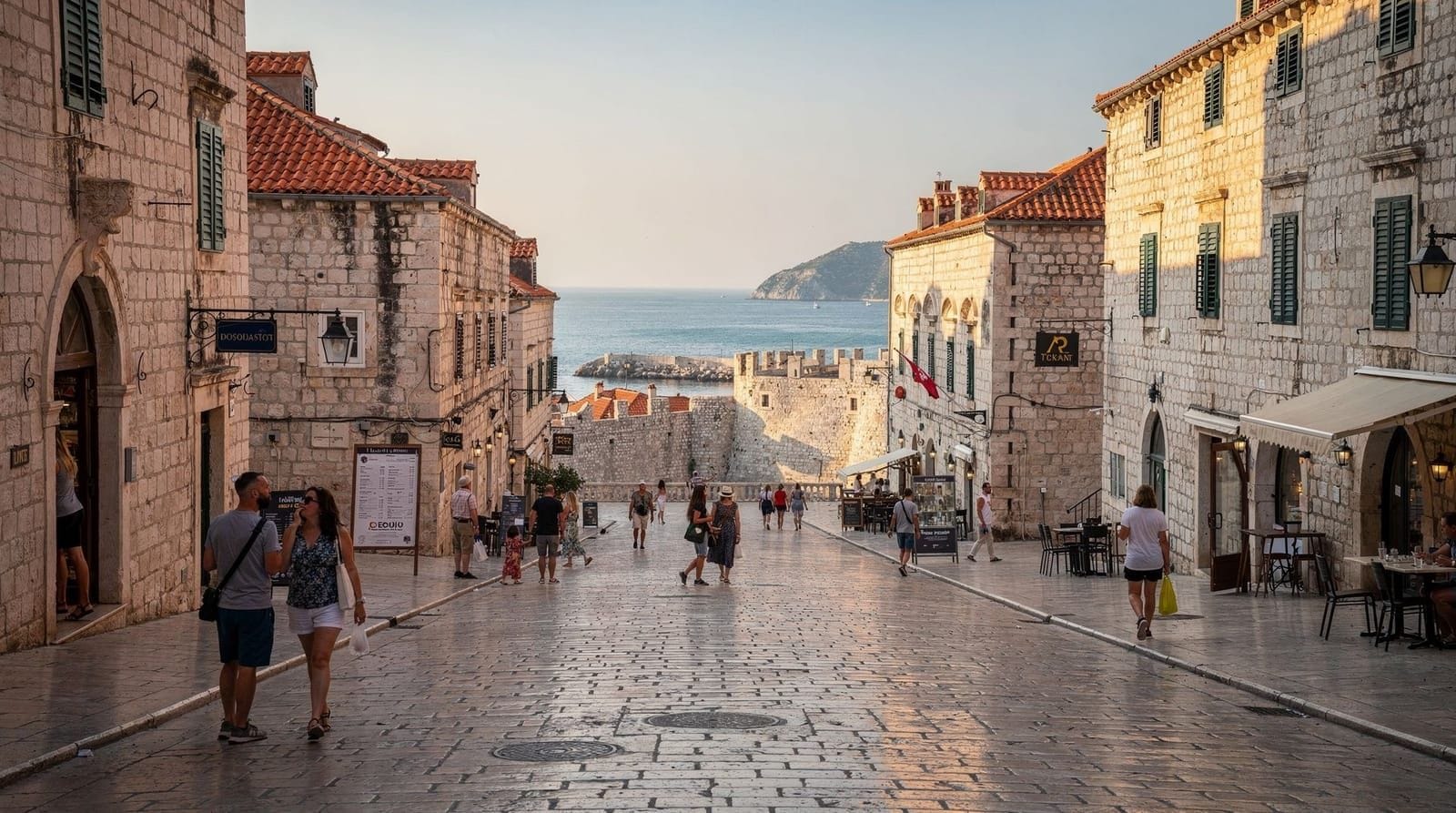
July and August in Croatia work on a simple logic: everything is open, the sea is warm, and the prices reflect the fact that roughly three-quarters of the country’s annual tourist traffic arrives in those two months. Accommodation costs 30 to 50 percent more than in June. Popular restaurants require reservations. The city walls in Dubrovnik have a queue. The fast catamaran to Hvar sells out.
None of this makes summer a bad time to visit. But it is worth being clear that May, June and September offer a version of Croatia that is, in several respects, more enjoyable — and demonstrably cheaper.
What changes in the shoulder season
The core attractions do not change: the old towns, the national parks, the beaches and the ferry network all operate throughout the season. What changes is the density of people using them and the price of doing so.
In practical terms:
Accommodation is typically 20 to 40 percent cheaper in June and September than in July or August. The same apartment in Dubrovnik’s old town that costs 200 EUR per night in August might be 130 EUR in June. In May, the discount can be larger still.
Restaurants in tourist areas operate at full capacity in July and August, which means shorter menus, faster service and less flexibility. In June and September, the same restaurants often cook better because they are less overwhelmed.
Queues and crowds at major sites — the Dubrovnik walls, Plitvice Lakes, the Blue Cave — are manageable in shoulder season. Not nonexistent, but manageable. In peak season, the Plitvice boardwalks can feel genuinely congested; in June, you might wait ten minutes at the most popular viewpoints.
Driving on the coastal road (the Magistrala, D8) is significantly less stressful without the caravans and rental cars of peak season. Renting a car in Croatia in June or September is also cheaper.
May: the underrated choice
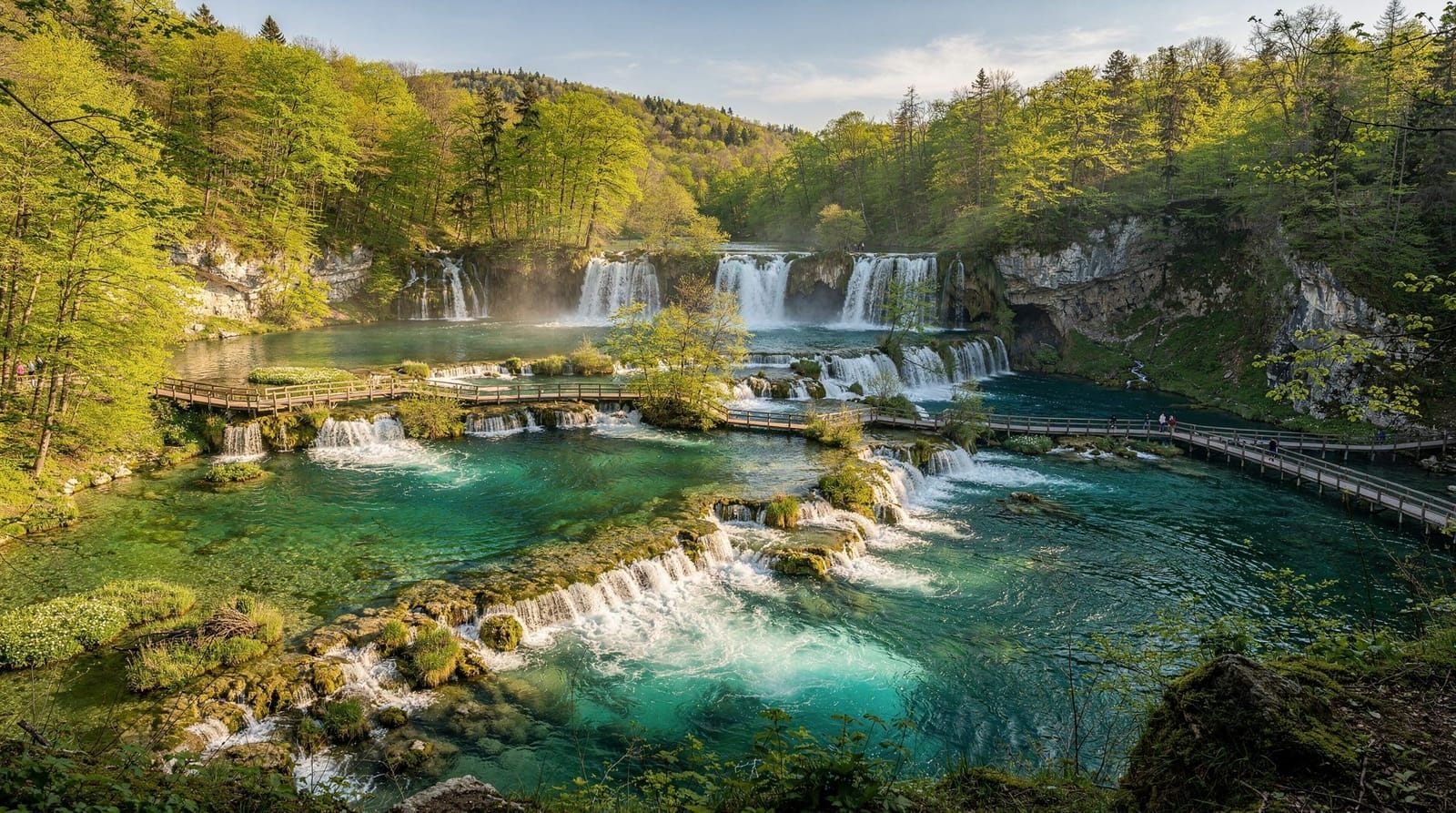
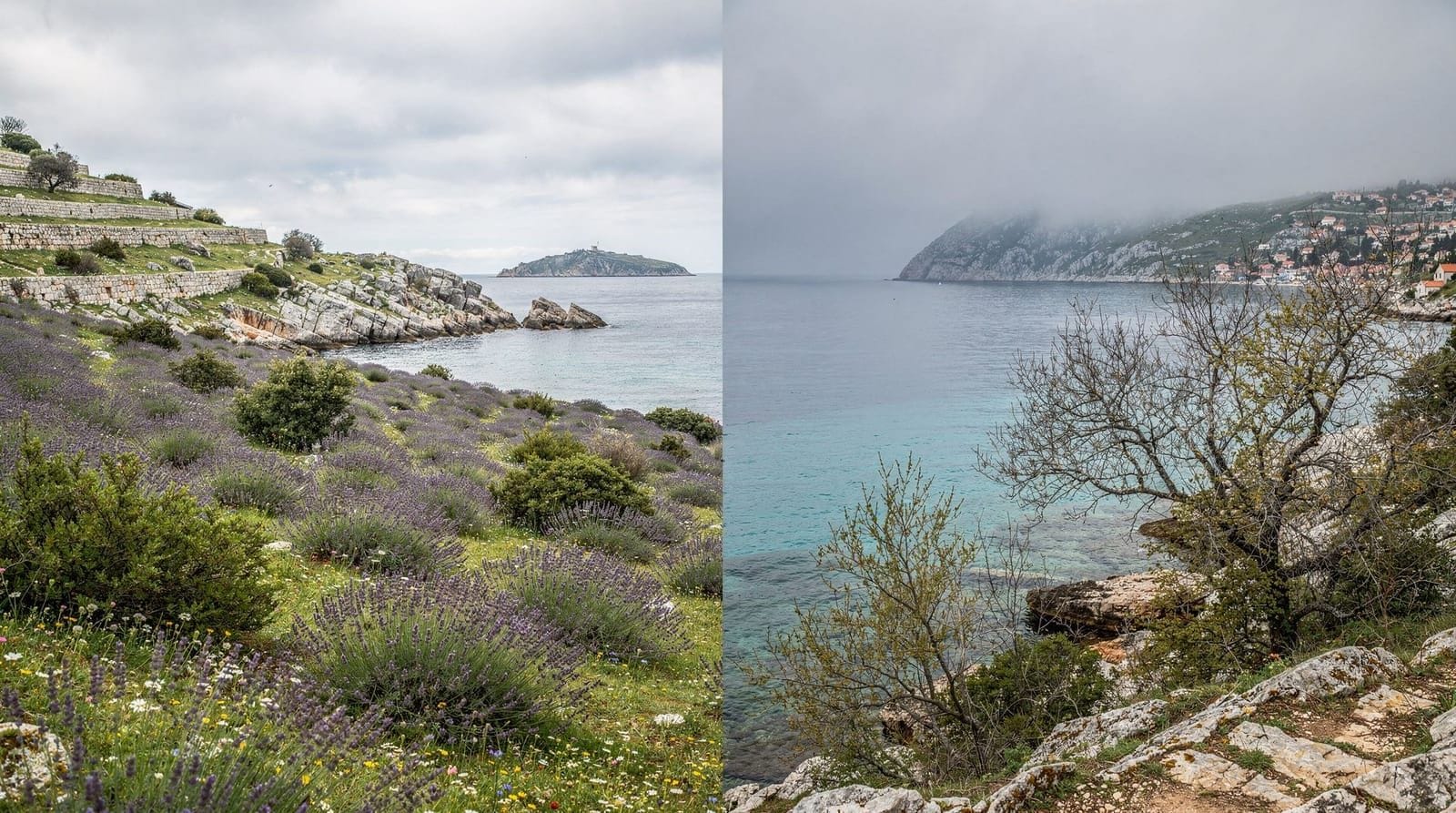
May is the most underrated month in Croatia. The sea temperature reaches 17 to 20°C in southern Dalmatia by mid-May — cold for prolonged swimming but fine for a quick dip — and rises quickly through the month. The landscape is at its greenest: the Plitvice waterfalls run at maximum volume from the winter snowmelt, the Istrian fields are flowering, and the temperature on the coast sits at a comfortable 20 to 25°C.
The main limitation in May is that some island services — certain catamaran routes, smaller seasonal restaurants, some boat tours — have not yet shifted to their full summer timetable. Jadrolinija ferries run year-round, but some Krilo and Kapetan Luka catamaran routes start in June. Verify schedules before building your itinerary around a specific connection.
Plitvice in May is one of Croatia’s best-value experiences. The waterfalls are full, the forests are fresh, and the park is considerably quieter than it will be in six weeks.
Plitvice Lakes full-day guided tour from Zagreb — excellent in MayJune: the sweet spot
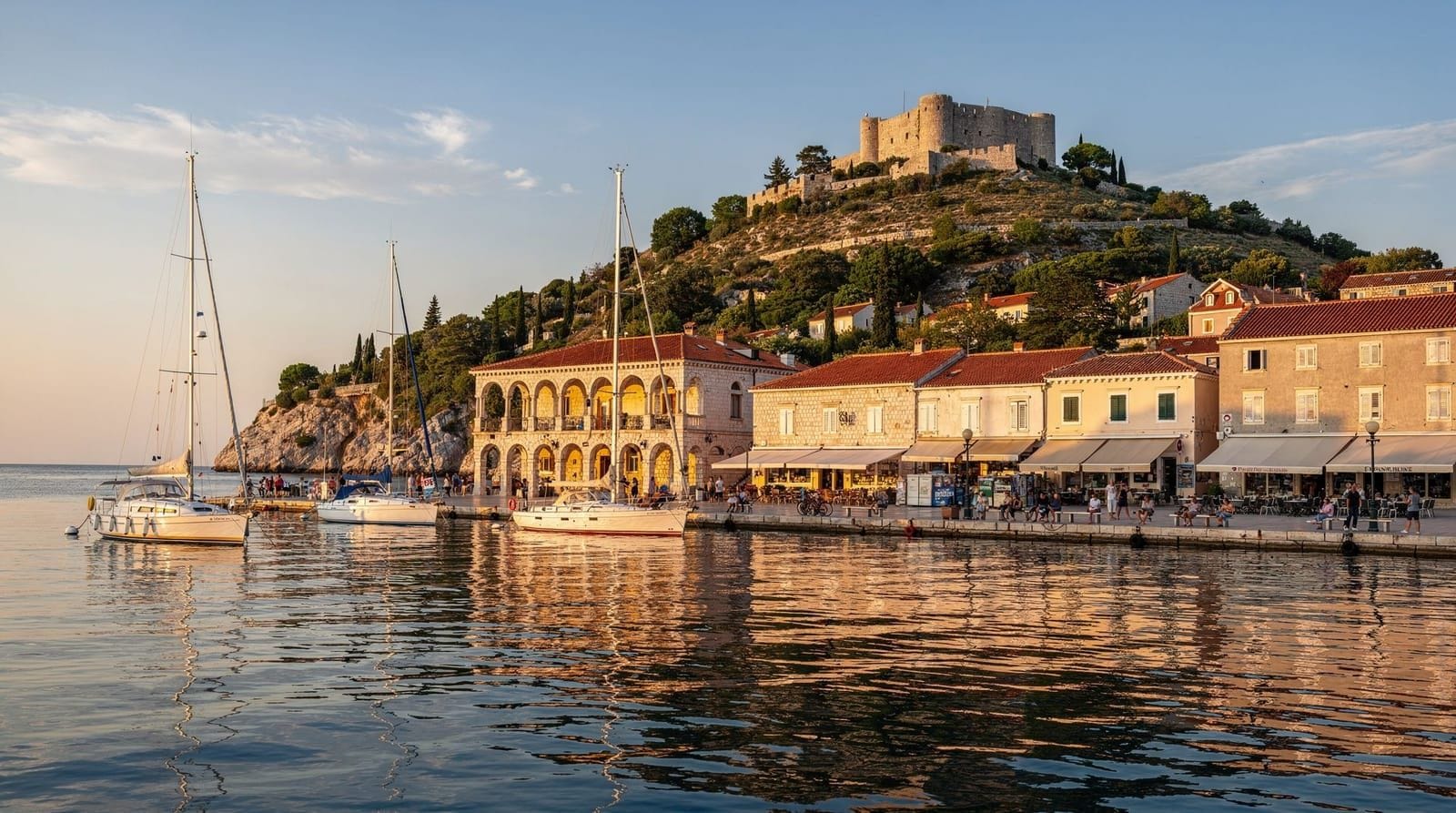
June is as close to an optimal month as Croatia gets. The sea temperature reaches 22 to 24°C in Dalmatia by late June — comfortable for most swimmers. The Hvar lavender fields bloom in June. The Krka waterfalls are well fed. Restaurants and boat tours are running full summer schedules. All accommodation options are open.
Prices in June are already higher than May but noticeably lower than July. Booking accommodation two to three months ahead for Dubrovnik and Hvar is advisable; other destinations are more flexible.
One specific June advantage: the Pelješac wine harvest has not yet started (that is September-October), but the wineries are open and the Plavac Mali vines are in full leaf. A Pelješac wine tour in June means you have the tasting rooms largely to yourself.
The sea kayaking conditions around Dubrovnik are excellent from June through September. The sea kayaking half-day tour is a good way to see the old town walls from the water.
Sea kayaking from Dubrovnik — best in June for calm water and clear visibilitySeptember: the return to sense
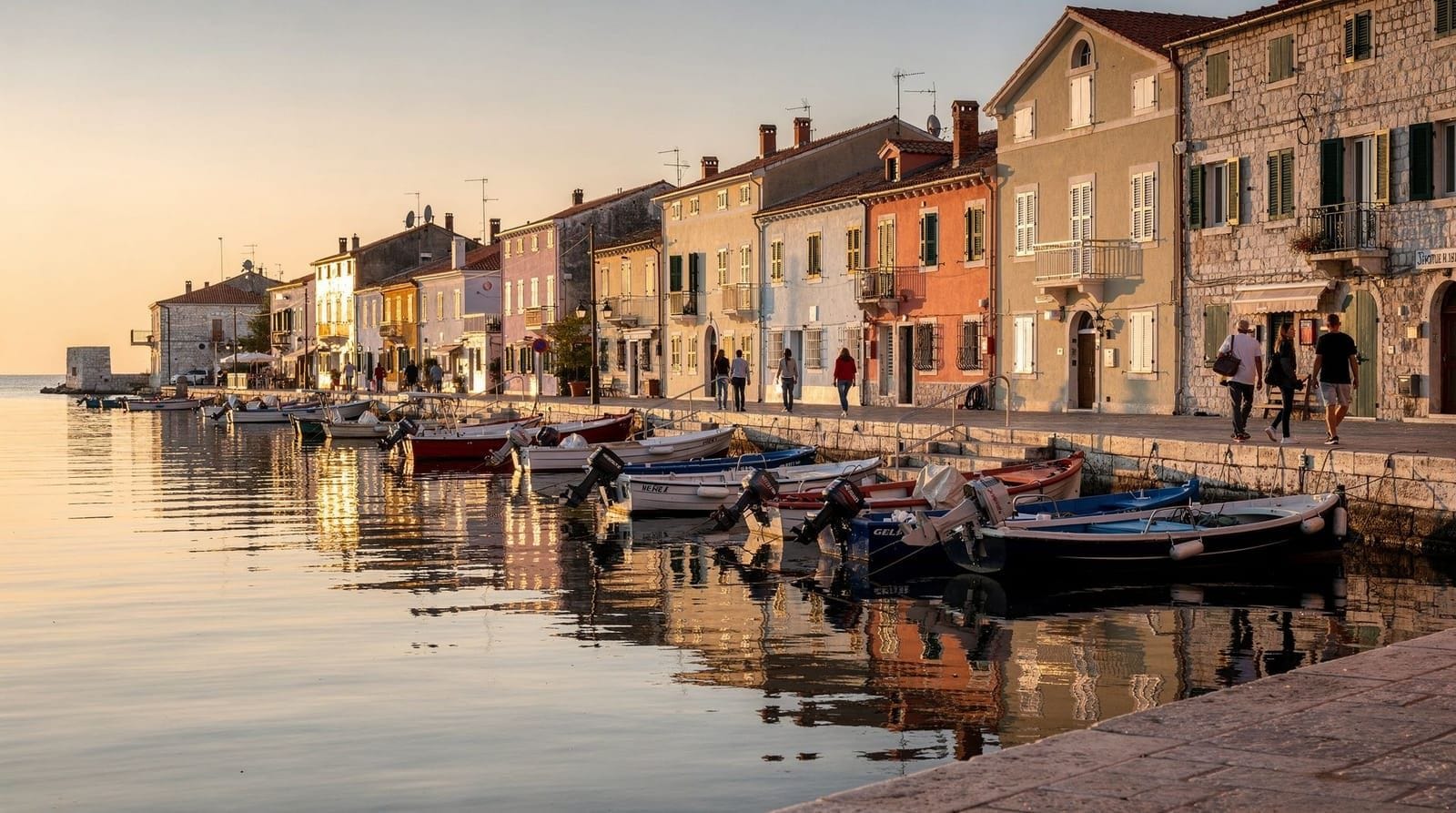
The first week of September in Croatia still has July-August pricing and crowd levels in most popular areas, as European families with school-age children extend their holidays to the maximum. From the second week of September, a shift occurs: the prices drop, the beaches clear, and the sea retains the warmth accumulated over summer (typically 25 to 27°C — the warmest sea temperatures of the year).
September is often cited by regular Croatia visitors as the best month to visit, and the case is strong. The conditions are optimal for swimming. The evenings are cooler and more comfortable for walking around old towns. The truffles in Istria are not yet in full season (that is October), but some early white truffle finds begin late September. The harvest season brings local food markets and events.
The practical risk in September is weather: autumn storms can arrive from mid-September onward, particularly in the north and on the Kvarner Gulf. Southern Dalmatia and the islands have more stable weather through the month.
What shoulder season does not give you
Honesty requires noting the limitations. Some beach bars close after August. The island social scene that makes Hvar what it is in July is significantly reduced in September. Some smaller island restaurants close after the first week of September. The Zrće beach music events on Pag are exclusively July-August. If you want the full peak-season animation, shoulder season offers a different version.
The sea in May is too cold for extended swimming for most people. If swimming is the primary activity, June or September are the practical options.
October: The Fourth Option Nobody Mentions
Most shoulder-season advice stops at September, but October deserves a mention of its own, with a different set of trade-offs. The sea is still swimmable in early October in southern Dalmatia (typically 21–23°C), prices drop further than September, and the truffle season in Istria is now in full swing — the Istrian truffle hunting window peaks in November but starts strongly in October.
The cost is real, though: many island restaurants, smaller hotels and some ferry routes reduce service or close entirely by mid-to-late October. Vis and the smaller islands feel noticeably quieter in a way that borders on empty by late October. October works best as a mainland-and-Istria trip — Zagreb, Istria, Split and Dubrovnik itself all function normally — rather than an island-hopping trip, where reduced ferry frequency becomes a real constraint.
Where the Shoulder-Season Savings Are Biggest
Not every destination discounts equally. Dubrovnik and Hvar — the two most in-demand names — show the largest percentage swings between August and June, because their peak-season premium is the highest to begin with. Split, being a larger city with more accommodation supply and a mix of business and leisure travel, discounts less dramatically. Inland destinations like Zagreb or Plitvice Lakes barely move on price at all between seasons, since their visitor base isn’t purely beach-driven — the savings case for shoulder season is really a coastal-and-island argument first.
Krka National Park entry ticket — good value and quieter in shoulder seasonBudget comparison (approximate, 2026)
The numbers below are indicative and will vary by exact timing and booking lead time:
A mid-range apartment in Dubrovnik old town: 130-160 EUR/night in June vs 190-250 EUR/night in August.
A mid-range apartment in Hvar: 90-120 EUR/night in June vs 140-200 EUR/night in August.
A Jadrolinija car ferry to an island: prices are fixed by the state and do not change seasonally. Fast catamaran passenger fares are slightly lower outside peak season.
Dining costs are consistent across the season at the restaurant level — Croatia does not typically charge summer premiums on menu prices the way some Mediterranean destinations do.
The Croatia trip cost guide provides a more detailed breakdown by category.
The practical conclusion
If your dates are flexible, choose June or early September. If you must travel in peak season, arrive early in July rather than August and book accommodation and catamaran tickets well in advance. If you can travel in May, do so — you will spend less, see more, and have the Plitvice boardwalks largely to yourself on a Tuesday morning in a way that is genuinely unlike any experience available in July.
Croatia is not a secret. The tourist infrastructure is developed, the prices have risen steadily, and the pressure on popular sites is real. The shoulder season is the structural response to all of that.
Month-by-month at a glance
| Month | Sea temp | Crowd level | Notes |
|---|---|---|---|
| May | 17–20°C | Low | Best for Plitvice, some island services not yet running |
| June | 22–24°C | Moderate, rising | The sweet spot — full services, lower prices than July |
| July–Aug | 24–26°C | Peak | Everything open, highest prices and queues |
| Sept (early) | 25–27°C | Still high | School-holiday extension keeps it busy through the first week |
| Sept (mid–late) | 25–27°C | Low | Warmest sea, prices drop, crowds clear |
| October | 21–23°C | Very low | Truffle season starts; many island venues close |