How to Visit Croatia on a Budget: Practical Hacks That Actually Work
The Honest Budget Situation in Croatia
Croatia is not cheap by European standards. Since adopting the euro in January 2023, prices have risen in tourist-facing businesses, and Dubrovnik in particular has converged toward the price level of Venice or Amsterdam. The idea that Croatia is a “budget Mediterranean destination” belongs to a different decade.
That said, there is a real gap between what tourists typically spend and what a knowledgeable visitor spends. The hacks in this guide are not about sacrificing experience — they are about redirecting money from where it disappears without trace (tourist restaurants, peak season rates, unnecessary taxis) to where it actually delivers (local food, shoulder season, quality experiences at better prices).
| Biggest lever | Travel dates — shoulder season saves 30–60% on rooms |
| Cheapest eating | Dnevni meni (daily set lunch), around EUR 10–16 |
| Cheapest transport | Intercity buses and Jadrolinija ferries over taxis |
| Watch out for | Dubrovnik prices (~25–40% higher than elsewhere) |
| Realistic budget | Around EUR 45–250/day depending on style |
See our broader Croatia on a budget guide for daily budget breakdowns. This article is specifically about strategies.
Timing: The Biggest Lever
The single most effective cost reduction in Croatia is adjusting your travel dates. The difference between visiting in August and visiting in May or October is not marginal — it affects accommodation prices (often 40–60% cheaper), crowd levels, tour availability, and your overall experience.
Shoulder season windows: Mid-April through mid-June, and September through October. The sea temperature in early October is still around 22°C — warm enough to swim. September is many regular visitors’ favourite month: the summer crowds are gone, the light is extraordinary, and restaurants are not overwhelmed.
Specific savings in shoulder season:
- Accommodation: 30–60% cheaper, with far more availability
- Tours and boat trips: same price or lower, but not sold out weeks ahead
- Ferries: less need to book ahead, more flexibility
- Restaurants: actual service, not the overwhelmed chaos of August
For the full case for travelling outside peak season, read our Croatia shoulder season guide. If you are specifically considering the warm months, Croatia in May and Croatia in September cover month-specific conditions.
Where You Stay: Location and Type Matter More Than Star Ratings
Base in a city, not a resort: Staying in Split or Zadar and doing day trips is dramatically cheaper than staying in Hvar town or Dubrovnik old town. The ferry or bus to the destination you want to visit adds an hour, but subtracts a significant amount from your nightly rate.
Private rooms (sobe): Croatia has a long tradition of rooms in private homes (advertised as sobe or apartmani). These are found on Booking.com but also locally — look for handwritten signs in residential streets near ports and old towns. Quality is variable but prices are often excellent.
Apartments with kitchens: Cooking even half your meals in an apartment significantly reduces total expenditure. Groceries at Croatian supermarkets (Lidl, Konzum, Spar) are reasonably priced. Breakfast and lunch from a supermarket, dinner at a konoba — this is how locals eat too.
Stay further from the old town: In Dubrovnik, the price difference between accommodation inside or immediately adjacent to the old walls versus 2 kilometres outside is significant. Bus connections are frequent and cheap (EUR 2 per trip). Cavtat, 20 minutes south of Dubrovnik by bus or boat, is a pleasant small town with notably cheaper accommodation and easy access to Dubrovnik.
Eating: The Konoba Strategy
The gap between tourist restaurant prices and local eating in Croatia is substantial.
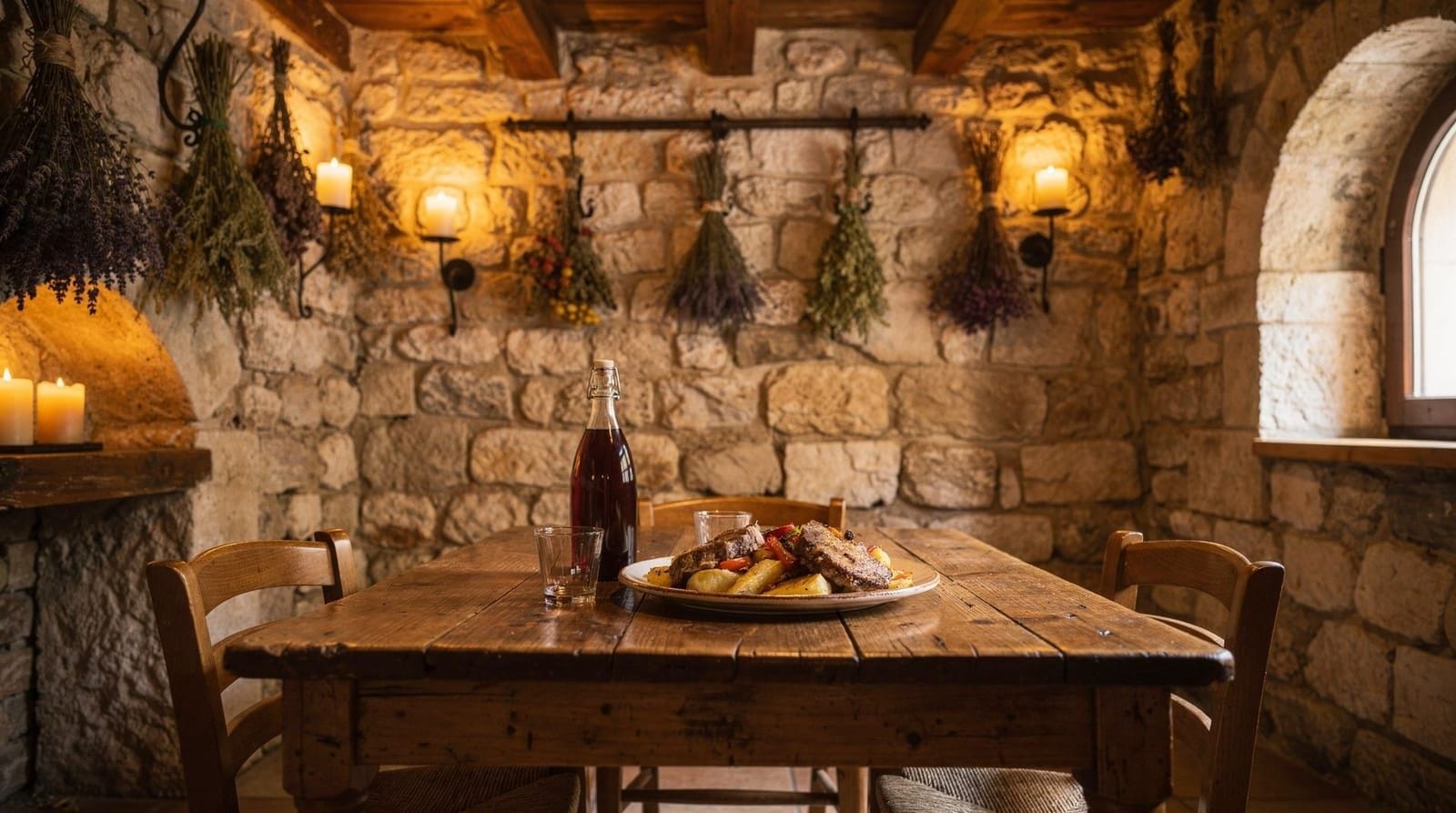
Konobas: Traditional Croatian taverns, often family-run, with simple menus of grilled fish, meat, pasta, and local wine. Prices are typically 20–40% lower than tourist-facing restaurants on the waterfront. Quality is often higher. Read our konoba guide for what to order and how to find them.
Daily menus (dnevni meni): At lunch, many restaurants — including some good ones — offer a set menu of starter, main, and sometimes dessert for EUR 10–16. This is the best value eating in Croatia. Look for the sign outside or ask at the door.
Markets (tržnica): Every town with a working population has a morning market. Fresh vegetables, local cheese, prosciutto-style pršut, and bread. Zagreb’s Dolac market and Split’s fish market are the most famous, but smaller versions exist in almost every town. This is where locals shop.
Fish: local species over tourist defaults: Sea bream (orada) and sea bass (brancin) are the most requested fish — and the most expensive. Cheaper and equally good: sardines (srdele), mackerel (skuša), and local shellfish. Order grilled sardines in a konoba and pay a quarter of what you would pay for a grilled sea bream at a tourist restaurant.
Bread and bakeries: Croatian bakeries (pekarna) sell excellent bread and pastries. A burek (filled pastry with cheese or meat) from a good bakery costs EUR 2–3 and is a satisfying meal.
Grocery shop for wine: Restaurant wine markups in Croatia are steep. A bottle you pay EUR 30 for in a restaurant costs EUR 8–12 in a supermarket. Buying a bottle from a supermarket or a local producer and drinking it at your apartment is not a lesser experience.
Transport: Buses Over Taxis, Ferries Over Speedboats
Buses: Croatia’s intercity bus network is extensive and surprisingly comfortable. Split to Dubrovnik takes around 4 hours and costs EUR 15–22. Zagreb to Split is about 6 hours by the fastest services and costs EUR 20–30. Buses run to most coastal towns that ferries do not reach.
Ferries (Jadrolinija): The public Jadrolinija ferry network is cheap by European standards. Car ferries between Split and Hvar cost a few euros for foot passengers. The fast catamarans (Krilo) are more expensive but still affordable for the distances covered. Book ahead in July–August; the rest of the year, walk-on is usually fine.
Local buses in cities: Split’s city bus network covers the main beaches and suburbs cheaply. Dubrovnik has an excellent bus network — Line 6 covers the coast south toward Cavtat. Taxis in Croatia are not extortionate, but for city transit, buses are significantly cheaper.
Avoid airport taxis: Agreed-price taxis from airports are standard but overpriced. In Split, the airport bus to the city centre runs frequently and costs a fraction of the taxi fare. In Zagreb, the airport shuttle bus is well-organised and cheap.
Renting a car versus not: A hire car opens up independent day trips and rural konobas that buses do not reach, but adds fuel, tolls, and parking costs that add up fast in old-town areas where parking is scarce and expensive. Our renting a car in Croatia guide and tolls explained guide help you work out whether it actually saves money for your specific itinerary — for a single-base city trip with day tours, it usually does not.
SIM cards over roaming: A prepaid Croatian SIM from A1, T-Mobile or Telemach costs around EUR 15–25 including data and is far cheaper than most home-country roaming plans for a trip of a week or more. See the Croatia SIM and eSIM guide for current options.
Free and Low-Cost Things to Do
Croatia has more free content than visitors realise:
Diocletian’s Palace, Split: The palace is not a single monument — it is a living neighbourhood. Walking through the peristyle, the narrow streets, and the cellars is free. Only specific museums inside charge admission.
Old towns in general: Šibenik, Trogir, Zadar, Rovinj — all have UNESCO-listed old towns you can walk through for free. The Sea Organ and Greeting to the Sun in Zadar are free.
Beaches: Virtually all beaches in Croatia are public. There is no admission charge to use a beach. Beach bars and sun-lounger rental are optional. Bring a towel and find a spot.
Hiking: The interior hills above most coastal towns have marked hiking paths. The Biokovo mountain above Makarska has a dramatic elevated walkway (the Biokovo Skywalk costs a fee, but the trails below are free). More in our hiking in Croatia guide.
Sunsets: The sunset from the walls of Dubrovnik requires a ticket (expensive). The sunset from the city itself — from Fort Imperial on Srđ hill, from the Banje Beach area, or from the Revelin Fortress terrace — is free or very cheap.
Free walking tours: Tip-based guided walking tours operate in Zagreb, Split, and Dubrovnik. They are genuinely informative and you pay what you think they were worth at the end.
Tour and Experience Savings
Book direct with local operators: Local operators are often 15–25% cheaper than booking the same tour through a large online platform. Find them via guesthouses, local Facebook groups, or small offices near the harbours.
Group tours over private: For standard day trips (Plitvice, Blue Cave, Pelješac), joining a small group tour is far cheaper than a private car and guide. The trade-off is less flexibility; for a first visit, the group option is usually the right call economically.
Off-peak sailing: Sailing day trips in September are substantially cheaper than in July, and sea conditions are often calmer.
A half-day sailing tour from Split — good value with snacks and wine includedThe Dubrovnik Problem
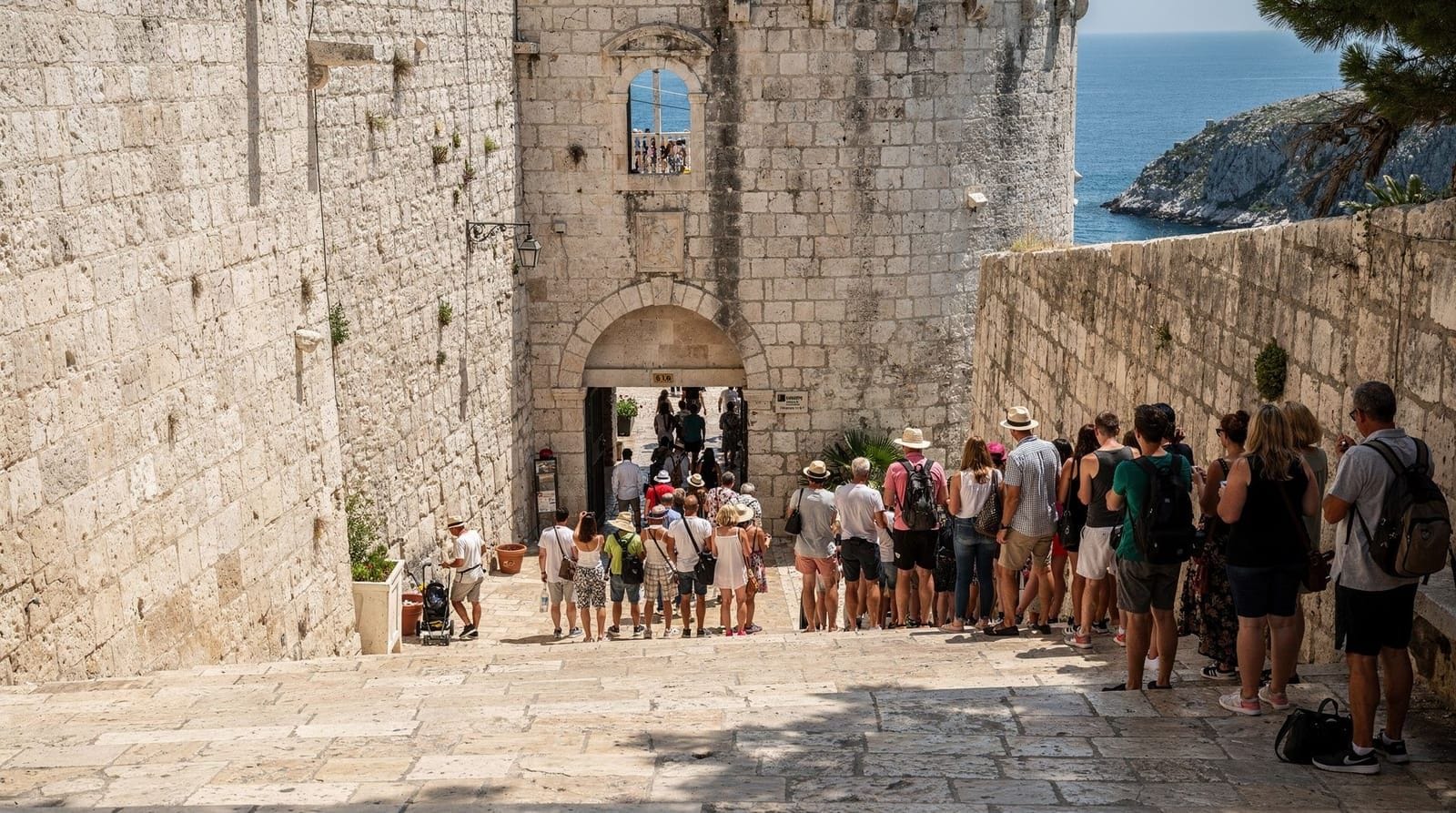
Dubrovnik deserves special mention because it is the most expensive city in Croatia, and the gap with the rest of the country is substantial. Some strategies specific to Dubrovnik:
Stay outside the walls: Accommodation inside or immediately adjacent to the old town commands a significant premium. Areas like Lapad and Gruž are served by frequent buses and are notably cheaper.
Use the bus: Line 6 runs along the coast. Line 8 reaches Lapad. These buses connect the main areas and cost EUR 2 per trip.
Visit in shoulder season: Dubrovnik in September or October is a different city from Dubrovnik in August. Fewer cruise ship day-trippers, shorter queues at the walls, more pleasant overall.
Skip the cable car for the sunrise hike: The cable car up Srđ costs money and is crowded. The hiking path up (Serpentina trail) is free and takes 45–60 minutes. Go at sunrise and you will have the summit to yourself.
A Realistic Daily Budget
Based on genuine spend rather than optimistic estimates:
Budget traveller (hostel, local eating, public transport): EUR 45–65/day
Mid-range (private room or apartment, konobas, occasional tour): EUR 85–150/day
Comfortable (B&B or mid-range hotel, restaurant dining): EUR 150–250/day
Dubrovnik specific: add approximately 25–40% to these estimates
These numbers align with what we cover in our Croatia daily costs and is Croatia expensive guides, which also address common misconceptions about pricing.
The most important point: how you spend money matters more than how much you spend. EUR 100/day in a tourist restaurant on the waterfront is a worse experience than EUR 70/day split between a good apartment, morning market shopping, a konoba lunch, and an afternoon on a free public beach.
What Not to Skimp On
Budget travel is about redirecting spending, not eliminating it. A few things where cutting costs genuinely reduces the experience:
Boat trips: The sea is what Croatia is. A day on the water — whether island hopping, visiting the Blue Cave, or sailing — is not optional. Budget for it properly.
Accommodation quality in Dubrovnik: Cheap rooms in Dubrovnik are often genuinely unpleasant — small, hot, noisy. Better to stay a shorter time in decent accommodation than a longer time in a poor room.
One good meal: Even on a tight budget, one dinner at a proper restaurant — not the cheapest konoba but something a step up — on at least a few nights is worth it. Croatian seafood at its best is a genuine food experience.
The Croatia budget tips guide complements this one with destination-specific breakdowns.
Tipping and Money Basics
Tipping in Croatia is appreciated but genuinely optional — rounding up or adding 10% at a restaurant is standard, and no one will chase you down for skipping it. Cash is still useful in rural konobas and small island shops, even though most tourist-facing businesses now take cards without issue. Our tipping in Croatia and money in Croatia guides cover ATM fees, currency exchange traps, and everyday payment habits in more detail than budget space allows here.