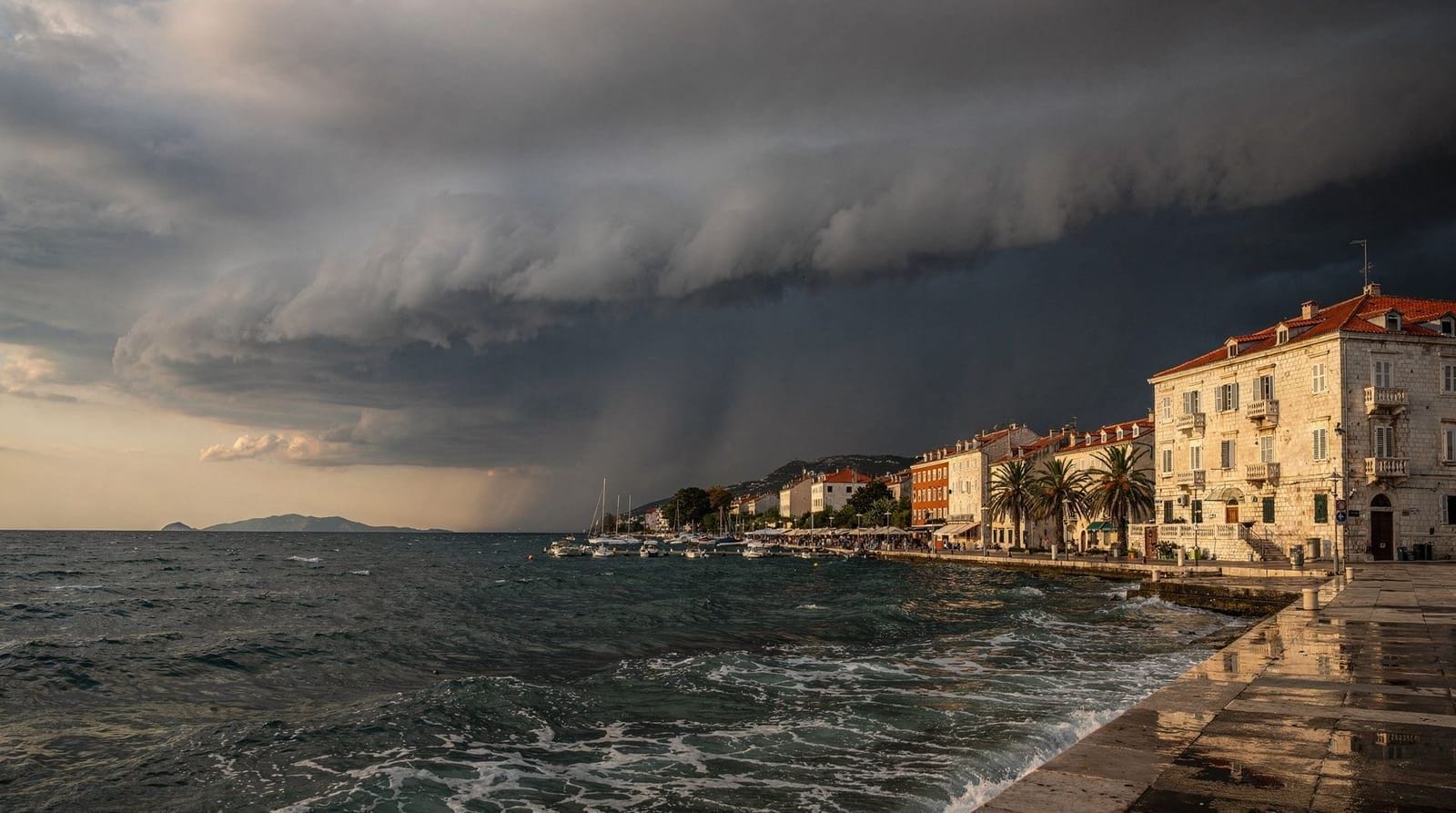
Croatia Off-Season: 7-Day Shoulder Season Itinerary
Zagreb: Plitvice Lakes full-day guided tour
The case for visiting Croatia off-season
The Croatian coast in July and August is genuinely beautiful — and genuinely exhausting. Queues at Plitvice, a Dubrovnik Old Town crowded with cruise-ship passengers at 10 am, Hvar hotel prices that rival Santorini. The same destinations in October, April or May are a different country.
This itinerary is built around the two sweet spots that Croatian insiders know: late September to mid-October (warm sea, empty beaches, Istrian truffle season beginning, full ferry schedules still running) and May (highest waterfalls at Plitvice, full greenery, warming sea, manageable crowds). It focuses on the destinations that work best outside summer: Zagreb (excellent year-round), Plitvice (best in spring and autumn), and Dalmatia (good in shoulder months, genuinely beautiful in October).
What to expect off-season: Some island businesses close from November to April. Ferry frequencies reduce significantly after mid-October. The Dalmatian sea is still swimmable through most of October (~20°C) but cooler in spring. Interior destinations — Zagreb, Plitvice, Zadar — operate year-round with minimal seasonal variation.
Budget: Off-season Croatia costs 30–50% less than peak for accommodation and tours. Hvar apartments that cost €120/night in August cost €50–60 in October. Dubrovnik’s hotels drop significantly. Total budget for this 7-day trip at mid-range: €500–750 per person (excluding flights). Our Croatia on a budget guide has more shoulder-season savings tips.
| Best months | late September–mid-October, or May |
| Bases | Zagreb (1 night), Zadar (1), Split (2) |
| Cost | around €500–750 per person, flights extra |
| Car needed | Yes, for Plitvice and inter-city driving |
| Watch for | reduced island ferry schedules after mid-October |
If you would rather do this trip entirely without a car, or want more time on the islands even off-season, see the 7-day Dalmatia itinerary — most of it still works well in late May or September, just with thinner ferry timetables. Read Croatia’s shoulder season for a month-by-month breakdown of what to expect.
Day 1: Zagreb — arrive and explore the capital
Fly into Zagreb (ZAG), which has year-round connections from most European hubs. Pick up a rental car if needed for Plitvice (the next day) or use public transport within the city.
Zagreb is one of Europe’s best cities for shoulder-season or winter travel. The café culture thrives year-round; the museums are excellent; the Christmas markets (Advent in Zagreb, consistently rated Europe’s best) run from late November through early January.
In October: the Spoj festival of music; harvest markets with autumn produce. In May: flowers everywhere, outdoor terraces in full swing. Zagreb’s Upper Town — Gornji Grad — with its Gothic cathedral, St. Mark’s tiled-roof church and the Lotrščak Tower is best explored at quiet moments.
Evening: Zagreb’s restaurant scene is significantly cheaper and more genuinely local than the coast. Dinner at Vinodol or Boban; wine at a bar in the Tkalčićeva Street area.
Where to sleep (Zagreb, 1 night): Hotel Jägerhorn, Esplanade Zagreb (classic), or boutique guesthouses in the Upper Town.
Day 2: Plitvice Lakes — best in spring and autumn
Drive from Zagreb to Plitvice Lakes (1.5 hours on the A1 then slower roads). This is where off-season travel pays its biggest dividends.
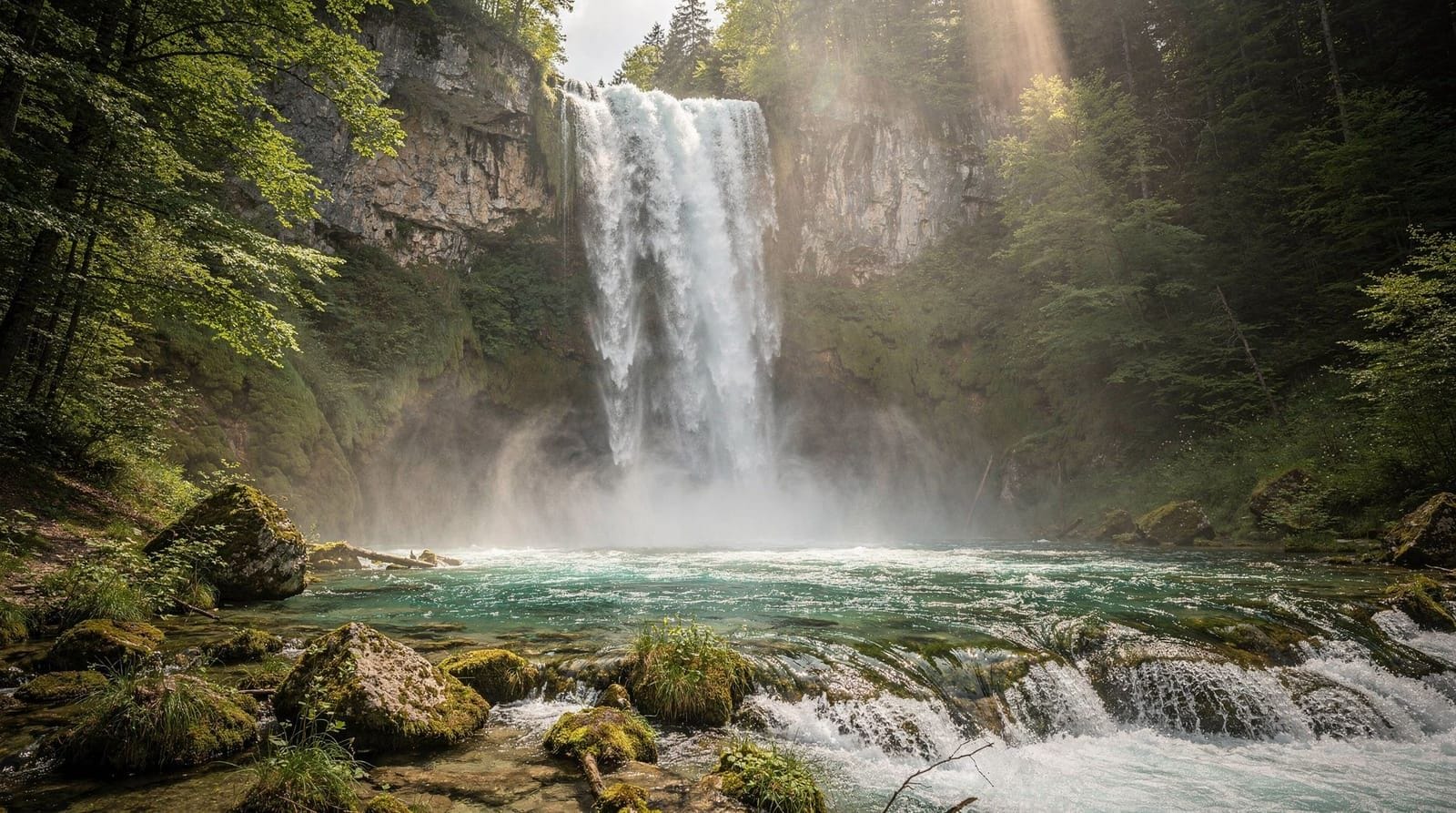
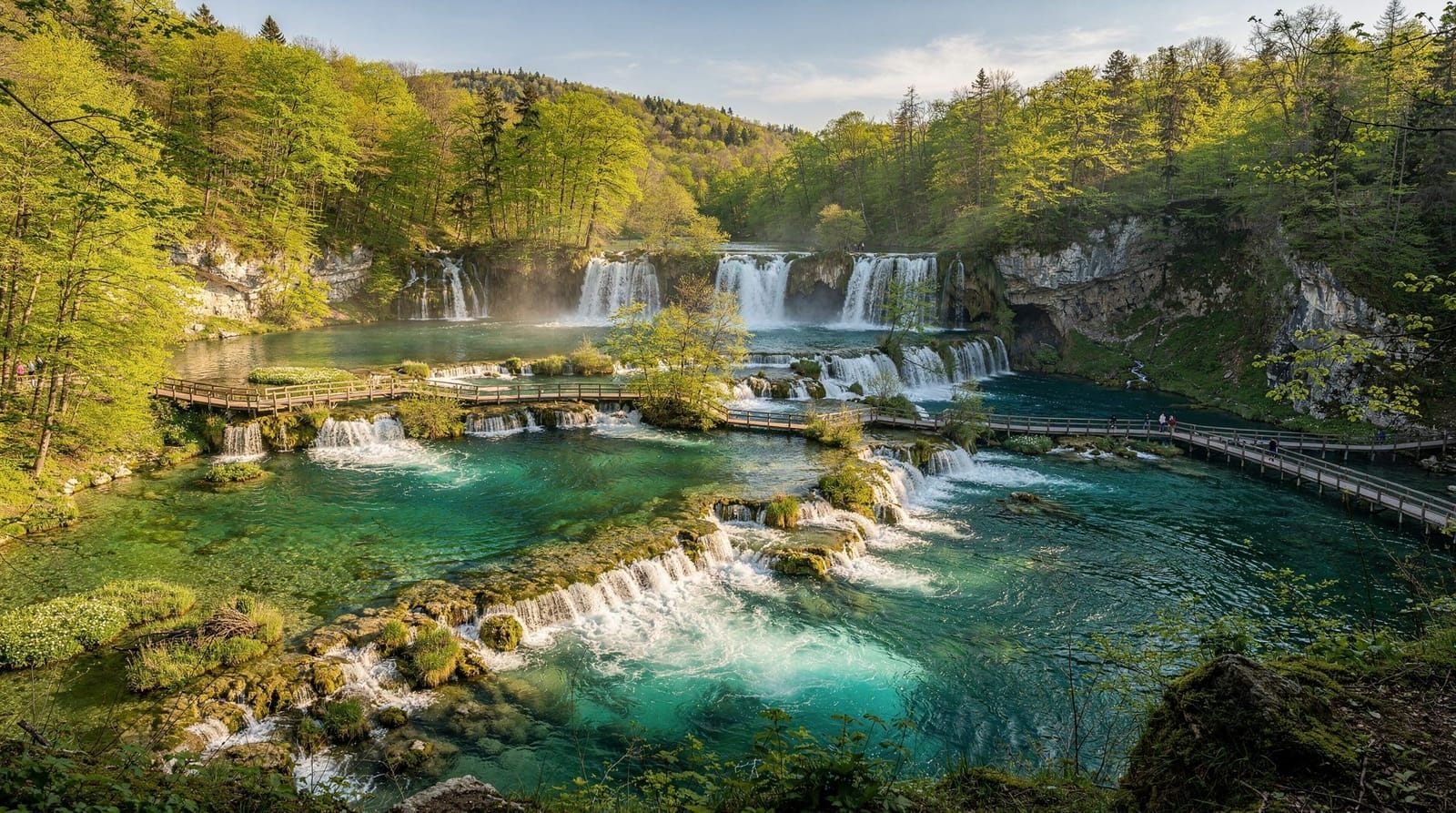
In autumn (October): The beech and maple trees around the lakes turn vivid orange and red; the golden light reflects in the turquoise water. Waterfall volumes are still good. Visitors are a fraction of summer numbers; the wooden boardwalks are almost empty in early morning.
In spring (May): The snowmelt from the Lika mountains reaches the lakes by April–May, producing the highest waterfall volumes of the year. The vegetation is at its greenest; migratory birds are passing through.
In either season, arrive by 09:00 and do the Lower Lakes first (maximum waterfalls, most dramatic). The boat across Kozjak and the Upper Lakes trail fills the rest of the morning. Exit by 12:00–13:00 if driving to the coast the same day.
Drive from Plitvice to Zadar (130 km, 1.5 hours). Arrive by late afternoon.
Plitvice entry: Off-season tickets cost €10–20 (significantly less than the €25–40 peak summer price). No advance booking needed outside summer.
Day 3: Zadar — Roman city and Sea Organ
Zadar in shoulder season is excellent. The crowds are manageable, the cafés open year-round, and the light on the limestone old town is particularly beautiful in October and May.
The Sea Organ on the western waterfront — where wave action produces music through the stone — is even more atmospheric off-season: fewer people, cleaner sound, and a more contemplative experience than the packed summer evenings.
Walk the entire old town peninsula: the Forum and Church of St. Donatus in the morning; the Sea Organ and Greeting to the Sun installation at dusk. The Archaeological Museum is underrated and very good.
Drive to Split in the afternoon (160 km, 1.5–2 hours).
Where to sleep (Zadar, 1 night): Off-season Zadar is very affordable — hotels drop 40–50% from peak prices. Hotel Bastion, Almayer Art Hotel, or seafront apartments.
Day 4: Split — Diocletian’s Palace without the crush
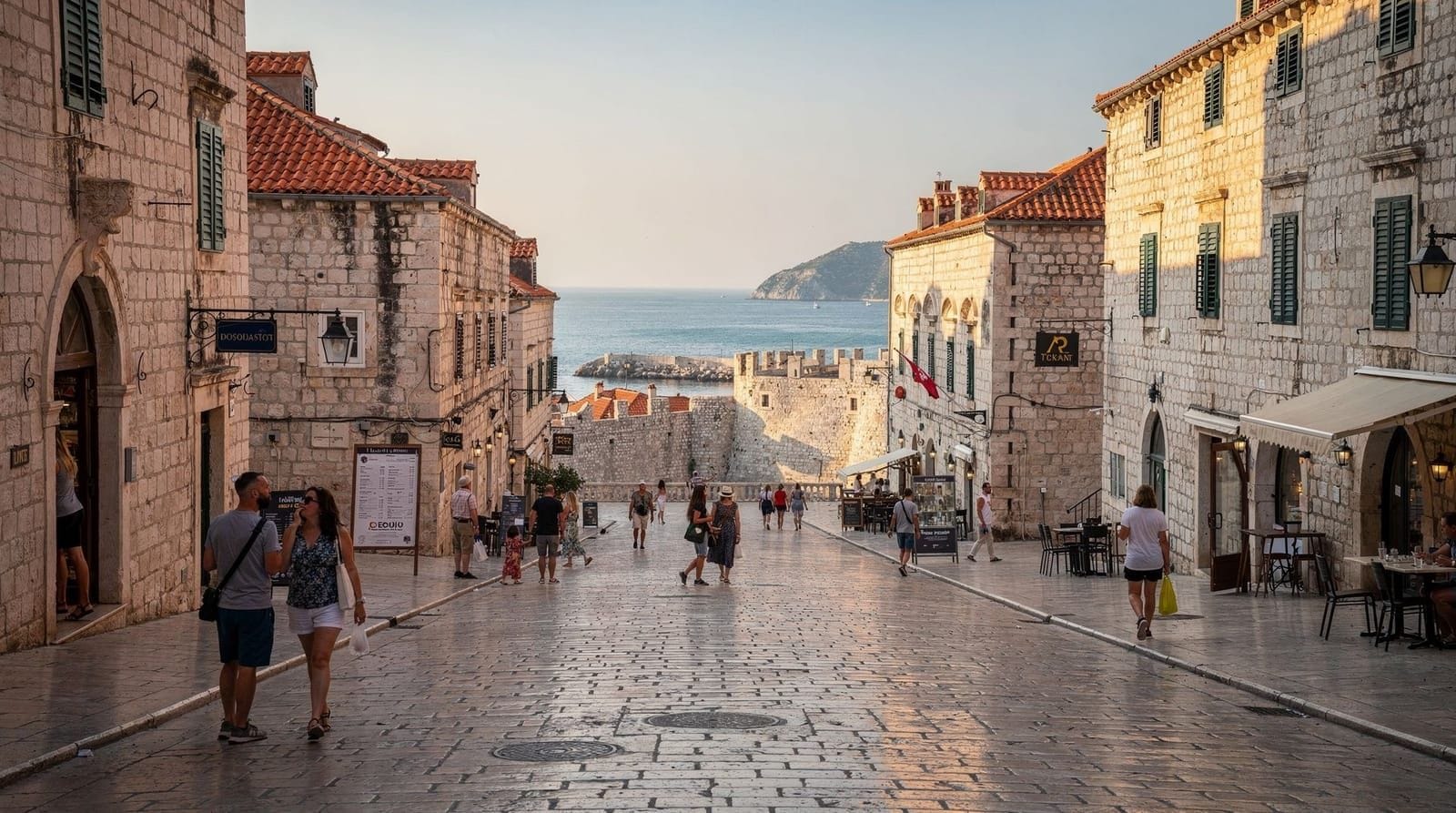
Split in October or May is a revelation. The palace is still the palace — the Roman cellars, the Peristyle, the Cathedral of St. Domnius — but you can move through it without jostling. The Riva promenade has its local life back: fishing boats at dawn, old men playing chess in the afternoon, locals having coffee rather than tourists having selfies.
In October: the adjacent Bacvice beach area retains some swimmers through mid-month (sea ~20°C). The restaurants thin slightly but the ones that remain are often the best.
In May: Bačvice is coming back to life; the Split summer programme is just beginning; prices are at their lowest before the peak surge.
Walk Marjan Hill park in the afternoon for the best views of the islands from the mainland.
Where to sleep (Split, 2 nights): Off-season Split is 30–40% cheaper. Apartments inside the palace walls are available without the August premium. Hotel Peristil drops significantly in shoulder season.
Day 5: Krka National Park — waterfalls without crowds
Krka National Park is 75 km north of Split. In October: the park is at near-empty capacity, the autumn light filters through the waterfalls and forest, and the Skradinski Buk sequence is breathtaking. In May: high water from snowmelt, full spring greenery, and almost empty in early morning.
If driving yourself, park at the Skradin village entrance (the most scenic route into the park by boat) or the Lozovac entrance (quicker, direct boardwalk access). The boat from Skradin up the Krka River to the waterfalls is a highlight; this is included in the park entry.
After Krka, drive the 30 km north to Šibenik for the Cathedral of St. James — a UNESCO-listed Renaissance cathedral whose head frieze is a remarkable 15th-century portrait gallery of Šibenik’s citizens.
Day 6: Trogir and Split coast
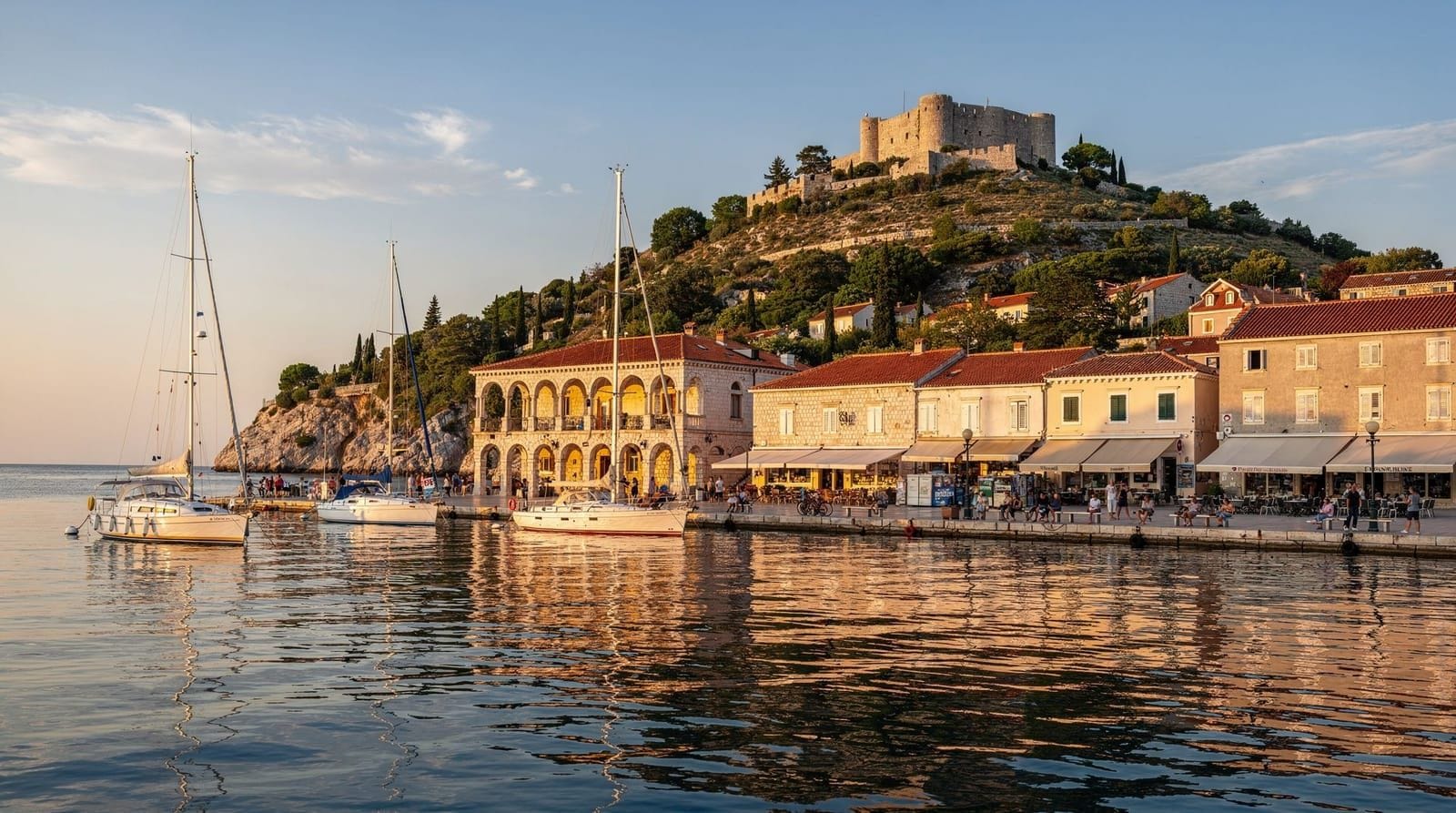
Trogir (30 km from Split) is one of Croatia’s most complete medieval towns — entirely car-free, UNESCO-listed, and genuinely beautiful. In off-season, you can walk the alleys and the Cathedral of St. Lawrence in near-solitude.
The Romanesque portal of the Cathedral — carved by the Master Radovan in 1240 — is the finest medieval carving in Croatia and deserves 30 minutes of careful attention. The town takes 1.5–2 hours total.
Return to Split for a final afternoon and last dinner.
In October: try the season’s new Plavac Mali wines if you visit a wine bar (the harvest is October–November); fresh peka dishes (lamb or octopus slow-cooked under a bell); and fresh truffles if you can find a restaurant offering them (Istrian truffle season begins in September).
Day 7: Depart Split
Morning coffee on the Riva; a last walk through the palace. Transfer to Split Airport (SPU, 25 km west, 30–40 minutes). Or — if the schedule allows — take the bus to Trogir for a final hour in the medieval town before your flight.
Off-season flight note: Split Airport has fewer direct connections outside summer. Check your routing carefully — you may need Zagreb as a hub, or a connection through Ljubljana, Vienna or Zagreb. Croatian Airlines and major European low-cost carriers both operate Zagreb (ZAG) year-round with good connectivity.
October versus May: which shoulder month suits this route
Both ends of shoulder season work well for this itinerary, but they favour different priorities.
| Late Sept–mid Oct | May | |
|---|---|---|
| Plitvice waterfalls | Good volume, best light (autumn colour) | Highest volume of the year (snowmelt) |
| Sea temperature | ~20°C, swimmable | Cooler, warming through the month |
| Ferry schedules | Reducing after mid-October | Building toward full summer schedule |
| Crowds | Low, dropping further into October | Low, rising toward June |
| Food/wine bonus | Truffle season begins, wine harvest | Peak greenery, fresh produce |
If swimming matters more to you, lean toward late September and the first half of October. If seeing Plitvice and Krka at their most dramatic matters more, May has the edge. Either way, this itinerary’s structure — Zagreb, Plitvice, Zadar, Split, Krka, Trogir — works without modification.
Extending this trip into winter
If your dates fall in November–March rather than the true shoulder months, this itinerary still mostly works for its interior destinations (Zagreb, Zadar, Split), but expect further reductions: many island guesthouses and boat tours close entirely, and Plitvice and Krka run on shorter winter hours. Croatia in winter covers what stays open and what to skip. Zagreb in December is a genuine highlight in its own right thanks to the Advent market, consistently rated one of Europe’s best — worth building a short trip around on its own rather than folding into this coastal route.
Split to Krka waterfalls and Primošten day tourFor Day 5, this Krka and Primošten combination is a good option if you would rather join a small group than self-drive — it also stops in Šibenik on the way back, saving a separate detour.
FAQ
Is Croatia worth visiting outside summer? Yes, and for many travellers it is genuinely better — lower prices, manageable crowds at Plitvice and in the old towns, and (in October) a sea still warm enough to swim in. The trade-off is reduced ferry schedules and closed island businesses, which this itinerary is built to work around.
Which is better for this itinerary, September/October or May? Both work well. October edges it for swimming and autumn colour at Plitvice; May edges it for waterfall volume and spring greenery. Neither requires changing the route described above.
Off-season Croatia: what is open and what closes
Year-round: Zagreb, Zadar, Split, Trogir, Šibenik, Plitvice Lakes, Krka National Park (reduced winter hours). All major hotels in these cities. Museums, restaurants, public transport.
Open April–October: Most Dalmatian island businesses. Jadrolinija ferry schedules on full summer operation.
Reduced or closed November–March: Many island guesthouses and restaurants. Most boat tour operators. Hvar’s nightlife scene. Some national park visitor centres.
Always seasonal: Hvar Town’s restaurant and hotel scene genuinely winds down October–April. Vis is very quiet off-season. Korčula has a small year-round population and some restaurants stay open.
Top experiences
Bookable activities with verified prices and instant confirmation on GetYourGuide.