How to Eat at a Konoba in Croatia (and What to Order)
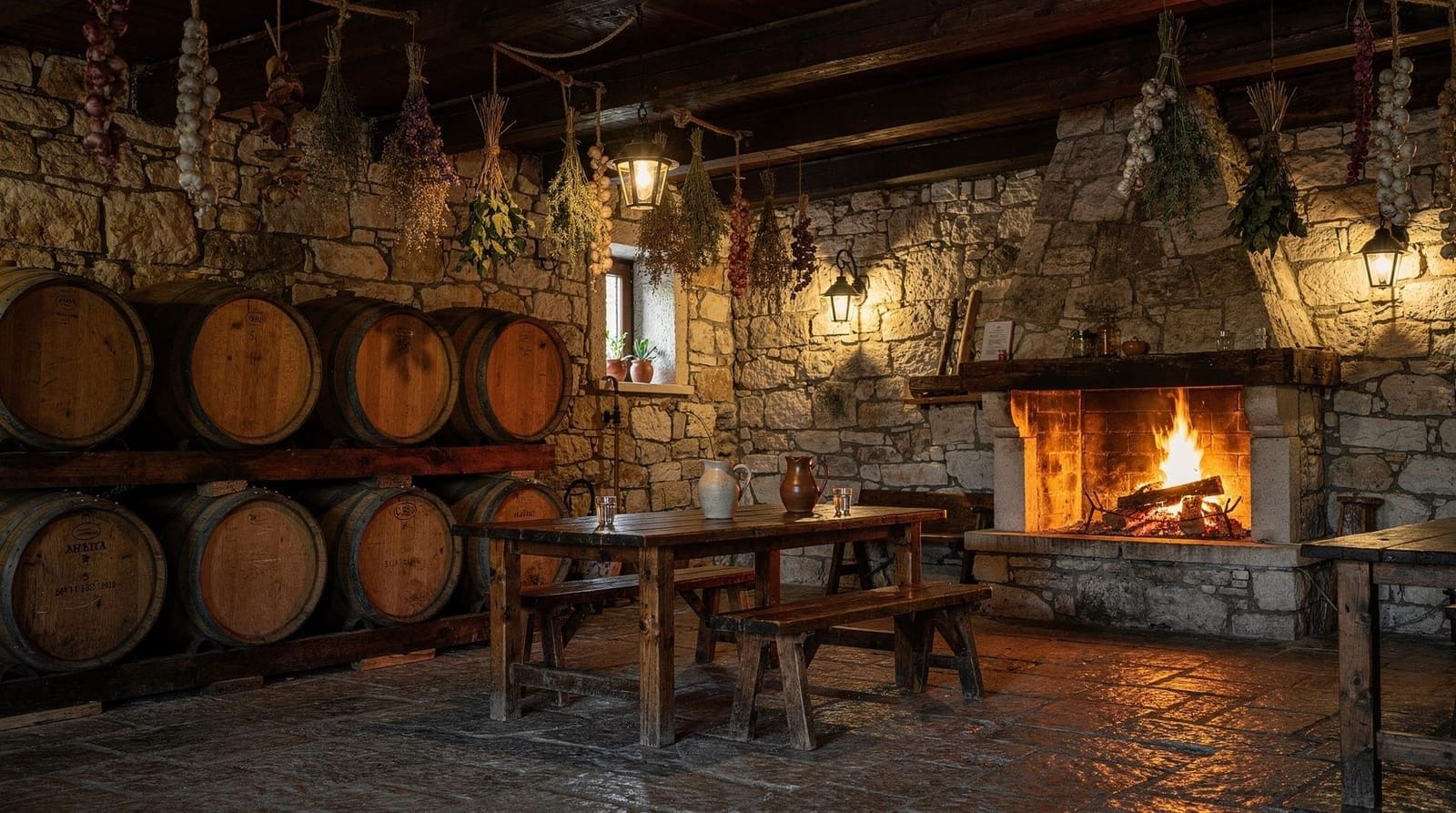
The word konoba originally meant a cellar or storage room. Over centuries, it evolved into something more specific: a family-run tavern, usually modest in appearance, where the kitchen is in the hands of one or two people who grew up cooking the food they serve. In the Croatian coastal tradition, a konoba is where you eat grilled fish chosen from a refrigerated display, drink local wine from an unlabelled carafe, and linger over olive oil and bread while someone’s grandmother carries the plates.
Konobas are Croatia’s best restaurants. They are also, frequently, its worst — because the word carries no legal definition and is used by everyone from genuinely excellent family kitchens to tourist-trap institutions that charge three times the appropriate price for mediocre fish. Understanding what distinguishes a real konoba from one wearing the costume is the most useful thing you can learn before eating your way through Croatia.
| What it is | Family-run tavern, short seasonal menu, grilled fish or peka |
| Typical cost | Around EUR 60–100 for two in Dalmatia; add ~30% in Hvar/Dubrovnik |
| Must pre-book | Peka (order at least a few hours ahead) |
| Best regions | Dalmatian coast, Istria, Kvarner |
| When to avoid crowds | Shoulder season, one street back from the main promenade |
What Makes a Konoba
A real konoba has a few consistent characteristics:
The menu is short and seasonal. Three or four starters, eight to twelve main courses, dessert is maybe two options. The menu exists because it reflects what’s available, not because it was designed to appear rustic. If the fish section lists 15 different species, something is off.
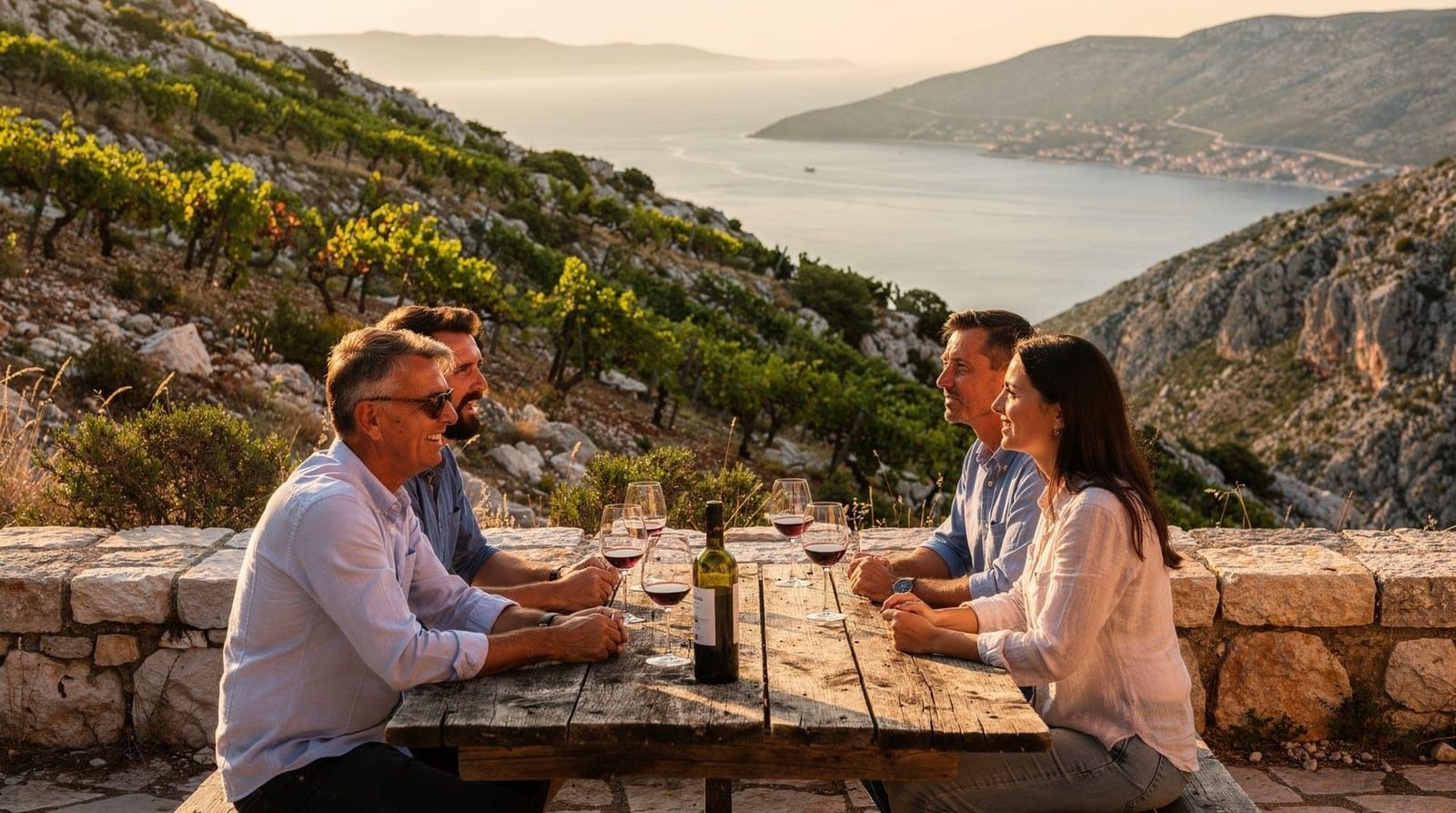
The wine list is local, possibly unlabelled. A konoba in Dalmatia will have wine from Pelješac or the nearest wine-producing region. A konoba in Istria will have Malvazija and a local red. An unlabelled carafe of house wine in a genuine konoba is often surprisingly good and consistently cheap.
The location is either very easy to find or very difficult. The great konobas divide into two categories: those on a working harbour (fishermen bring the catch to the door; the restaurant has been there since 1968) and those up a dirt track in a village that requires asking directions twice. Tourist-facing konobas on main promenades are more likely to have inflated prices and inconsistent quality.
Someone in the kitchen owns the place. This is impossible to verify from the outside but becomes apparent in the food.
What to Order
Starters
Pršut — Dalmatian air-dried ham, similar to Italian prosciutto but with a slightly different cure and texture. The Dalmatian varieties from the Zagora (inland) region and the Pelješac Peninsula are the most respected. Served sliced thin with local cheese (paški sir from the island of Pag is the most famous; sheep’s milk, hard and sharp).
Brudet — A fish stew, slow-cooked with tomato, onion and vinegar, served with polenta. Every coastal region makes it differently. The Dalmatian versions tend to be simpler and more fish-forward than the Kvarner variants. When brudet appears on a menu, it usually means someone has been at the stove since morning.
Grilled vegetables — Zucchini, eggplant, peppers, dressed with olive oil. In Istria, this is elevated by the quality of the local olive oil, which can be exceptional.
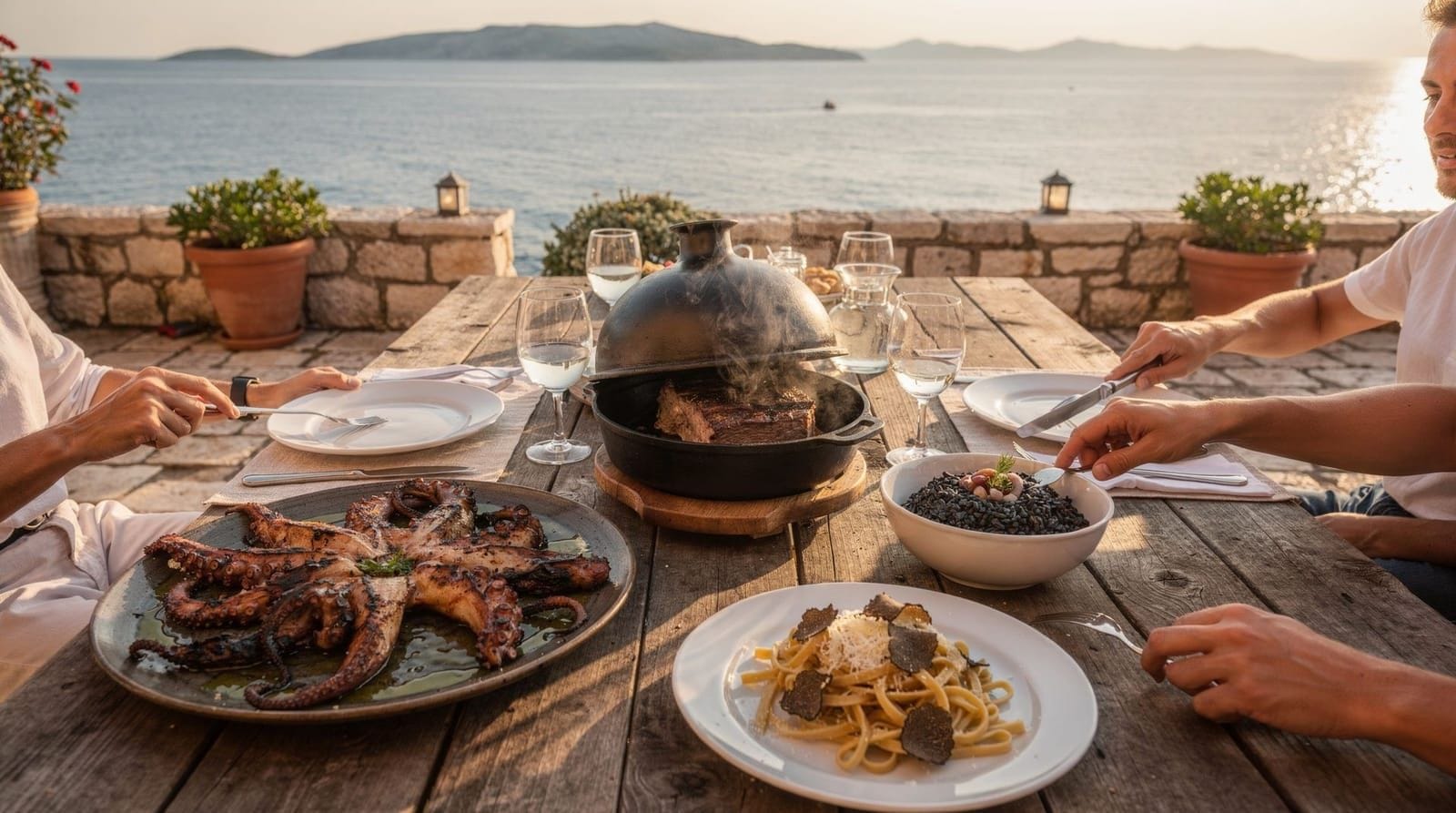
Black risotto (crni rižot) — Made with cuttlefish and its ink. The appearance is alarming if you haven’t encountered it; the taste is deep, briny and savoury. One of the most characteristic dishes of the Dalmatian coast and rarely found this well elsewhere.
Mains
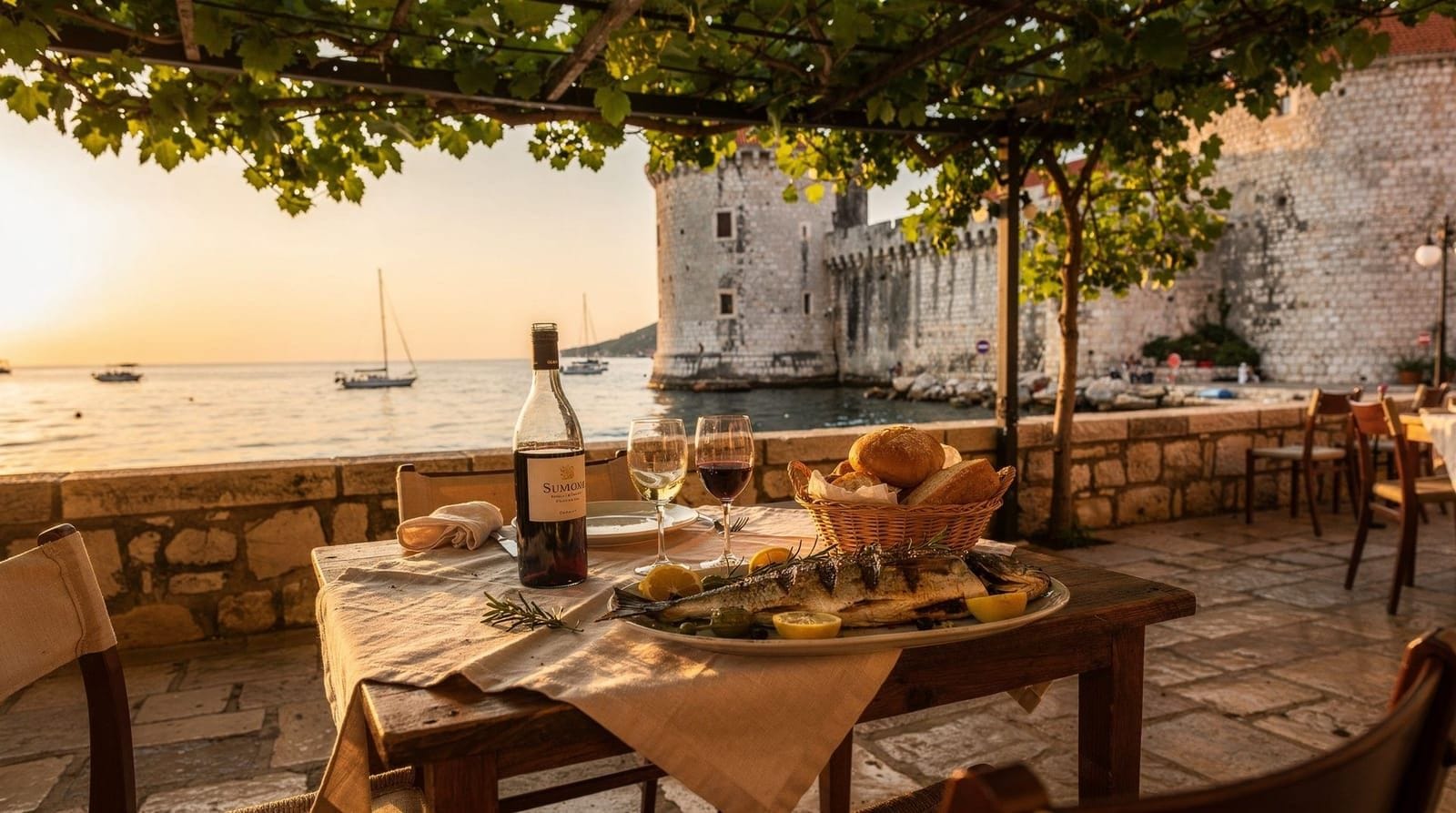
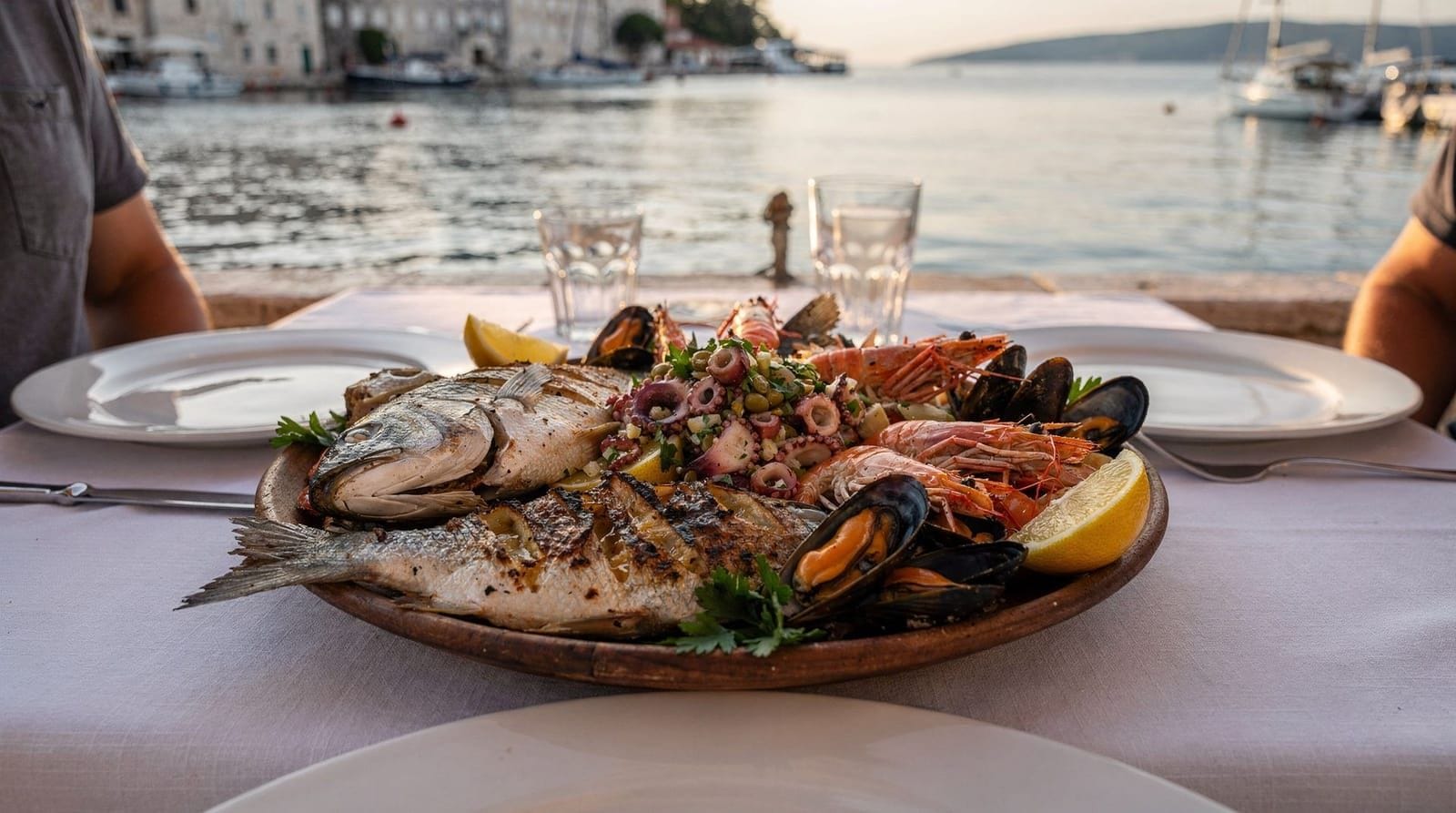
Grilled fish by the kilogram — This is the central transaction of a Dalmatian konoba. You approach the refrigerated display (or the fisherman’s box), choose a whole fish — sea bass (brancin), sea bream (orada), dentex (zubatac), or whatever arrived that morning — and have it weighed. You pay by the kilogram. A reasonable price for fresh brancin in 2026 runs EUR 30–50 per kilogram, with a typical fish for one person weighing 300–500 grams.
The fish is grilled over embers or charcoal, dressed with olive oil and sometimes rosemary, and served with blitva (Swiss chard sautéed with garlic and olive oil) and roasted potatoes. This combination is found in every konoba from Umag to Dubrovnik and is executed with or without imagination — the quality of the fish is the variable.
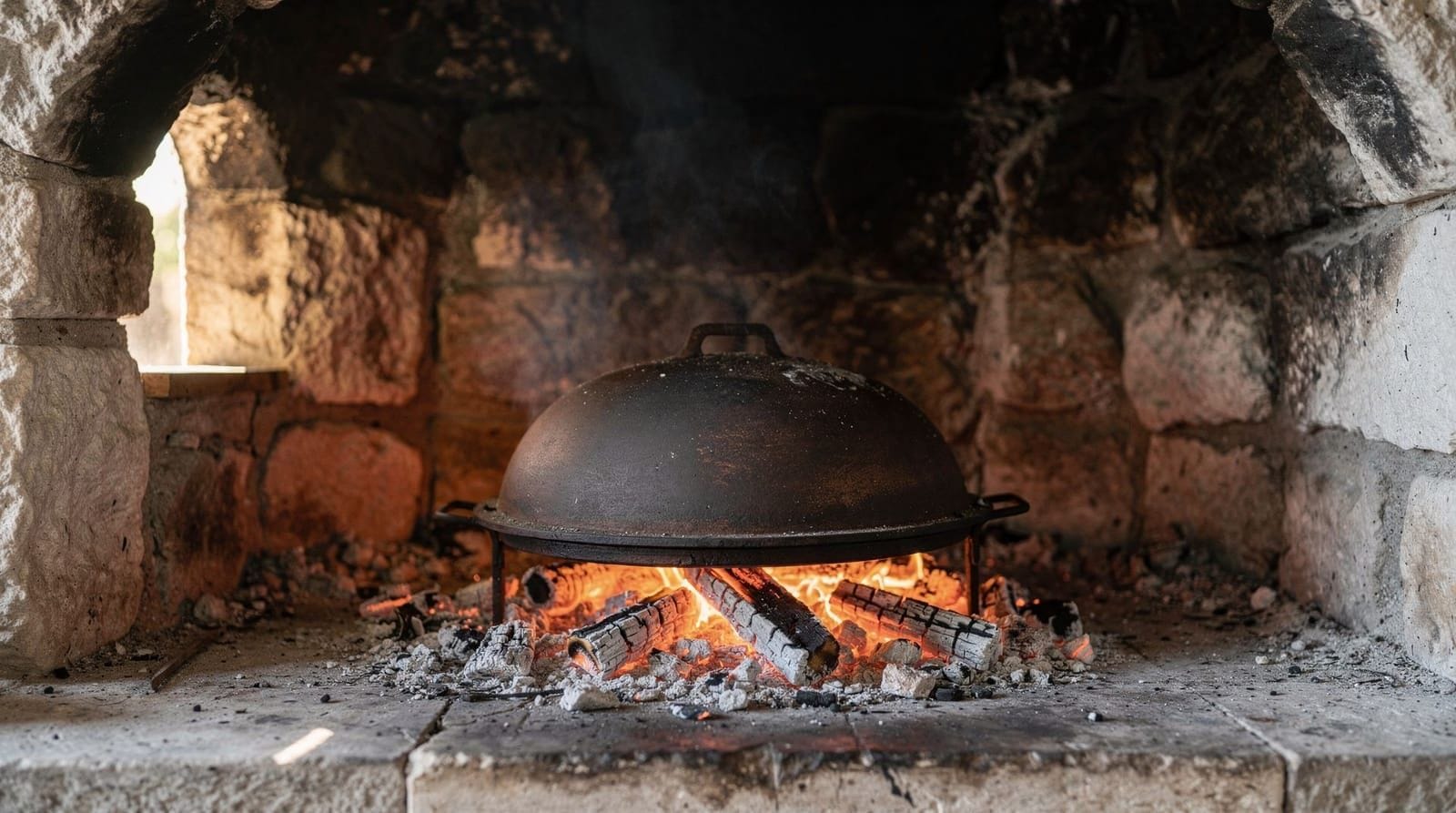
Peka — The most beloved slow-cook of the Dalmatian tradition. Lamb or octopus (or sometimes veal) is placed in a baking dish with potatoes and vegetables, covered with a bell-shaped iron lid (the peka), and buried under embers for two to three hours. The result is extremely tender meat in its own juices with vegetables that have absorbed everything around them.
The critical thing to know: peka must be ordered in advance, typically a day ahead or at minimum a few hours before the meal. It cannot be prepared quickly. Konobas that serve good peka will ask when you book; if you walk in and order peka, you will be told it’s not available. Plan accordingly. See our peka guide for the full story.
Octopus salad (hobotnica ispod peke) — Cold octopus salad, dressed simply with olive oil, parsley, garlic and lemon. A reliable starter or light main that appears in most coastal konobas and varies considerably in execution depending on how long the octopus was cooked.
Oysters and Shellfish
If you’re anywhere near Ston on the Pelješac Peninsula or the Limski kanal near Rovinj, order oysters. These are two of the Adriatic’s premium shellfish farming areas, and the konobas surrounding them serve oysters from the water in front of the building. The protocol is simple: lemon, a splash of local white wine, and not much else.
Mussels (dagnje) are farmed throughout Dalmatia and served steamed in white wine. They appear on nearly every konoba menu and are consistently cheap and good.
Istrian Specifics
Istria has a more Italian-influenced food culture than Dalmatia, and the konoba tradition here overlaps with the osteria tradition of Trieste and Friuli. Truffle dishes appear everywhere in season — on pasta, on eggs, shaved over risotto. The Istrian pasta (fuzi or pljukanci) is handmade and serves as the base for the region’s meat ragù and truffle preparations.
Olive oil in Istria deserves particular attention. The region’s producers now regularly win international competitions, and a good Istrian konoba will serve estate oil that’s distinct from the generic Croatian coast version. Ask about it.
For a hands-on truffle experience: a truffle hunting and cooking experience in Istria takes you through the forest in the morning and into the kitchen in the afternoon — a good way to understand the ingredient before eating it in restaurants.
What to Drink
A konoba’s wine list is one of the best signals of authenticity, and it is worth ordering deliberately rather than defaulting to the cheapest bottle. In Dalmatia, ask for Plavac Mali — the flagship red grown on the Pelješac Peninsula, with Dingač and Postup as the two most respected sub-appellations — or Pošip, a crisp white from Korčula that pairs well with grilled fish. In Istria, Malvazija is the default white, light and slightly saline, and Teran is the local red, more tannic and food-friendly than it first appears. Rakija (fruit brandy) typically arrives unbidden as a welcome or closing shot; it is polite to accept a small one even if you do not finish it. Our Croatian wine guide and the Istrian Malvazija guide go deeper into producers and regions if wine is a trip priority rather than an afterthought.
Konoba Etiquette Worth Knowing
Reservations matter more in peak season than the relaxed atmosphere suggests — the best konobas, especially small ones with eight or ten tables, fill up by 7pm in July and August. Calling ahead (or having your accommodation call) is worth the effort, especially if you want peka. Portions are generous by design; sharing starters between two or three people is normal and expected, not a faux pas. Service can feel slow by northern-European standards, but this usually reflects a kitchen cooking to order rather than reheating from a warming tray — a good sign, not a bad one. Cash is still preferred in some rural konobas, particularly inland ones away from tourist card-payment infrastructure, so carrying some euros is sensible even though most coastal establishments now take cards without issue.
How to Find a Good One
Ask the hotel breakfast staff, not the concierge. The concierge recommends partners. The person who brings your eggs eats out in the neighbourhood and usually has a direct opinion.
Look for locals, not just tourists. Presence of Croatian tables doesn’t guarantee quality, but absence of any is a warning sign in a non-peak month. In July and August, tourist volume makes this signal unreliable everywhere.
Cross-reference Google Maps reviews with TripAdvisor. This sounds obvious, but the overlap between highly-rated places on both platforms in Croatia is actually a reliable quality indicator — restaurants that game one platform rarely dominate both.
Check the fish display. In a serious fish konoba, the catch is fresh and clearly just that day’s haul. Cloudy eyes on a fish, or a display that looks like it hasn’t changed since yesterday, are signs to move on.
Avoid the main tourist promenades in July. This is where the highest prices and most inconsistent quality converge. One street back from the Riva in Split, one block off the Stradun in Dubrovnik — the prices drop noticeably and the quality often improves.
Regional Character
Dalmatia (Split coast, islands, Dubrovnik area): The classic grilled-fish konoba tradition. Emphasis on freshness and simplicity. Wine from the nearest vineyard. Peka on advance order. Prices in tourist towns run 20–30% higher than in non-touristed villages for comparable quality.
Istria: More menu variety, truffle dishes prominent in season (October–January for white truffles), pasta more prominent than in Dalmatia, excellent olive oil. The most sophisticated food culture in Croatia. Read our deep-dive on Istrian truffles for context.
Kvarner (Rijeka, Opatija, Krk, Lošinj): A mix of Austrian-influence (Opatija) and the local shellfish tradition of the Kvarner Bay. Skampi (scampi from the Kvarner Gulf) are the flagship ingredient — smaller and sweeter than Atlantic prawns, typically served sautéed in garlic and olive oil or grilled.
Slavonia (inland, Osijek area): A completely different tradition — pork-based, paprika-forward, fish stew (fiš paprikaš) from the Drava and Sava rivers. The konoba tradition here is less defined, but the food is hearty and cheap compared to coastal equivalents.
The Bill
Croatian konobas price fish by the kilogram and charge separately for sides (bread, blitva, potatoes — expect EUR 3–5 each). Couverts (bread and olive oil arrival charge) are common in tourist areas, legally required to appear on the menu. The fish bill can be the largest surprise if you’ve only looked at the starter and main prices.
A full dinner for two at a decent konoba — brudet or fish starter, two grilled fish mains with sides, a litre of house wine — typically runs EUR 60–100 in Dalmatia, less in less-touristed areas. Dubrovnik and Hvar Town add roughly 30% to these estimates. A tasting menu at one of Istria’s more serious restaurants might reach EUR 80–120 per person.
Tipping is appreciated but not mandatory. A round-up of 10% is standard; leaving nothing is not unusual and not considered rude.
For a structured introduction to Croatian food culture in Zagreb, the food tour format works well — particularly if you arrive in Zagreb before heading to the coast. A guided food tour of Zagreb’s markets and neighbourhoods covers the full range of Croatian food tradition, from pastry shops to the Dolac market, in a few hours. For the full food landscape, see our Croatian food guide and the specific Dalmatian cuisine guide. If seafood specifically is the focus of your trip, the Croatian seafood guide covers species and preparation in more depth than this roundup can.
Regional price comparison
| Region | Typical dinner for two | Signature dish | Reservation needed? |
|---|---|---|---|
| Dalmatia (village) | Around EUR 50–80 | Grilled fish, peka | Recommended in peak season |
| Dalmatia (Hvar/Dubrovnik) | Around EUR 80–130 | Grilled fish, brudet | Yes, especially July–August |
| Istria | Around EUR 70–110 | Truffle pasta, Teran wine | Recommended for known spots |
| Kvarner | Around EUR 60–90 | Škampi, shellfish | Advisable in summer |
| Slavonia (inland) | Around EUR 35–55 | Fiš paprikaš, pork dishes | Rarely necessary |
The konoba is not a performance. It is, at its best, just lunch — prepared carefully by people who have been doing it this way for a long time. That’s the thing to look for.