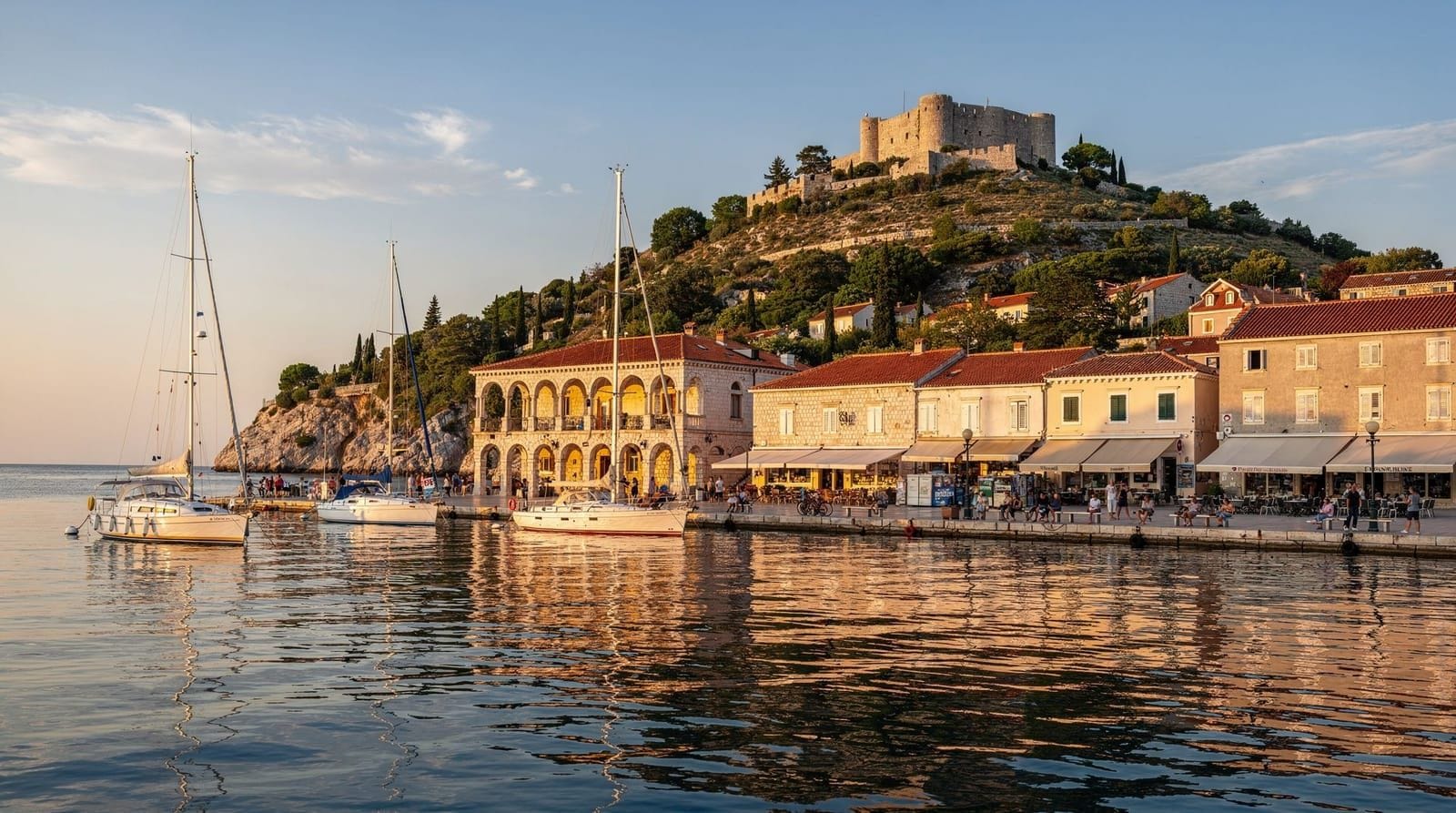
Romantic Croatia: The Best Destinations and Experiences for Couples
Croatia’s appeal to couples rests on a geography that arranges most of the best possible elements in close proximity: wine-producing peninsulas, forested islands, Venetian old towns, clear water and a food culture centred on slow meals. The infrastructure is good enough to make logistics easy without being so polished that it erases the sense of discovery. And the shoulder season — May through June, September through October — delivers all of this without the August crowds that undermine the atmosphere considerably.
This isn’t a list of “romantic” restaurants with candles in dark corners. It’s a map of the places and experiences in Croatia where being two people rather than one makes the specific thing you’re doing significantly better.
| Best single evening | Rovinj harbour at golden hour |
| Best island for polish | Hvar |
| Best island for quiet | Vis or Mljet |
| Best for wine + food | Korčula or Ston/Pelješac |
| Best time to go | May–June or September–October |
The Islands: Where to Go
Hvar
Hvar has a dual reputation that requires parsing. Hvar Town in July and August is Croatia’s party island — expensive, crowded, the yachts anchored in the harbour and the music from the harbour bars audible until 3am. That’s one thing.
The same island in May or September is substantially different. Hvar Town’s harbour is still beautiful; the hilltop fortress with its panorama of the Pakleni islands is still one of the best viewpoints in Dalmatia; the lavender fields in the interior are (depending on exact timing) in bloom; and the restaurants operating year-round are noticeably better in mood and service than their August equivalents.
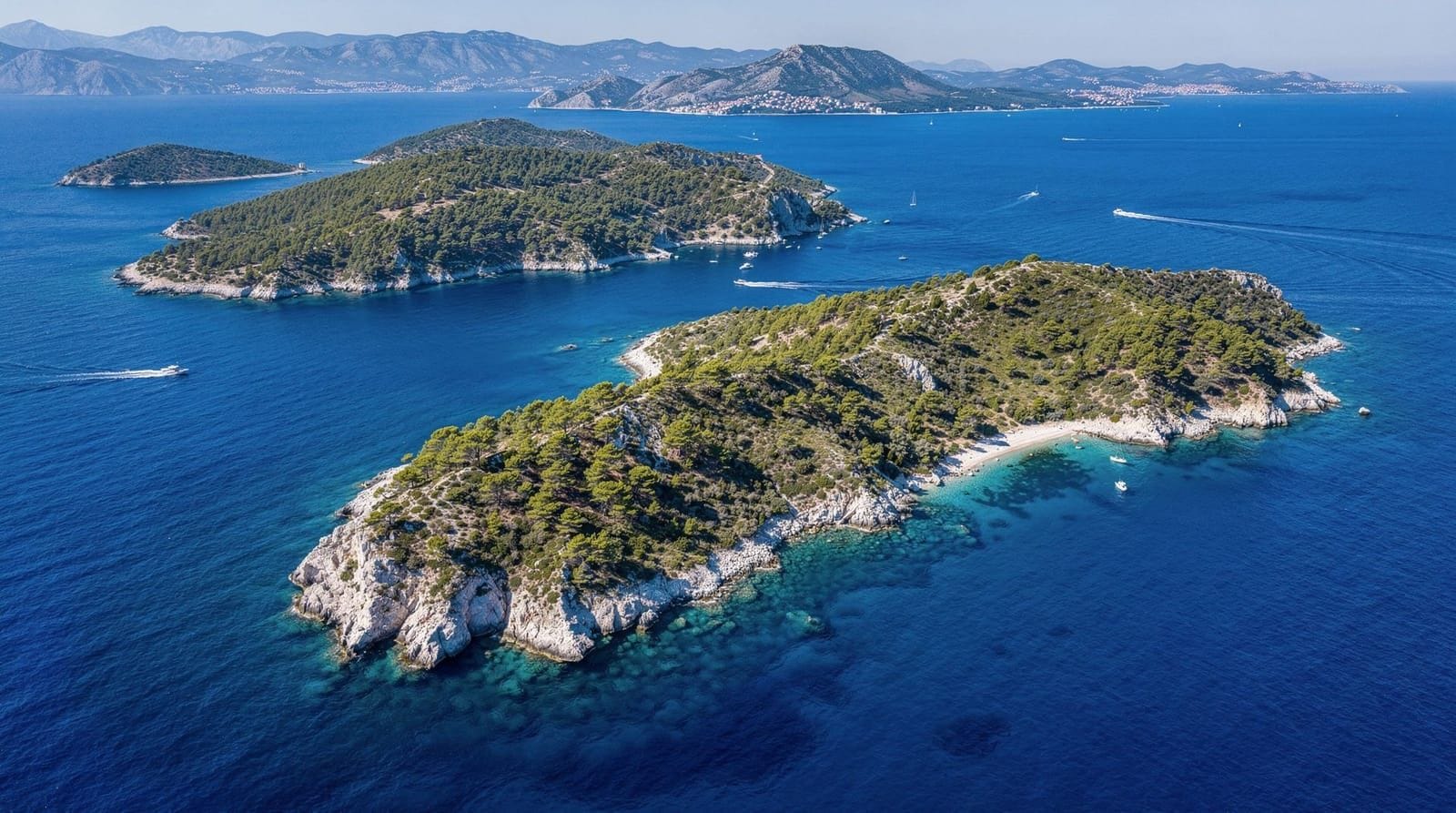
The Pakleni Islands — a chain of small forested islands visible from Hvar Town’s harbour, reachable by water taxi in 15 minutes — have private coves, pine forest and several good restaurants. Spending an afternoon on the Pakleni is essentially a private island experience without the logistical complexity.
Korčula
Korčula is often compared to Dubrovnik — the walled medieval town, the Venetian civic architecture, the stone streets. The comparison flatters Korčula by pointing out how much it delivers with a fraction of the crowd. The old town occupies a small peninsula connected to the main island by a gate; the arrangement is similar to the Elaphiti Island of Lopud, but on a larger and more inhabited scale.
The island has a strong wine identity — the Pošip white wine produced on Korčula is one of Croatia’s best. Several producers offer cellar door tastings within the island’s interior villages. A day built around driving through the island’s interior, stopping at a winery and eating lunch in a vineyard konoba, then returning to Korčula Town for the evening is a very good day.
A wine-focused guided tour to Korčula from Dubrovnik covers both the old town and the island’s wine culture in a single day — useful if you’re based in Dubrovnik and want to include Korčula without the ferry logistics.
Vis
Vis is the furthest inhabited island from the Split coast and, as a consequence, the least visited by day-trippers. An overnight stay — which requires the ferry commitment — filters out the majority of casual tourists. What you find is an island with working fishing villages, good wine (Pošip and the indigenous Vugava white), excellent food in small konobas, and a relatively unspoiled atmosphere.
The Blue Cave on the nearby island of Biševo — a sea cave lit by refracted light that turns the interior an electric blue — is accessible as a morning excursion from Komiža on Vis. It’s one of Croatia’s most photographed natural features and manages to be genuinely impressive despite the Instagram familiarity.
Mljet
Mljet is the island that Odysseus was allegedly detained on for seven years, which may be mythological marketing or genuine recognition that Mljet is unusually difficult to leave. The western part of the island is a national park, containing two saltwater lakes connected to the sea — inside one of which is a small island with a 12th-century Benedictine monastery. The lakes are warm enough to swim in; the forest surrounding them is silent.
It’s Croatia’s most tranquil island destination and one of the few where the national park setting rather than the old town is the primary draw. A two-night stay lets you kayak the lakes, cycle the park trails and eat dinner at the small restaurants on the lakeside.
The Coastal Towns
Rovinj
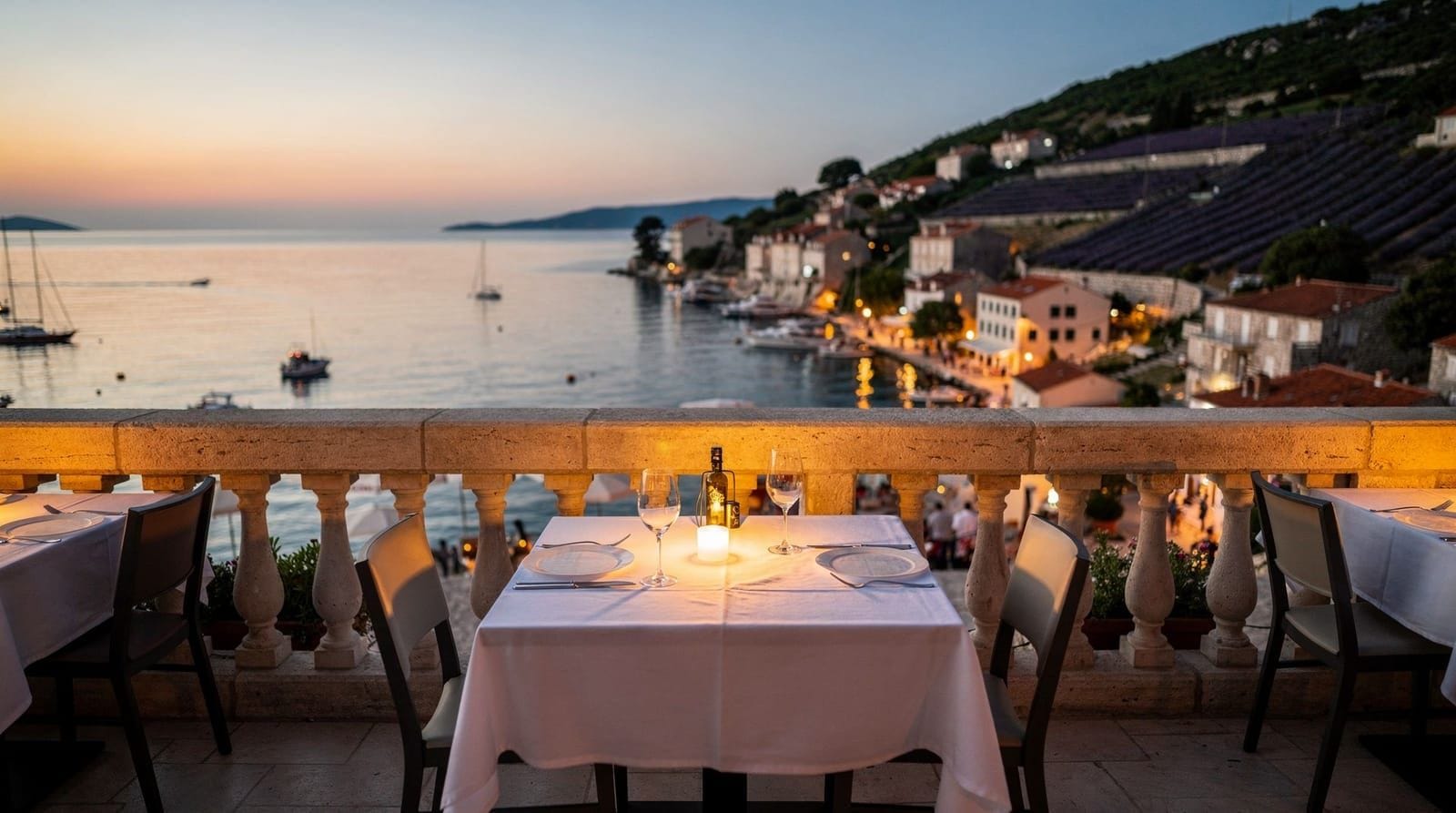
Rovinj has been drawing couples for decades, and the reason is architectural: the old town on its small peninsula with the baroque church at the summit, the harbour of coloured buildings catching the evening light, the offshore islands. It’s a place where the visual environment does the work and you simply need to be in it at the right hour.
The harbour front in the evening — dinner at one of the fish restaurants, the boats rocking on the water, the church silhouette against the late sky — is Croatia’s most reliably atmospheric evening. The quality of Istrian food (olive oil, truffle season October–November, excellent wine) adds substance to the setting.
A boat trip from Rovinj’s harbour to the Lim Fjord — a narrow drowned valley flanked by forested cliffs, with oyster farms at the waterline — is a good afternoon on the water that doesn’t require a full sailing day.
Ston and the Pelješac Peninsula
Ston is a small town on the Pelješac Peninsula with a disproportionate claim on the attention: extraordinary medieval walls, the cleanest shellfish farming water in the Adriatic, and a position at the beginning of one of Croatia’s best wine roads. Mali Ston (the smaller, adjacent village) has waterfront restaurants serving oysters from the channel in front of them with Pelješac wine.
A half-day in Ston — walking the walls, eating oysters and mussels at a table on the water, drinking local wine — is one of the more specific pleasures Croatia offers that doesn’t appear prominently enough in most itineraries.
A full-day wine tour covering Pelješac and Korčula from Dubrovnik packages the wine roads, cellar door visits and the coast into a single guided day — ideal if you don’t have a car.
Sailing
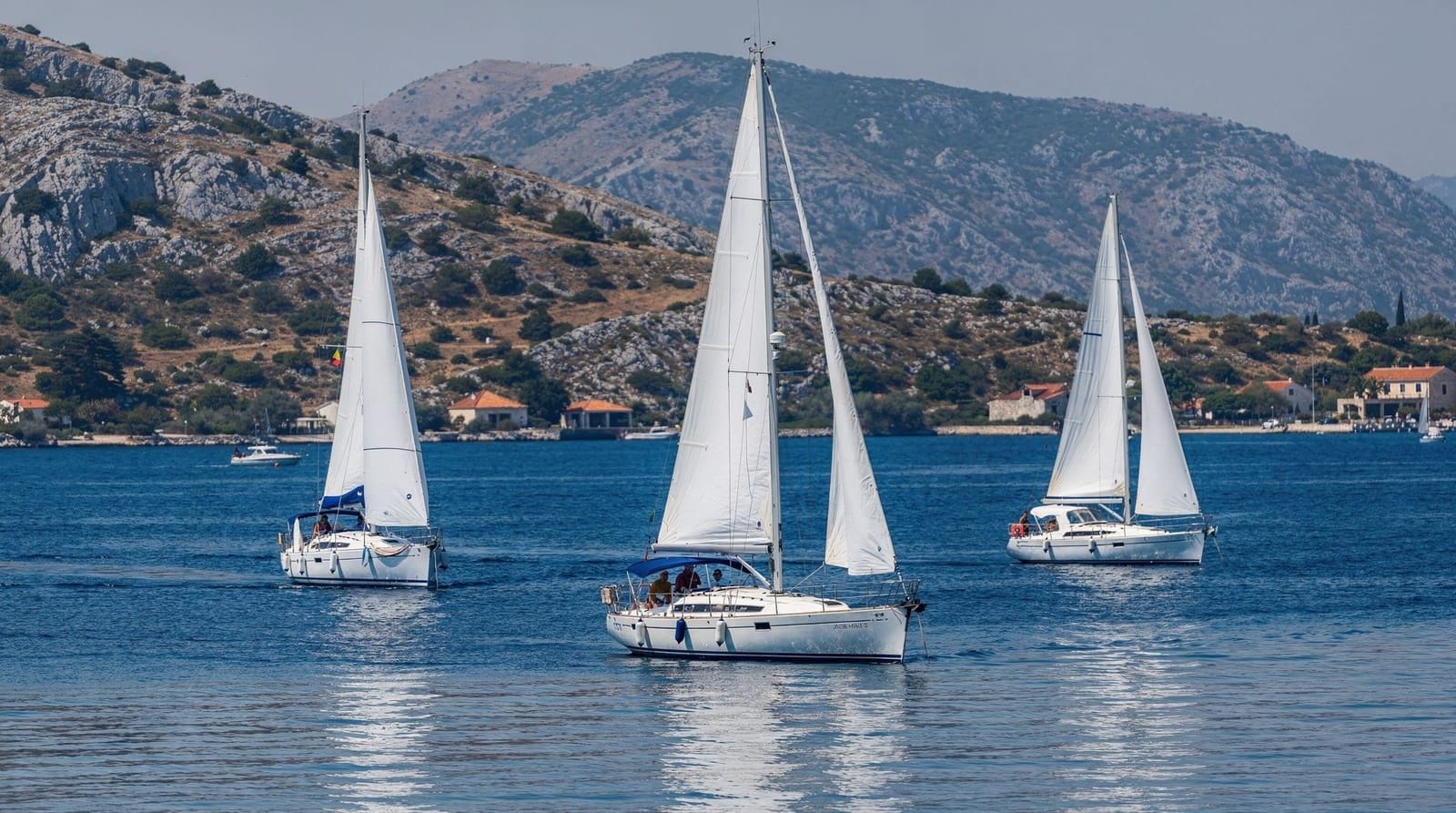
Croatia’s coastline is one of the premier sailing destinations in Europe. The combination of reliable summer winds (the maestral blows most afternoons), calm waters, numerous island anchorages and well-maintained marinas makes sailing here more accessible for non-experienced sailors than many comparable destinations.
The standard format for couples is a bareboat charter (sailing yourselves) or a skippered charter (captain handles the boat; you are passengers). Bareboat requires relevant sailing qualifications; skippered requires only the desire to be on the water.
The classic week-long route from Split covers Brač, Hvar, Vis, Korčula and back — a circuit that hits the best Dalmatian islands in a logical sequence with good wind angles throughout.
For a single-day taste of sailing without the charter commitment, half-day and full-day sailing excursions from Split are widely available. A half-day sailing tour from Split with a swim stop, snacks and wine covers the basic experience: open water, a cove for swimming, local wine on board and good coastal views for a few hours.
Our Croatia sailing guide covers the chartering process, route planning and what to look for when booking. If you are deciding between sailing yourselves and hiring a skipper, the bareboat vs skippered guide walks through the trade-offs, and the Croatia yacht charter guide covers the booking process for longer charters in more depth.
Golden Hour and the Small Moments
Some of Croatia’s most reliably romantic moments are free and require nothing more than being in the right place at the right time. Dubrovnik’s old town at golden hour — walked from Fort Lovrijenac toward the harbour as the limestone turns amber — is one of the more dependable “this is why we came” moments in the country, and our golden hour Dubrovnik guide covers exactly when and where to be for it. In Cavtat, a short bus or boat ride south of Dubrovnik, the same quality of evening light comes with a fraction of the crowds and considerably cheaper dinner prices — a good option if you want the Dubrovnik glow without the Dubrovnik premium. For a slower, walkable version of old-town romance without an island crossing, the Dubrovnik old town guide covers routes that avoid the main cruise-day crowds.
Food and Wine Experiences
Croatia’s best food is deeply suited to a slow two-person meal: grilled fish chosen from a display and priced by the kilogram, shared starters of pršut and cheese, a carafe of local wine from an unlabelled bottle. This format requires time and attention from both people and rewards it.
The wine regions that are most worth visiting specifically as a couple:
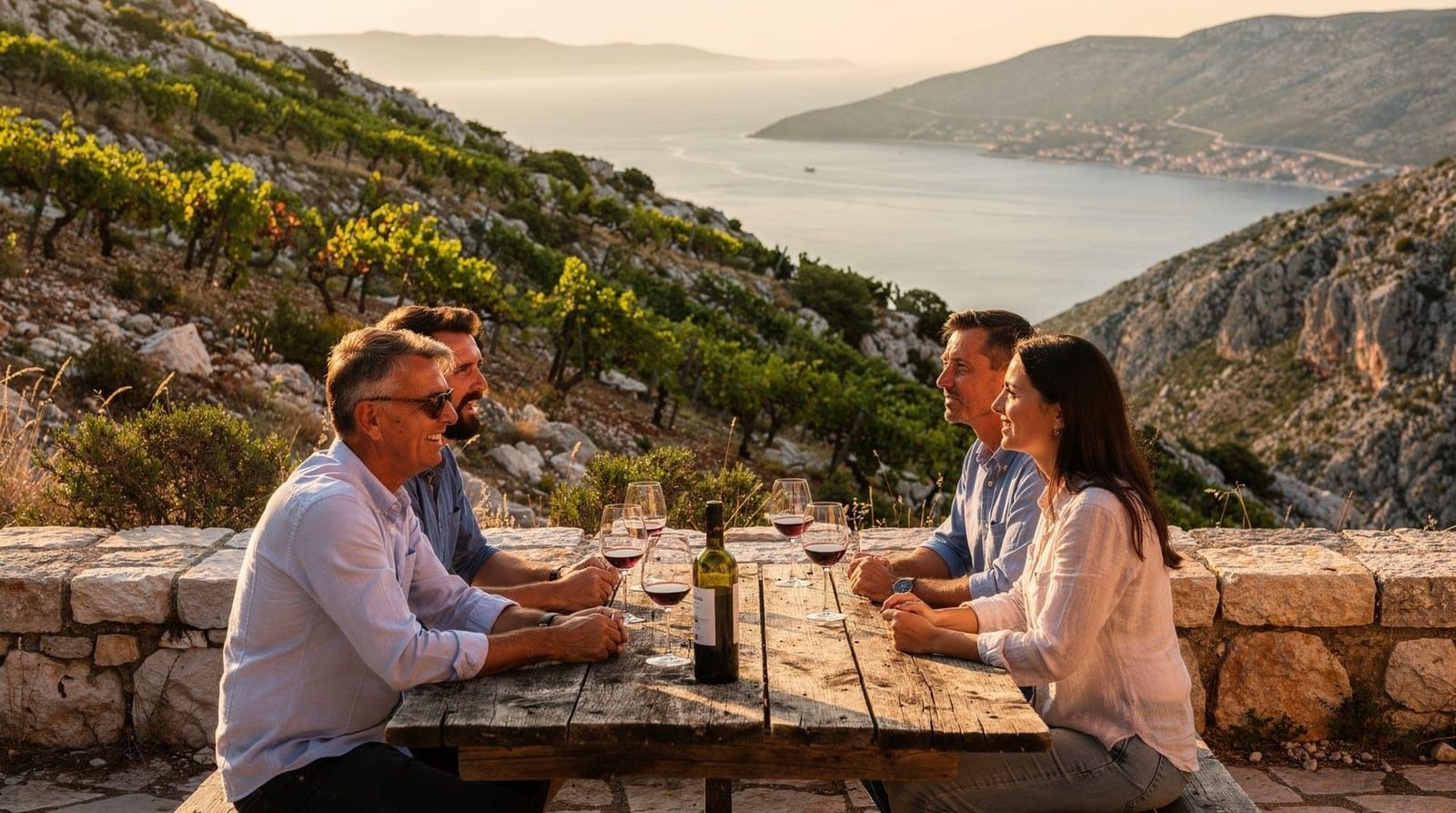
Pelješac Peninsula: Plavac Mali at its best — the Dingač and Postup appellations are among the most concentrated reds in Croatia. The vineyards grow on steep south-facing terraces above the sea; the combination of altitude and Adriatic proximity is part of what makes the grape here distinctive.
Korčula: Pošip and Grk whites — both unique to the island and rarely encountered outside Croatia. Cellar door visits in the interior villages are small-scale and personal in a way that larger wine regions rarely are.
Istria: Malvazija (a dry, mineral white) and Teran (an intense red) alongside the truffle culture. Istrian wine producers are increasingly serious and the food pairing culture is stronger here than anywhere else in Croatia.
For a structured introduction to the wine landscape, see our Croatia wine guide and the specific Pelješac wine guide. For the two flagship reds specifically, the Dingač and Postup guide explains what separates the two appellations if wine is the centrepiece of your trip.
Timing: When to Go
The answer for couples, almost without qualification, is shoulder season. May, June, September and October deliver everything Croatia does best — warm water, good food, the right light — without the crowds and inflated prices of July and August.
| Month | Sea temp | Crowds | Best for couples |
|---|---|---|---|
| May | ~20°C (Dalmatia warmer) | Low | Wildflowers, quiet old towns |
| June | ~23–24°C | Moderate, rising | Lavender in Hvar, still uncrowded |
| July–Aug | ~25–26°C | Peak | Only if dates are fixed; book everything early |
| September | ~24–25°C | Dropping fast after week 1 | The best all-round month |
| October | ~20–22°C early, cooler later | Low | Wine harvest, truffles, golden light |
July–August: the most popular months are also the hottest, most crowded and most expensive. If this is the only window available, Dubrovnik and Hvar are still worthwhile — just plan more carefully, book everything in advance, and adjust expectations for the level of solitude.
Practical Notes for Couples Travelling Croatia
Accommodation: Many of Croatia’s most characterful accommodation options are small — boutique hotels in old town buildings, private apartments in restored stone houses, agrotourism properties in the Istrian or Dalmatian interior. These suit couples better than large resort hotels. Book in advance for July–August; shoulder season allows more last-minute flexibility.
Car vs. no car: Having a car enables the wine roads, the interior villages and the coastal road between stops. Without a car, you’re effectively island-hopping via ferry — which is a perfectly valid (and very pleasant) way to travel but limits access to anything off the main coastal path.
Budget: Croatia is a mid-range destination that rewards spending slightly above budget for meals and accommodation. The best konobas aren’t expensive; the best island apartments aren’t significantly more than the average. The upgrade in experience relative to price is good by European standards.
The one essential: Book popular experiences in advance in summer. The Dubrovnik city walls, the cable car, the Blue Cave tours, and ferry vehicle spaces all fill weeks ahead in July–August. The rest of Croatia is more forgiving.
For a comprehensive honeymoon planning guide including suggested itineraries by duration, see our Croatia honeymoon guide. For a week-long island-focused circuit, the Dalmatian island hopping itinerary maps out the logistics.