The Best Stops on a Croatian Road Trip, North to South
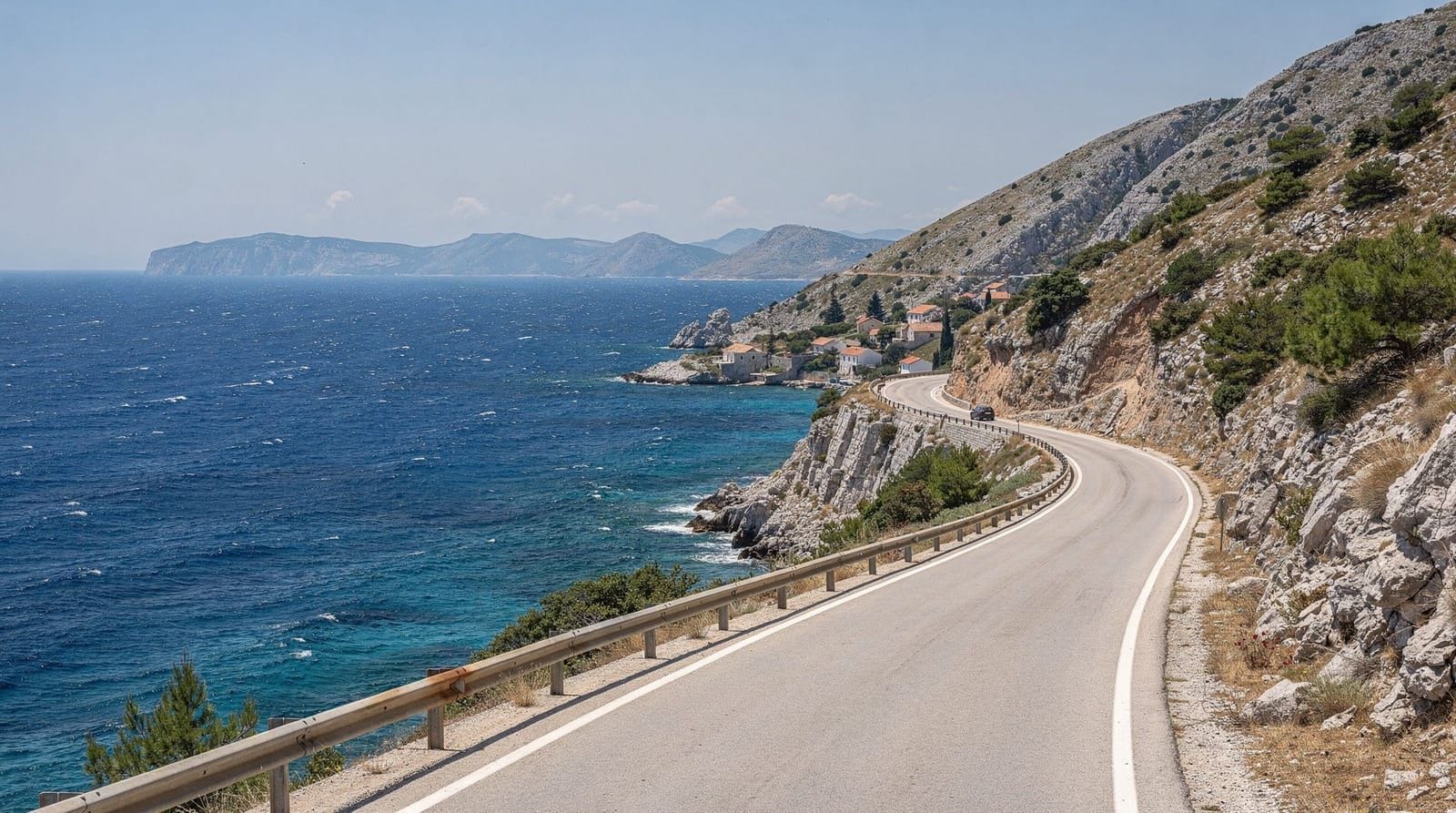
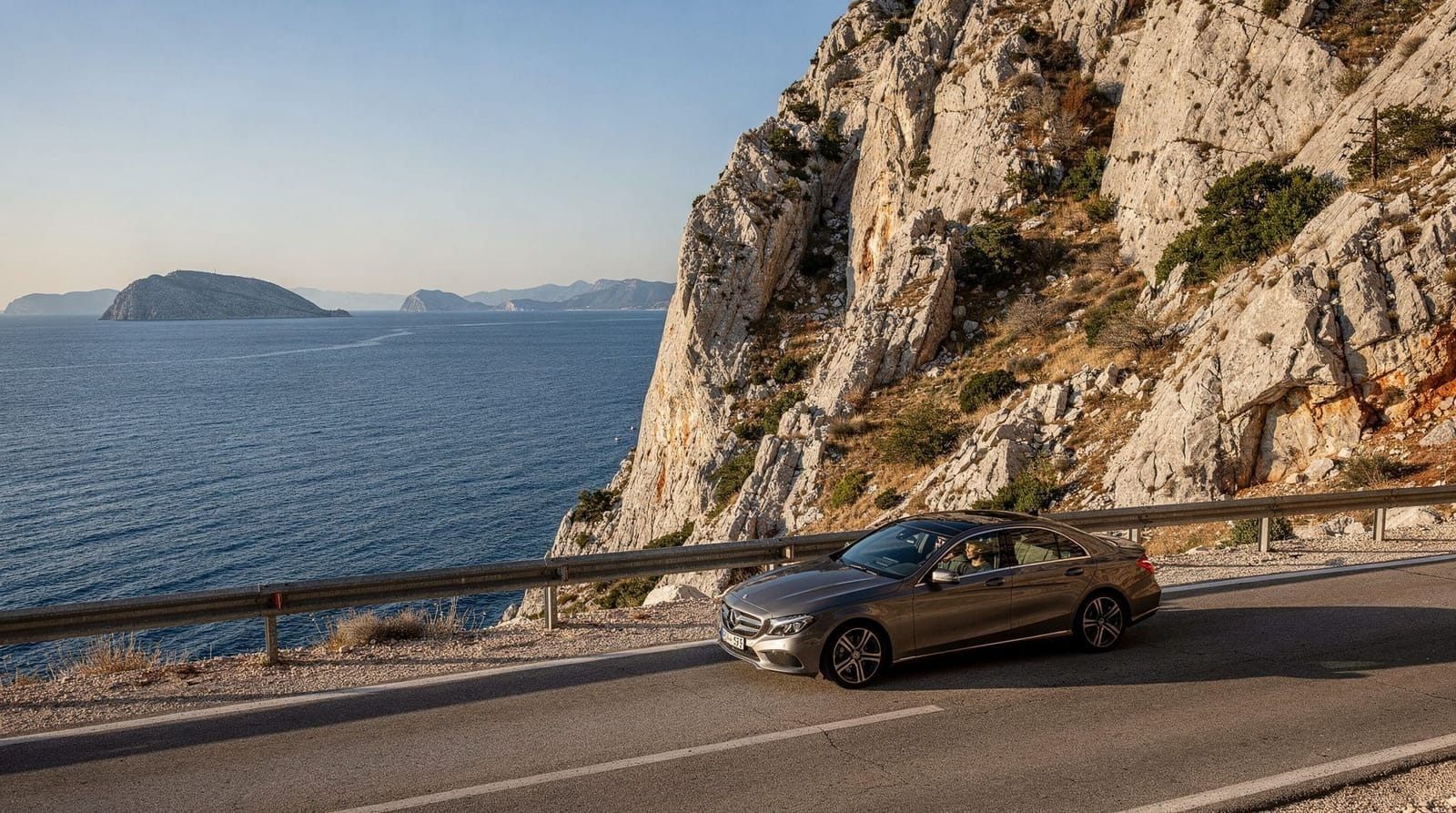
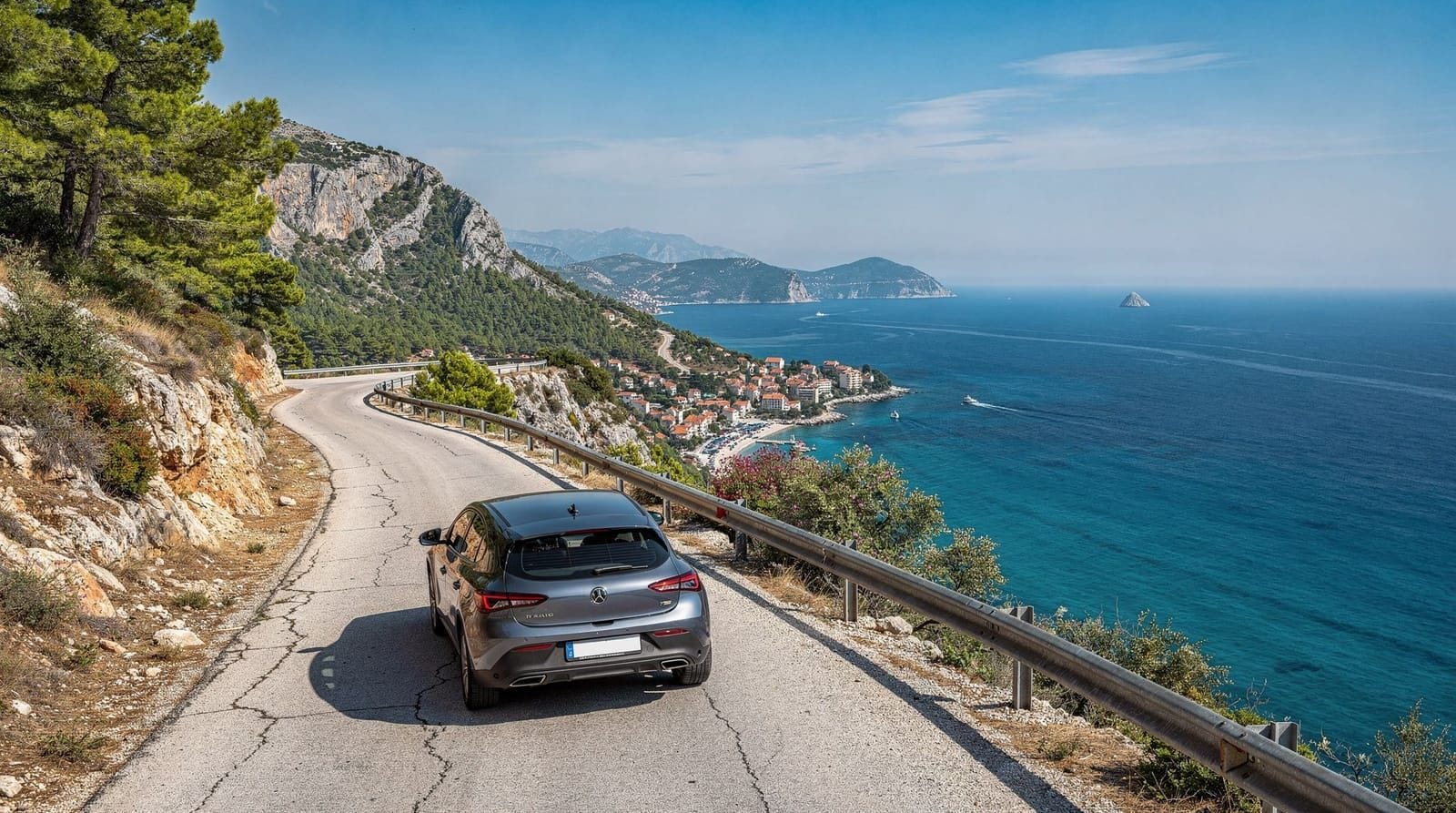
The Adriatic Highway — the D8 coastal road, or Jadranska magistrala — is one of Europe’s great drives. Running for over 1,000 kilometres from Slovenia’s border in the north to Montenegro in the south, it threads between limestone mountains and the sea, passing through some of the most consistently beautiful coastal scenery on the continent.
But the beauty is best appreciated in the details. Knowing which towns are worth stopping in, which side roads lead somewhere worthwhile, and where to sleep breaks the drive into a journey rather than a transfer. Here are the stops that earn their place.
| Route length | Over 1,000km, Slovenia to Montenegro border |
| Minimum time | 7 days for the essentials |
| Best time | May–June or September for driving comfort |
| Tolls | A1 motorway only; coastal D8 is toll-free |
| Car ferries | Book vehicle space 4–6 weeks ahead in July–August |
Planning the Route
The most common road trip direction is north to south — arriving via Istria (flying into Pula or Rijeka, or overland from Slovenia), then tracking south through Zadar, Šibenik, Split and down the Dalmatian coast to Dubrovnik.
The reverse is equally valid and has the advantage of getting Dubrovnik — usually the motivating destination — out of the way at the start, leaving you to discover less-visited places on the way back.
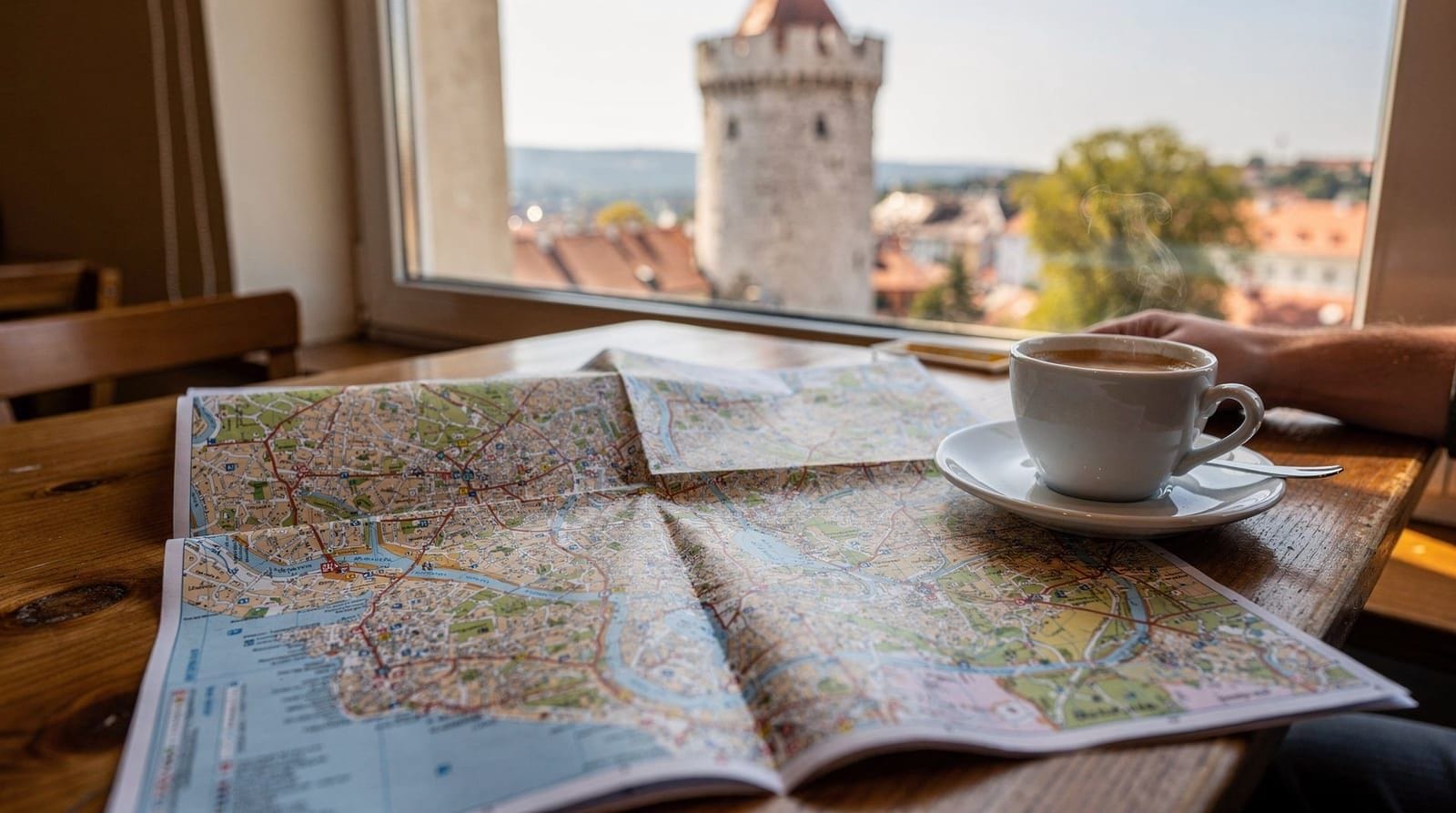
What doesn’t work: rushing. Croatia’s road distances look short on a map but the coastal highway is winding, often single-lane through towns, and the scenery encourages stopping. Allow a minimum of 7 days for anything meaningful; 10–14 days to see the interior and islands too.
For full planning details, see our Croatia road trip guide and driving in Croatia guide.
Stop 1: Rovinj, Istria
Rovinj is the most atmospheric starting point in Istria — a former Venetian fishing town on a small peninsula, with a baroque church at the top and a tangle of cobbled streets below. The harbour is lovely at any time of day; the islands just offshore are accessible by water taxi.
Why stop here: The old town is walkable in a morning; the Lim Fjord, 10 kilometres south, is worth an afternoon boat excursion; the seafood restaurants on the harbour are consistently good.
How long: One night minimum; two if you want to explore the Istrian interior (Motovun, truffle roads).
Nearby: Pula (40 minutes south) has one of the world’s best-preserved Roman amphitheatres, still used for concerts in summer. Poreč (30 minutes north) has the 6th-century Euphrasian Basilica, a UNESCO site with exceptional Byzantine mosaics. Motovun (40 minutes inland) sits atop a hill above truffle-hunting forests.
If you’re in the area in October–November, truffle season in Motovun’s forests is something specific to Istria — the white truffle is among the finest in Europe and found in larger quantities here than in most of Italy.
A private truffle hunting experience in Istrian forests is the most direct way to spend a morning among the oaks with a hunter and a trained dog.
Stop 2: Plitvice Lakes (Interior Detour)
Plitvice Lakes National Park sits inland, about 2 hours east of the coast on the road between Zadar and Zagreb. It’s not on the coastal route in the strict sense, but it’s close enough to the midpoint of any Zadar-to-Split journey to make the detour entirely sensible.
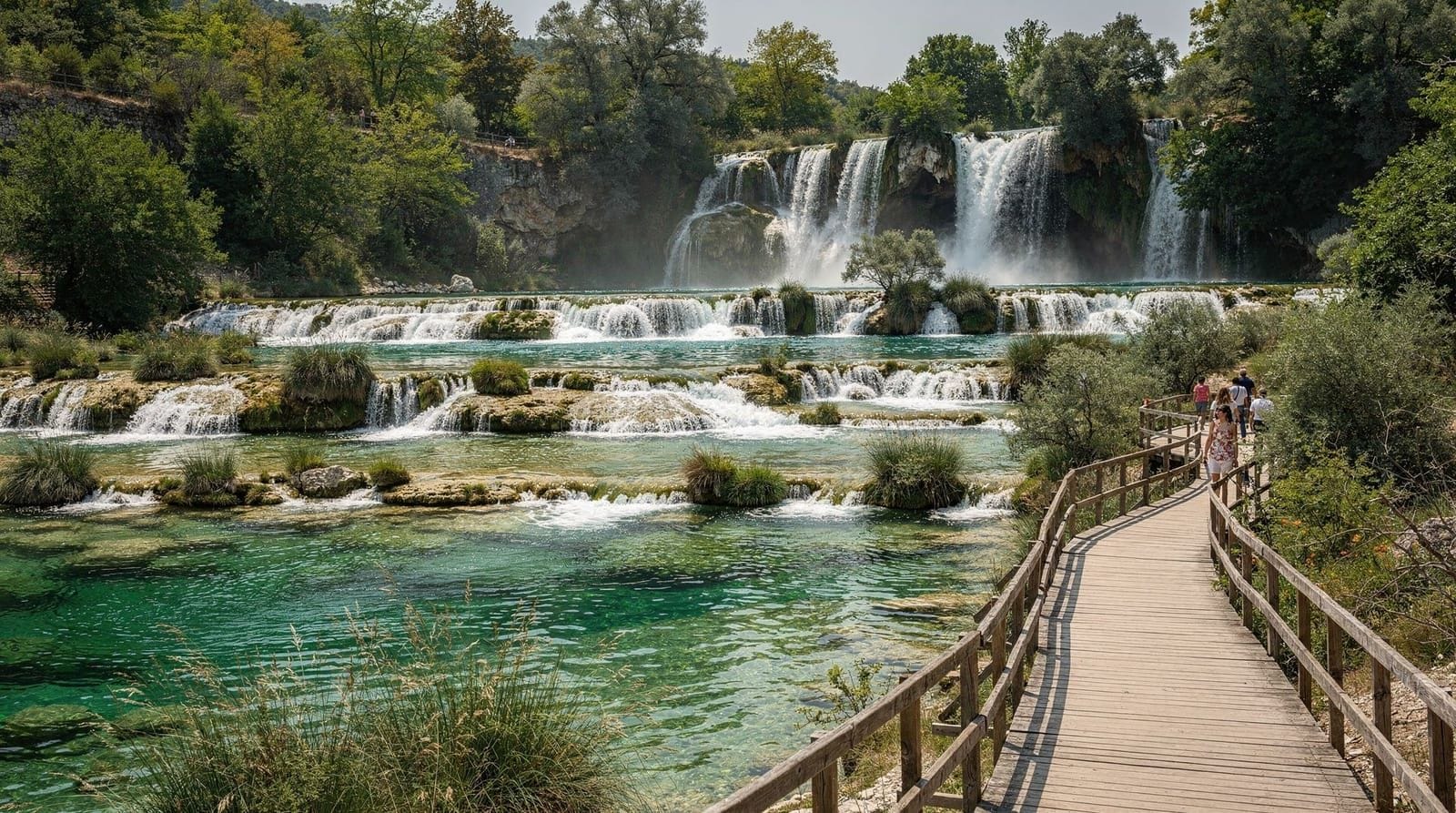
Why stop here: The lake system — 16 terraced lakes connected by waterfalls, set in a forested gorge — is one of the best natural spectacles in Europe. The boardwalk trails put you at water level; the upper lake circuit takes a full morning.
How long: Half day minimum for the main circuit; a full day to see both upper and lower lakes properly.
When to go: Spring (May–June) for maximum waterfall volume; autumn (September–October) for the colour and thinner crowds. July and August require an early morning timed entry — book ahead.
Logistics: The park entry tickets must now be purchased online in advance for peak dates. There are two main entrances (Entrance 1 for the lower lakes, Entrance 2 for the upper — arrive at whichever matches your planned circuit). Accommodation in the village of Plitvice or nearby Rastoke is limited but adequate.
Stop 3: Zadar
Zadar is Croatia’s most underrated city, and the coastal road’s most pleasant urban stop between Istria and Split. The old town occupies a peninsula bounded by water on three sides; Venetian walls, Roman ruins and modern art installations sit in close proximity in a way that doesn’t feel forced.
Why stop here: The Roman forum is still used as a public square. The Church of St Donatus, a cylindrical 9th-century rotunda, is one of the most unusual pre-Romanesque buildings in Europe. Alfred Hitchcock reportedly called Zadar’s sunset the finest he’d ever seen — the combination of the Adriatic view and the light here in the evening is genuinely exceptional. Nikola Bašić’s Sea Organ (underwater tubes that produce sound through wave action) and Sun Salutation installation make the waterfront memorable.
The city functions as a real city — not just a tourist stage set — which gives it a character that some of the more polished old towns lack.
How long: One night; two if you want to make the ferry trip to the Kornati archipelago (no permanent residents, extraordinary landscape) or the day trip to Plitvice.
Stop 4: Šibenik
Šibenik is 80 kilometres south of Zadar on the coast road and consistently gets bypassed in favour of Split, which is a mistake. The cathedral of St James — all stone, no wood or brick in the vaulting, built by the Dalmatian master Juraj Dalmatinac over more than a century — is one of the finest Gothic-Renaissance buildings in Europe and a UNESCO World Heritage Site.
Why stop here: The cathedral is reason enough. The medieval quarter climbing to the 13th-century fortress adds context. The Old Town has improved significantly in recent years with better restaurants and a slightly hipper cafe scene. And Šibenik is the closest mainland base to Krka National Park.
How long: One night. Two if you want a full day at Krka.
Side trip: Krka National Park is 12 kilometres inland (30 minutes by car). The waterfalls at Skradinski Buk are the centrepiece, surrounded by boardwalk trails. Swimming in the pools below the falls was restricted in 2021 and the rules have fluctuated since — check current regulations before planning around this.
Stop 5: Trogir
Trogir, 30 kilometres north of Split, is a tiny UNESCO-listed island town that most people see only as a transfer point near Split airport. It deserves more. The Romanesque portal of the Cathedral of St Lawrence, carved by Master Radovan in 1240, is genuinely remarkable up close.
Why stop here: The old town is small enough to absorb in an afternoon, which makes it a perfect split-the-journey stop. The harbour promenade is pleasant in the evening.
How long: A few hours, or one night if you want a quieter base than Split while still accessing Split’s sights.
Stop 5b: Omiš, the Canyon Detour
Omiš, 25 kilometres south of Split, sits where the Cetina River gorge meets the Adriatic — a quick detour off the main coastal road that most road-trippers skip in favour of pressing on toward Split or Makarska, which is a missed opportunity if you have even a couple of spare hours.
Why stop here: Cetina River rafting and canyoning trips run from the town and are among the best adventure activities on the whole route; the gorge itself, walled in by limestone cliffs, is dramatic even just viewed from the road above. The half-day Cetina River rafting tour from Omiš is a straightforward way to fit the activity into a driving day without arranging your own gear.
How long: A couple of hours for the town and viewpoint; half a day if you’re rafting.
Stop 6: Split
Split is the Dalmatian coast’s main urban hub and a destination in its own right — not just a ferry departure point. Diocletian’s Palace, built in the 4th century as a Roman emperor’s retirement villa, now has an entire neighbourhood living inside its walls. The cellars, used as Daenerys’s dragon pits in Game of Thrones, are accessible for a few euros.
Why stop here: The palace is extraordinary and inexhaustible. The Riva waterfront is one of the best promenades on the coast. The fish market off the peristyle square in the morning is the most atmospheric market in Dalmatia. Split is also the hub for ferry connections to Hvar, Brač, Vis and Korčula.
How long: Two nights minimum; three to four if you want to day-trip to an island and Krka.
Side trips from Split: Plitvice Lakes by guided day trip; Krka National Park (1.5 hours); Hvar Town by fast catamaran (1 hour); the 5-islands tour covering Blue Cave, Vis, Hvar and more in a single day.
Stop 7: Makarska and the Biokovo Range
Makarska is the main town on the Makarska Riviera, backed by the dramatic limestone massif of Biokovo. The beaches here are among the longest in Dalmatia; the backdrop of mountains rising to 1,762 metres is the defining feature.
Why stop here: The beach quality is genuinely good (pebbled, but broad and with clear water). The Biokovo Skywalk — a glass-floored viewing platform cantilevered over the mountain — gives a perspective on the Dalmatian coast that no other vantage point matches. Hiking from the beach to the Biokovo summit is possible but demanding.
How long: One or two nights if you want beach time. Day trip feasible from Split (90 minutes) or as a drive-through stop.
Stop 8: Ston and Pelješac
Ston sits at the neck of the Pelješac Peninsula, surrounded by a 5.5-kilometre wall system. The village of Mali Ston is where you eat: the oysters and mussels farmed in the Ston channel are among the best in the Adriatic, served simply with lemon and Pelješac wine.
The Pelješac Peninsula itself is Croatia’s premier wine country. The hillside vineyards around Dingač and Postup produce Plavac Mali, a thick-skinned red with high alcohol and stone-fruit character. Several producers offer tastings.
Why stop here: Shellfish and wine in combination, with a medieval wall to walk off the lunch.
How long: A long lunch stop or an overnight to explore the wine villages properly. The full-day Pelješac wine tour from Dubrovnik covers the peninsula with a guide who knows the producers.
Stop 9: Dubrovnik
Dubrovnik is where most road trips end. The city walls, the Stradun, the Lokrum island, the cable car to Srđ Hill — it’s all real and genuinely impressive. The crowds in July and August are also real and less impressive.
Why stop here: Because you’re here. The old town is one of the best-preserved medieval city centres in Europe. Walk the walls in the early morning before 9am; take the cable car for the full coastal panorama.
How long: Two nights. Three if you want to day-trip to Montenegro (Kotor is under 2 hours south), Bosnia (Mostar is 2 hours inland) or the Elaphiti Islands by boat.
Side trips: The Mostar day trip from Dubrovnik is one of the most popular excursions in Croatia; the drive south to Kotor through Montenegro is equally worthwhile for the Bay of Kotor scenery.
Practical Notes for the Drive
Fuel: Petrol stations are well distributed on the main coastal road. In Istria and north Dalmatia, you won’t go more than 30 minutes without one. The islands have limited fuel availability — fill up on the mainland.
Tolls: The A1 motorway (Zagreb to Split) has tolls; the coastal D8 does not. Driving via the motorway saves several hours over the coastal route but bypasses most of the scenery. Many travellers drive south on the motorway and return north on the coast road, or vice versa.
Parking: Old towns (Dubrovnik, Split, Šibenik, Trogir) have restricted car access. Park outside and walk in. Dubrovnik’s Pile parking garage fills early in summer.
Ferry connections: If you’re driving with a car and want to include an island, book the vehicle ferry well in advance (4–6 weeks in July–August). Hvar’s vehicle ferry (Stari Grad) and Vis ferry from Split are the most popular and fill fastest.
The road itself requires no great skill — just patience and an acceptance that the views will make you stop more often than planned. That’s as it should be.
| Day | Focus |
|---|---|
| 1–2 | Rovinj, Istrian interior |
| 3 | Plitvice detour or straight to Zadar |
| 4 | Zadar, optional Kornati boat day |
| 5 | Šibenik, Krka National Park |
| 6 | Trogir, Split |
| 7 | Makarska, Omiš, on to Ston |
| 8–9 | Dubrovnik and side trips |