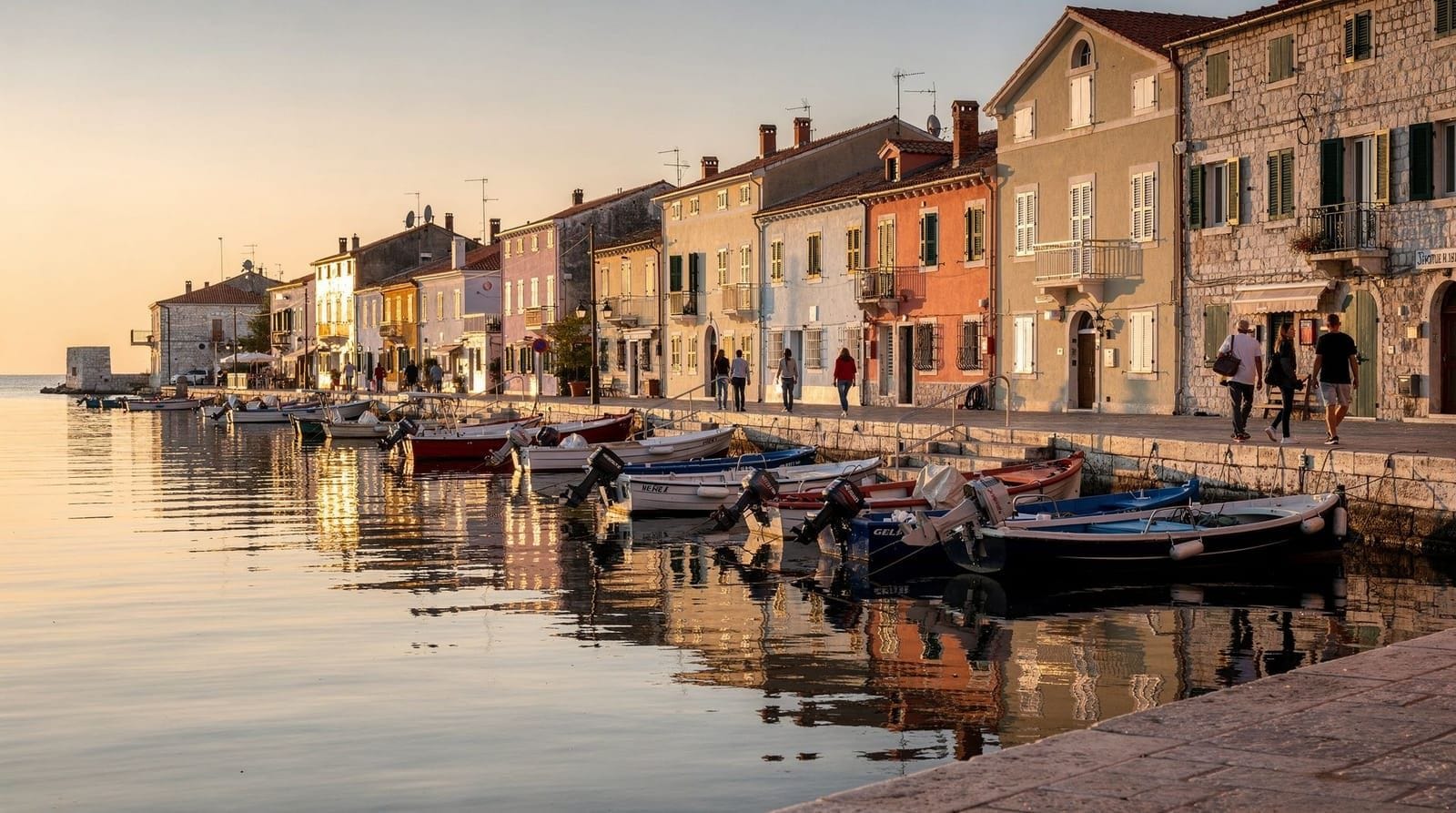
Croatia vs Greece vs Italy vs Montenegro: Which Should You Book?
The Adriatic and Mediterranean form a vast menu of holiday options, and for most travellers, Croatia, Greece, Italy and Montenegro all appear on that menu simultaneously. They share a climate, a general aesthetic of old stone and blue water, and a similar price bracket. Choosing between them can feel arbitrary.
It isn’t. Each country has a distinct identity, a different balance of costs and experience, and a different set of trade-offs. This is an honest breakdown to help you decide.
| Cheapest | Montenegro, then Croatia and Greece roughly level |
| Most expensive | Italy, especially Rome, Venice and the Amalfi Coast |
| Best sandy beaches | Greece and Italy; Croatia is mostly pebbled |
| Deepest culture/history | Italy, then Greece |
| Lowest crowds | Montenegro, then Croatia’s less-famous towns |
The Short Version (If You Just Want an Answer)
- Greece if you want the best classic island hopping, the Aegean aesthetic, or the Cyclades specifically.
- Italy if food, art, history and cities matter more than beaches.
- Croatia if you want a short-haul European trip with excellent coastal scenery, decent infrastructure and lower prices than both.
- Montenegro if you want a more off-the-beaten-track Adriatic option with dramatic fjord scenery and Dubrovnik-adjacent geography.
Now the longer version.
| Category | Croatia | Greece | Italy | Montenegro |
|---|---|---|---|---|
| Daily budget (mid-range) | EUR 85–150 | EUR 80–150 | EUR 100–180 | EUR 60–110 |
| Beaches | Mostly pebbled | Sandy and pebbled | Sandy, variable quality | Mostly pebbled |
| Culture/history depth | Moderate | Very high | Highest | Moderate |
| Crowds in peak summer | High, especially Dubrovnik | High on famous islands | Very high in major cities | Lower than Croatia |
| Best for | Coastal scenery + value | Island hopping | Food, art, cities | Off-the-beaten-track drama |
Costs and Budget
Croatia
Since adopting the euro in January 2023, Croatia is no longer the bargain it once was — but it remains meaningfully cheaper than Italy and roughly comparable to Greece. A realistic mid-range daily budget runs EUR 85–150 per person for accommodation, meals, local transport and a paid activity or two. Backpackers can do EUR 45–65.
Dubrovnik is the outlier within Croatia. It’s the most expensive city — accommodation runs 30–50% higher than Split or Zadar, and the tourist tax on Old Town restaurants is visible in the prices. Travel to less famous Dalmatian towns (Šibenik, Trogir) and costs drop noticeably.
See our Croatia budget guide and the full daily cost breakdown for specifics.
Greece
Greece runs at a very similar level to Croatia for mid-range travellers. Athens hotels and Santorini are expensive; the Peloponnese and lesser-known islands are not. Island-hopping Greece tends to involve more ferry costs accumulated over the trip, which can add up. Dining is slightly cheaper on average than comparable Croatian coastal restaurants.
Italy
Italy is more expensive than Croatia across almost every category. Rome and Venice are dramatically more expensive; smaller cities and southern towns bring costs down considerably. The infrastructure is generally excellent but accommodation and meals in tourist centres cost meaningfully more than their Croatian equivalents.
Montenegro
Montenegro is currently the cheapest of the four by a significant margin. Kotor Bay accommodation costs less than Dubrovnik, restaurants are cheaper, and entrance fees are lower. The trade-off is less developed tourism infrastructure — which for some travellers is the appeal.
Coastlines and Beaches
Croatia
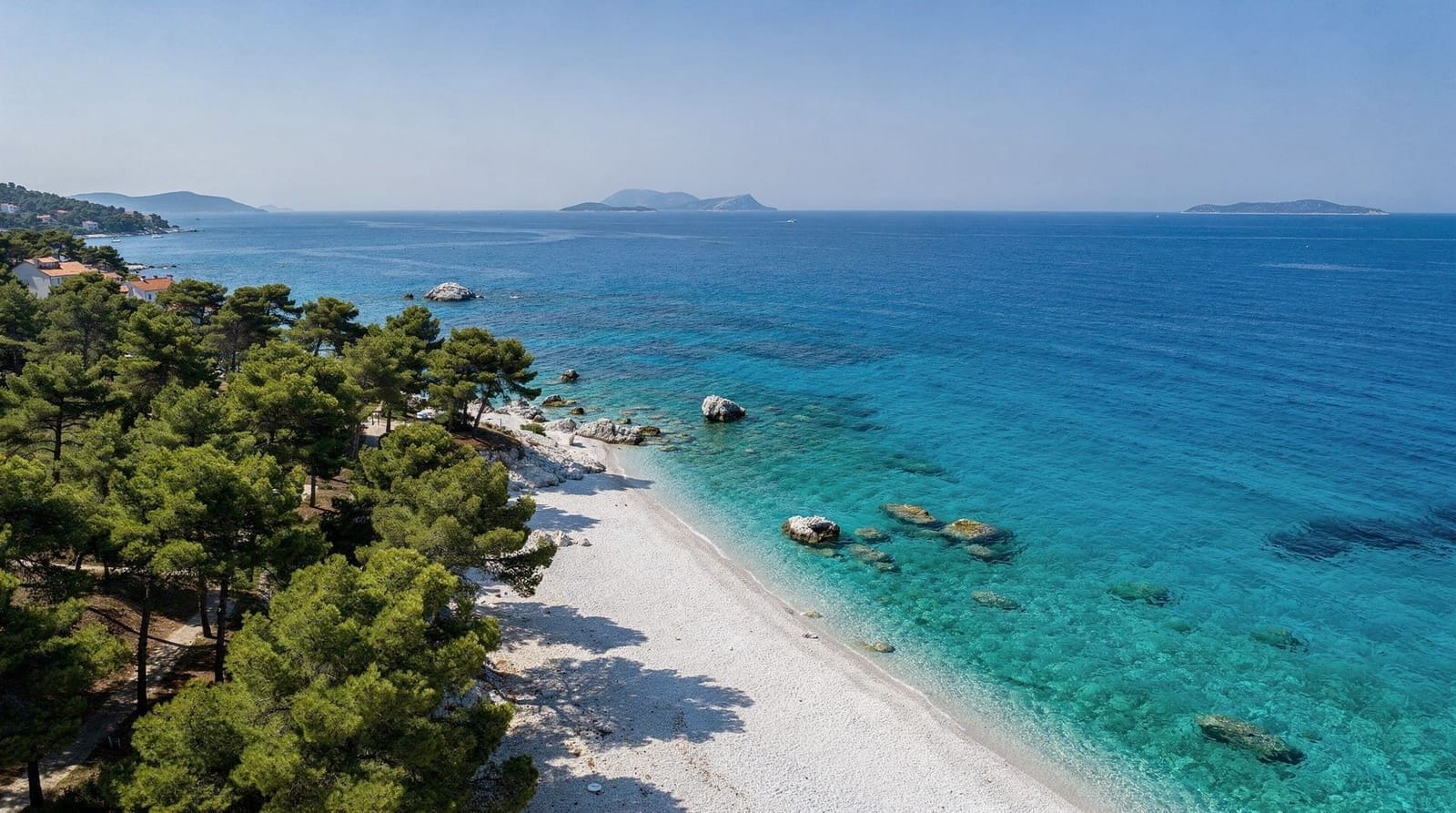
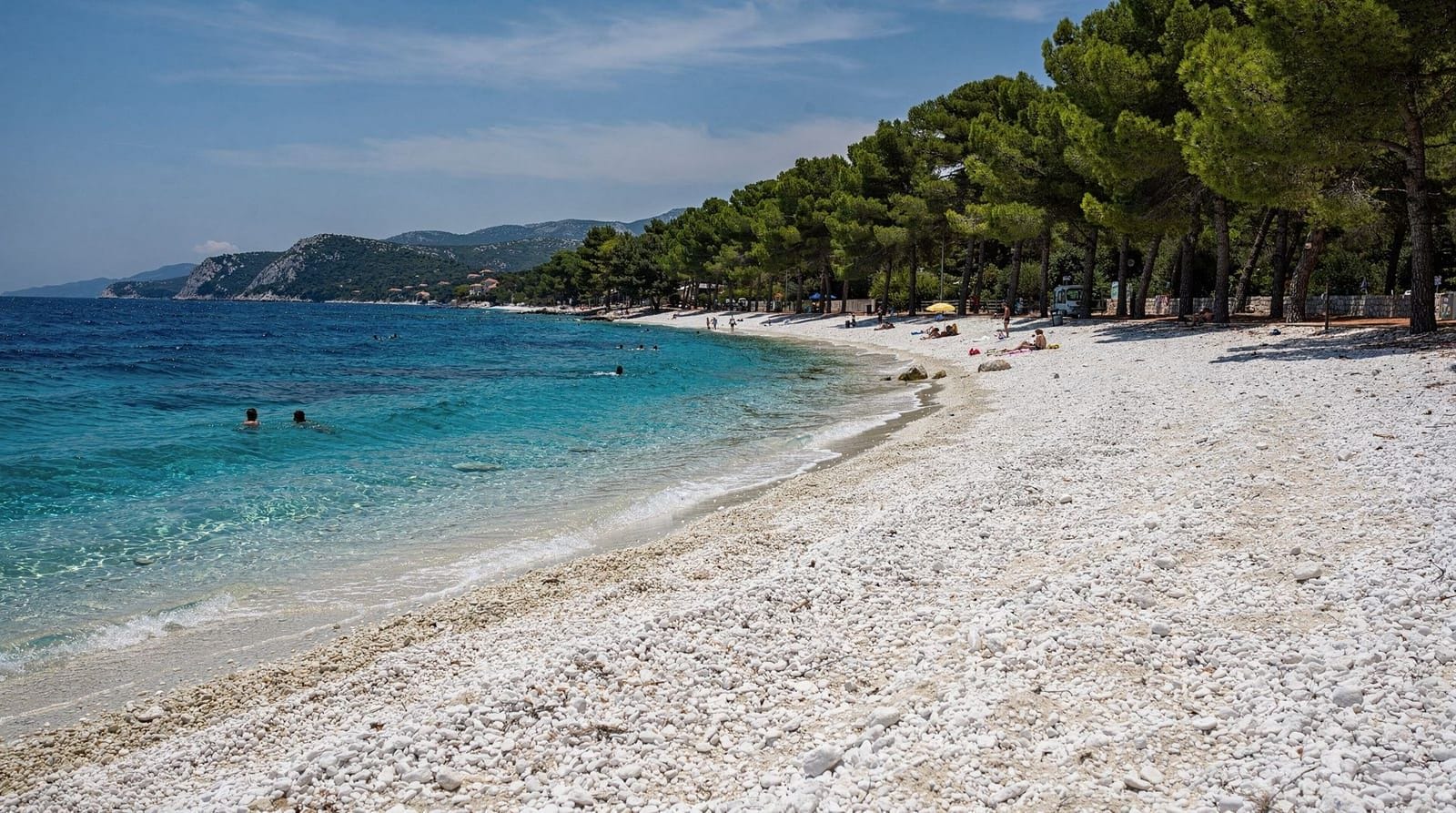
The Croatian coast is fjord-like in places and island-studded throughout. The water is Adriatic — notably clear, warm by late June through September, and very salty. The coast itself is predominantly rocky and pebbled rather than sandy; the famous Zlatni Rat beach on Brač is an exception. If you define “beach” as lying on fine sand, Croatia will disappoint; if you define it as swimming in crystalline water off limestone platforms, it excels.
The island chain offers enormous variety: the pine-forested coves of Mljet, the party atmosphere of Hvar, the quiet fishing villages of Vis, the cave-riddled coast around Šibenik. Best beaches in Croatia are genuinely good — they just tend to be pebbled.
Greece
Greece has both pebbled and genuinely sandy beaches in abundance, particularly in the Ionian Islands (Lefkada, Kefalonia) and on Crete. The Cyclades lean more toward dramatic scenery than classic beach holidays; Mykonos and Santorini are expensive and crowded. The Aegean feels wilder and more open than the enclosed Adriatic, which some find more dramatic.
Italy
Italy’s Adriatic coast (Puglia, the Gargano peninsula) has excellent sandy beaches but is more domestic-tourist-oriented. The Amalfi Coast is stunning visually but narrow, expensive and hard to swim from. Sardinia and Sicily have exceptional coastlines. Overall, Italy’s best beaches are among the Mediterranean’s finest — but they come at a cost and require knowing where to go.
Montenegro
The Bay of Kotor is one of the Adriatic’s most dramatic pieces of geography: a series of enclosed bays resembling a fjord, ringed by mountains that drop to the water. It’s genuinely beautiful. Swimming beaches in Montenegro are mostly pebbled; the Budva Riviera further south has sandier beaches but the resorts are fairly package-holiday-heavy.
History and Culture
Croatia
Croatia’s history is layered: Illyrian, Roman, Venetian, Habsburg, Ottoman-adjacent, Yugoslav. The result is a coastline dotted with Venetian-style old towns — Rovinj, Trogir, Hvar Town, Dubrovnik — and inland with Habsburg architecture. The old towns are compact, walkable and photogenic. But if you’re comparing quantity of world-class museums or art galleries, Croatia is thin on the ground compared to Italy.
Dubrovnik’s city walls are genuinely impressive. Diocletian’s Palace in Split is one of the best Roman monuments in Europe — an entire city built inside a 4th-century palace. Zagreb has good museums and a livelier cultural calendar than its fame suggests.
Greece
Greece’s historical depth is unmatched in the Mediterranean. The Acropolis, Delphi, Epidaurus, Knossos — the sites are world-class and the reach of Greek civilisation across the region gives travel here an intellectual texture that’s hard to replicate. The Orthodox church, the traditional village structure and the island culture all add up to something distinctly Greek.
Italy
Italy requires its own category. The concentration of UNESCO sites, art collections, architectural periods and culinary regions is unparalleled. If culture is the primary purpose of your trip, Italy wins by an enormous margin. The constraint is cost, crowds and logistical complexity in peak season.
Montenegro
Montenegro was part of the Ottoman, then Serbian, then Yugoslav sphere. Kotor’s Old Town is Venetian-era and well-preserved; the coastal fortifications are dramatic. The history is interesting but not deep in the same sense as Greece or Italy. Montenegro’s main appeal is scenery and atmosphere rather than museum-quality heritage.
Food
Croatia
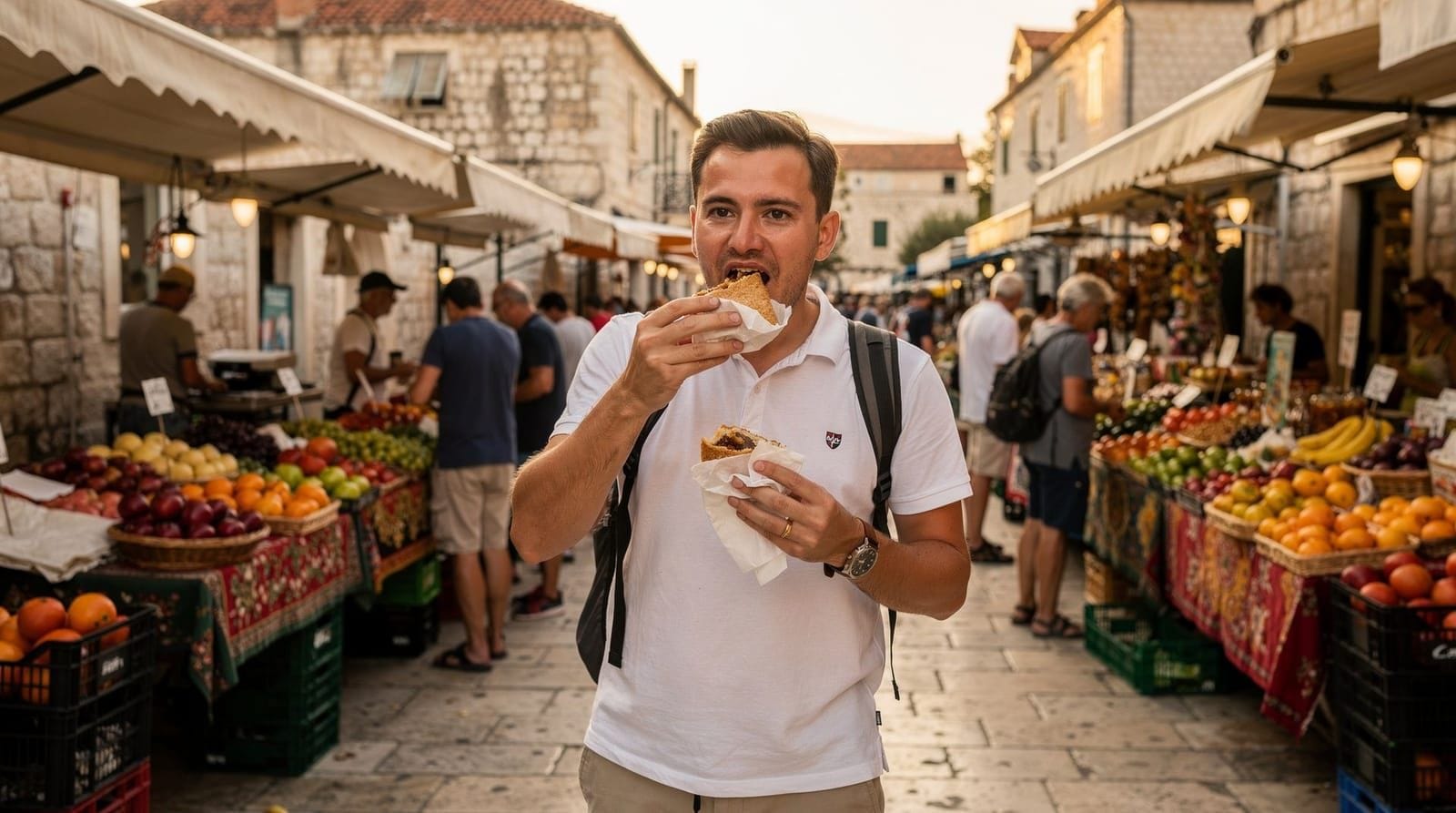
Croatian food is excellent and frequently underrated. Coastal Dalmatia specialises in grilled fish, shellfish, and slow-cooked dishes like peka (meat or seafood baked under a bell-shaped lid with embers). Istria has the strongest food culture — truffles, olive oil, and an increasingly serious restaurant scene. The wine is genuinely good: Plavac Mali from the Pelješac Peninsula is Croatia’s best red; Malvazija from Istria is a reliable white.
Eating well in Croatia is quite easy. The konoba — a family-run tavern — is the right institution to seek out. Our konoba guide covers what to look for. For a deep dive into the wine scene: Croatia wine guide.
Greece
Greek food at its best — grilled octopus, fresh mezze, slow-roasted lamb — is excellent. The problem is consistency: in the most touristed spots, quality drops sharply. Greek salad and souvlaki are ubiquitous and reliable; finding the genuinely good taverna requires a little more effort or local knowledge.
Italy
Italy has the deepest food culture of the four. The regional variation is extraordinary, and even midrange Italian restaurants in smaller towns produce food at a level that’s hard to match elsewhere in Europe. The cost of eating well is higher, but the ceiling is far higher too.
Montenegro
Montenegrin food borrows from the Balkans and the Adriatic: smoked meats, cheese from the Njegoši plateau, fresh seafood in Kotor and on the coast. It’s good, unfussy, and notably cheaper than the Croatian coastal equivalent.
Crowds and Tourism Infrastructure
Croatia
Croatia receives around 20 million tourists per year — a lot for a country of 3.9 million people. The coast in July and August is genuinely crowded, particularly Dubrovnik (which has imposed daily tourist limits on the Old Town). Travelling in shoulder season (May–June, September–October) makes an enormous difference. Infrastructure for tourists — English spoken everywhere, well-signed trails, reliable ferries, good ATM coverage — is excellent.
Greece
Greece similarly peaks badly in July and August on the most famous islands. Santorini in August is one of the most over-crowded places in Europe. But Greece’s archipelago is vast enough that quiet alternatives exist at any time of year. Tourist infrastructure in the main destinations is comparable to Croatia; in the less-visited islands, it can be thin.
Italy
Italy is the world’s fifth most-visited country by international arrivals. Venice in June, Rome in August — these are experiences defined by crowds. The infrastructure is generally excellent, but managing the tourism load is a constant challenge. Avoiding peak season or peak sites matters more in Italy than anywhere else on this list.
Montenegro
Montenegro’s tourism infrastructure is developing fast but remains behind Croatia. English is widely spoken in tourist areas; outside them, it drops off. The crowds are much lower than Croatia’s coast, which is the main argument for choosing it.
Getting There and Getting Around
Croatia
International airports at Zagreb, Split, Dubrovnik, Zadar, Pula and Rijeka give good direct access from most of Europe in summer, with Dubrovnik and Split carrying the bulk of seasonal charter and low-cost routes. Getting around once you land usually means either a rental car or the ferry network — public bus coverage along the coast is decent but slow for anything beyond a single hop.
Greece
Athens is the main hub, with island airports (Santorini, Mykonos, Crete, Rhodes) adding direct seasonal routes from northern Europe. Inter-island travel depends heavily on ferries, and the network, while extensive, is slower and more schedule-dependent than Croatia’s shorter Adriatic crossings.
Italy
The best-connected of the four by a wide margin — Rome, Milan, Venice, Naples and several smaller cities all have major international airports, and the train network is fast and reliable between cities. This matters if your itinerary covers multiple regions in one trip.
Montenegro
Podgorica and Tivat airports handle most international arrivals, with Tivat the more useful for the Kotor Bay area. Flight options are thinner than Croatia’s, and many visitors arrive overland from Dubrovnik instead, which keeps Montenegro’s Adriatic coast easy to bolt onto a Croatian itinerary.
Combining Countries
Croatia and Montenegro are natural companions — the Dubrovnik–Kotor day trip or multi-day circuit is one of the most popular routes in the region. The drive from Dubrovnik to Kotor takes under 2 hours; the scenery along the Bay of Kotor is exceptional.
A full-day guided tour from Dubrovnik to Kotor and Perast is the easiest way to cover Montenegro as a side trip without overnight logistics.
Slovenia makes a logical extension if you’re coming from Istria or Zagreb. The Italian regions of Friuli and Trieste are geographically adjacent to Istria. Any of these combinations work well.
The Honest Verdict
Croatia is the right choice for most travellers who want a Mediterranean coastal holiday on a reasonable budget, with good infrastructure, genuine historical interest, excellent swimming, and a food and wine scene that won’t disappoint. It’s not the cheapest option, but it’s the best value for what it delivers compared to Italy, and it has a coastline character that’s distinctly its own. A good way to sample Croatian food culture before committing to the full coastal circuit: a Zagreb food tour covers the breadth of Croatian regional cuisine in a few hours.
Greece is better if the island-hopping dream — multiple Aegean islands, white-washed Cyclades villages, ancient sites — is central to why you want to go. Croatia’s islands are beautiful, but they have a different feel: green, forested and Venetian rather than arid and Hellenic.
Italy is in a different category if culture, food at the highest level, and cities are the priority. As a coastal beach destination, it’s not better than Croatia; as a cultural and culinary destination, nothing else competes.
Montenegro is the right call if you want Adriatic drama with far fewer people, a lower daily spend, and a slight sense of discovery that Croatia’s most popular destinations no longer offer.
The question is Croatia worth visiting? — yes, for the right type of traveller. And understanding what each neighbour does better helps you use Croatia strategically: front-load cultural sightseeing in Split and Zagreb, then escape to the islands while the Adriatic is warm.