Croatia's Best Beaches: from Zlatni Rat to Stiniva and beyond
Croatia has more than 1,100 islands and roughly 1,800 kilometres of coastline, so the question is never whether there are good beaches — it is which kind of beach you want, and whether you are prepared to work a little to reach the best ones. Pebble or sand, busy or remote, boat-access only or walkable from the town square: the variety across Dalmatia and Istria is genuinely surprising for a country this compact.
This roundup picks the beaches that are actually worth prioritising, with honest notes on crowds, access and the times of year when each works best.
| Best overall | Zlatni Rat, Brač |
| Best for solitude | Stiniva, Vis (arrive before 9am) |
| Best sand beach | Sakarun, Dugi Otok |
| Best time to go | Late May–June or September |
| Getting there | Ferry/catamaran from Split, Zadar or Hvar, or an organised boat tour |
Zlatni Rat, Brač — the famous one, and why it earns its reputation
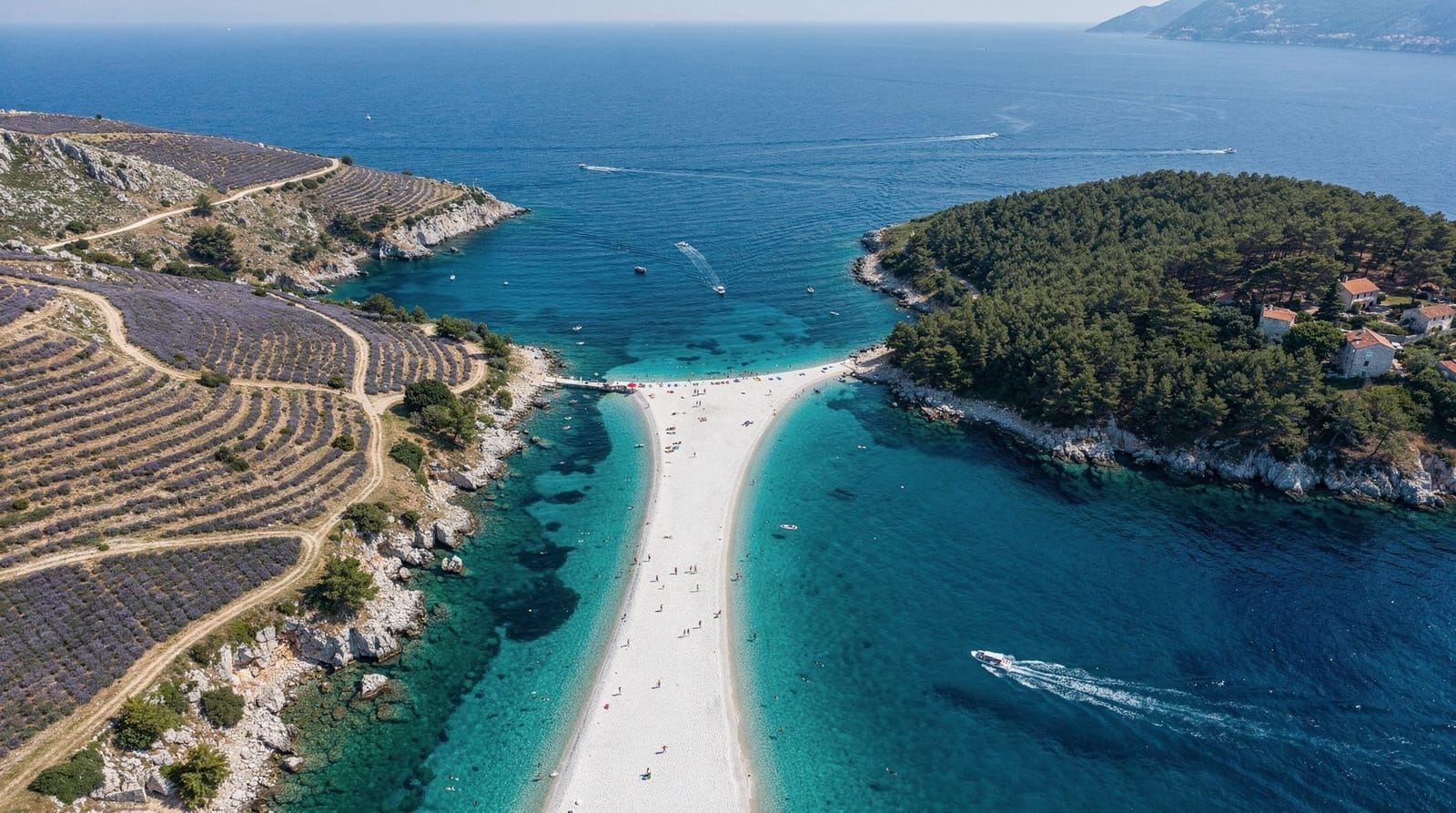
Zlatni Rat near Bol on the island of Brač is probably Croatia’s most photographed beach, and unlike many heavily promoted sites it does justify the attention. The spit of fine white pebble extends roughly 500 metres into the sea and shifts direction slightly depending on currents — a geomorphological quirk that makes it easy to find a spot in the shade or sun by simply walking to the other side.
The beach is backed by pine trees, which is rarer than you might expect on the Dalmatian coast. In July and August it gets very busy, but it never feels squalid. Arrive before 9am or after 5pm in peak season and you will have a different experience entirely. The windsurfing conditions near the tip are genuinely good — Bol has a reliable afternoon wind called the maestral that draws athletes from across Europe.
Getting there from Split takes about an hour by fast catamaran, then a short walk or bike ride from Bol harbour. A full-day boat tour from Split — combining Vis, Hvar and the Blue Cave — often passes Brač and can be a good way to chain several destinations.
Split 5-islands day tour including Brač, Vis and HvarStiniva, Vis — the secluded cove that requires some effort
Vis is the most remote of the main Dalmatian islands and Stiniva is its standout beach: a narrow cove enclosed almost entirely by white limestone cliffs, accessible either by boat or by a steep 20-minute descent from the road above. The entrance from the sea is a gap barely wider than a rowing boat, opening into a sheltered bay of fine pebble.
The effort required to reach Stiniva is part of its appeal. In peak summer the cove does get busy — largely because day-trip boats from Hvar and Split arrive mid-morning — but if you stay overnight on Vis and walk down before 9am, or linger after 5pm, you will likely have it nearly to yourself. There are no facilities beyond a small seasonal bar; bring your own water.
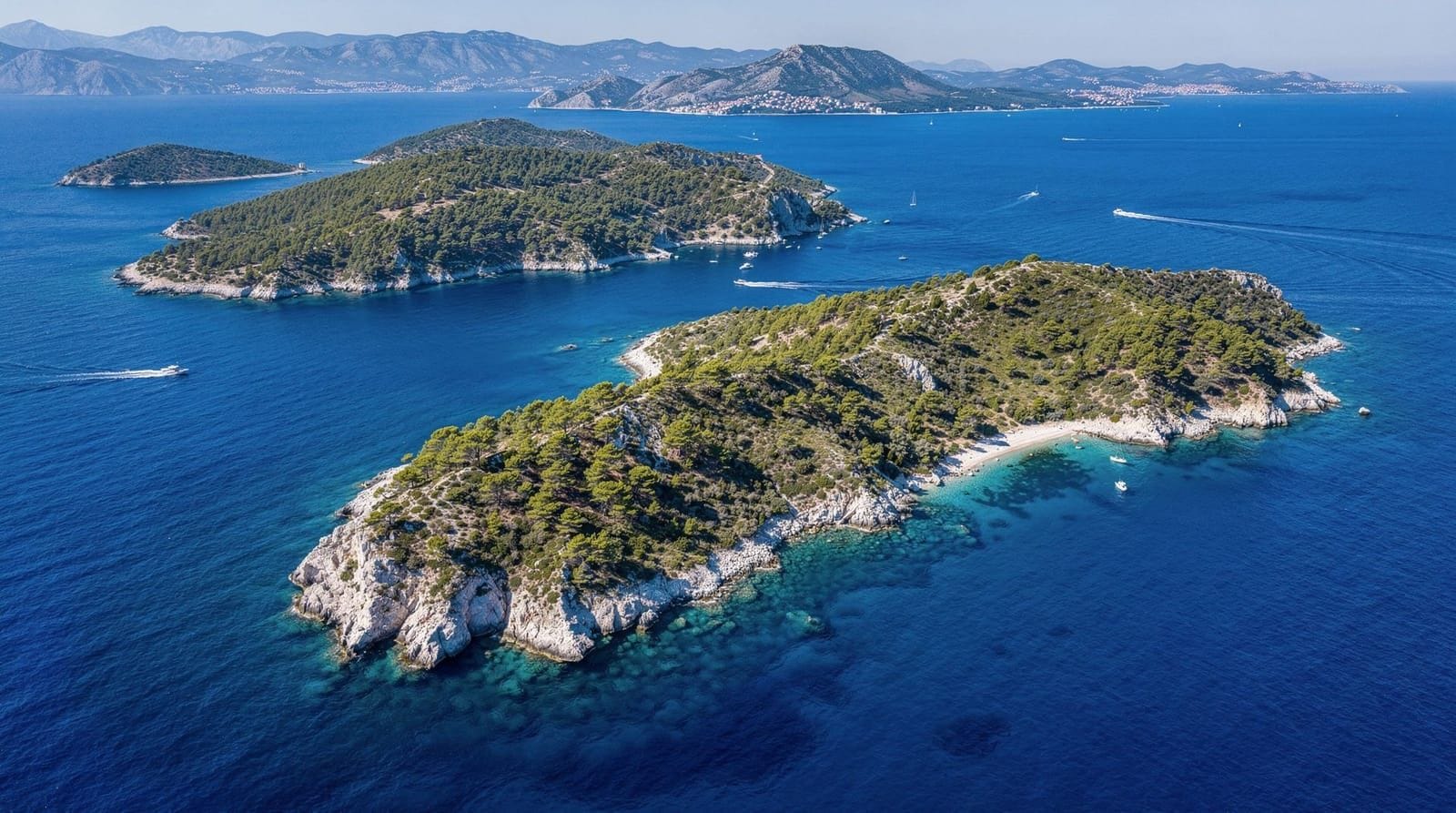
Pakleni Islands (Paklinski otoci), Hvar — scattered beauty near town
The Pakleni archipelago lies just offshore from Hvar town and comprises a chain of small islands with a series of excellent beaches accessible by water taxi from the main harbour. Palmižana on the island of Sveti Klement has a restaurant, naturist sections and clear turquoise water. Stipanska and Mlini are quieter alternatives further west.
The combination of proximity to Hvar’s nightlife and genuinely good swimming makes the Pakleni islands a practical choice if you want both options available in the same day. Water taxis run frequently in summer; the crossing takes 10 to 20 minutes depending on which island you target.
Sakarun, Dugi Otok — the sand anomaly
Most Croatian beaches are pebble or rock. Sakarun on Dugi Otok — technically a separate island accessible from Zadar — is a genuine anomaly: a wide crescent of pale sand in shallow, almost impossibly blue water. It is exceptionally good for families with young children precisely because the sand is fine and the water depth increases very gradually.
The beach is inside a protected bay and the water stays warm well into September. Access is by car via the island’s narrow roads or by boat excursion from Zadar. Organised boat trips to the Kornati archipelago sometimes include Dugi Otok stops.
Nugal, Makarska Riviera — the naturist classic
Nugal is reached by a 20-minute walk from Makarska along a coastal path — a journey that deters the casual visitor and keeps the pebble beach pleasantly uncrowded even in high summer. It has no facilities and a long tradition of naturism, though clothing-optional and clothed sections coexist without friction. The water is deep and very clear.
The Makarska Riviera more broadly runs for about 60 kilometres and has no shortage of accessible pebble beaches along the main road, but Nugal represents the contrast: the extra walk buys significant peace.
Stara Baška, Krk — the northern exception
Krk is in the Kvarner Gulf and its main beach options are underwhelming. The exception is Stara Baška, a remote pebbly cove on the island’s south-western tip accessible only by a steep road followed by a long footpath down. The reward is a wide beach with impressively clear water and, outside July-August, very few people. The landscape here is stark karst limestone with dramatic wind-sculpted pine.
Rajska Plaža, Rab — sand in the north
Rab’s Rajska Plaža (Paradise Beach) is the counterpart to Sakarun: a long sandy beach in the Kvarner Gulf, managed and clean, backed by pine forest. It is popular and busy in summer, but well enough resourced that it handles the volume without becoming unpleasant. The island of Rab itself has a medieval old town worth a half-day on its own.
Sveti Ivan, Šibenik area — the overlooked corner
Between Šibenik and Split lies a stretch of coast that most visitors pass through rather than stopping in. Several beaches near Primošten and Rogoznica are excellent — Rogoznica’s lake beach Zmajevo Oko (Dragon’s Eye) is a saltwater lake connected to the sea by an underground channel, which makes for unusual swimming. The water temperature can differ from the Adriatic by several degrees.
Punta Rata, Brela — the pine-to-sea benchmark
Brela, at the northern end of the Makarska Riviera, has a beach that frequently appears on “best in Europe” lists and justifiably so. Punta Rata is a long crescent of finely graded pebble with pine trees growing to the water’s edge, excellent clarity and a wide shallow entry suitable for non-swimmers. The famous Brela Rock — a small islet just offshore — is the classic foreground for photographs.
Kamenjak, Istria — the wild peninsula in the north
Cape Kamenjak, at the southern tip of the Istrian peninsula near Pula, is a different kind of beach experience altogether: a protected nature park with dozens of small coves cut into low limestone cliffs, connected by dirt tracks that you can walk, cycle or drive between. There is no single “best” cove here — the appeal is picking your own, whether that means a sheltered pebble inlet for children or an exposed rocky ledge for jumping into deep water. Kamenjak stays noticeably quieter than the Dalmatian hotspots even in August, partly because Istria’s coast has fewer famous single beaches and partly because the park spreads visitors across a wide area. A small entrance fee applies in peak season. It pairs naturally with a wider Istrian trip, since Rovinj and Poreč are both within 40 minutes.
Which beach for which trip: a quick comparison
| Beach | Terrain | Best for | Getting there |
|---|---|---|---|
| Zlatni Rat, Brač | Pebble | First-timers, windsurfing | Catamaran from Split + short walk |
| Stiniva, Vis | Pebble cove | Solitude, photography | Boat, or steep 20-min walk down |
| Pakleni Islands, Hvar | Mixed | Combining beach + nightlife | Water taxi from Hvar town |
| Sakarun, Dugi Otok | Sand | Families, young children | Car or boat from Zadar |
| Nugal, Makarska | Pebble | Naturists, quiet | 20-min coastal walk from Makarska |
| Punta Rata, Brela | Pebble | Classic pine-and-sea scenery | Short walk from Brela centre |
| Kamenjak, Istria | Rocky coves | Independent exploring, cliff jumping | Car or bike from Pula |
For a deeper dive into the pebble-versus-sand trade-off, see our pebble vs sand beaches guide, and for naturist-specific options beyond Nugal, the naturist beaches guide has the full list.
Planning your beach trip: timing and access
May and June offer the best balance. The sea is warm enough to swim from early June, crowds are manageable, prices are 20 to 40 percent lower than July-August, and the light for photography is clearer. The shoulder season is particularly good for island beaches that would be overcrowded in peak summer.
July and August are peak season. The water is warm, everything is open, and the ferry network runs at full frequency — but Zlatni Rat, the Pakleni islands and the Blue Cave all receive very heavy traffic. Arriving early or late in the day becomes more important.
September and October return the best version of most beaches. The sea retains summer warmth, crowds drop sharply after the first week of September, and accommodation prices fall.
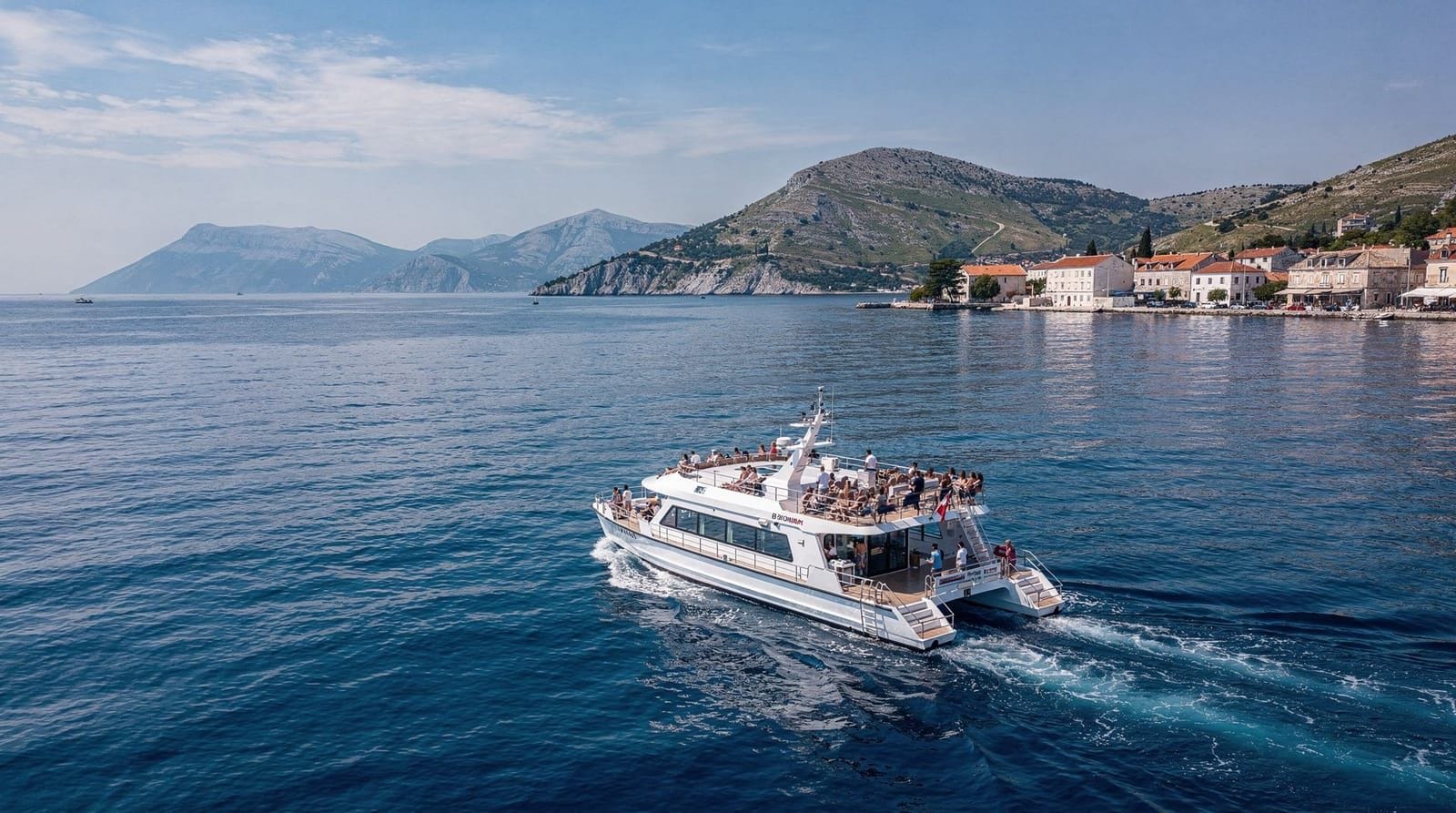
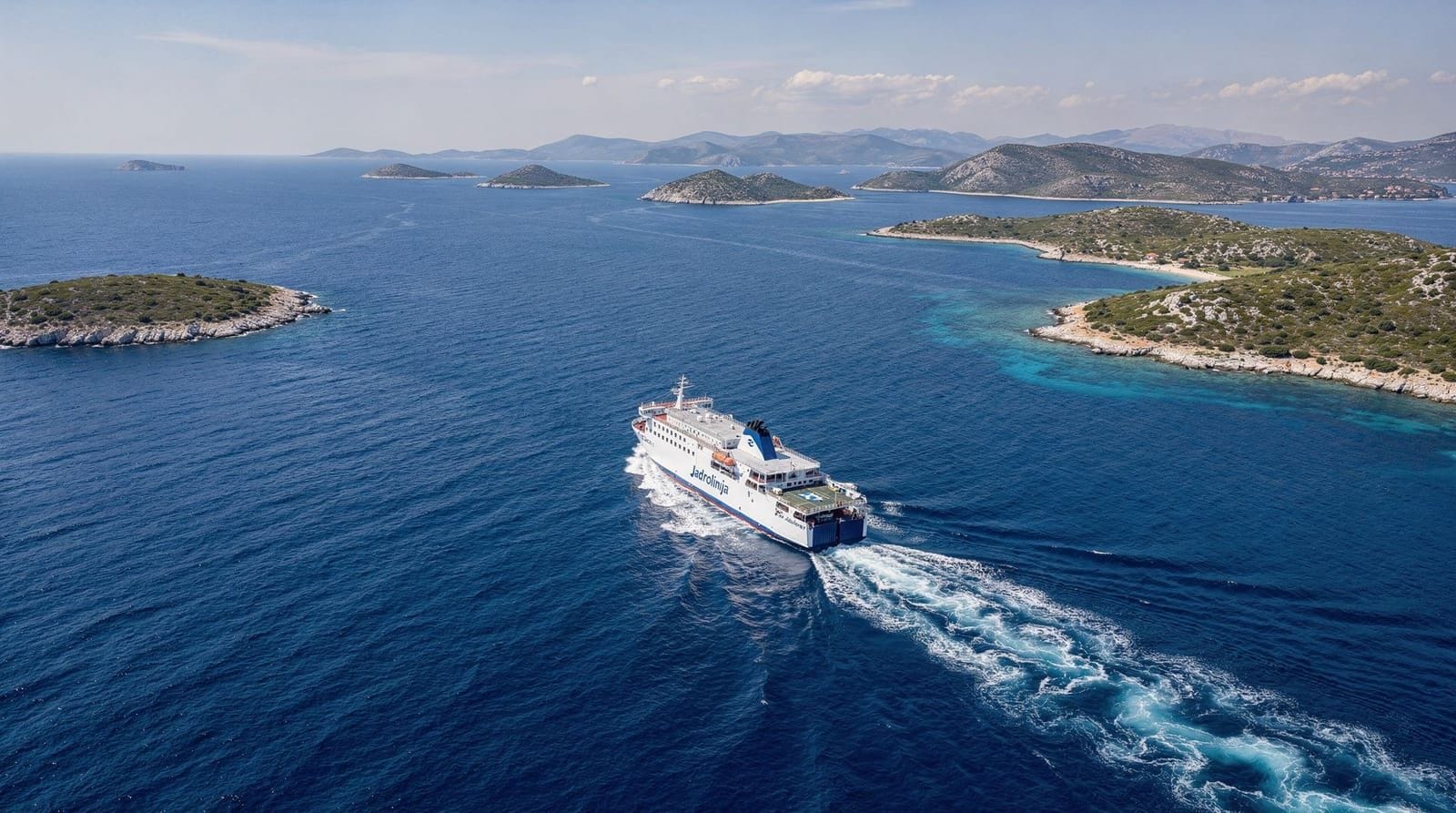
For the island beaches — Stiniva, Pakleni, Sakarun — boat access is essential. The Croatia ferries guide covers the Jadrolinija and Krilo networks. For day trips that chain multiple beaches and sites, organised boat tours from Split remain one of the most efficient options.
Half-day sailing from Split with swimming stopsPractical notes
Most Croatian beaches charge nothing for access; some popular ones have a seasonal fee for sunbed rental. Beach bars are widespread along Dalmatia and usually serve food. Nudism is legal on designated FKK beaches and traditionally tolerated at many others — Nugal, sections of the Pakleni islands and several Vis coves have informal naturist traditions.
Water quality across Croatia is among the best in the Mediterranean — the country consistently ranks near the top of EU Blue Flag beach ratings. Jellyfish blooms do occur, most commonly in August, particularly along sheltered bays. Check local conditions if this concerns you.
The island hopping guide covers logistics for chaining multiple island beaches across a week or more. If your time is limited to Split, the day trips from Split guide highlights which beaches are reachable in a single day without staying overnight. If Dubrovnik is your base instead, the best beaches near Dubrovnik guide covers the Elaphiti islands and closer options, and the best beaches near Split guide does the same for the central Dalmatian coast. Sea temperatures vary more than you might expect across the season — the Croatia sea temperatures guide has month-by-month figures if you are planning around swimming comfort rather than just weather.
Croatia’s beaches reward a degree of planning and a willingness to arrive early or walk further than the tour buses go. The ones on this list are the ones that are worth the effort.