Croatian Street Food
Split: The real Split food tour
What is the most popular street food in Croatia?
Burek — flaky phyllo pastry filled with meat, cheese or potato — is the undisputed king of Croatian fast food. You will find it at a pekara (bakery) for as little as EUR 1.50, sold by weight, eaten hot on the pavement. Ćevapi (grilled minced-meat sausages) served with lepinja flatbread and ajvar relish is a close second.
Croatian street food runs from a pekara queue at dawn to a paper cone of hot chestnuts on a winter evening — cheap, filling, and often more interesting than the tourist-menu food a street away. This guide covers what to eat, where, at what price, and how to order like a local rather than a visitor.
| Signature dish | Burek (phyllo pastry, meat/cheese/potato) |
| Typical cost | EUR 1.50–7 per item |
| Best morning stop | Pekara (bakery), open from 5–6am |
| Best market | Dolac (Zagreb) or Pazar (Split) |
| Payment | Cash preferred at stalls; cards widening |
| Vegetarian-friendly | Yes — cheese/potato burek, štrukli, market produce |
The pekara: where Croatian mornings begin
Before the café opens, before the market fills, before anyone is properly awake — the pekara is already running. Croatia’s bakeries operate on a schedule that starts at 5 or 6 in the morning, and by 7am there is already a queue of construction workers, students and locals who know exactly what they are doing.
The anchor of the pekara menu is burek: phyllo pastry layered with filling, coiled or stacked into a tray, then baked until the top is bronze and shattering. The fillings are non-negotiable in their simplicity — burek sa mesom (minced meat), burek sa sirom (fresh white cheese), burek s krumpirom (potato and sometimes onion). Some pekare offer spinach or mushroom, but traditionalists consider anything beyond the classic three a distraction.
Burek is sold by weight. You point at the tray, the server cuts a wedge or a roll, places it on the scales, wraps it in paper and hands it over. The going rate is EUR 1.50–3, depending on size and city. Zagreb’s pekare are slightly cheaper than coastal ones; Dubrovnik, predictably, charges a premium. In Split, the area around the Pazar market — the open-air market east of Diocletian’s Palace — has reliable pekare at local prices even in summer.
The correct way to eat burek: immediately, standing outside, before it cools. A cold burek is a sad burek. Wash it down with a jogurt — a drinkable yoghurt sold in the same pekara for about EUR 0.80 — and you have the most Croatian breakfast possible for under EUR 3.
If you want to understand what you are actually eating, a guided food tour in Split will walk you through the pekara culture alongside everything else the city eats — a good investment for a first visit.
Ćevapi and the roštilj tradition
Ćevapi (the singular is ćevap) are small, fingerlike sausages of grilled minced meat — typically a blend of beef and lamb, seasoned simply with salt, onion and sometimes garlic. They originate in the Ottoman culinary tradition that shaped much of the western Balkans, and they remain one of the most-eaten dishes across Croatia, Bosnia, Serbia and beyond.
In Croatia, ćevapi are almost always served with lepinja — a soft, slightly puffed flatbread that splits open to become an edible envelope — along with raw onion and a generous smear of ajvar. The portion is usually 5 or 10 sausages; 10 is a proper meal, 5 is a snack or a starter if you are building toward something more ambitious.
Price: EUR 4–7 for a portion, depending on whether you are at a roadside roštilj stand or a sit-down restaurant. The stands tend to be better.
Roštilj (the grill) is not just a cooking method in Croatia — it is a social institution. On summer weekends, the smell of charcoal and cured meat drifts through every neighbourhood, village square and campsite. Festivals often have a roštilj row: a line of stands each grilling slight variations on the same theme (ćevapi, pljeskavica, kobasice), competing on speed and fire management rather than recipe differentiation.
Pljeskavica deserves its own mention: a large, flat, grilled patty made from the same minced meat blend as ćevapi, often 15–20cm across. It is essentially the Balkan answer to a burger, and a good one. Some versions are stuffed with cheese (punjana pljeskavica) or spiced with paprika. Served in lepinja with onion and ajvar, it is a full meal for around EUR 5–6 at a decent stand.
If you are travelling through Slavonia in eastern Croatia, look for kulen — a cured, paprika-hot pork sausage that is one of the region’s most prized products. Kulen is sliced and eaten cold rather than grilled; the best versions are genuinely spicy and deeply smoky from weeks of oak-smoke curing. You will find it at Slavonian markets and specialist food shops. It also makes excellent road-trip provisions.
Štrukli: Zagreb’s own pastry tradition
Of all the foods on this page, štrukli is the one most likely to surprise you. It does not look dramatic. It arrives looking like a modest, pale parcel. But the combination of fresh skuta (cottage cheese), eggs and sour cream wrapped in thin dough and either boiled or baked produces something that has earned a place on Croatia’s intangible cultural heritage list — and a devoted following that extends well beyond Zagreb.
The two versions are genuinely different experiences:
Kuhani štrukli (boiled) is soft throughout, with a silky, yielding texture and a milky, mild flavour. It is often served with a dollop of sour cream and a pinch of sugar — the sweet-savoury combination is central to the experience, not a mistake.
Pečeni štrukli (baked) develops a golden crust on the outside while staying creamy within. It is more robust, slightly richer, and holds up better as a standalone snack rather than a side dish.
Both versions are fundamentally Zagreb food. You will find štrukli elsewhere in Croatia — the Zagorje region north of Zagreb (Zagorje is where it originated) claims the dish as its own — but in Dalmatia or Istria it appears mainly at restaurants specifically marketing Croatian regional cuisine. In Zagreb, it is on the menu of any self-respecting traditional konoba.
Where to find it in Zagreb: Dolac market area has snack versions. For the definitive sit-down experience, head to a konoba in the Upper Town. Budget EUR 4–6 for a portion of štrukli as a first course or light meal.
Dolac market and the Zagreb food scene
Zagreb is the food city that coastal Croatia tourists systematically skip, which is their loss. The capital has an active food culture that runs from early-morning pekara queues through Dolac market into evening konoba dinners — and the street-food dimension of it is genuinely excellent.
Dolac market is the city’s central open-air market, a few steps uphill from the Ban Jelačić main square. It operates daily (best Monday to Saturday, mornings), with stalls selling fresh produce, cheese, cured meats and seasonal specialities. The lower level has covered stalls where you can buy prepared snacks, cheeses and dried goods.
In autumn, vendors appear around Dolac and the surrounding streets selling kesteni (roasted chestnuts) from open metal drums. The paper cone costs EUR 2–3 and the chestnuts are hot, sweet and starchy — exactly the right autumn street food. The season runs roughly October through December.
In summer, market stalls and wandering vendors sell kukuruz (grilled or boiled corn on the cob) for about EUR 1.50. Grilled is preferable: the kernels caramelise slightly and the vendors brush on butter and salt. It is not remarkable food, but it is honest and seasonal and very cheap.
A morning walking food tour in Zagreb will take you through Dolac, into the pekare, past the coffee bars and into the traditional spots for štrukli — the most efficient way to understand the city’s food geography in a few hours.
Split: the Pazar market and Dalmatian quick bites
Split’s version of casual eating revolves around the Pazar market, which occupies the open square immediately east of Diocletian’s Palace walls. This is where locals shop — fruit, vegetables, olives, cheese, dried figs, honey — and where the best value food encounters in the city happen.
Stalls sell Paški sir (Pag cheese, aged and sharp, from the island of Pag to the north) in chunks you can taste before buying. Olives come in dozens of varieties. In season, vendors sell fresh almonds, figs and pomegranates by the bag.
Around the market and in the streets between the Pazar and the palace, you will find Split’s pekare running full burek and pastry operations from early morning. The prices are lower than inside the palace walls by a meaningful margin — the Old Town interior has adjusted its pricing to the tourist economy.
For something more substantial, Split’s restaurant and konoba scene is detailed in the broader Dalmatian cuisine guide. But for pure street-food purposes, the Pazar area delivers: burek, ajvar sandwiches, roasted nuts and seasonal fruit, all at local prices.
Ice cream (sladoled) is available everywhere in Split, but quality varies significantly. The better gelaterie use seasonal Croatian fruit — fig in late summer, sour cherry (višnja) from June, Maraschino cherry from the Zadar area. Look for shops where staff are refilling tubs from a back room rather than scooping from a display that has been sitting since morning.
A dedicated food tour of Split covers the market, the palace interior food stops and the lesser-known neighbourhood spots in a manageable morning or afternoon — recommended if you only have one or two days.
Dubrovnik and the southern Dalmatian coast
Dubrovnik’s Old Town operates at fully tourist-adjusted prices — a ćevapi portion that costs EUR 5 in Split can reach EUR 9–12 inside the walls. This is worth knowing, not as a complaint but as practical planning information.
The workaround is the Gunduličeva Poljana morning market, held in a square in the southern part of the Old Town near the Jesuit steps. Local producers sell Pag cheese, homemade rakija (fruit brandy), dried lavender, honey and seasonal produce. Prices here remain relatively honest, partly because the market draws both tourists and locals.
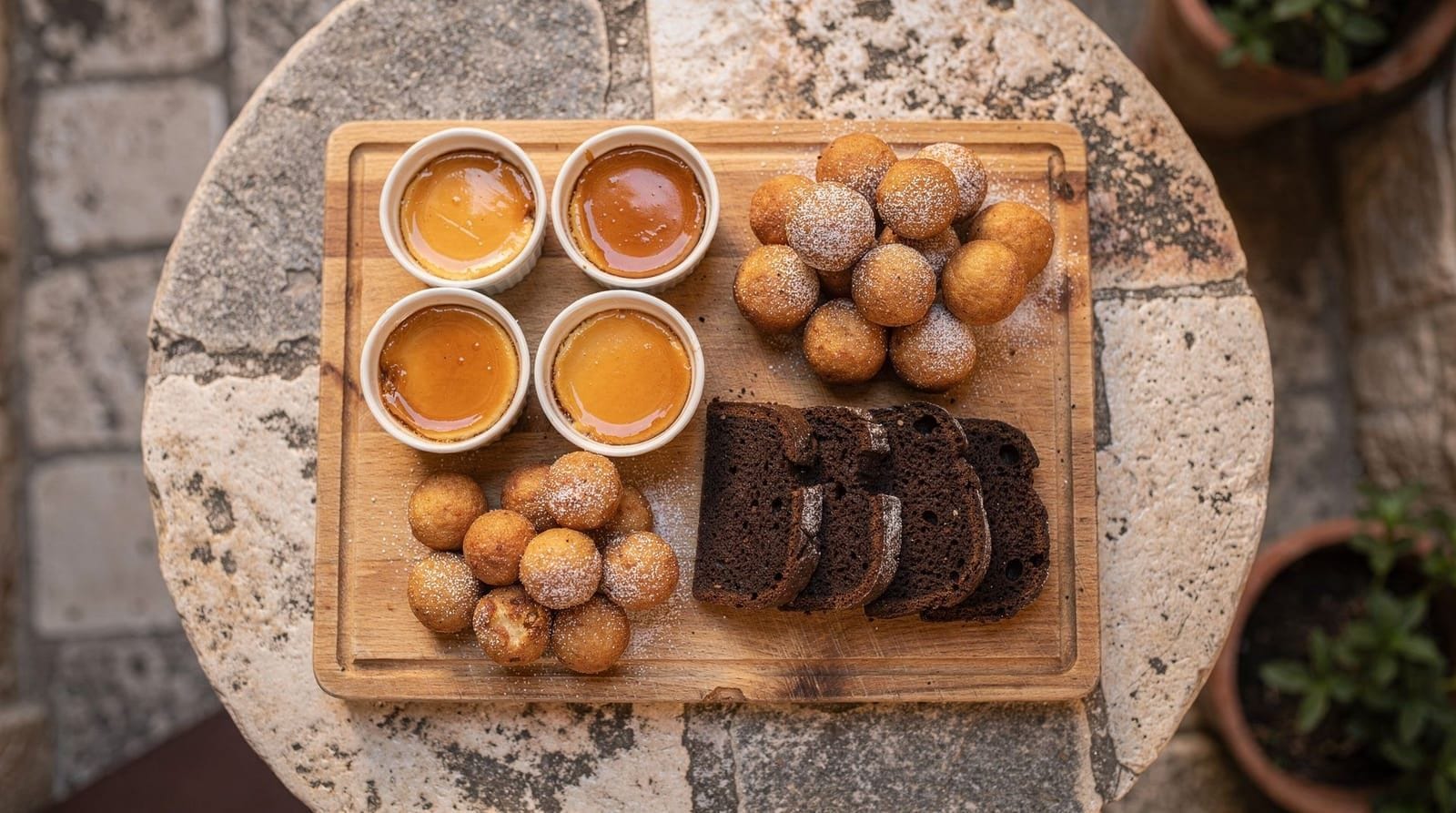
Rozata is Dubrovnik’s signature dessert: a baked custard pudding scented with rozalin (a liqueur made from rose petals from the Dubrovnik hinterland), similar in texture to crème caramel but with a distinctive floral note that is entirely its own. You will find it at traditional restaurants and some pastry shops; it is not a street food in the pekara sense, but it is the most distinctly Dubrovnik sweet thing you can eat.
For quick bites without demolishing your budget, the streets immediately outside the Pile Gate (the main western entrance to the Old Town) have more reasonably priced pekare and sandwich shops. The Lapad neighbourhood, a short bus ride from the centre, operates on near-normal Dalmatian prices.
From Dubrovnik, a day trip to Ston — the walled town on the Pelješac peninsula — gives access to the best oysters in Croatia, farmed in the Mali Ston Bay. These are not street food exactly, but they are eaten standing at the water’s edge for EUR 1–1.50 each, which is close enough. The oysters of Ston guide has the specifics.
Istria: fuži, truffles and village festival food
Istria operates on a slightly different culinary axis from Dalmatia. The Venetian and Central European influences show up clearly in the food, and the street food scene at village festivals reflects this.
Fuži is the defining Istrian pasta: hand-rolled tubes of egg pasta, typically served with truffles (tartufi) or game ragù. At village festivals and outdoor markets in towns like Motovun and Rovinj, you will find fuži cooked in large pots and served in paper bowls for EUR 5–8. It is not precisely street food in the urban sense, but at an Istrian festival it absolutely is.
The Istrian truffles guide covers the truffle culture in depth — but the short version for street-food purposes is that Istria produces both black and white truffles in significant quantity, and you can eat truffle-topped scrambled eggs or truffle cheese at market stalls for prices that would be considered extraordinary in France or Italy.
Roasted chestnuts appear in Istria as in Zagreb, particularly around Pula and the interior towns in autumn. Grilled kobasice (sausages) at outdoor markets tend to lean slightly more toward Central European seasoning than the Dalmatian roštilj style — more marjoram, occasionally caraway.
Sladoled in Istria reflects the Italian border influence: the gelaterie in Rovinj, Poreč and Umag are genuinely excellent, with fresh seasonal flavours and the competitive quality standards of places that know the comparison is being made constantly.
Seasonal street food: when to find what
Croatia’s street food scene shifts with the seasons in ways that are worth understanding before you travel.
Spring (April–May): Pekare are year-round institutions, but spring brings lighter pastry options alongside burek — pita sa zeljem (cabbage pastry) and seasonal vegetable fillings appear at this time. Markets begin filling with asparagus from Istria and fresh cheeses from inland producers.
Summer (June–September): Peak season for outdoor roštilj stands, ice cream queues and market stalls. Coastal towns run extended hours. Kukuruz (grilled corn) vendors appear at beach entrances and markets from July. The island destinations — Hvar, Brač, Korčula, Vis — all have their own pekare and small fast-food operations that ramp up from June.
Autumn (October–November): The chestnut season is the defining street food moment. Kesteni vendors set up on main streets from mid-October, and the combination of wood smoke, hot chestnuts and cooling air is one of the most atmospheric food experiences Croatia offers. Truffle season in Istria runs October through January.
Winter (December–January): The coast goes quiet, but Zagreb’s Advent market is a major food event: stalls selling mulled wine (kuhano vino), grilled sausages, štrukli, roasted nuts and seasonal pastries operate daily through December. The Christmas market around Zrinjevac park and the Upper Town is one of the best-rated in Central Europe.
Regional street food at a glance
| Region | Signature street food | Typical price | Best season |
|---|---|---|---|
| Zagreb / interior | Burek, štrukli, kesteni (chestnuts) | EUR 1.50–6 | Year-round; chestnuts in autumn |
| Dalmatian coast | Burek, ćevapi, ajvar sandwiches, sladoled | EUR 2–7 | Best May–October |
| Dubrovnik / south | Rozata, Pag cheese, Ston oysters | EUR 1–8 | Year-round; oysters best in cooler months |
| Istria | Fuži with truffles, roasted chestnuts, festival kobasice | EUR 5–10 | Truffle season October–January |
This regional lens matters if you’re building a multi-stop trip: Istria’s street food economy is festival-driven and seasonal, while Zagreb’s pekara culture runs every single day of the year. If your itinerary includes day trips from Split or day trips from Dubrovnik, factor a market stop into the day rather than relying solely on the destination’s restaurants.
Drinks that pair with Croatian street food
Rakija is the ubiquitous fruit brandy — plum (šljivovica), grape (loza), herb-infused (travarica) — sold at markets in unlabelled bottles and offered as a friendly shot at family-run konobas. It is not technically street food, but no honest guide to Croatian eating culture leaves it out. A small glass costs €2–3 at a bar; homemade versions from Gunduličeva Poljana or a village market are the more interesting option and typically cheaper.
Craft beer has expanded well beyond the standard Karlovačko and Ožujsko lagers, particularly in Zagreb and Split, where small breweries now supply market stalls and street-food-adjacent bars.
Coffee (kava) is less a beverage than a social institution — an espresso ordered to linger over for an hour is entirely normal, and no pekara visit is complete without a jogurt (drinkable yoghurt) or a kava to go with your burek.
Water and soft drinks: tap water is safe throughout Croatia, so carrying a refillable bottle rather than buying plastic bottled water at every stall is both cheaper and more practical, especially on hot days moving between market stalls. Cedevita, a Croatian vitamin drink powder mixed with water, is a local favourite worth trying if you want something other than coffee or beer with your street food.
A sample day of street eating
For a first-time visitor wanting to sample Croatian street food properly in a single day, a rough sequence works well in most coastal towns:
- Morning (7–9am): Pekara for burek and a jogurt, standing outside, hot from the oven.
- Mid-morning (10–11am): A market walk — Pazar in Split or Dolac in Zagreb — tasting cheese and olive samples, buying fruit for later.
- Midday (12–1pm): A roštilj stand for ćevapi or pljeskavica in lepinja with ajvar — the proper midday anchor meal.
- Afternoon (3–4pm): Ice cream (sladoled) from a gelateria using seasonal fruit flavours.
- Evening: If in season, roasted chestnuts (autumn) or grilled corn (summer) from a street vendor as a light, cheap evening snack.
This sequence costs roughly €12–18 total per person — genuinely one of the most affordable ways to eat well anywhere on the Croatian coast, and arguably more representative of daily Croatian life than a sit-down restaurant meal.
Adjust the sequence for the season and region: in Zagreb in December, swap the ice cream stop for mulled wine (kuhano vino) and roasted nuts at the Advent market; in Istria in October, add a fuži stop at a village festival if your timing allows; on the islands (Hvar, Korčula, Brač), the market stop often shrinks to a single fruit-and-cheese stall but the pekara and ice cream stages hold true everywhere.
Ordering like a local: practical tips
At a pekara: Do not ask for a menu. Look at the trays, point, and say what you want: “burek sa mesom, molim” (meat burek, please). They will weigh it and tell you the price. Paying in cash is standard; cards are increasingly accepted but not guaranteed.
At a roštilj stand: The universal order is a quantity of ćevapi (pet or deset — five or ten) with lepinja and ajvar. If you want pljeskavica, just say so. The question you may be asked is “sa lukom?” (with onion) — the answer is yes.
At a market: Vendors expect you to taste before buying. Cheese and cured meats are almost always offered as samples. Take the sample, buy if you like it, move on without guilt if you do not.
Ice cream: Queue properly. Point at what you want. Some shops allow you to mix flavours in a single scoop; some do not. Ask “mogu li miješati?” (can I mix?) if unsure.
Tipping: Not expected at pekare or stands. At sit-down konoba or restaurants, rounding up to the nearest euro or 10% is appreciated but not mandatory.
For the full picture of what Croatia eats beyond the street, the Croatian food guide covers everything from seafood to wine pairings to the best regional specialities by area.
Frequently asked questions about Croatian Street Food
How much does street food cost in Croatia?
Burek runs EUR 1.50–3 depending on size and filling. Ćevapi portions (usually 5 or 10 sausages) cost EUR 4–7. Roasted chestnuts (kesteni) are sold in paper cones for EUR 2–3. Grilled corn (kukuruz) from a market cart is around EUR 1.50. Ice cream (sladoled) in coastal shops is typically EUR 1.50–2.50 per scoop. Street food in Croatia is genuinely affordable — a full meal of ćevapi with a cold pivo costs under EUR 10 almost everywhere.Where is the best place to try burek in Zagreb?
Dolac market area and the surrounding streets of Zagreb's Upper Town have reliable pekare open from early morning. Look for places with a queue — freshness matters more than brand. Burek is best eaten within minutes of leaving the oven, hot and dripping slightly, wrapped in paper. Avoid pre-packaged burek at petrol stations or airport cafés.What is štrukli and is it worth trying?
Štrukli is Zagreb's most distinctive pastry — a dough parcel stuffed with fresh cottage cheese (skuta), eggs and sour cream, then either boiled (kuhani štrukli, soft and yielding) or baked (pečeni štrukli, golden and slightly crisp on top). It is listed on Croatia's intangible cultural heritage register and recognised by UNESCO. Worth trying? Absolutely. Seek out the baked version at a traditional Zagreb konoba for the best version.Can vegetarians eat well from Croatian street food stalls?
Yes, better than you might expect. Burek sa sirom (cheese burek) and burek s krumpirom (potato burek) are both vegetarian. Štrukli is vegetarian. Market stalls sell roasted chestnuts, grilled corn, fresh fruit and Pag cheese (Paški sir). Ice cream parlours are everywhere on the coast. Vegetarians will struggle more with roštilj culture, which is almost entirely meat-centred, but the pekara route keeps you well-fed.What is the best street food in Dubrovnik?
Dubrovnik's tourist-heavy Old Town inflates prices, but you can eat well if you know where to look. The Gunduličeva Poljana morning market sells Pag cheese, olives and seasonal produce. Rozata — a Croatian take on crème caramel, made with rose liqueur — is the city's signature dessert, sold at cafés and pastry shops. For something more filling, walk a few minutes outside the Pile Gate to find proper pekare with honest prices.Is Croatian ice cream as good as Italian gelato?
Coastal Croatia has a strong gelato tradition with real Italian influence — particularly in Istria and Dalmatia. Quality varies, but the best sladoled shops use fresh fruit, minimal stabilisers and rotate flavours daily. Fig (smokva), lavender (lavanda) and Maraschino cherry (maraska) are Croatia-specific flavours worth seeking out. Prices are comparable to Italy: EUR 1.50–2.50 per scoop.What is ajvar and why does it come with everything?
Ajvar is a roasted red pepper and aubergine relish, spreadable and slightly smoky, with a flavour somewhere between sweet and earthy. It is the default condiment of the Balkan grill culture: served alongside ćevapi, pljeskavica and roasted sausages. You can buy jars of it at every market and supermarket — homemade varieties from village markets are noticeably better than commercial ones.
Top experiences
Bookable activities with verified prices and instant confirmation on GetYourGuide.
Top experiences
Best-rated activities across GetYourGuide and Viator.

Krka National Park Tour with tour Guide & Wine tasting from Split & Trogir
- Viator

Dolphin Watching & Sunset Boat Tour With Drinks & optional Dinner
- Viator

Fantastic DOLPHIN & SUNSET TOUR with dinner ( Pula-NP BRIJUNI )
- Viator

Dubrovnik Guided Group Tour with Ston Oyster tasting from Split & Trogir
- Viator

Zadar Highlights: Old Town, Sea Organ & Local Tastings
- Viator

Zadar: Luxury Island Boat Tour, Snorkeling & Unlimited Wine
- Viator