Where to stay in Croatia: best bases by travel style
Split: Old town small group walking tour
Where is the best place to stay in Croatia?
Split is the best all-round base for most visitors — central, ferry-connected, and far more affordable than Dubrovnik. Dubrovnik works best if southern day trips (Mostar, Kotor) are your priority. Zadar is the underrated value pick for north Dalmatia. Hvar town suits party-and-beach travelers. Rovinj is the go-to for Istria. Zagreb fits a short city break perfectly.
Choosing where to base yourself in Croatia shapes your entire trip. The country stretches nearly 1,800 km along the Adriatic — from the Istrian peninsula in the northwest to Dubrovnik in the deep south — and no single city covers it all. The good news is that Croatia’s ferry network and decent road connections make multiple-base strategies practical, so you don’t have to compromise.
This guide covers the six most useful bases, the accommodation types you’ll encounter, honest price benchmarks, and the booking habits that save money without sacrificing quality.
| Base | Best for | Peak double room | Ferry/island access |
|---|---|---|---|
| Split | First-timers, island hopping | €80-140 | Best in Croatia |
| Dubrovnik | Southern day trips, Old Town nights | €150-250+ | Limited, Elaphiti only |
| Zadar | Budget, northern islands, Plitvice | €80-130 | Good, less crowded |
| Hvar | Nightlife, beach glamour | €80-400+ | Good via Split |
| Rovinj | Istria, food and wine | €100-200 | None (no island ferries) |
| Zagreb | City break, transport hub | €55-160 | None (inland) |
Why your base choice matters more in Croatia than most countries
Croatia is longer than it looks on a map and its geography creates genuine trade-offs. Dubrovnik is a geographic dead end: it sits at Croatia’s southern tip, and getting north from there requires backtracking or flying. Split sits right in the middle of Dalmatia and has direct ferries to more islands than anywhere else. Zadar is better placed for northern Dalmatian islands — Pag, Kornati — but less convenient for the popular Hvar/Brač/Vis cluster.
Getting this decision right means more time swimming and less time sitting on buses.
Split: the best all-round base
For most travelers, Split wins. It sits at the heart of Dalmatia, its ferry terminal connects to more islands than any other port, its Old Town (Diocletian’s Palace) is genuinely extraordinary, and it costs considerably less than Dubrovnik. A mid-range double room in Split runs €80–140/night in peak season, versus €150–250+ for comparable quality in Dubrovnik.
From Split you can reach:
- Brač (Zlatni Rat beach) in 50 minutes by car ferry
- Hvar town in 1 hour by fast catamaran or 2 hours by car ferry to Stari Grad
- Vis in 2.5 hours
- Šibenik and the Krka national park in 1 hour by bus
- Trogir in 30 minutes
The Split old town — Diocletian’s Palace — functions as a living neighborhood rather than a museum piece, and walking it with a local guide at dawn is one of Croatia’s genuinely outstanding experiences.
Split Old Town walking tour (small group)Best neighborhoods to stay in Split: Varoš (hilly, authentic, 5-min walk to Palace), Manuš, or the Green Market area. Avoid the Marjan side if you have an early ferry — it’s a long walk or bus ride from the ferry terminal.
Accommodation budget (peak season):
- Hostel dorm: €25–35/night
- Private room/sobe: €50–90/night
- Mid-range hotel: €90–160/night
- Boutique/design hotel: €160–300/night
Dubrovnik: iconic but expensive
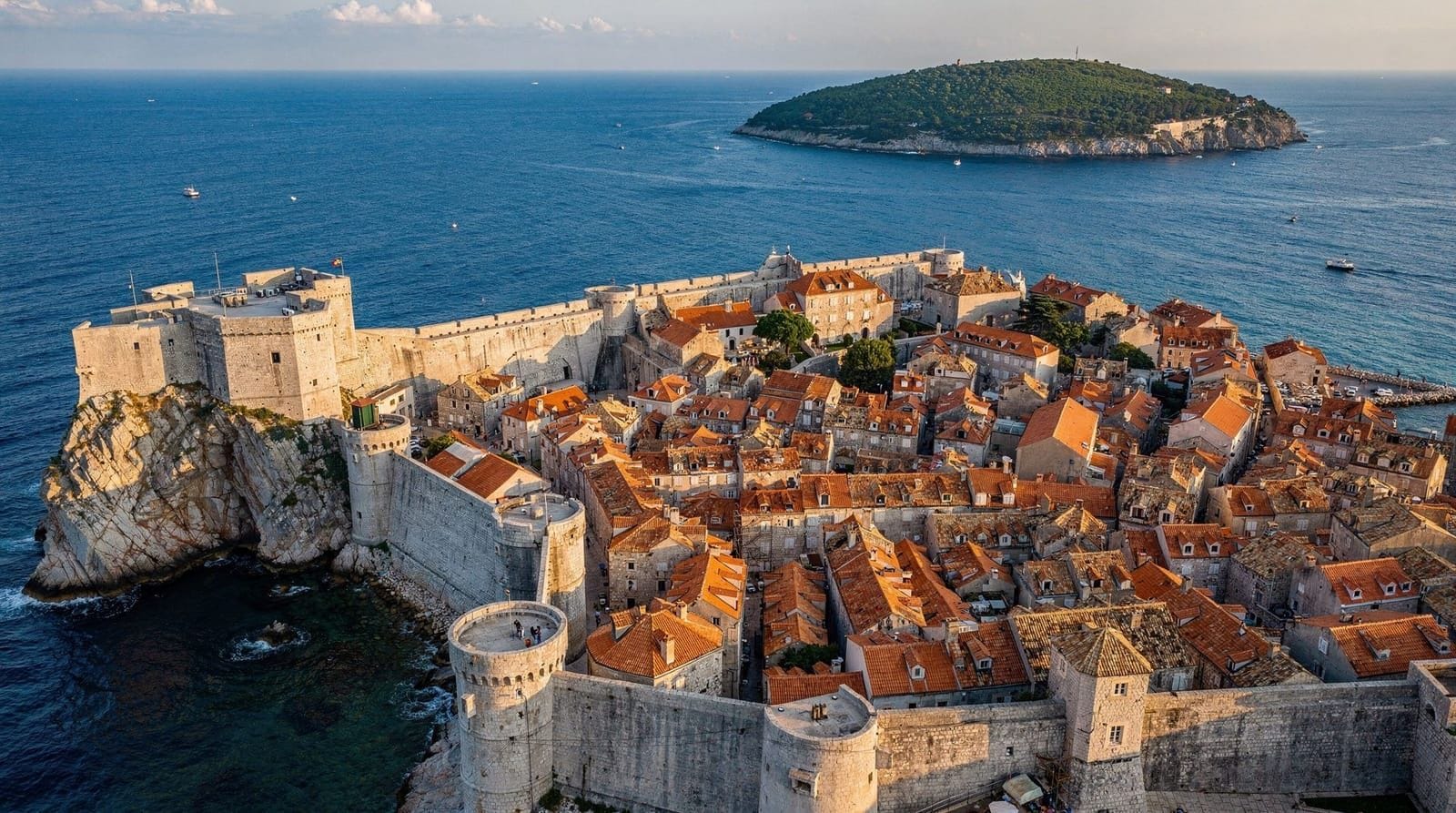
Dubrovnik earns its reputation. The walled Old Town at night, when the day-trippers have gone, is one of Europe’s finest urban experiences. The problem is cost and crowds. In July–August, Dubrovnik is overwhelmed: cruise ships disgorge thousands of visitors daily, the main street (Stradun) becomes a shuffle, and parking is a genuine crisis — the Old Town is pedestrianized and you cannot drive to most properties inside the walls.
Where to stay in Dubrovnik:
- Old Town: Premium prices (€180–400+/night in peak season), no car access, spectacular. Worth it for one or two nights.
- Lapad peninsula: 3 km from Old Town by bus, significantly cheaper (€70–150/night), most hotels have pools. Best for families.
- Babin Kuk and Gruž: Even further out, quietest option, frequent buses.
Dubrovnik is also your best base for the outstanding day trips to Mostar in Bosnia-Herzegovina and Kotor in Montenegro — both around 2.5–3 hours each way and easily combined with a guided tour.
Dubrovnik Old Town walking tourWho should base in Dubrovnik: Those prioritizing southern day trips, cruise passengers extending their trip, travelers who specifically want Old Town nights, or anyone visiting only the far south of Croatia.
Who should avoid Dubrovnik as a primary base: Anyone on a tight budget, travelers wanting island flexibility, or anyone sensitive to crowds in peak season.
Zadar: the underrated value pick
Zadar gets unfairly overlooked. It has a well-preserved walled Old Town, two of Croatia’s most unusual attractions (the Sea Organ and Sun Salutation), direct ferry connections to the northern Dalmatian islands, and prices noticeably lower than Split or Dubrovnik. Budget travelers and families find Zadar a compelling base.
From Zadar, the Plitvice Lakes are 1.5 hours by bus — making it a better base than Split for that day trip. Šibenik is an hour south. The Kornati archipelago and Paklenica national park are both within reach.
Zadar Old Town walking tourAccommodation budget in Zadar (peak season):
- Hostel dorm: €18–28/night
- Private room: €45–80/night
- Mid-range hotel: €80–130/night
Hvar: best for nightlife and beach glamour
Hvar town is Croatia’s party capital and its most glamorous island base. The piazza is lined with restaurants and bars, the fortress views are spectacular, and the beaches around the Pakleni Islands are excellent. It also has the longest sunshine record in Croatia.
The trade-off: it is expensive, especially in July–August, and accommodation quality is inconsistent at the budget end. Book 3–4 months ahead if you want anything decent in peak season. Hvar town has no car ferry access — you must leave your car in Split or take the car ferry to Stari Grad (the quieter end of the island) and drive across.
Who Hvar works for: Couples, social travelers, beach lovers, anyone who wants Croatia’s “scene.” It also works as a 2-3 night stop rather than a full week’s base.
Accommodation budget in Hvar town (peak season):
- Budget room/hostel: €35–60/night
- Private apartment: €80–160/night
- Boutique hotel: €180–400+/night
Rovinj: best for Istria
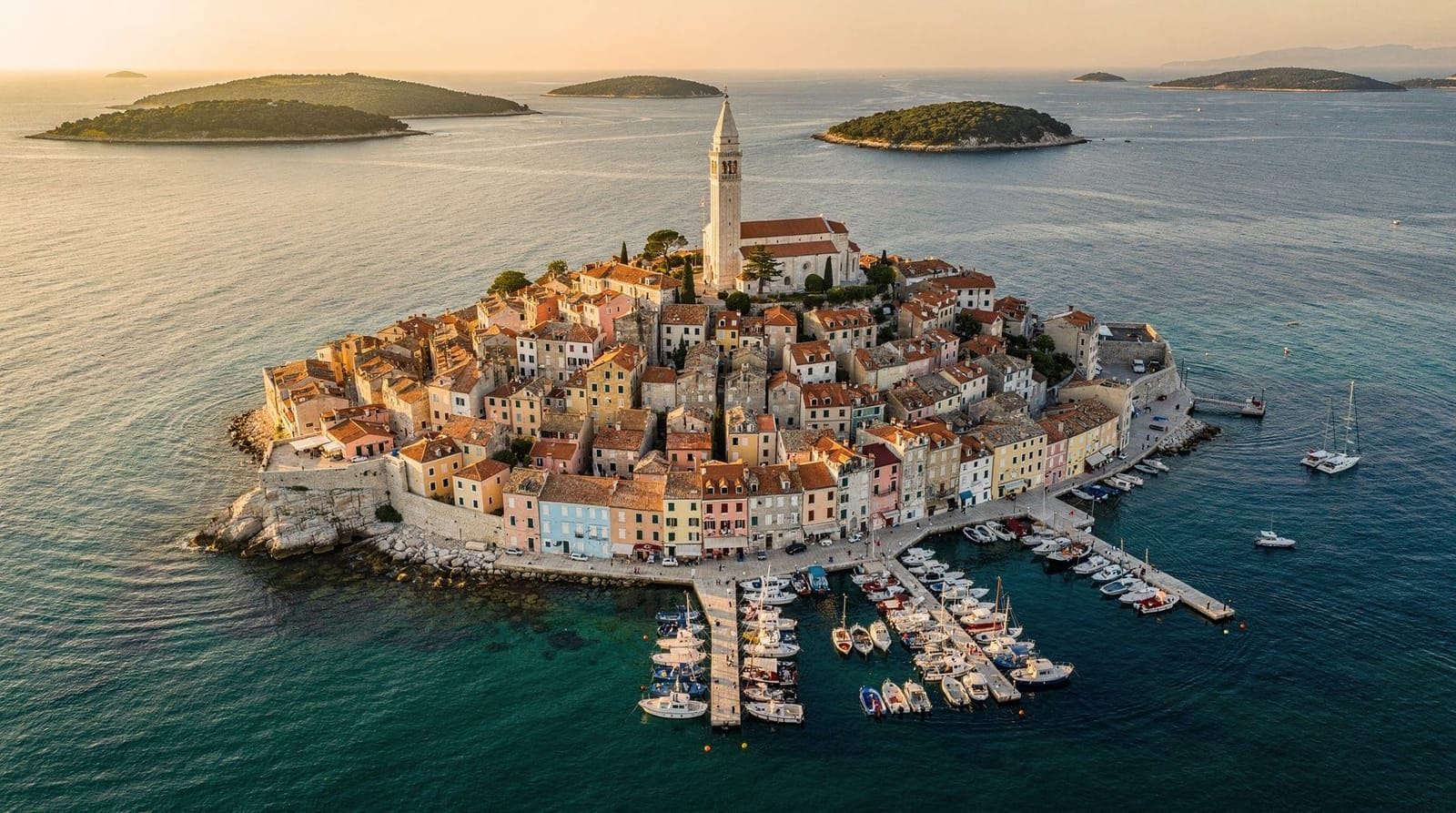
If your focus is Istria — the Venetian-influenced peninsula in Croatia’s northwest — Rovinj is the most characterful base. Its old town sits on a peninsula jutting into the Adriatic, with pastel-colored houses and narrow alleys that feel more Italian than Croatian (historically, it was). The Istrian interior — Motovun, truffles, wine — is an easy day trip from here.
Rovinj doesn’t connect to the Dalmatian island ferry network, which is fine if you’re staying in Istria. If you want islands, base in Dalmatia instead.
Accommodation budget in Rovinj (peak season):
- Private room: €60–100/night
- Mid-range hotel: €100–200/night
- Luxury boutique: €200–450/night
Zagreb: best for a city break
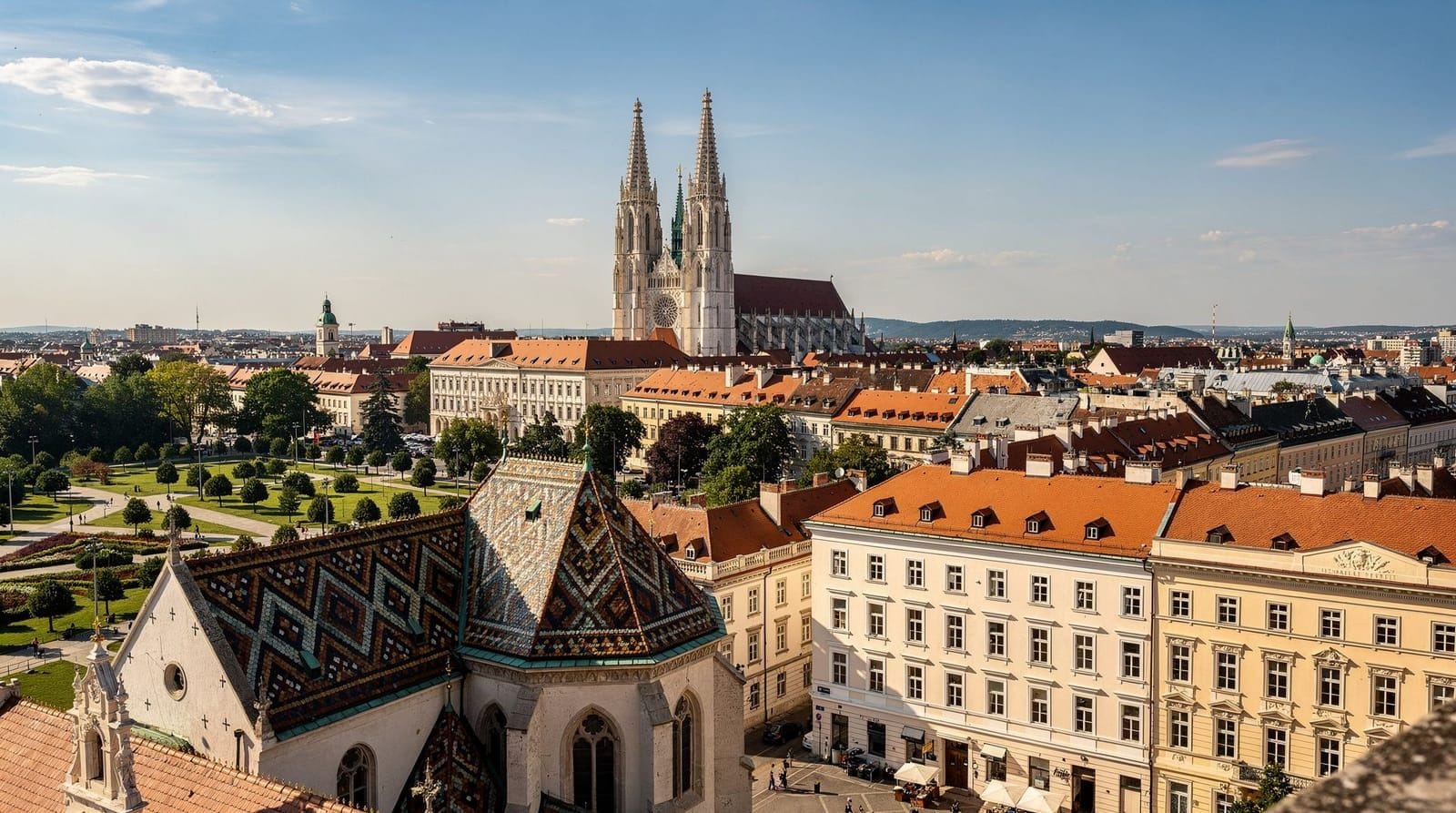
Zagreb is Croatia’s underappreciated capital — and a genuinely enjoyable city for 2–3 days. The Upper Town, museum quarter, café culture, and excellent restaurant scene make it worthwhile. It’s also the natural starting or ending point for a longer Croatia trip, with the best transport connections (train, bus, airport) in the country.
Zagreb works poorly as a Dalmatian coast base — the coast is 3–4 hours away by bus, and there are no ferries. Treat it as a city break in its own right, or as bookend nights either side of a coastal trip.
Accommodation budget in Zagreb (peak season):
- Hostel dorm: €18–28/night
- Budget hotel: €55–90/night
- Mid-range hotel: €90–160/night
Accommodation types in Croatia
Private rooms and apartments (sobe): The traditional Croatian option. Families rent out spare rooms or entire apartments. Quality ranges from basic to excellent; always read recent reviews. This is typically the best value for money, especially outside the main tourist towns.
Family-run guesthouses (pansioni): A step up from sobe — usually 4–12 rooms, sometimes with a small restaurant. Often the sweet spot between price and hospitality.
Hotels: International chains are thin on the ground outside Zagreb. Most Croatian hotels are locally owned and range from unremarkable 3-stars to genuinely outstanding boutique properties. The 4-star category varies enormously in quality.
Hostels: Good networks in Split, Dubrovnik, Zagreb, Hvar, and Zadar. Quality is high by European standards — many have rooftop terraces, organized social events, and excellent common rooms.
Camping: Croatia has excellent campsite infrastructure, particularly in Istria and on the islands. Many are large, well-equipped sites with direct sea access. Peak season prices can reach €40–60/night for two people with a tent, which undercuts budget hotels but not by as much as you’d expect.
Booking tips and price benchmarks
Book early for peak season: July–August is the crunch. Hvar town sells out 3–4 months ahead for decent properties. Dubrovnik Old Town similarly. Split and Zadar have more supply and can be booked 6–8 weeks out.
Avoid July–August if budget is a priority: Prices for identical rooms rise 40–70% between June and July. Late May to mid-June and September–October offer the best combination of good weather, fewer crowds, and lower prices.
Private apartments vs hotels solo: Hotels charge single supplements that often make a private apartment better value for one person. Airbnb and Booking.com both list good options.
Watch what you’re getting in Dubrovnik: “Old Town” listings on booking platforms sometimes mean just close to the walls, not inside them. Read the full property description carefully and check the map pin.
Avoid Euronet ATMs: This is relevant wherever you stay — Euronet machines typically offer poor exchange rates. Use bank ATMs (Erste, Zaba, OTP) and decline dynamic currency conversion (DCC).
What’s overrated about accommodation in Croatia
Dubrovnik’s most expensive Old Town apartments are frequently cited as a disappointment by travelers who’ve paid €300+ per night. The issues are practical: you drag luggage up steep marble steps, parking is impossible, and the noise from late-night restaurants and bars can be significant in summer. Many visitors who splurge on the walls say they’d choose Lapad next time.
Hvar town’s budget end is also worth approaching with caution. Properties listed as “budget” at €80–100/night in peak season sometimes mean poorly maintained rooms above a bar. The reviews on those matter more than the star rating.
Multi-base strategies worth considering
Most travelers spending more than 7 days in Croatia benefit from splitting their time between two bases rather than picking one and doing day trips. The classic structure:
- Zagreb (2 nights) + Split (3–4 nights) + Dubrovnik (2–3 nights): Covers city, islands, and UNESCO heritage. Fly in/out of different airports (ZAG in, DBV out) to avoid backtracking.
- Split (3 nights) + island (3–4 nights) + Dubrovnik (2 nights): The most popular island-heavy trip. Choose Hvar, Vis, or Korčula as your island stop.
- Zadar (2 nights) + Split (4 nights): Budget-friendly Dalmatia, excellent ferry access, no need to pay Dubrovnik prices.
For structured itinerary frameworks, see the Croatia 10-day itinerary and Croatia 14-day itinerary pages.
Neighborhood-level guide for each major base
Split neighborhood breakdown
Inside the Palace (Diocletian’s Palace district): The most atmospheric option. Marble-floored apartments, views onto Roman courtyards, the sound of evening concerts from the Peristyle square. Downsides: no parking within the palace walls, luggage must be carried on foot, some apartments directly above restaurants can be noisy until 11pm. Perfect for one or two nights; harder for a longer stay.
Varoš: The hillside neighborhood directly west of the palace. Narrow streets, authentic local character, 5-minute walk to the palace, slightly more parking options. Better suited to longer stays than the palace interior.
Grad (around the palace outer walls): Immediately outside the palace walls — practical, short walk to everything, more standard apartment and hotel options.
Manuš/Radunica: Further east, close to the ferry terminal. Practical for early ferry departures. Less atmosphere than the palace district.
Firule/Meje: Western peninsula with several larger hotels and views of Marjan park. Beautiful but a long walk or bus ride from the ferry terminal and Old Town.
Dubrovnik neighborhood breakdown
Old Town (within the walls): Premium pricing, genuine atmosphere especially at night and early morning. Dragging luggage up steps is the main practical issue. Noise can be significant on summer evenings. Worth it for 1–2 nights.
Pile (just outside Ploče Gate): Very close to Old Town walls, easier access than truly inside. Mix of boutique guesthouses and apartments. Good compromise.
Lapad peninsula: 3 km from Old Town, frequent bus connection. Multiple larger hotels, more pools, family-friendly. Significantly cheaper than Old Town options.
Babin Kuk: Further west from Lapad, quieter, more residential. Long bus ride to Old Town.
Gruž (port area): Functional rather than attractive. Near the main harbor, useful for very early ferry departures.
Accommodation booking platforms in Croatia
Booking.com dominates in Croatia and has the widest inventory of private apartments, guesthouses, and hotels. Reviews tend to be honest and recent.
Airbnb is strong in Zagreb and the main Dalmatian cities but has less complete island coverage than Booking.com.
Direct booking: Many family-run guesthouses and apartments prefer direct booking (email or phone) and will often match or beat platform prices to avoid the commission. Look for contact details on property signs or their own small websites.
Hostelworld: Best for hostel comparison and booking. Most Croatian hostels list here as well as Booking.com.
Jadrolinija and ferry operator websites: Useful if you’re booking cabin accommodation on overnight coastal ferries (Split to Dubrovnik overnight service). Book early — cabins sell out.
Choosing a base by travel style
Families with kids: Split and Zadar are the easiest bases logistically — flat old towns, short airport transfers, gentle beaches nearby without long ferries. See the Croatia with kids guide and family itinerary for structured plans built around these bases.
Budget travelers: Zadar and Zagreb offer the lowest accommodation costs for comparable quality. Pair a base choice with the tips in the Croatia on a budget guide and Croatia daily costs guide for a realistic trip budget.
Sailors and island-hoppers: Split is the clear pick — its marina and ferry terminal give the widest range of departures. The Croatia sailing guide and island hopping guide cover route planning in depth.
Solo travelers: Split and Zagreb have the strongest hostel scenes and social infrastructure for meeting other travelers; see the Croatia solo travel guide for base-specific advice.
Couples and honeymooners: Hvar and Rovinj both suit a romantic few nights; for a longer trip, the Croatia honeymoon guide suggests pairing one of these with a quieter island like Korčula.
Shoulder-season bases: where the savings are biggest
Peak-season price gaps between bases narrow considerably outside July-August. In May, June or September, a Dubrovnik Old Town room can drop to €100-160/night — still a premium over Split, but far less punishing than the €250+ summer rate. Split and Zadar see smaller percentage drops since they’re cheaper to begin with, but availability opens up dramatically, meaning better rooms for the same money rather than just lower prices. Hvar benefits the most proportionally: outside peak weeks, decent apartments that cost €150+/night in August can be found for €70-100. See the Croatia shoulder season guide and shoulder season deals for timing a trip around this.
How this compares to renting a car instead
A base-and-day-trips strategy isn’t the only option. If you’d rather move each night or two and self-drive the coast, see driving in Croatia and renting a car in Croatia — a road trip trades the convenience of unpacking once for the freedom to chase quieter towns and beaches on your own schedule.
Frequently asked questions about Where to stay in Croatia
Is it cheaper to stay outside Dubrovnik's Old Town?
Yes, significantly. Apartments and guesthouses in Lapad, Babin Kuk or Gruž cost 40–60% less than Old Town properties and are served by frequent local buses. You also avoid dragging luggage up steep Old Town steps.How far in advance should I book in July–August?
For Hvar town in peak season, book 3–4 months ahead for anything decent. Dubrovnik Old Town also sells out early. Split and Zadar are easier — 6–8 weeks is usually sufficient, though earlier is always safer.Is Split a good base for island day trips?
Split is Croatia's best ferry hub. From Split you can reach Brač (50 min), Hvar Stari Grad (2h car ferry or 1h catamaran), Šolta (50 min), and connecting services run on to Vis and Korčula. No other base gives you as many island options.Where should I stay if I want peace and quiet?
Vis, Mljet and Korčula Old Town all offer a slower pace than Hvar or Dubrovnik. Vis especially has very few mass-market tourists. Losinj in Kvarner is another calm option with good infrastructure.Are private apartments (sobe) worth it?
Often yes. Croatian private rooms and apartments (look for the blue 'sobe' signs or Booking.com listings) offer excellent value, breakfast sometimes included, and far more local interaction than chain hotels. Standards vary, so check recent reviews carefully.Which Croatian city has the best budget accommodation?
Zagreb has the best hostel and budget hotel scene in Croatia, with beds from €18 and decent private rooms from €50. Zadar is the best budget option on the coast, typically 30–40% cheaper than Split for comparable quality.Is Dubrovnik Old Town worth staying in despite the price?
For one or two nights, yes — waking up inside the walls before the day-trip crowds arrive is genuinely special. More than two nights there is hard to justify unless budget is irrelevant; the experience of being a Dubrovnik 'resident' fades fast when cruise ships dock.Which base is best for a family with young children?
Split and Zadar both work well for families — flat old towns, short transfers from the airport, and easy access to gentle beaches without long ferry rides. Lapad in Dubrovnik is also strong, with pools and calm water. Avoid basing a family in Hvar town, where nightlife noise and steep streets make life harder with young kids.Should I book one base or split my stay across several?
For trips under a week, one well-chosen base with day trips is usually simpler and cheaper than packing and repacking. For 8 days or more, splitting between two or three bases (for example Split plus an island plus Dubrovnik) covers more ground and avoids long round-trip day excursions that eat into your time.
Top experiences
Bookable activities with verified prices and instant confirmation on GetYourGuide.
Top experiences
Best-rated activities across GetYourGuide and Viator.

From Zadar: Plitvice Lakes with Boat Ride & Zadar Old town tour
- Viator

Mostar and Herzegovina Tour with Kravica Waterfall from Split & Trogir
- Viator

3Hour ALL-INCLUSIVE Sunset Dolphin Watching from Medulin onSandra
- Viator

Dolphin Watching & Sunset Boat Tour With Drinks & optional Dinner
- Viator

Fantastic DOLPHIN & SUNSET TOUR with dinner ( Pula-NP BRIJUNI )
- Viator

Medulin :All-Inclusive Pirate Boat Dolphin Watching Sunset Cruise
- Viator